


Prague, 30 August 2004 (RFE/RL) -- The Amu Darya is the lifeblood of Turkmenistan. One of the two great rivers of Central Asia, the Amu Darya today provides almost 90 percent of Turkmenistan's water.
The Amu Darya feeds the 1,100-kilometer-long Karakum Canal. The canal is a Soviet-era project that irrigates the cotton and wheat fields of southern Turkmenistan and brings water to the majority of Turkmenistan's population, who live in the south.
Erika Dailey is the director of the Turkmenistan Project of the Open Society Institute, based in Budapest. She described the importance of the canal: "The Karakum Canal is the largest irrigation canal in the entire world. It's vitally important to Turkmenistan's agriculture, to its industry, and to turning what is essentially a desert country into a viable and inhabitable place. So the canal plays an enormous role in the country. It provides almost the only source of water for the 4 percent of the country which is actually arable. So, it really provides the basis for inhabitation for certain parts of the desert where the principle oases are."
The population of Central Asia is nearly 10 times larger than it was 100 years ago. And with the burgeoning population comes increasing demands for water, especially in Turkmenistan, the driest of the five Central Asian nations. The Turkmen government is taking dramatic -- and controversial steps -- to confront its water challenges. Turkmen President Saparmurat Niyazov recently spoke of one such project and of its importance for the future of the country.
"I am building the Turkmen Lake. I am building it for future generations. It will cost $8 billion. Hopefully, already a part has begun flowing. The salty waters from Dashoguz are flowing into the lake. It will join with waters from here. This lake is like a big sea. It will solve the water problem for the next generations. If we do not solve this problem, we will face water shortages," Niyazov said.
According to the plan, Turkmen Lake will have a surface area of almost 3,500 square kilometers. That is slightly more than half the surface area of Kyrgyzstan's grand mountain lake, Lake Issyk-Kul. Planners say the lake will help create 4,000 square kilometers of new farmland, more than 20 percent more arable land for the country, on which 450,000 tons of cotton and 300,000 tons of grain can be grown.
The lake will be located in the desert of northern Dashoguz Province, one of the poorest areas of Central Asia. The lake is expected to be completed by 2020.
Plans call for the lake to be filled with runoff water from agricultural fields. That means, in theory, that the lake will not need extra water from the Amu Darya or any other source. Critics of the plan doubt runoff water alone will be sufficient to fill the lake and fear that more water from the Amu Darya will have to used.
Vladimir Dukhovny is the director of the Central Asian Institute for Water Issues, located in Uzbekistan. He downplays fears that the Turkmen projects will take water from other Central Asian states. "Turkmenistan can't get any more water than agreements permit," Dukhovny said. "It's an internal matter. The issue of water is an issue for individual countries. Water resources are not shared according to how many canals a country has."
There has been criticism that the money for the lake would be better spent on relining the Karakum Canal. Some reports claim half the water carried by the canal leaks into the desert.
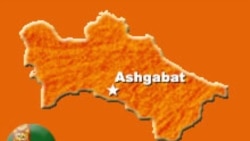
There is also a plan for a man-made river through the Turkmen capital, Ashgabat. The 12-kilometer-long river should be completed by Niyazov's 66th birthday in February 2006 at an estimated cost of $63 million. According to plans, parks, and fountains would be featured at regular intervals.
When announcing the project, Niyazov recalled his university days in St. Petersburg. "Leningrad was a green, quiet city. It was possible to walk around, near the bank of the river," he said. "[The construction of the man-made river] was borrowed from there."
Turkmen theater and film director and Ashgabat resident Halmurat Gylychdurdiev likes the idea, but notes that care in the river's construction is important. "Of course, if the river goes through the whole city, and they put concrete down properly, under the river and along its banks, it will be better," he said. "Maybe it would be cooler in Ashgabat, and the landscape will look better also."
There are critics of both the lake and river projects who note previous projects like the Karakum Canal created as many problems -- maybe more -- than they solved.
For more on Turkmen plans to build a river through Ashgabat, see:
Turkmenistan: Projects Sounding Alarm Bells In Region (Part 2)
Analysis: A River Runs Through It
The Amu Darya feeds the 1,100-kilometer-long Karakum Canal. The canal is a Soviet-era project that irrigates the cotton and wheat fields of southern Turkmenistan and brings water to the majority of Turkmenistan's population, who live in the south.
Erika Dailey is the director of the Turkmenistan Project of the Open Society Institute, based in Budapest. She described the importance of the canal: "The Karakum Canal is the largest irrigation canal in the entire world. It's vitally important to Turkmenistan's agriculture, to its industry, and to turning what is essentially a desert country into a viable and inhabitable place. So the canal plays an enormous role in the country. It provides almost the only source of water for the 4 percent of the country which is actually arable. So, it really provides the basis for inhabitation for certain parts of the desert where the principle oases are."
The population of Central Asia is nearly 10 times larger than it was 100 years ago. And with the burgeoning population comes increasing demands for water, especially in Turkmenistan, the driest of the five Central Asian nations. The Turkmen government is taking dramatic -- and controversial steps -- to confront its water challenges. Turkmen President Saparmurat Niyazov recently spoke of one such project and of its importance for the future of the country.
"I am building the Turkmen Lake. I am building it for future generations. It will cost $8 billion. Hopefully, already a part has begun flowing. The salty waters from Dashoguz are flowing into the lake. It will join with waters from here. This lake is like a big sea. It will solve the water problem for the next generations. If we do not solve this problem, we will face water shortages," Niyazov said.
According to the plan, Turkmen Lake will have a surface area of almost 3,500 square kilometers. That is slightly more than half the surface area of Kyrgyzstan's grand mountain lake, Lake Issyk-Kul. Planners say the lake will help create 4,000 square kilometers of new farmland, more than 20 percent more arable land for the country, on which 450,000 tons of cotton and 300,000 tons of grain can be grown.
The lake will be located in the desert of northern Dashoguz Province, one of the poorest areas of Central Asia. The lake is expected to be completed by 2020.
Plans call for the lake to be filled with runoff water from agricultural fields. That means, in theory, that the lake will not need extra water from the Amu Darya or any other source. Critics of the plan doubt runoff water alone will be sufficient to fill the lake and fear that more water from the Amu Darya will have to used.
"It's an internal matter. The issue of water is an issue for individual countries. Water resources are not shared according to how many canals a country has."
Vladimir Dukhovny is the director of the Central Asian Institute for Water Issues, located in Uzbekistan. He downplays fears that the Turkmen projects will take water from other Central Asian states. "Turkmenistan can't get any more water than agreements permit," Dukhovny said. "It's an internal matter. The issue of water is an issue for individual countries. Water resources are not shared according to how many canals a country has."
There has been criticism that the money for the lake would be better spent on relining the Karakum Canal. Some reports claim half the water carried by the canal leaks into the desert.
There is also a plan for a man-made river through the Turkmen capital, Ashgabat. The 12-kilometer-long river should be completed by Niyazov's 66th birthday in February 2006 at an estimated cost of $63 million. According to plans, parks, and fountains would be featured at regular intervals.
When announcing the project, Niyazov recalled his university days in St. Petersburg. "Leningrad was a green, quiet city. It was possible to walk around, near the bank of the river," he said. "[The construction of the man-made river] was borrowed from there."
Turkmen theater and film director and Ashgabat resident Halmurat Gylychdurdiev likes the idea, but notes that care in the river's construction is important. "Of course, if the river goes through the whole city, and they put concrete down properly, under the river and along its banks, it will be better," he said. "Maybe it would be cooler in Ashgabat, and the landscape will look better also."
There are critics of both the lake and river projects who note previous projects like the Karakum Canal created as many problems -- maybe more -- than they solved.
For more on Turkmen plans to build a river through Ashgabat, see:
Turkmenistan: Projects Sounding Alarm Bells In Region (Part 2)
Analysis: A River Runs Through It