
Prague, 31 August 2005 (RFE/RL) -- In the letter made public last week, some 400 Muslims asked Putin and his government permission to emigrate to another Russian republic, or to a foreign country, that would accept them and respect their religious rights.
Under Russian laws, no individual can leave his permanent place of residence without official approval.
Larisa Dorogova, the lawyer who wrote the letter for the group of Muslims, told RFE/RL that neither the regional nor the federal government has responded yet to the appeal. “This is an open letter and we haven’t sent it by mail yet," she said. "We simply made it available on the Internet. But there has been no reaction. No officials have contacted me to learn more about it.”
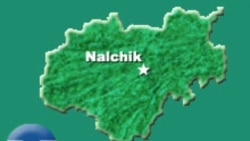
Kabardino-Balkaria, a tiny republic with a predominantly Sunni Muslim population of less than 900,000, is squeezed between Russia, Georgia, and the Russian republics of Karachaevo-Cherkessiya and North Ossetia.
About half of its population is made up of Kabards, who live mainly in the lowlands. Russians are the second-largest ethnic group, comprising nearly one-third of the population. Turkic-speaking Balkars represent another 10 percent. Dorogova said those who are asking to leave the republic include Kabards, Balkars, and even a number of Russians who have converted to Islam (see also What Is The Biggest Threat To Stability In Kabardino-Balkaria?).
Valerii Khatazhukov, chairman of the Republican Human Rights Center in Nalchik, the capital of Kabardino-Balkaria, said those who are seeking a safe haven outside the republic are in opposition to the official Muslim clergy, but do not follow a particular brand of Islam.
“Most of them are either young women who wear the hijab [Islamic head scarf], or young bearded men. These people are in opposition to the official Spiritual Directorate of the Muslims [of Kabardino-Balkaria]," Khatazhukov said. "This group [of young people] is subject to repression and arbitrary detentions, which -- unfortunately -- are becoming a general trend. The problem is that many of these young people refuse to file complaints or even talk openly about these repressions and arbitrary detentions.”
Information about the harassment of young Muslims is scarce, and authorities refuse to openly discuss reported police abuses.
Kabardino-Balkaria’s president, Valerii Kokov, claims radical Islam is gaining ground in the republic and that steps need to be taken to ensure peace and stability in the region. Rights activists say authorities began cracking down on unofficial Islam soon after Russia's second war in nearby Chechnya began in 1999.
Radical Chechen field commander Shamil Basaev is said to have ties with some of Kabardino-Balkaria’s underground Muslims. These links reportedly date back to the time when Basaev and volunteers from the North Caucasus helped Abkhaz separatist forces fight Georgian troops in the early 1990s.
Several deadly clashes pitting security forces against alleged Islamic militants have been reported in Kabardino-Balkaria over the past two years. In December, an Islamic group called Yarmuk reportedly claimed responsibility for a deadly raid on the Federal Antinarcotics Service in Nalchik.
A purported Yarmuk statement posted on the Chechen separatist website Kavkaz-Tsentr said the raid was aimed at punishing policemen involved in drug trafficking. But in a subsequent statement, the group denied any involvement in the attack.
Muslim Ataev, a young ethnic Balkar who reportedly founded Yarmuk in 2002, was killed during a police raid in Nalchik in January. Security officials say Ataev had fought in Chechnya under field commander Ruslan Gelaev.
Regional security officials claim that 20 underground religious groups are operating in the republic.
Authorities indiscriminately describe all expressions of unofficial Islam as "Wahhabism," which has come to be used as a blanket description for any deviation from the four traditional schools of Sunni Islam. Officials say Islamic fundamentalism is rapidly spreading among Nalchik schoolchildren and university students.
Kabardino-Balkaria’s rights activists charge that regional authorities are targeting all forms of unofficial Islam, irrespective of their nature. Lawyer Dorogova said Nalchik authorities last year ordered all but one of the city’s mosques closed, thus stripping many Muslims of their places of worship.
“There used to be mosques in nearly all of Nalchik’s districts. But five mosques were closed down simultaneously. It happened in August of last year, almost within a day. The authorities had decided to build a new mosque and close down the old ones. The Spiritual Directorate now occupies half of the new mosque. Its offices are there,” Dorogova said.
Observers note that if young dissident Muslims sometimes challenge the official clergy over religious issues, their criticism is mainly of a political nature. Khatazhukov said most of them believe the Spiritual Directorate is more preoccupied with lending support to the secular government than with defending the rights of faithful Muslims.
“We sometimes succeed in making these young people talk about their grievances toward the Spiritual Directorate. In most cases -- not all, though -- it appears that the grievances are not theological. They accuse [the Spiritual Directorate] of siding with a government they describe as illegitimate, corrupt, and criminal, and not protecting the interests of Muslims. In a sense they’re right. Mosques are being closed, Muslims are being illegally detained, and sometimes tortured, but there is hardly any reaction from the Spiritual Directorate,” Khatazhukov said.
North Caucasus experts say Chechnya’s two successive wars have been instrumental in helping Islamist groups emerge throughout the region. But economic need, chronic unemployment, corruption, and other domestic factors are believed to have contributed equally to radicalizing entire segments of the local populations. Analysts believe many of the region’s youth are using Islam as a vehicle for their political and economic demands.
Khatazhukov said an effective way to defuse tension in Kabardino-Balkaria could be for the government to invite representatives of the official clergy and unofficial Islam to a public discussion on how to tackle the region’s socioeconomic problems. But, "the authorities are more interested in showing the Kremlin they’re effectively fighting terrorism, and that can only contribute to further radicalizing Muslims,” he added.
For RFE/RL's full coverage of events in the North Caucasus, see "News And Features On The North Caucasus"
Under Russian laws, no individual can leave his permanent place of residence without official approval.
Larisa Dorogova, the lawyer who wrote the letter for the group of Muslims, told RFE/RL that neither the regional nor the federal government has responded yet to the appeal. “This is an open letter and we haven’t sent it by mail yet," she said. "We simply made it available on the Internet. But there has been no reaction. No officials have contacted me to learn more about it.”
Kabardino-Balkaria, a tiny republic with a predominantly Sunni Muslim population of less than 900,000, is squeezed between Russia, Georgia, and the Russian republics of Karachaevo-Cherkessiya and North Ossetia.
About half of its population is made up of Kabards, who live mainly in the lowlands. Russians are the second-largest ethnic group, comprising nearly one-third of the population. Turkic-speaking Balkars represent another 10 percent. Dorogova said those who are asking to leave the republic include Kabards, Balkars, and even a number of Russians who have converted to Islam (see also What Is The Biggest Threat To Stability In Kabardino-Balkaria?).
Valerii Khatazhukov, chairman of the Republican Human Rights Center in Nalchik, the capital of Kabardino-Balkaria, said those who are seeking a safe haven outside the republic are in opposition to the official Muslim clergy, but do not follow a particular brand of Islam.
“Most of them are either young women who wear the hijab [Islamic head scarf], or young bearded men. These people are in opposition to the official Spiritual Directorate of the Muslims [of Kabardino-Balkaria]," Khatazhukov said. "This group [of young people] is subject to repression and arbitrary detentions, which -- unfortunately -- are becoming a general trend. The problem is that many of these young people refuse to file complaints or even talk openly about these repressions and arbitrary detentions.”
Information about the harassment of young Muslims is scarce, and authorities refuse to openly discuss reported police abuses.
"They accuse [the Spiritual Directorate] of siding with a government they describe as illegitimate, corrupt, and criminal, and not protecting the interests of Muslims. In a sense they’re right. Mosques are being closed, Muslims are being illegally detained, and sometimes tortured, but there is hardly any reaction from the Spiritual Directorate." - Khatazhukov
Kabardino-Balkaria’s president, Valerii Kokov, claims radical Islam is gaining ground in the republic and that steps need to be taken to ensure peace and stability in the region. Rights activists say authorities began cracking down on unofficial Islam soon after Russia's second war in nearby Chechnya began in 1999.
Radical Chechen field commander Shamil Basaev is said to have ties with some of Kabardino-Balkaria’s underground Muslims. These links reportedly date back to the time when Basaev and volunteers from the North Caucasus helped Abkhaz separatist forces fight Georgian troops in the early 1990s.
Several deadly clashes pitting security forces against alleged Islamic militants have been reported in Kabardino-Balkaria over the past two years. In December, an Islamic group called Yarmuk reportedly claimed responsibility for a deadly raid on the Federal Antinarcotics Service in Nalchik.
A purported Yarmuk statement posted on the Chechen separatist website Kavkaz-Tsentr said the raid was aimed at punishing policemen involved in drug trafficking. But in a subsequent statement, the group denied any involvement in the attack.
Muslim Ataev, a young ethnic Balkar who reportedly founded Yarmuk in 2002, was killed during a police raid in Nalchik in January. Security officials say Ataev had fought in Chechnya under field commander Ruslan Gelaev.
Regional security officials claim that 20 underground religious groups are operating in the republic.
Authorities indiscriminately describe all expressions of unofficial Islam as "Wahhabism," which has come to be used as a blanket description for any deviation from the four traditional schools of Sunni Islam. Officials say Islamic fundamentalism is rapidly spreading among Nalchik schoolchildren and university students.
Kabardino-Balkaria’s rights activists charge that regional authorities are targeting all forms of unofficial Islam, irrespective of their nature. Lawyer Dorogova said Nalchik authorities last year ordered all but one of the city’s mosques closed, thus stripping many Muslims of their places of worship.
“There used to be mosques in nearly all of Nalchik’s districts. But five mosques were closed down simultaneously. It happened in August of last year, almost within a day. The authorities had decided to build a new mosque and close down the old ones. The Spiritual Directorate now occupies half of the new mosque. Its offices are there,” Dorogova said.
Observers note that if young dissident Muslims sometimes challenge the official clergy over religious issues, their criticism is mainly of a political nature. Khatazhukov said most of them believe the Spiritual Directorate is more preoccupied with lending support to the secular government than with defending the rights of faithful Muslims.
“We sometimes succeed in making these young people talk about their grievances toward the Spiritual Directorate. In most cases -- not all, though -- it appears that the grievances are not theological. They accuse [the Spiritual Directorate] of siding with a government they describe as illegitimate, corrupt, and criminal, and not protecting the interests of Muslims. In a sense they’re right. Mosques are being closed, Muslims are being illegally detained, and sometimes tortured, but there is hardly any reaction from the Spiritual Directorate,” Khatazhukov said.
North Caucasus experts say Chechnya’s two successive wars have been instrumental in helping Islamist groups emerge throughout the region. But economic need, chronic unemployment, corruption, and other domestic factors are believed to have contributed equally to radicalizing entire segments of the local populations. Analysts believe many of the region’s youth are using Islam as a vehicle for their political and economic demands.
Khatazhukov said an effective way to defuse tension in Kabardino-Balkaria could be for the government to invite representatives of the official clergy and unofficial Islam to a public discussion on how to tackle the region’s socioeconomic problems. But, "the authorities are more interested in showing the Kremlin they’re effectively fighting terrorism, and that can only contribute to further radicalizing Muslims,” he added.
For RFE/RL's full coverage of events in the North Caucasus, see "News And Features On The North Caucasus"