



Afghanistan
- By Ron Synovitz
Afghanistan: NATO Looks To Expand Mission After September Elections
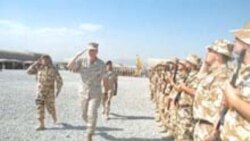
General Jones addresses troops during his visit The NATO-led International Security Assistance Force (ISAF) has completed the deployment of an additional 2,000 troops to support Afghanistan's upcoming parliamentary elections. With a total of 11,000 troops across the country, ISAF is now larger and more widely deployed than it has ever been during nearly four years of UN-backed political reforms known as the Bonn Process. In addition, NATO's top commander says the alliance is now planning for an expanded role that would merge UN-mandated security assistance with U.S.-led combat operations.
Jones completed a two-day visit to Afghanistan yesterday that included security talks with President Hamid Karzai. Jones told reporters after those talks that NATO -- the leader of the UN-mandated International Security Assistance Force (ISAF) in Afghanistan -- already is looking beyond the parliamentary vote.
"Not only will it be concerned with the security of the parliamentary elections that are coming up in September, but it will also be the transitional period in which NATO continues its expanded mission in Afghanistan," Jones said.
The NATO deployments completed this week -- involving troops mostly from Spain, Romania, and the Netherlands -- take the total number of alliance troops in Afghanistan to 11,000. The alliance also has backing from increased air power. Jones said the strength of ISAF should be sufficient to guarantee security in Kabul and in the northern and western regions of Afghanistan that are under NATO's security umbrella.
As with the Afghan presidential election last October, the primary responsibility for security at the polling stations lies with Afghanistan's own security forces -- the Afghan National Army and the Afghan National Police. But Jones said the NATO troops will be close by in the north and west with ground forces and air support if necessary.
A separate contingent of about 20,000 troops -- the U.S.-led combat force on the ground as part of Operation Enduring Freedom -- is in charge of bolstering security in the south and east of Afghanistan, where fighting with Taliban and Al-Qaeda militants continues.
The coalition has launched a series of military offensives in the south and east of the country since the start of spring this year, focusing on Taliban and Al-Qaeda militants who have vowed to disrupt the ballot. Militants have also increased their attacks on coalition troops -- as well as civilian contractors and Afghan election workers, parliamentary candidates, and moderate clerics.
About 1,000 people have been killed in the surge of violence this year. Most have been suspected militants or Afghan civilians, but about 50 U.S. soldiers have died in combat since the spring thaw.
Significantly, Jones said that NATO is now planning for the eventual takeover of those U.S.-led combat operations -- possibly within the next year.
"The North Atlantic Treaty Organization says that Afghanistan is its No. 1 mission. And it remains committed to that statement," Jones said. "It intends to be faithful to that statement by expanding the mission even further during the course of the next year to such a point that Operation Enduring Freedom and ISAF will eventually merge and become one mission. It will bring a new vitality and a new agility to this effort. And Afghanistan will be all the better for it."
Such a move could free up U.S. troops in Afghanistan for deployment to Iraq. But France and Germany have previously expressed doubts about the idea of merging UN-mandated security assistance with U.S.-led combat operations.
NATO spokesman James Appathurai said the issue has been discussed in recent months by defense ministers from NATO countries. The NATO spokesman said the issue will certainly be raised again when alliance defense ministers gather in Berlin in mid-September.
"This meeting does come at a good time to allow ministers to reflect, in a more political way, on some of the very important issues on their agenda," Appathurai said. "For example, they will want to look at the long-term future for NATO in Afghanistan as part of the international community's efforts to support the Karzai government once we have moved beyond what is called the Bonn Process. In other words, once the district and provincial elections have taken place, the international community will want a new approach that will, of course, take into account the issue of narcotics."
Appathurai said no formal decisions will be taken in Berlin because it is an informal meeting meant to allow ministers to discuss their political perspectives.
The European Union also is concerned about the future role of international troops and government aid workers in Afghanistan. EU External Relations Commissioner Benita Ferrero-Waldner said it is "crucial" for the international community to stay engaged in Afghanistan after the elections.
In a statement issued yesterday, Ferrero-Waldner said a new "post-Bonn compact" is needed between Afghanistan and the international community to ensure that both sides maintain their commitments in the years to come.
Ferrero-Waldner is due to meet with Karzai in Kabul next week for talks expected to include the issue of a "post-Bonn" agreement.
(RFE/RL Afghan Service correspondent Freshta Jalalzai contributed to this report from Kabul.)
See also:
"Violence Spiraling As Afghan Elections Near"
"UN Envoy Warns Violence Could Disrupt Afghan Polls"
For in-depth analysis and coverage of Afghanistan's 18 September elections, visit Afghanistan Votes 2005
More News
The Azadi Briefing: Taliban Deals Another Blow To Afghan Media

Welcome to The Azadi Briefing, an RFE/RL newsletter that unpacks the key issues in Afghanistan. To subscribe, click here.
I'm Abubakar Siddique, senior correspondent at RFE/RL's Radio Azadi. Here's what I've been tracking and what I'm keeping an eye on in the days ahead.
The Key Issue
As part of its widening crackdown on the media, the Taliban’s hard-line government has shut down two television stations.
On April 16, the media complaints commission within the Taliban's Information Ministry ordered the immediate suspension of the broadcasts from the Noor and Barya channels.
Commission members said the stations were shut for "violating Afghan and Islamic values and journalistic principles.”
A Taliban court will now decide whether the suspension can be lifted or turned into a permanent ban.
Jamiat-e Islami owns Noor TV, while Hizb-e Islami runs Barya. Both are leading Islamist groups who have opposed the Taliban. These stations ran Islamic programs.
Since it emerged as a ragtag militia in the mid-1990s, the Taliban has opposed and fought against the two groups, which it held responsible for the vicious civil war following the demise of Afghanistan’s pro-Soviet socialist government in 1992.
Why It's Important: The ban is a clear manifestation of the Taliban’s intent to outlaw media that does not conform to its Islamist ideology and worldview.
With the suspension of the stations, the Taliban is indicating that there is no space even for media outlets that are ostensibly Islamic and which cannot be accused of immorality or debauchery.
"This is worrying,” Samia Walizadeh, the head of the Afghanistan Journalists Center (AFJC), an independent media watchdog, told RFE/RL'S Radio Azadi. “The reasons given by the [Taliban] commission for suspending the broadcasts of these two media outlets are unacceptable."
Saddiqullah Tohidi, a press freedom activist, agreed. He said that the Taliban closed the two stations without even bothering to first prove their accusations.
“In a country that lacks a constitution, how can you prove a violation of national interests and Islamic principles?” he asked. “Afghanistan has turned into one of the most censored nations.”
What's Next: The Taliban is forging ahead to create a media environment that only reflects its views and serves its interests.
The extremist Islamist group ultimately aims to replace all journalism with propaganda. It attempts to achieve this by closing or outlawing independent Afghan media and discouraging or banning international press outlets from covering Afghanistan.
Fading international interest in the country provides a more conducive atmosphere for the Taliban to achieve its ideological goals.
What To Keep An Eye On
Statistics issued by the Taliban-led government show a drop in Afghanistan's exports and an increase in imports.
On April 16, the Taliban’s National Statistics and Information Authority released figures showing a nearly 20 percent decline in exports in the first three months of this year -- to $134 million from $176 million during the same period last year.
The country’s imports, however, surged from $694 million during the first quarter of last year to $793 million this year.
A recent World Bank report on the Afghan economy recorded similar trends.
Experts attribute the decline to the Taliban’s tense relations with neighboring Pakistan, which is one of its leading trading partners. Islamabad also provides ports to the landlocked nation.
"Pakistan closed its border crossings while pomegranates and other fruit crops were ready for export," said Khan Jan Alakozai, a senior official of the Afghanistan-Pakistan Joint Chamber of Commerce.
He said coal prices also plummeted in the same period, impacting Afghanistan's export earnings.
Why It's Important: Afghan macroeconomic trends might continue to deteriorate if the Taliban's relations with Pakistan do not improve.
Tehran's ongoing standoff with Israel threatens the alternative import route the Taliban wants to build through Iran.
That's all from me for now. Don't forget to send me any questions, comments, or tips that you have. You can always reach us at azadi.english@rferl.org
Until next time,
Abubakar Siddique
If you enjoyed this briefing and don't want to miss the next edition, subscribe here. It will be sent to your inbox every Friday. You can always reach us at azadi.english@rferl.org
Dozens Dead From Flooding In Pakistan, Afghanistan
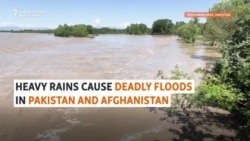

Heavy snowmelt and torrential rains have caused deadly floods around Pakistan's Peshawar and in Afghanistan's Farah Province. Dozens have died, crops were lost, and more than 2,000 homes were damaged or destroyed. The flooding follows an unusually mild winter.
Death Toll Mounts In Afghanistan, Pakistan As Heavy Rains Exacerbate Flash Flooding
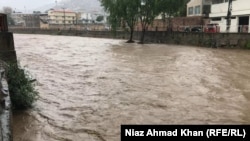
Flash flooding hits Pakistan's Swat Valley as torrential rains continued to fall.
Pakistan and Afghanistan are both struggling with rising rivers and flash flooding that killed nearly 140 people in four days.
The death toll continued to rise in Afghanistan and Pakistan from heavy rains and flash flooding that claimed nearly 140 lives in four days.
- By AFP
Taliban Pulls 2 TV Channels For 'Violating Islamic Values'

Two Afghan television channels have been taken off the airwaves for "violations against Islamic and national values," a spokesman for the Taliban-led government said on April 18. Rights monitors warn that the Taliban authorities have been cracking down on media freedoms since their return to power in 2021 as they enforce an austere vision of Islamist rule. Culture Ministry spokesman Khubaib Ghufran said the Barya and Noor TV channels had been suspended on April 16 for failing to abide by "journalistic principles." "They had programs creating confusion among the public and their owners are abroad," he told AFP. "The media violation commission suspended their operations."
Iran's Afghan Community Worried About Prospect Of War With Israel
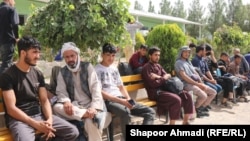
Many in Iran are worried about the prospect of a war with Israel and the possible impact on the country’s faltering economy.
That includes members of Iran’s large community of Afghan refugees and migrants, one of the most vulnerable groups in society.
Experts have warned that a full-scale war is a possibility in the wake of Iran’s unprecedented attack on Israel on April 13.
Afghans in Iran, speaking to RFE/RL’s Radio Azadi, described a wartime atmosphere in Iran since Tehran’s first-ever direct attack against Israel.
They also said the authorities have intensified their crackdown on undocumented Afghans, many of whom fled war, poverty, and persecution in Afghanistan.
"This situation is alarming for all Afghan migrants in Iran," said Omid Poya, an exiled Afghan journalist living in Iran. "Those who don’t have legal documents [to stay in Iran] don’t even leave their houses anymore.”
An Afghan migrant, who spoke on condition of anonymity for fear of retribution, said “Iranian cities are in an emergency-like situation” since the April 13 attack, referring to the deployment of additional law enforcement officers on the streets. This, he said, has “forced many of us to worry about our future.”
An estimated 4.3 million Afghans currently live in Iran, according to the UN. More than 1 million have been deported in the past year as part of Tehran’s plan to expel all undocumented Afghans.
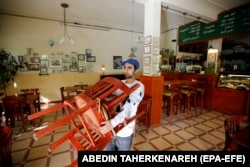
Afghans suffer widespread abuse and discrimination in Iran, where they have often been blamed for insecurity and unemployment.
Life More Difficult
Many Afghans are worried that a possible war between Iran and Israel will worsen the already dire economic situation in the Islamic republic, which has witnessed soaring inflation, rising unemployment, and growing poverty in recent years.
Following Iran’s April 13 attack, the national currency, the rial, plummeted to a new record low against the U.S. dollar.
That has had a direct impact on the livelihoods of Afghans and how much money they can send back to their families in Afghanistan.
"Life has become more difficult after the dollar rose against the Iranian currency," said Azizgul Afghan Beg, an Afghan living in Tehran. "Our main concern is where we will escape if a war breaks out here.”
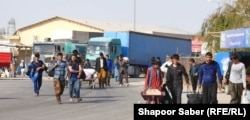
An estimated 70 percent of the estimated 3.6 million Afghans who have fled their homeland after the Taliban seized power in 2021 moved to Iran.
Afghans, including journalists, activists, and former soldiers and police officers, said they fear being forced to flee Iran and return to their homeland.
“Our lives will be in danger," Qadariah Rezaei, said an Afghan rights campaigner residing in Iran. Afghans would pay a “heavy price” if Tehran becomes embroiled in a conflict with Israel, she said.
Other Afghans say they are contemplating returning to Afghanistan.
"It is better to return to our homeland because of the mounting worries over war and the sharp slump in employment,” said Shamsul Rahman, an Afghan living in the southeastern city of Kerman.
Written by Abubakar Siddique based on reporting by RFE/RL’s Radio Azadi.
- By AFP
70 killed As Afghanistan Hit By Heavy Rains
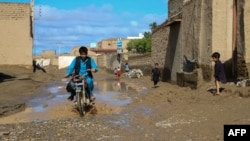
Around 70 people have been killed by heavy rains lashing Afghanistan over the past five days, the government's disaster management department said on April 17. Afghanistan was parched by an unusually dry winter, which desiccated the earth, exacerbating flash flooding caused by spring downpours in most provinces. Disaster management spokesman Janan Sayeq said "approximately 70 people lost their lives" as a result of rains between April 13 and April 17.
Flash Flooding Kills At Least 33 People In Kabul, Other Afghan Regions
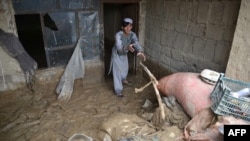
Flash flooding caused by heavy rains has destroyed hundreds of homes and killed at least 33 people over the past three days in the Afghan capital, Kabul, and across the country, the de facto Taliban rulers said on April 14. "Unfortunately, 33 people have been martyred and 27 injured as a result of the floods, while approximately 606 houses have been destroyed in villages," Taliban spokesman Mullah Janan Sayiq said. A resident of the village of Bast in Helmand Province who did not want to be identified told RFE/RL that "the floods have destroyed our agricultural lands and houses, our animals have been destroyed. Our area is between two rivers." To read the original story by RFE/RL’s Radio Azadi, click here.
- By Omid Marzban and
- Michael Scollon
Facebook Restrictions The 'Last Nail In The Coffin' For Free Speech In Afghanistan

Facebook users in Afghanistan fear the Taliban's plans to block or restrict access to the popular social-media platform will deal a death blow to what is left of free speech in the country.
It is unclear what exactly the "finalized" policy announced last week will entail or how it will be implemented and enforced, but Afghans are bracing for the worst-case scenario.
"This is really the last nail in the coffin of freedom of speech," Fatema, a Facebook user in Afghanistan, told RFE/RL's Radio Azadi.
"Facebook was the only source where most of the news that is censored in the Afghan domestic media was published without censorship," she said, providing only her first name due to fear of retribution from the Taliban's hard-line Islamist government.
In announcing the impending move to counter what it called the distracting influence of social media, the Taliban cited the need for young people to focus on their education.
"Our youth are in a situation where they are academically weak and the majority of them are illiterate, yet they continue to waste their time and spend money on these things to the benefit of the company and the detriment of the nation," Najibullah Haqqani, the Taliban's minister of telecommunications and information, said in an interview with the private Tolo News channel on April 6.
Facebook has emerged as a major social-media platform in Afghanistan, with an estimated 4.5 million users in the country of some 40 million people. Many rely on Facebook for unfiltered information and, particularly for women and girls, to continue their pursuit of an education denied to them by the Taliban.
WATCH: Two exiled Afghan women have told RFE/RL that the Taliban appears to be further tightening restrictions on women and girls in Afghanistan.
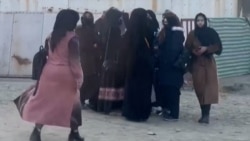
Media watchdogs say that any effort to curtail access to Facebook would have a devastating effect in an already heavily censored media landscape.
"The Taliban's plan to restrict or block access to Facebook would be a further blow to freedom of information in Afghanistan," Beh Lih Yi, Asia program coordinator for the Committee to Protect Journalists (CPJ), said in a statement. "Social-media platforms, including Facebook, have helped to fill a void left by the decline of the Afghan media industry since the Taliban's August 2021 takeover and the ensuing crackdown on press freedom."
The CPJ statement said that when questioned, Taliban spokesman Zabihullah Mujahid told the U.S.-based media watchdog that "Facebook will not be banned, but restrictions will be imposed on it."
In any event, the CPJ said, the proposal "highlights the worsening censorship by the Taliban."
The Taliban's Telecommunications and Information Technology Ministry did not respond to questions from Radio Azadi asking for specifics about the new policy and when it will come into force.
Since regaining power, the Taliban has reversed the free-media gains that were made after the first Taliban regime was ousted by the U.S.-led invasion in 2001.
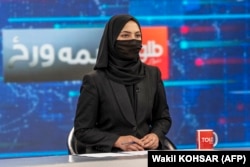
Despite its early promises to protect the independent media, the Taliban has waged a violent crackdown on dissent. Television and radio stations have encountered sustained pressure to end entertainment and educational programming that does not fit with the hard-line leadership's strict interpretation of Islamic law. Female television presenters are required to wear face masks on air and are barred from conducting interviews with male government officials or from participating in press conferences without a male chaperone.
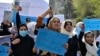
Women and girls have meanwhile seen their access to education severely impeded, again despite the Taliban's early pledges. Girls are not allowed to attend school past the sixth grade, while women have been banned from going to university.
Female teachers are barred from teaching male students, and encounter difficulties leaving their homes for work at all due to the Taliban's restrictions on women being in public without a male escort.
With many teachers and journalists fleeing the country due to the obstacles to their work, many Afghans turned to inclusive radio and television programs that provided students a lifeline to continue their studies and for unrestricted media and discussion of social issues. Facebook, by providing access to outside news and educational courses often catered to women and girls, became a crucial tool.
The Taliban has already taken steps to curtail traditional media from continuing with such programming. In February, for example, police in the eastern Khost Province banned girls from contacting local radio and television stations and warned such outlets against taking calls from girls.

The Taliban cited the potential for such outreach to promote "inappropriate behavior" among audiences as justification for the move, which was enforced with warnings of punishment and shutdowns against media that did not comply.
Now the Taliban appears to have focused its attention on Facebook, which hosts a wealth of pages dedicated to women's rights and education, Afghan news and society, and allows for discourse among users.
Spozhmai Gharani, a Facebook user, said the social-media platform is one of the few ways for Afghan girls to continue their education, and "should not be shut down."
Homa Rajabi, from Kabul, said that without the ability to share views and collect information on Facebook, life in Afghanistan "will become more limited and narrow."
Kamal Sadat, who served as a deputy minister of information and culture in the previous, Western-backed government, told Radio Azadi that any restrictions on Facebook would be a "strong blow to freedom of expression."
The move, he said, would cut the Afghan people off from a crucial and increasingly rare way to "express their voices to the world, Afghan authorities, and international organizations."
Facebook has blacklisted the Taliban for years, and since the militant group took power in 2021, the platform has reportedly maintained a loose ban on Taliban content. References and posts that promote the Taliban are removed, while official Taliban posts that serve the public good, such as the de facto Health Ministry's directives related to natural disasters, have been allowed.
Asif Ashna, a frequent critic of the Taliban's unrecognized government, took to a social-media platform that the Taliban itself relies on heavily to promote itself to air his criticism of the new policy. Ashna suggested that the Taliban may have targeted Facebook in retaliation for restrictions the U.S.-based social-media company has placed on its content.
"Why is this ignorant group hostile to Facebook?" Ashna asked in a post that included a clip of Haqqani's Tolo News appearance. "The bottom line is that Facebook has blocked thousands of official and pseudonymous accounts related to the Taliban and put this group on its blacklist."
"Now the Taliban has decided to do the same thing to Facebook," Ashna wrote. "The rest of the arguments [made by the Taliban for targeting Facebook] are bullshit."
Whether the Taliban can actually succeed in banning or curtailing Facebook is open to debate.
Experts say that the Taliban does not have the technological infrastructure in place to cut Afghanistan off from the global Internet and force its citizens to use a domestically designed "intranet," as Iran and China have attempted to do.
"No, never. They cannot do that," Jamil Nematyar, a cybersecurity expert who worked for the former Afghan government told Radio Azadi in a video interview. "It is not possible for them. The existing infrastructure is not capable of this."
Instead, Nematyar and other experts say the Taliban must rely on pressuring private companies to enforce any policy decisions or laws that would target Facebook.
The Taliban's control over the country's telecommunications infrastructure does give its government leverage in this regard by forcing mobile telecoms operators or Internet service providers (ISPs) to block specific websites, and by filtering the domain name system (DNS) that determines specific Internet protocol (IP) addresses.
"It is common to use the worldwide web to control the flow of information" in Afghanistan, Agha Malok Sahar, founder of Darrak, a GPS tracking and software company that works in Afghanistan, told Radio Azadi.
There is precedent for banning foreign news outlets in the country, including the websites of Radio Azadi, the Afghan service of the congressionally funded RFE/RL. But as CPJ notes, the Facebook pages of Radio Azadi and other foreign news outlets such as Britain's BBC and Germany's Deutsche Welle are still accessible to readers inside the country despite being officially banned.
Sahar said that in the event of a complete ban, the Taliban authorities could also go after individuals and media outlets that are active on Facebook by "monitoring their activities, potentially harassing or penalizing them."
Such an approach, Sahar said, could "involve arrests or other forms of intimidation to discourage the use of Facebook" and be accompanied by Taliban propaganda efforts "to discredit these outlets or individuals."
But restricting or outright banning Facebook would be a tough task for the Taliban. "This would be a difficult law to actually enforce," Darren Linvill, co-director of the U.S. Clemson University's Media Forensics Hub, told RFE/RL in written comments.
"There are a large range of ways individuals have to skirt such restrictions. Any teenager can learn to pretend their computer is somewhere in the EU so that they can get different options out of Netflix," he said. "China has difficulty enforcing the Great Firewall. I'm sure Afghanistan would face similar problems."
Elsewhere around the world, people have found a workaround to local restrictions by using virtual private networks (VPNs) that allow users to mask the area or country they are in.
Ultimately, Nematyar said, "people will go to VPNs and it will make more headaches for the nation and the current regime" in Afghanistan.
"Facebook will be working, through VPNs," Nematyar said, although Afghans' use of the social-media platform might be closely followed by the Taliban authorities.
Written by Michael Scollon based on reporting by RFE/RL's Radio Azadi
Little Cheer As Afghans Mark Eid Under Taliban Rule
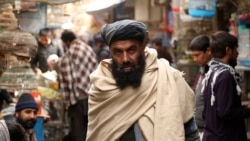
The Muslim festival of Eid Al-Fitr passed peacefully but with few celebrations in the Afghan capital, Kabul. Extra security was in place at mosques and parks, but shopkeepers reported business remained stagnant. The United Nations estimates the Afghan economy has shrunk 27 percent since the Taliban retook power in 2021, with unemployment doubling.
RFE/RL Freelance Journalist Attacked By Armed Men In Islamabad

Ahmad Hanayesh, a freelance journalist for RFE/RL's Radio Azadi, sustained injuries in an attack by unknown gunmen in Islamabad on April 3. Pakistani police said that they are investigating the incident. One of Hanayesh's relatives told Radio Azadi that three armed men on a motorcycle attacked the Afghan national as he was returning home from a walk in the Pakistani capital. Hanayesh, who is in stable condition, worked as a reporter with Radio Azadi for several years before leaving the country for neighboring Pakistan, where he has since worked as a freelance journalist. To read the original story by RFE/RL's Radio Azadi, click here.
Could Taliban Canal Spark Water War In Central Asia?
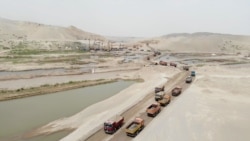
The Taliban-led government is pushing forward with the ambitious Qosh Tepa canal project despite concerns over its impact. The waterway taps the Amu Darya River, a key water source that runs through Afghanistan and Central Asia. While Afghan farmers await a potential agricultural boon, neighboring states Uzbekistan and Turkmenistan have expressed concern over possible damage to water security and farming in the area.
Amnesty International Calls On Pakistan To Stop Expelling Afghan Girls And Women
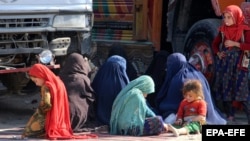
Amnesty International has urged Pakistan to halt expelling hundreds of thousands of Afghan girls and women to neighboring Afghanistan.
“The deportation of Afghan refugees from Pakistan will put women and girls at unique risk,” Amnesty's South Asia Office wrote on X, formerly Twitter, on March 27.
The global rights watchdog's plea comes ahead of the beginning of a new phase of the expulsion of Afghan refugees from neighboring Pakistan. Islamabad plans to force some 850,000 documented Afghan refugees back to their country next month if they don't leave voluntarily.

Since October, Pakistan has already expelled more than 500,000 Afghans who lacked proper documents to stay in the country.
“Forced returns seriously curtail their rights to education, work, movement, and in some cases, expose them to imminent threat of violence,” Amnesty said.
“The Government of Pakistan must halt all deportations and take affirmative measures to ensure the safety of refugee women and girls,” it added.
After returning to power in August 2021, the Taliban’s ultraconservative Islamist government n Afghanistan has banned teenage girls and women from education. It also prohibited women from employment in most sectors.
Afghan women must also wear a niqab -- a strict head-to-toe veil -- in public. Taliban restrictions have severely curtailed women’s mobility by requiring them to be accompanied by a male chaperone outside their homes. Women are also banned from leisure activities, including visits to parks.
“Women and girls will experience serious repression of their rights to education, work, freedom of movement and more if deported,” Amnesty said.
The new warning comes two days after Amnesty called in a new report on Islamabad to reverse forced expulsions of all Afghans.
The report, Pakistan: Human Rights Charter, issued on March 25, asked Islamabad to protect all at-risk "refugees in compliance with Pakistan obligations under the principle of non-refoulement."
Non-refoulement is a fundamental principle of international law that prohibits a state from returning asylum seekers to a country where they would face persecution based on their race, religion, nationality, membership of a particular social group, or political opinion.
Pakistan lacks a domestic law that offers a path to refugee status. It is not a signatory to the 1951 UN Convention Relating to the Status of Refugees or the 1967 protocol intended to remove constraints on who can be considered a refugee.
From Offshoot To 'Spearhead': The Rise Of IS-K, Islamic State's Afghanistan Branch
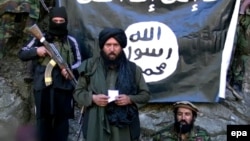
Since its emergence a decade ago, the Islamic State-Khorasan (IS-K) militant group has largely focused its attacks on Afghanistan and Pakistan.
But IS-K, the Afghanistan branch of Islamic State (IS), has carried out an increasing number of mass-casualty attacks outside its stronghold in South Asia in recent years, including in Iran and Russia.
Experts say the deadly attack on a concert venue outside Moscow on March 22, which was widely blamed on IS-K, shows the affiliate’s growing capabilities and ambitions, as well as its leading role in the umbrella organization.
“This branch has become the spearhead, the leading internationally minded branch of the Islamic State,” said Lucas Webber, co-founder and editor of MilitantWire.com.
Webber said IS’s central leadership in Syria and Iraq has had to “focus more on survival, regrouping, and reconstituting its capabilities and its networks” after the group was largely defeated and dismantled by a U.S.-led coalition in 2019.
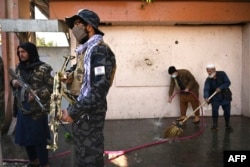
“It’s essentially become the parent organization of the IS franchise,” said Webber, referring to IS-K, which first appeared in Afghanistan in late 2014, the same year that IS seized large swaths of Syria and Iraq and declared a self-styled caliphate.
IS also has branches in the Arabian Peninsula, Africa, Southeast Asia, and the Caucasus.
External Operations
As well as continuing to carry out attacks in Afghanistan and Pakistan, IS-K appears to have shifted its focus to external operations in recent months.
In January, IS-K was blamed for killing more than 90 people in Iran’s southern city of Kerman, the deadliest attack in the Islamic republic in decades.
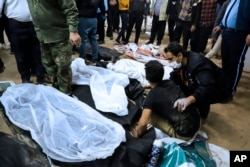
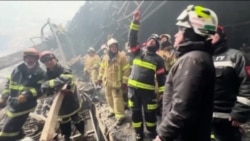
On March 22, gunmen stormed the Crocus City Hall concert venue in the Moscow region, killing at least 139 people, in Russia’s worst terrorist violence in two decades.
IS claimed responsibility for the attack. U.S. officials specifically blamed IS-K, while Moscow attributed the attack to Islamic extremists without mentioning the IS affiliate.
IS-K on March 25 threatened to carry out more “massacres” against Russia. Moscow has targeted IS militants in Syria and Africa and forged ties with the Taliban government, a fierce rival of IS-K in Afghanistan.
Webber of MilitantWire.com said IS-K poses a rapidly growing threat to the West. “For the foreseeable future, this seems to be an indication of things to come,” he said.
General Michael E. Kurilla, head of the U.S. military’s Central Command, told lawmakers on March 21 that IS-K “retains the capability and the will to attack U.S. and Western interests abroad in as little as six months with little to no warning.”
Law enforcement in Europe have uncovered several IS-K plots in recent years.
German police on March 19 said they had arrested two suspected IS-K supporters. They were accused of plotting to attack the Swedish parliament.
In July, police in Germany and the Netherlands arrested nine people who they said were in contact with IS-K.
During the past year, the group has threatened to carry out attacks in Sweden, the Netherlands, and Denmark after cases of Koran burnings in those countries.
'Loose Network Of Cells'
After its emergence, IS-K initially captured small pockets of territory in eastern and northern Afghanistan as part of IS’s broader aim of expansion throughout South and Central Asia.
But IS-K was driven out from its territorial strongholds around 2019 after coming under increasing fire from Afghan and international forces as well as the Taliban. Since then, IS-K has embarked on a new strategy of urban warfare.
“We are witnessing a new phase of the Islamic State-Khorasan,” said Riccardo Valle, the co-founder of The Khorasan Diary, an online platform that tracks militant groups in Afghanistan and Pakistan.
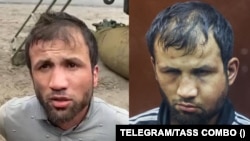
Before-And-After Images Suggest Severe Abuse Of Moscow Terror Suspects
He said IS-K has evolved from a group aiming to seize territory like a “traditional army” to a “loose network of cells, which tends to carry out more lethal attacks.”
IS-K is made up of Afghan and foreign fighters. In a report published in June 2023, the UN Security Council said the number of IS-K militants in Afghanistan ranged “from 4,000 to 6,000,” including family members. Some experts estimate that the number is much lower.
Sara Harmouch, a terrorism and defense policy expert in Washington, said IS-K’s focus on asymmetric warfare instead of territorial control has enabled the group to adapt to local conditions and withstand counterterrorism operations.
“This flexibility could make IS-K a more dynamic and resilient leader within the IS network, capable of navigating post-caliphate era complexities,” she said.
Harmouch said IS-K’s ability to carry out high-profile attacks outside Afghanistan and Pakistan has raised its profile and indicated its expanding capabilities.
“This visibility could position IS-K as a leading figure within the broader IS network, especially in attracting recruits and resources,” she said.
- By Frud Bezhan
Explainer: What Is Islamic State-Khorasan, The Group Blamed For The Moscow Concert Attack?
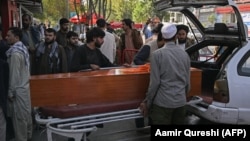
Scores of people were killed after gunmen stormed a concert venue in the Moscow region in what was the deadliest attack in Russia in decades.
The March 22 attack was claimed by the Islamic State (IS) militant group. U.S. officials said a regional branch of IS -- Islamic State-Khorasan (IS-K) -- was behind the incident.
Based in Afghanistan, IS-K has previously targeted the Russian Embassy in Kabul and threatened to carry out attacks inside Russia.
When Did IS-K First Emerge?
IS-K was founded in Afghanistan in late 2014, the same year that IS overran large swaths of Iraq and Syria and declared a self-styled caliphate, or a state governed by Islamic law. IS was later defeated by a U.S.-led coalition.
IS-K initially captured small pockets of territory in eastern and northern Afghanistan as part of IS’s broader aim of expansion throughout South and Central Asia. Khorasan refers to a historical region that comprised parts of modern-day Afghanistan, Iran, and Central Asia.
But IS-K began withdrawing from its territorial strongholds in Afghanistan around 2019 after coming under increasing fire from Afghan and foreign forces as well as the Taliban, a rival militant group. IS-K then embarked on a new strategy of urban warfare.
Where Are IS-K Fighters From?
IS-K was founded by disgruntled members of the Afghan Taliban, the Tehrik-e Taliban Pakistan, and Al-Qaeda who declared allegiance to IS.
Over the years, IS-K’s ranks have been further boosted by local recruits and foreign fighters, particularly those from the former Soviet republics of Central Asia.

In a report published in June 2023, the UN Security Council said IS-K fighters included citizens of Pakistan, Iran, Azerbaijan, Turkey, Russia, Tajikistan, Uzbekistan, and a small number of Arab fighters from Syria who had traveled to Afghanistan.
The UN Security Council said the number of IS-K militants in Afghanistan ranges “from 4,000 to 6,000,” including family members. Some experts estimate that the number is much lower.
What Attacks Has IS-K Carried Out?
IS-K has carried out attacks against Afghan and international forces as well as the Taliban. It has also targeted Afghanistan’s religious minorities.
The group carried out one of its most high-profile attacks -- the killing of 170 Afghan civilians and 13 members of the U.S. military at Kabul's international airport -- in August 2021 as foreign troops pulled out of Afghanistan.
After the Taliban seized power that month, IS-K has since targeted Taliban officials, foreign nationals and embassies, Afghanistan's Shi’a Hazara community, and others it considers incompatible with its own extreme interpretation of Islam.
On March 21, IS-K claimed responsibility for an attack outside a bank in Afghanistan’s southern city of Kandahar that killed at least 21 people, most of them Taliban employees.
The group has also launched cross-border attacks. In January, IS-K was blamed for killing more than 90 people in Iran’s southern city of Kerman, the deadliest attack in the Islamic republic in decades.
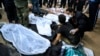
Experts said IS-K has remained a resilient force despite hundreds of its fighters being arrested or killed by the Taliban since 2021.
“IS-K is probably the most active and potent of all of the regional affiliates of Islamic State today,” said Michael Kugelman, the director of the South Asia Institute at the Wilson’s Center in Washington.
Why Would IS-K Attack Russia?
In September 2022, IS-K claimed responsibility for a suicide bombing outside the Russian Embassy in Kabul that killed at least six people, including two employees of the embassy.
The attack did not surprise observers, who said IS had long threatened to carry out attacks inside Russia.

Lucas Webber, co-founder and editor of MilitantWire.com, said IS had named Russia alongside the United States early on as a primary enemy.
“This was only intensified in 2015 when Russia intervened militarily in Syria to support the government,” he said, referring to Moscow’s backing of President Bashar al-Assad in the Syrian civil war.
“And it continued to intensify after Russia's various military and private military contractor interventions across Africa,” during which IS fighters were targeted, he added.
Experts said Moscow’s support of the Taliban could have also motivated the attack.
Russia, like the rest of the international community, does not recognize the Taliban government and officially considers the hard-line Islamist group to be a terrorist organization. But Moscow on multiple occasions has hosted Taliban officials and maintained an embassy in Kabul.
Reid Standish and Neil Bowdler contributed to this report.
Taliban Strongly Condemns Moscow Concert Hall Attack
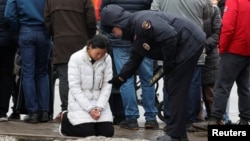
Afghanistan's Taliban rulers have issued a stark condemnation of the March 22 attack on a Moscow concert venue that left at least 115 dead and wounded more than 100 others. The Taliban Foreign Ministry "condemns in the strongest terms the recent terrorist attack in Moscow... claimed by Daesh & considers it a blatant violation of all human standards," ministry spokesman Abdul Qahar Balkhi wrote on X, formerly Twitter, referring to the Islamic State (IS) extremist organization by its Arabic acronym. IS has staged frequent attacks in Afghanistan since the return of the Taliban to power in 2021. On March 21, IS claimed an attack that killed 19 Taliban employees outside a bank in Kandahar. To read the original story by RFE/RL's Radio Azadi, click here.
Pakistan Threatens To Close Vital Afghan Trade Corridor With India
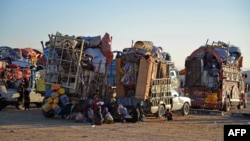
Amid escalating tensions between Islamabad and Kabul, Pakistan's defense minister has warned Afghanistan's Taliban rulers that his country could block a corridor it provides to allow trade with India.
Khwaja Asif said that Islamabad could block access to its western neighbor Afghanistan through its territory that allows goods to flow into its eastern neighbor India if the Taliban government fails to rein in the Pakistani Taliban, formally known as the Tehrik-e Taliban Pakistan (TTP).
"If Afghanistan treats us like an enemy, then why should we give them a trade corridor?" Asif told Voice of America on March 20.
Tensions between Islamabad and Kabul are running high after the Taliban said it retaliated against Pakistani air strikes that killed eight people, including two children, on March 18. Over the past two decades, Islamabad has repeatedly closed trade routes and border crossings with Afghanistan to pressure Kabul whenever tensions spiked in their bilateral relations.
Islamabad said it targeted a hideout of the TTP, which it blames for mounting attacks on its forces. Pakistan says the TTP is using the Afghan side of the mountainous border region to launch such strikes.
The corridor allowing goods to flow between Afghanistan and India has become an important economic pillar for Kabul.
According to the World Bank, Kabul's trade with India increased 43 percent to $570 million last year, while its trade with Islamabad has shrunk from more than $4 billion a decade ago to less than $1 billion.
Given the growing importance of the corridor, threats of a possible blockade was met with anger and resentment in Afghanistan.
"Their policy has always been harmful to Afghanistan," Ahmad Khan Ander, an Afghan military expert, told RFE/RL's Radio Azadi. "[Pakistan] has never been a friend of Afghanistan."
Ghaus Janbaz, an international relations expert, told Radio Azadi that Islamabad wants to shift the blame to Afghanistan instead of focusing on its domestic crises.
"[The Pakistani government] wants to show that the violence is coming from elsewhere, when all the violence is coming from within Pakistan," he said.
As part of pressuring the Taliban, Pakistan is set to force some 850,000 documented Afghan refugees back to their country next month if they don't leave voluntarily.
According to reports in Pakistani media, the expulsions, the latest in an ongoing campaign of forced deportations, are scheduled to begin on April 15.
The Azadi Briefing: Deadly Bombing In Taliban's De Facto Capital Deals A Blow To Militants
Welcome to The Azadi Briefing, an RFE/RL newsletter that unpacks the key issues in Afghanistan. To subscribe, click here.
I'm Abubakar Siddique, senior correspondent at RFE/RL's Radio Azadi. Here's what I've been tracking and what I'm keeping an eye on in the days ahead.
The Key Issue
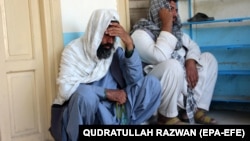
A deadly suicide bombing struck Afghanistan’s southern city of Kandahar on March 21.
The attack outside a bank killed at least 21 people and wounded around a dozen others, hospital sources in the city told RFE/RL's Radio Azadi. Taliban officials put the death toll at three.
The Islamic State-Khorasan (IS-K) extremist group, a rival of the Taliban, claimed responsibility for the attack.
Many of the victims appeared to be people queuing outside a branch of the New Kabul Bank in central Kandahar to collect their salaries.
Why It’s Important: The high-profile attack undermined the Taliban’s claim that it has restored security in Afghanistan since seizing power in 2021.
“Such acts also took place under the previous government and it was a disaster,” said Gul Ahmad, whose brother was killed in the attack, referring to the Western-backed Afghan government.
“Now similar attacks happen, too. I request and I beg the current [Taliban] government to bring security to the country,” Ahmad told Radio Azadi.
That IS-K managed to carry out a major assault in the heart of Kandahar, the de facto capital of the Taliban government, is also a blow. The Taliban’s spiritual leader, Mullah Haibatullah Akhundzada, is based in the city.
The suicide bombing has also highlighted the enduring threat posed by IS-K, which continues to carry out attacks against the Taliban and religious minorities.
What's Next: The Taliban is likely to continue to be the target of attacks by IS-K as well as several resistance groups that have waged a low-level insurgency against it.
IS-K has been weakened by years of fighting with the Taliban, but it poses the biggest threat to its rival.
What To Keep An Eye On
The new school year officially began in Afghanistan on March 21. It is the third school year in a row that teenage girls were barred from returning to their classes.
Many girls across Afghanistan lamented the education ban on girls above the sixth grade, which was imposed in March 2022.
Niayesh, who was in the eighth grade when the Taliban seized power, said she is dismayed at the ongoing ban.
"I'm disappointed," Niayesh told Radio Azadi. “I still want to go to school just like my brother.”
Bahar, who is now in the sixth grade, expressed optimism. “I hope all schools will open so that we can study until the 12th grade," she said.
Why It's Important: The Taliban appears unlikely to reverse its restrictions on female education, despite condemnation inside and outside Afghanistan.
The Taliban’s repressive policies have threatened to make its government an international pariah.
The militant group is unlikely to gain international recognition without reversing some of its most draconian policies, including its ban on teenage girls attending school and women going to university.
That's all from me for now. Don't forget to send me any questions, comments, or tips that you have. You can always reach us at azadi.english@rferl.org
Until next time,
Abubakar Siddique
Please note that the next newsletter will be issued on April 19.
If you enjoyed this briefing and don't want to miss the next edition, subscribe here. It will be sent to your inbox every Friday. You can always reach us at azadi.english@rferl.org.
Deadly Suicide Bombing Strikes Outside Bank In Kandahar As Taliban Employees Wait For Pay
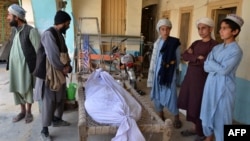
A suicide bomber detonated his explosive belt outside a bank in the Afghan city of Kandahar early on March 21 as Taliban employees waited for their salaries.
The bombing, later claimed by the Islamic State (IS) extremist group, killed 19 people, according to a source who spoke to RFE/RL on condition of anonymity.
The source at Kandahar's Mirwais Hospital said the bodies of 19 people were transported to the hospital from the scene along with 18 people who were injured.
Another source quoted by the AFP news agency said 20 people had been killed. That source also spoke on condition of anonymity, citing fear of reprisal for speaking to the media.
A statement from the Taliban-led government's police headquarters in Kandahar said three had been killed in the incident and 13 were injured.
Inamullah Samangani, the director of information and culture for Kandahar Province, said that the situation at one of the city's hospitals where the wounded were transported was under control, denying that there was an urgent need for blood donations.
"There is no such issue, and the wounded people are not in serious condition, they have superficial injuries," he said in a message to journalists quoted by AFP.
The bombing took place around 8 a.m. local time as people employed by the Taliban gathered outside a local branch of the New Kabul Bank to collect their salaries, reports said.
Mullah Asadullah Jamshid, the spokesman of the Taliban's police headquarters in Kandahar, said most of the victims were civilians who were waiting to receive their pay.
An IS fighter "detonated his explosive belt" near a bank in Kandahar city, said a statement from the militant group's Amaq news agency on Telegram. The statement also made reference to a "gathering of the Taliban militia."
One of the dead, Khalil Ahmad, a father of eight in his 40s, had gone to the bank to get his salary, said his nephew, Mohammad Shafiq Saraaj.
"We beg for security to be properly maintained in the country and especially in crowded places, and that our nation be saved from this kind of tragedy," Saraaj was quoted by AFP as saying.
Taliban Interior Ministry spokesman Abdul Mateen Qani told AFP that an investigation had been launched and that "the criminals will be identified...and punished for their actions."
The number of random bombings and suicide attacks in Afghanistan has declined since the Taliban seized power in August 2021, but multiple explosions have been reported since the start of the Muslim holy month of Ramadan on March 11 as the regional chapter of IS and other armed groups remain a threat.
The U.S. Charge d'Affaires for Afghanistan, Karen Decker, condemned the bombing at the bank as a "cowardly act" in statement on X, formerly Twitter, and offered condolences to the victims' families.
"Afghans should be able to observe Ramadan peacefully and without fear," she said.
With reporting by AFP
Pakistan's Campaign To Expel Millions Of Afghan Refugees Enters Second Phase
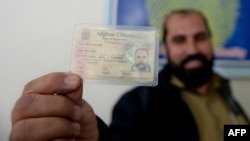
Pakistan is set to force some 850,000 documented Afghan refugees back to their country next month if they don't leave voluntarily.
According to reports in Pakistani media, the expulsions, the latest in an ongoing campaign of forced deportations, are scheduled to begin on April 15.
The News, an English-language daily, reported that Afghans holding an Afghan Citizen Card (ACC), an ID card issued by the Pakistani government, will be first asked to voluntarily leave the country.
“Later, they will be arrested and deported,” the report said.
Islamabad is calling this the second phase of its move to force more than 3 million documented and undocumented Afghans out of the country. Since October, it has expelled more than 500,000 Afghans who lacked proper documentation to stay in Pakistan.
“This new step will force Afghans to face danger and fear," lawyer Muniza Kakar told RFE/RL's Radio Azadi.
Kakar, a lawyer who has voluntarily represented Afghan refugees arrested in the Pakistani city of Karachi, says the campaign aims to expel more than 850,000 ACC-holding Afghans from the South Asian nation.
"When the expulsions begin, they will not discriminate between Afghans holding ACC cards and those holding valid visas,” she said.
Widespread abuses marred Pakistan's earlier expulsions. Afghans complained of police and other authorities pressuring them for bribes. Many said they were robbed or were expelled despite holding documents that proved that their stay in Pakistan was legal.
“Urgent action is needed to protect the lives and rights of refugees,” Muniza said.
She shared a government document on X, formerly Twitter, that asks the provincial authorities in the southern province of Sindh, where Karachi is the capital, to complete their respective “mapping and repatriation plans” by March 25.
"Unfortunately, the Pakistani government’s campaign against Afghan refugees has upended our lives," said Suraya Sadat. "When outside, we always fear being arrested."
Samira Hamidi, a campaigner for global human rights watchdog Amnesty International, questioned why Islamabad is going after Afghan refugees given the situation in Afghanistan.
“Most of these refugees fled Afghanistan fearing persecution of the Taliban,” she wrote on X. "Such mapping and any further decision will expose them to great risk.”
The new plan for exclusions comes after Afghanistan’s Taliban government shelled a Pakistani military installation on March 20. The Taliban said that the attacks were a retaliation for Pakistani air strikes that killed women and children in two southeastern Afghan provinces.
Pakistan said the attacks targeted members of the Tehrik-e Taliban Pakistan, which Islamabad says is sheltering in Afghanistan. Islamabad blames the group for violent attacks on its security forces.
Swedish Aid Group Suspends Afghanistan Operations After Taliban Order
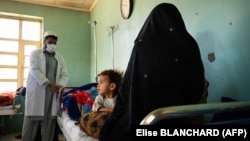
The Swedish Committee for Afghanistan (SCA), one of the country's oldest and largest international aid groups, has suspended activities in Afghanistan following a decree issue by the Taliban that provides for the suspension of all of "Sweden's activities" in the country following the burning of copies of the Koran in Stockholm in June.*
"We are extremely saddened by the current situation and the effects our suspension will have on the millions of people who have benefitted from our services over the past four decades," the organization said in a statement on March 19.
The SCA said it suspended its operations only after the decree called for a halt in all Swedish activities in Afghanistan and that its license was not revoked.
"We strongly condemn and distance ourselves from these acts," the statement said, referring to the June incident.
"Desecration of the Holy Koran is an insult to all Muslims around the world who hold this sacred text dear to their hearts, and it constitutes a flagrant attack on the Islamic faith," it said.
Every year, nearly 3 million Afghans residing in 16 provinces benefit from the SCA's projects in health care, education, and disability and livelihood support.
"We are also gravely concerned about the future of our nearly 7,000 Afghan employees across 16 provinces," the SCA said.
"Many of them are the sole breadwinners of their families and if they lose their jobs, thousands of families will suffer," the organization added.
The closure of the SCA has disappointed Afghans across the country because it was seen as a leading example of how best to work with Afghan communities.
"All these activities were effective in healing our nation's pain," an Afghan aid worker who requested anonymity told RFE/RL's Radio Azadi.
"While our people face starvation and don't have enough food and water, they are closing such humanitarian organizations," he added.
An SCA employee in the southeastern Ghazni Province told Radio Azadi that the closure of the group's operations was wreaking havoc on the daily lives of Aghanistan's most vulnerable.
"Our hospital was helping more than 200 disabled people daily," he said.
"Now hundreds wait outside the hospital's gates with no prospects of it reopening soon."
In the northern Balkh Province, another employee said that closing an education training institute was a further blow to the region.
"Our people are grappling with monumental problems," he told Radio Azadi. The SCA employees interviewed sought anonymity because they said they were not authorized to speak to the media.
The SCA was founded as a nongovernmental organization in 1980. It first supported millions of Afghan refugees in neighboring Pakistan who had fled the Soviet invasion of Afghanistan.
From a small office in northwestern Pakistan, it established health clinics inside Afghanistan in 1982. In the 1990s, it moved into Afghanistan and provided lifesaving health care and education to millions of Afghans. Various Western donors have supported its projects.
*CORRECTION: This story has been amended to reflect that the Swedish Committee for Afghanistan's operations were suspended because of a Taliban decree and not as a result of its license being revoked. It also clarifies that the group established health clinics in Afghanistan in the 1980s from its office in Pakistan.
Afghans Pushed Out, Fenced In By Once-Accommodating Neighbors
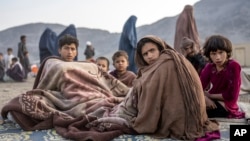
Afghans are being pushed back, fenced out, and left to fend for themselves in the face of Taliban persecution and widespread hunger.
Hundreds of thousands of undocumented Afghans have been kicked out of neighboring countries and forcibly returned to Afghanistan in recent months. Millions more are slated to join them, complicating the already daunting humanitarian effort to stave off a famine.
Underscoring that Afghans are not welcome, neighboring states are rolling out the barbed wire in an attempt to keep them out.
Returnee Overload
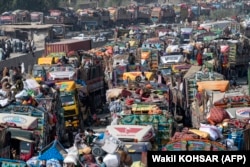
Over the course of a year, a total of 1.5 million Afghans have been forcibly returned to Afghanistan by various countries, the Taliban said earlier this month.
Most, according to migration officials, were sent back by Pakistan, Iran, and Turkey -- for decades destinations for Afghan migrant workers as well as refugees looking to escape war and poverty. Others have been sent back from Tajikistan and Uzbekistan.
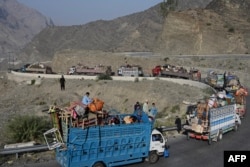
That number could more than double if Iran and Pakistan fully carry out their goals of deporting all undocumented Afghans, including asylum-seekers who face persecution under the Taliban and some who have not lived in their home country for decades or were born abroad.
Pakistan was initially accommodating to Afghans fleeing Taliban rule, serving as a temporary destination for many as they sought asylum in a third country.
But since October 2023, when Islamabad announced its plans to expel more than 1.7 million "undocumented foreigners," more than a half million Afghans have been forced to leave Pakistan, Abdulmatallab Haqqani, spokesman for the Taliban’s Refugees and Repatriations Ministry, said this week.
Some of the new arrivals are now trying to resettle in a homeland they have never stepped foot in, and most are being held in temporary tent camps set up along Afghanistan's eastern border with Pakistan, where aid groups are struggling to provide them with emergency relief.

More than half of Afghanistan's population of around 40 million faces a food security crisis that is approaching the level of a famine, according to aid and rights groups.
According to the UN's World Food Program, the situation is contributing to "a humanitarian crisis of incredible proportions" that has "grown even more complex and severe since the Taliban took control" in August 2021. The UN body warns that Afghanistan is on the brink of economic collapse, with the currency struggling and food prices on the rise.
The vast majority of the returnees aim to return to their provinces of origin, according to the International Organization for Migration Afghanistan, but many have no homes or livelihoods to return to.
The new arrivals have been welcomed in Afghanistan, UN Refugee Agency (UNHCR) senior public information officer Caroline Gluck told RFE/RL in written comments, but "there are limited capacities to offer them the support they need."

"The arrival of around a half million Afghans from Pakistan is putting a huge strain on already limited services -- from health to shelter, work opportunities, and schools," Gluck said.
"Many have arrived, having spent all their life in Pakistan and never having set foot in Afghanistan," Gluck added, noting that more than 23 million Afghans are in need of humanitarian aid.
Like many returnees, Abdul Basit, a migrant who recently left Pakistan and moved to Afghanistan's eastern Nangarhar Province, has experienced difficulties settling back in.
Basit told RFE/RL's Radio Azadi that there is no work and he and other deportees spend much of their time bouncing around from government office to government office.
The situation now promises to get even worse, with a second phase set to begin on April 15 to expel Afghan citizens from Pakistan, meaning more than 1 million Afghans could be potentially deported.
To the west, Iran is also engaged in a concerted effort to push out Afghans.
According to Iranian officials, more than 1 million undocumented Afghans have been deported in the past year. That number, too, could more than double, with Tehran saying it intends to expel half of the 5 million Afghans it estimates live in Iran.
In the meantime, Iran has taken steps to make Afghans' lives difficult on its territory, with migrants and refugees barred from living in, traveling to, or seeking employment in more than half of Iran's 31 provinces.
Amid rising resentment against Afghan migrant workers whom some Iranians accuse of stealing their jobs, parliamentary committees and officials have also discussed plans that would introduce strict punishments for renting homes or hiring undocumented foreigners.
Heydayatullah, an Afghan laborer who gave only his first name to Radio Azadi, said he was recently deported from Iran after spending only 20 days in the country.
He said that now that he is back in Afghanistan, he is unemployed and has no way of supporting his family of six.
Nasir Ahmad, a 30-year-old who was deported from Iran and has tried to settle in the northern Afghan city of Mazar-e Sharif, said "there is no work in Afghanistan" and that he had depended on traveling to Iran to support his wife and children. Now, he says, he is ready to work for a pittance if only he could find employment.
Fenced Out
From all sides, Afghanistan's neighbors are taking steps to prevent Afghans from entering their territory, a situation that has led to tensions and occasional clashes.
The efforts are far-reaching, including Tajikistan calling on fellow members of the Shanghai Cooperation Organization to establish a "security belt" along the Afghan border to combat drug trafficking, and Turkey's construction of a 170-kilometer wall along its border with Iran that is widely seen as intended to keep Afghan migrants out.
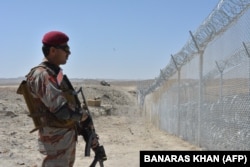
But most of the work is being done along Afghanistan's borders with Pakistan and Iran.
In April 2023, Pakistan announced it was "98 percent" done installing fencing along its around 2,600-kilometer border with Afghanistan. Ahmed Sharif, the spokesman for the Pakistani military's media department, said the barrier was intended to prevent "terrorists" from crossing into Pakistani territory.
But the fence also reinforces Islamabad's anti-migrant position, observers suggest, and has posed difficulties for traders on both sides.
Running along the contentious Durand Line border that the Taliban does not recognize as legitimate, the fence has also left Taliban officials bristling. Having previously boasted about destroying the barbed wire fencing, the Taliban has said it will not allow the fence to be completed.
Tensions along the border have risen considerably in recent days, with Islamabad this week launching retaliatory air strikes on armed groups it says have carried out militant attacks in Pakistan and are hiding out in Afghanistan.
The Taliban, in turn, said its forces had fired at Pakistani positions in retaliation on March 17.
Iran, meanwhile, has launched its own initiative to block the paths of Afghans across its 920-kilometer border with Afghanistan.
Iranian Interior Minister Ahmad Vahidi said in January that the project was a "complete plan" that went beyond the erection of a wall along a porous 74-kilometer stretch of the border, stressing it is a top priority to seal gaps in the border that are being "misused."
Observers note the initiative comes after Iran accused extremist groups in Afghanistan of attacks on Iranian territory as well as following clashes between Iranian and Taliban border forces that reportedly led the Taliban to reinforce the border.
Aziz Maaraj, a former Afghan diplomat in Iran, told Radio Azadi that "Iran is installing cameras and barbed wire" to prevent smuggling and the entrance of illegal migrants, as well as to protect itself against future clashes and possible militant attacks.
Fereshta Abbasi, a researcher in the Asia division at Human Rights Watch, told RFE/RL that "definitely, Iran and Pakistan are trying to send the message to Afghans that they are not welcome."
Contributing to the problem is that the international community has been slow in living up to commitments to resettle Afghan asylum seekers and refugees who fled after the Taliban seized power. That has left thousands of Afghans who did find temporary refuge in neighboring countries as they awaited processing at the risk of having to return to the persecution and insecurity they fled.
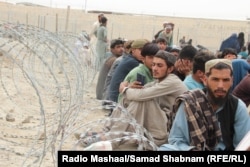
"Some of these people who are now being forced to leave Pakistan and Iran are the ones whose lives are not safe inside Afghanistan," Abbasi said.
"The Taliban have arbitrarily detained journalists, human rights activists, former government employees, and former security officers. These people have been tortured. In some cases, they have been forced to disappear and killed," she added.
Outside countries have also been slow to deliver money, leaving the coffers of the UN's 2024 humanitarian response plan at just 3 percent of expected levels, coming after the 2023 plan was only funded by half, according to Abbasi.
"These governments are not living up to their commitments," Abassi said, adding that Afghans who worked with the previous Western-backed government or alongside Western forces are at particular risk. "They need to be reminded of the fact that they are leaving those Afghans behind who have stood by them."
- By Reuters
Afghan Asylum Seeker Convicted For New Mexico Killing Of Pakistani Immigrant
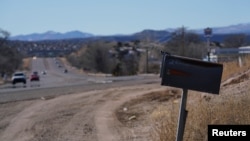
A jury in the U.S. state of New Mexico on March 18 found an Afghan asylum seeker guilty of murdering a Pakistani immigrant in one of three 2022 ambush-style shootings. Mohammad Syed, 53, faces life imprisonment for the murder of Aftab Hussein, 41. Syed is charged with two other killings of Muslim men that have been linked to sectarian violence, but police and the Islamic community blamed them on interpersonal feuds. “As best we can tell, the motive in this may truly be a random serial killer type of mentality that we will never understand,” the prosecutor said.
'I Feel Like An Alien': Afghan Muslims Decry India's New Citizenship Law
Osman Ali was just a few weeks old when his family fled Afghanistan's devastating civil war and moved to India in the early 1990s.
Today, few members of his family of eight remember their homeland. Ali and his five siblings all grew up in India and do not speak any Afghan languages.
But the 30-year-old, like many other Afghans in India, is only on a temporary visa and ineligible to work or receive government help.
When Indian lawmakers moved to amend the citizenship law for migrants from Afghanistan, Pakistan, and Bangladesh, many Afghans were hopeful of gaining a fast track to naturalization.
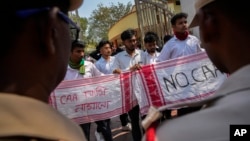
But the new rules implemented by New Delhi on March 11 exclude Muslims, who are the majority in all three countries. Only members of non-Muslim minorities, including Hindus, Sikhs, and Buddhists, who moved to India before December 31, 2014, can apply for citizenship.
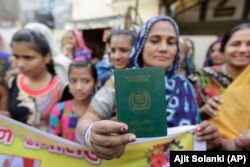
The move is a major blow to many of the thousands of Afghan Muslims in India, a Hindu-majority country of some 1.4 billion people.
"I feel like an alien staying in my own country and not enjoying any of the rights that all citizens in India enjoy," Ali told RFE/RL's Radio Azadi. "It is a dark day for secularism in India."
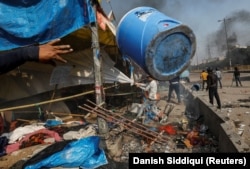
The Citizenship Amendment Act has sparked protests in India and attracted widespread criticism. Human rights groups said the legislation discriminates against Muslims and undermines the South Asian country's secular constitution.
'Bad Development'
Farhad, an Afghan migrant, has lived in India for the past 15 years. Each year, he must renew his visa. He is not permitted to travel abroad. Even traveling within India is difficult, he said.
Farhad, a Muslim, had hoped the Indian government would provide a fast track to citizenship for Afghans who had fled their homeland due to war and poverty.
"This is a bad development," Farhad told Radio Azadi, referring to the new citizenship law. "We have tried very hard, but we have been denied citizenship [for years]."
Without Indian citizenship, many Afghans cannot open a bank account or work legally, condemning them to a life of poverty, said Farhad, who only revealed his first name.
"The government needs to pay attention to the numerous problems we face," he said.
India has been a close ally of Afghanistan for decades. New Delhi has granted asylum to tens of thousands of Afghans since the civil war of the 1990s, including Muslims as well as members of Afghanistan's small Hindu and Sikh communities.
But New Delhi is not a signatory to the 1951 UN Convention Relating to the Status of Refugees or the related 1967 protocol intended to eliminate restrictions on who can be considered a refugee.
The result has been that thousands of Afghan migrants and refugees have lived in India in limbo for years, with no livelihood or security.
The exact number of Afghans in India is unknown. The UN refugee agency, UNHCR, said in 2022 that people from Afghanistan and Myanmar comprised most of the 46,000 registered refugees in India. Several thousand more undocumented Afghans are also believed to live in India.
"Most of us have no money to pay rent and other expenses," said Mohammad Qais Malakzada, the head of the Afghan Solidarity Committee, an NGO based in New Delhi that provides help to the estimated 7,000 Afghans living in the Indian capital.
Boon For Hindus, Sikhs
The new citizenship law does not just affect Muslim migrants.
The legislation marks the first time that India -- officially a secular state that is home to over a dozen religious groups -- has established religious criteria for citizenship.
Rights groups said the amended law is the latest attempt by Prime Minister Narendra Modi's Hindu nationalist government to further marginalize the 200-million-strong Muslim minority in India.
"The Citizenship Amendment Act is a bigoted law that legitimizes discrimination on the basis of religion," said Aakar Patel, chairman of the board at Amnesty International India, on March 14.
Despite widespread criticism, the new law is a significant boon for members of Afghanistan's Hindu and Sikh minorities.
Sikhs and Hindus together numbered around 100,000 several decades ago, but the outbreak of war and the onset of growing persecution pushed many out.
Many of those who remained fled Afghanistan after a string of deadly militant attacks in 2018 and 2020.
"This law will solve all of our problems," Partab Singh, an Afghan Sikh who arrived in New Delhi in 1992, told Radio Azadi.
Diya Singh Anjan is another Afghan Sikh who has lived in the Indian capital for decades.
"If we go to any government office now, we will receive the same treatment and privileges given to a citizen," he said.
Taliban Says It Strikes Back After Deadly Pakistani Strikes
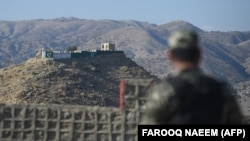
Afghanistan's Taliban-led government said its border forces targeted the Pakistani military installation along its eastern border in retaliation for two air strikes that Islamabad carried out on Afghan territory that killed eight people, including three children.
The Taliban's artillery shelling on March 18 came hours after Pakistani warplanes bombed "militant hideouts" inside Afghanistan that Islamabad said belonged to Tehrik-e Taliban Pakistan (TTP), also known as the Pakistani Taliban.
In Kurram, a western district in Pakistan's northwestern Khyber Pakhtunkhwa Province, locals confirmed the Taliban’s shelling of the area. There were no immediate reports of casualties or damage.
Haji Nowroz Ali, a local tribal leader, told RFE/RL’s Radio Mashaal that a gunbattle between the Taliban and Pakistani forces ensued after four rockets were fired at the border village of Kharlachi from Afghanistan.
Pro-Taliban accounts on X, formerly Twitter, shared a video they claimed showed the Taliban's attacks on Pakistani installations in what appeared to be Kharlachi.
Tensions between Pakistan and Afghanistan have been on the rise since the Taliban returned to power in Afghanistan following the withdrawal of the U.S.-led forces in August 2021. Islamabad accuses the conservative Islamist movement of harboring TTP militants on its territory and allowing them to carry out cross-border attacks in Pakistan. Afghanistan's ruling Taliban deny this.
At "around 3 a.m., Pakistani aircraft bombarded civilian homes" in Afghanistan's southeastern provinces of Khost and Paktika bordering Pakistan, Taliban spokesman Zabihullah Mujahid said in a statement.
"Pakistan should not blame Afghanistan for the lack of control, incompetence, and problems in its own territory," Mujahid said in a statement.
He added the strikes targeted Pakistan's Barmal district of Paktika and the Spera district of Khost, killing three women and three children in Paktika, and two women in Khost.
In a March 18 statement, Pakistan’s Foreign Ministry defended the attacks.
"Certain elements among those in power in Afghanistan are actively patronizing the TTP and using them as a proxy against Pakistan," the statement said, adding that groups like the TTP are a collective security, which requires the two neighbors to "work toward finding joint solutions in countering terrorism and to prevent any terrorist organization from sabotaging bilateral relations."
Pakistani officials, speaking on condition of anonymity, have said that the house of Abdullah Shah, one of the TTP commanders reportedly hiding in Afghanistan, was apparently targeted in the attacks in Paktika.
But Mujahid rejected the accusation and said Shah was inside Pakistan.
"The same [Pashtun] tribe lives on both sides [of the Durand Line border]. Its members frequently move among their communities," he said in a statement.
The TTP said the strikes targeted civilians, denying Shah's house had been hit.
The group issued a video in which Shah claimed to be present in the Shawal areas of Waziristan, which borders Afghanistan’s Paktika and Khost Provinces.
An unconfirmed social media post said "multiple" Pakistan strikes targeted the Paktika, Khost, and Kunar regions.
The reported strikes came after seven Pakistani soldiers were killed and 17 others wounded in a militant attack that targeted a sprawling army post in the volatile North Waziristan district near the Afghan border on March 16.
Pakistani President Asif Ali Zardari, who attended the funeral of those killed in the attack on March 17, said Islamabad would give "a befitting reply to the terrorists" that perpetrated the attack.
With reporting by AFP and Reuters
- By AP
Traffic Accident In Southern Afghanistan Leaves 21 Dead, 38 Injured
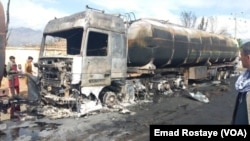
A traffic accident in southern Afghanistan left at least 21 people dead and 38 injured, according to a provincial traffic department. The accident occurred on the morning of March 17 in the Gerashk district of Helmand Province on the main highway between the southern Kandahar and western Herat provinces, a statement from the department in Helmand said. A motorbike crashed into a passenger bus, which then hit a fuel tanker on the opposite side of the road, said a traffic official in Helmand. An investigation into the accident was under way, he added.
RFE/RL has been declared an "undesirable organization" by the Russian government.
If you are in Russia or the Russia-controlled parts of Ukraine and hold a Russian passport or are a stateless person residing permanently in Russia or the Russia-controlled parts of Ukraine, please note that you could face fines or imprisonment for sharing, liking, commenting on, or saving our content, or for contacting us.
To find out more, click here.
Editor's Picks







Afghanistan/Pakistan Trending
From Offshoot To 'Spearhead': The Rise Of IS-K, Islamic State's Afghanistan Branch
2Could Taliban Canal Spark Water War In Central Asia?
3Facebook Restrictions The 'Last Nail In The Coffin' For Free Speech In Afghanistan
4Iran's Afghan Community Worried About Prospect Of War With Israel
5RFE/RL Freelance Journalist Attacked By Armed Men In Islamabad
6Chinese Investigators Arrive In Pakistan To Probe Suicide Attack That Killed 5 Of Its Nationals
7Flash Flooding Kills At Least 33 People In Kabul, Other Afghan Regions
8Taliban Pulls 2 TV Channels For 'Violating Islamic Values'
9Little Cheer As Afghans Mark Eid Under Taliban Rule
1070 killed As Afghanistan Hit By Heavy Rains
Subscribe