



RFE/RL: Do you believe that Georgian-Abkhazian dialogue is no longer deadlocked?
Matthew Bryza: I believe it's moving. It is beginning to move. I believe that, for the first time since I've been involved with Abkhazia, both sides are talking to each other directly and are genuinely expressing good will. And an example of that has to do with the ideas just exchanged there. Nobody is publicizing them right there. Both sides are considering them in a very professional way, very carefully. And they are not making any statements about them, because they really are examining them in detail. That was not possible in the past. I think that you see a process beginning. And I think our visit helped to stimulate that process.
RFE/RL: Do you welcome the sides' decisions not to publicize the details of those peace plans at the moment?
Bryza: Very much so, yes. It is very important that each side has a chance to consider the other side's proposals carefully, quietly, and to find common elements. As in any negotiation, the sides are starting far apart. That is why there are negotiations and then they try to find common elements. There had not previously been that process of finding common elements. Very often one or other of the sides would publicize the other's ideas and reject them out of hand.
U.S. Deputy Assistant Secretary of State Mathew Bryza (InterPressNews)
RFE/RL: Could you go into some details of those common elements for us?
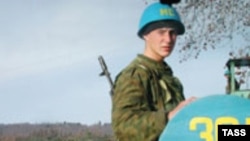
Bryza: No. I can't at this point because [the assessment process] is beginning. Except to say that, on security, there is a common understanding that more needs to be done about security. The existing mandate of the CIS peacekeepers does not cover police actions. Something has to be done to fill that vacuum.
RFE/RL: The Georgian government says it will never give up the country's territorial integrity, while Abkhazia is insisting on gaining independence. How, then, can a dialogue go in the right direction?
Bryza: It can happen. There are other examples in history, for example, Cyprus. The sides there started from very different positions and came extremely close to a final settlement. The Annan plan [proposed by UN Secretary-General Kofi Annan] ended up being rejected by one side, but it brought them very close. There are negotiations going on right now over Nagorno-Karabakh that began from a very similar situation, with the Armenian side saying 'we won't discuss anything unless we talk about the status of Karabakh.' The Azerbaijani side said 'we won't talk about the status of Karabakh.' Despite that, the negotiations have gone quite a long way. So, it is possible as people's attitudes change. That is the idea. The attitudes of the parties change. They work together and understand each other better. As you remove the fear, the security fear, they may then begin to see more eye-to-eye on the issue of status.
Universal Principles?

President Putin at a Kremlin meeting in April (epa)
PUTIN SPEAKS OUT: During a January press conference, Russian President Vladimir Putin said there is a need for "universal principles" to settle "frozen" conflicts in the CIS. His comments came against the background of impending talks on the future status of Kosovo, which many predict will grant it a form of "conditional independence" from Serbia and Montenegro. As an ally of Serbia, Moscow has consistently opposed the idea of Kosovar independence. Putin's remarks suggest he may be shifting his position, but only if the principles applied to Kosovo are also applied to frozen conflicts in the former Soviet Union. If Kosovo can be granted full independence, he asked, why should we deny the same to Abkhazia and South Ossetia? (more)
RELATED ARTICLES
Putin Calls For 'Universal Principles' To Settle Frozen Conflicts
Russia Key To OSCE's Attempts To Resolve Frozen Conflicts
Georgia Pushes For EU Backing In Standoffs With Russia
ARCHIVE
Click here to view archives of RFE/RL's coverage of the conflicts in Abkhazia, Chechnya, Kosovo, Nagorno-Karabakh, Ossetia, and Transdniester.