
WASHINGTON -- A group of pro-American intellectuals and former policy makers from former Soviet bloc countries have written an open letter to the Obama administration urging it to significantly strengthen its diplomatic and security ties with the region.
The signatories warn that the post-Cold War alliances with the United States that helped usher in democracy and bring the region into trans-Atlantic security agreements are in danger of slipping away.
The letter was published in the Polish daily "Gazeta Wyborcza" on July 16 and signed by 22 prominent thinkers and ex-foreign ministers, prime ministers, and presidents from Lithuania, Slovakia, the Czech Republic, Poland, Hungary, Estonia, Bulgaria, Latvia, and Romania.
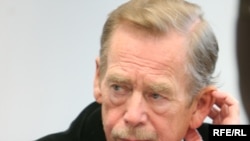
The signatories include former presidents Lech Walesa and Aleksander Kwasniewski of Poland, Vaclav Havel of the Czech Republic, Emil Constantinescu of Romania, and Vaira Vike-Freiberga of Latvia. They describe themselves as U.S. allies who remain deeply indebted to America for helping bring down the Iron Curtain.
Chief among their concerns is that the Central and Eastern European region has ceased to be a priority on the U.S. foreign policy agenda due to what they consider the misguided notion that the region is largely stable, pro-American, and on a secure path to full trans-Atlantic integration.
To the contrary, the signers say, the region's traditionally close relationship with the United States faces a raft of threats -- from citizens skeptical of NATO membership and increasingly critical of the United States, to Russia's return to what it calls a "revisionist power pursing a 19th-century agenda with 21st-century tactics."
Weakened NATO
The group is most concerned about what it sees as a weakened NATO that seems ambivalent about defending its newest members, and a strong Russia that seems increasingly intent on restoring the old Soviet sphere of influence on its borders.
One of the signatories, Lubos Dobrovsky, a former Czech defense minister and ambassador to Russia, said the group wants Obama to improve U.S. relations with Russia at the same time that it holds the former superpower accountable for its regional aggression.
"To me, the main message [of the open letter] is that President Obama should continue his efforts to establish better relationship with Russia, requesting at the same time that they understand [the] demands of Central and East Europeans and stop threatening us with their rockets," Dobrovsky told RFE/RL's Georgian Service. "And [that they] finally give the explicit order to their forces to vacate the sovereign territory of Georgia, i.e. South Ossetia and Abkhazia."
The letter talks of "nervousness in our capitals" over the methods Russia has employed -- from energy blockades to media manipulation -- to advance its interests and challenge the region's trans-Atlantic orientation and aspirations.
And it warns Obama against embracing a "narrow understanding of Western interests" vis-a-vis Russia that could lead "to the wrong concessions."
Ivan Krastev, head of the Centre for Liberal Strategies in Sofia, Bulgaria, signed the letter and said it wasn't written in reaction to anything Washington has or hasn't done, but rather because the group wanted to contribute to the formation of new policy.
"This is not about something that has been done by the Obama administration," Krastev says. "It's much more a kind of a signal that we wanted to send now, when we believe that European policy of the Obama administration is in the making."
Not 'Anti-Russia'
Krastev also said the letter is not meant to be "anti-Russia" but said there is real anxiety in the region over the United States' view of Russia as a global power, which he said masks its revisionist policies toward Europe.
One of the major messages of the letter, he said, is that if the United States wants to rely on the support of Central and Eastern Europe, the Obama administration should strengthen its role as a "European power."
Krastev adds that the White House should also appreciate the fact that its priorities are not the same as the priorities of people and governments in the Central and Eastern European region. The challenges of Afghanistan, Iran, and climate change, for example, are supported, but not important, he said.
"A special policy for Central and Eastern Europe is needed because otherwise, paradoxically, because of its provincialism, Central and Eastern Europe can become a problem for cooperation between the European Union and the United States," Krastev says.
The signatories say they didn't write the letter to add to the Obama administration's already long list of foreign policy problems, but rather to offer a new agenda that, 20 years after the fall of the Iron Curtain, will help ensure another 20 years of close cooperation with the United States.
'Thorniest Issue'
Their recommendations range from the relatively simple -- "the United States should reaffirm its [role] as a European power and make clear that it plans to stay fully engaged in the continent even while it faces pressing challenges" elsewhere -- to the fairly complex: "NATO needs to make the Alliance's [common defense] commitments credible and provide strategic reassurance to all members."
The group says the "thorniest issue" is the United States' planned missile-defense installations, and admits that public opinion is sharply divided throughout Central and Eastern Europe. But it advocates working "as allies" to decide the future of the program and warns that "unfounded Russian opposition" should not determine the final outcome.
The Bush administration reached agreements last year to station interceptor missiles at a base in Poland and a linked radar base in the Czech Republic. Russia vehemently opposes the plan and Obama is skeptical of it and is undertaking a thorough review.
"Abandoning the program entirely or involving Russia too deeply in it without consulting Poland or the Czech Republic can undermine the credibility of the United States across the whole region," the letter says.
Washington has had no official reaction to the letter as of yet.
The signatories warn that the post-Cold War alliances with the United States that helped usher in democracy and bring the region into trans-Atlantic security agreements are in danger of slipping away.
The letter was published in the Polish daily "Gazeta Wyborcza" on July 16 and signed by 22 prominent thinkers and ex-foreign ministers, prime ministers, and presidents from Lithuania, Slovakia, the Czech Republic, Poland, Hungary, Estonia, Bulgaria, Latvia, and Romania.
The signatories include former presidents Lech Walesa and Aleksander Kwasniewski of Poland, Vaclav Havel of the Czech Republic, Emil Constantinescu of Romania, and Vaira Vike-Freiberga of Latvia. They describe themselves as U.S. allies who remain deeply indebted to America for helping bring down the Iron Curtain.
Chief among their concerns is that the Central and Eastern European region has ceased to be a priority on the U.S. foreign policy agenda due to what they consider the misguided notion that the region is largely stable, pro-American, and on a secure path to full trans-Atlantic integration.
To the contrary, the signers say, the region's traditionally close relationship with the United States faces a raft of threats -- from citizens skeptical of NATO membership and increasingly critical of the United States, to Russia's return to what it calls a "revisionist power pursing a 19th-century agenda with 21st-century tactics."
Weakened NATO
The group is most concerned about what it sees as a weakened NATO that seems ambivalent about defending its newest members, and a strong Russia that seems increasingly intent on restoring the old Soviet sphere of influence on its borders.
One of the signatories, Lubos Dobrovsky, a former Czech defense minister and ambassador to Russia, said the group wants Obama to improve U.S. relations with Russia at the same time that it holds the former superpower accountable for its regional aggression.
This is not about something that has been done by the Obama administration. It's much more a kind of a signal that we wanted to send now...

The letter talks of "nervousness in our capitals" over the methods Russia has employed -- from energy blockades to media manipulation -- to advance its interests and challenge the region's trans-Atlantic orientation and aspirations.
And it warns Obama against embracing a "narrow understanding of Western interests" vis-a-vis Russia that could lead "to the wrong concessions."
Ivan Krastev, head of the Centre for Liberal Strategies in Sofia, Bulgaria, signed the letter and said it wasn't written in reaction to anything Washington has or hasn't done, but rather because the group wanted to contribute to the formation of new policy.
"This is not about something that has been done by the Obama administration," Krastev says. "It's much more a kind of a signal that we wanted to send now, when we believe that European policy of the Obama administration is in the making."
Not 'Anti-Russia'
Krastev also said the letter is not meant to be "anti-Russia" but said there is real anxiety in the region over the United States' view of Russia as a global power, which he said masks its revisionist policies toward Europe.
One of the major messages of the letter, he said, is that if the United States wants to rely on the support of Central and Eastern Europe, the Obama administration should strengthen its role as a "European power."
Krastev adds that the White House should also appreciate the fact that its priorities are not the same as the priorities of people and governments in the Central and Eastern European region. The challenges of Afghanistan, Iran, and climate change, for example, are supported, but not important, he said.
"A special policy for Central and Eastern Europe is needed because otherwise, paradoxically, because of its provincialism, Central and Eastern Europe can become a problem for cooperation between the European Union and the United States," Krastev says.
The signatories say they didn't write the letter to add to the Obama administration's already long list of foreign policy problems, but rather to offer a new agenda that, 20 years after the fall of the Iron Curtain, will help ensure another 20 years of close cooperation with the United States.
'Thorniest Issue'
Their recommendations range from the relatively simple -- "the United States should reaffirm its [role] as a European power and make clear that it plans to stay fully engaged in the continent even while it faces pressing challenges" elsewhere -- to the fairly complex: "NATO needs to make the Alliance's [common defense] commitments credible and provide strategic reassurance to all members."
The group says the "thorniest issue" is the United States' planned missile-defense installations, and admits that public opinion is sharply divided throughout Central and Eastern Europe. But it advocates working "as allies" to decide the future of the program and warns that "unfounded Russian opposition" should not determine the final outcome.
The Bush administration reached agreements last year to station interceptor missiles at a base in Poland and a linked radar base in the Czech Republic. Russia vehemently opposes the plan and Obama is skeptical of it and is undertaking a thorough review.
"Abandoning the program entirely or involving Russia too deeply in it without consulting Poland or the Czech Republic can undermine the credibility of the United States across the whole region," the letter says.
Washington has had no official reaction to the letter as of yet.