

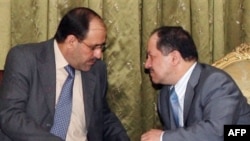
SULAIMANIYA, Iraq (Reuters) - Iraqi Prime Minister Nuri al-Maliki has met with Kurdish President Masud Barzani, the first meeting between the two rivals in many months, in an effort to resolve a row that threatens fresh conflict in Iraq.
The dispute over land and oil between Maliki's Shi'ite Arab-led government and the Kurds' largely autonomous northern enclave is seen as the greatest threat to Iraq's stability, as the sectarian violence that brought it close to civil war fades.
State-run Iraqiya TV images showed Maliki, Barzani, and Iraqi President Jalal Talabani, also a Kurd, greet each other outside a retreat near the hilly Kurdish city of Sulaimaniya before going inside for talks.
Officials did not say what the talks were about, but the disputed oil-producing province of Kirkuk is likely to be high on the agenda.
Kurds see Kirkuk, which produces a fifth of Iraq's oil, and other territories on the Kurdistan border as rightfully theirs.
They want to annex it to the Kurdistan Regional Government (KRG), an idea rejected by the city's ethnic Arabs and Turkmen and by Baghdad. The talks follow parliamentary and presidential polls in Kurdistan last week that re-elected Barzani.
On the day of the election, Barzani reiterated his position that there could be "no compromise" over Kirkuk and that Iraq must stick to a plan laid out in its 2005 constitution to hold a census, then a referendum, on the city's fate.
Baghdad, which accuses the Kurds of moving into Kirkuk aggressively to tip the result of a referendum, rejects that. UN officials fear it could be a recipe for civil war.
Saddam Hussein oppressed Iraq's Kurds and packed Kirkuk with Arabs to strengthen his influence in an area some U.S. officials believe holds 4 percent of the world's remaining oil.
Another sticking point comes from oil deals the Kurds signed with foreign firms, which Baghdad says are illegal, despite agreeing to export oil from Kurdistan's fields, which began in June.
The commander of U.S. forces in Iraq, General Ray Odierno, this week called Kurd-Arab tensions the "number one driver of instabilities" in Iraq.
The dispute over land and oil between Maliki's Shi'ite Arab-led government and the Kurds' largely autonomous northern enclave is seen as the greatest threat to Iraq's stability, as the sectarian violence that brought it close to civil war fades.
State-run Iraqiya TV images showed Maliki, Barzani, and Iraqi President Jalal Talabani, also a Kurd, greet each other outside a retreat near the hilly Kurdish city of Sulaimaniya before going inside for talks.
Officials did not say what the talks were about, but the disputed oil-producing province of Kirkuk is likely to be high on the agenda.
Kurds see Kirkuk, which produces a fifth of Iraq's oil, and other territories on the Kurdistan border as rightfully theirs.
They want to annex it to the Kurdistan Regional Government (KRG), an idea rejected by the city's ethnic Arabs and Turkmen and by Baghdad. The talks follow parliamentary and presidential polls in Kurdistan last week that re-elected Barzani.
On the day of the election, Barzani reiterated his position that there could be "no compromise" over Kirkuk and that Iraq must stick to a plan laid out in its 2005 constitution to hold a census, then a referendum, on the city's fate.
Baghdad, which accuses the Kurds of moving into Kirkuk aggressively to tip the result of a referendum, rejects that. UN officials fear it could be a recipe for civil war.
Saddam Hussein oppressed Iraq's Kurds and packed Kirkuk with Arabs to strengthen his influence in an area some U.S. officials believe holds 4 percent of the world's remaining oil.
Another sticking point comes from oil deals the Kurds signed with foreign firms, which Baghdad says are illegal, despite agreeing to export oil from Kurdistan's fields, which began in June.
The commander of U.S. forces in Iraq, General Ray Odierno, this week called Kurd-Arab tensions the "number one driver of instabilities" in Iraq.