



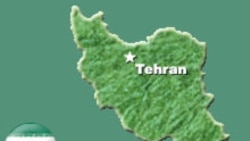
Prague, 2 September 2004 (RFE/RL) -- The International Atomic Energy Agency (IAEA) issued a report yesterday saying Iran plans to resume large-scale production of material to enrich uranium, a process that can help the development of nuclear weapons.
U.S. Secretary of State Colin Powell was quick to react, saying Washington will try to persuade the UN agency to refer Iran to the UN Security Council to try to impose sanctions.
The question is now whether France, Britain, and Germany will adopt the U.S. stance or try to find middle ground.
Shahram Chubin is director of research at the Geneva Center for Security Policy. He said the dilemma facing the three European states is to come up with a policy that is effective without forcing a confrontation between Iran and the Security Council. "The Iranians have moved backwards," he said. "They're slicing away at that program [of suspending uranium enrichment]. They had discussions with the European countries in Paris in July, which are leading nowhere."
Chubin added: "[However] I think that the European countries, by and large, don't share the Americans' belief that Iran is determined to get nuclear weapons. They think there's still time, [and] that Iran hasn't made yet a definite decision. And therefore they're not convinced that the only way to deal with Iran is by confronting it."
Powell told reporters in Washington that the United States believes Iran is taking steps toward developing nuclear weapons and wants the Security Council to impose economic, political, or diplomatic sanctions as a result.
John Bolton, U.S. undersecretary of state for arms control and international security, expressed concern about a statement in the IAEA report that Iran plans to convert 37 tons of "yellowcake" uranium into uranium hexafluoride (UF6), which could be used to build nuclear weapons. Bolton said this is "further strong evidence of the compelling need" to take Iran's nuclear program to the UN Security Council.
However, the UN's nuclear watchdog agency said there is still no evidence that would confirm U.S. allegations that Iran is building a nuclear bomb.
Tehran claims its nuclear program is for peaceful purposes only. Iranian Foreign Ministry spokesman Hamid Reza Assefi said the IAEA report is evidence that Iran is cooperating in resolving questions about its nuclear program.
According to Chubin, European countries have not yet determined what might trigger them to take firm steps against Iran at the Security Council. "When you refer something to the Security Council, you have to be sure [the council] is unanimous and is going to take a strong position," he said. "And the strong position in the case of Iran would be naming Iran as a noncompliant state. And as I said, [the European countries are] not sure that's the case yet. The European countries haven't [clearly stated that they have] got a red line that says, 'If you cross that line, we are going to take the sternest measures possible at the Security Council.'"
Chubin notes that the "red line," for the European countries, is uranium enrichment. The Iranians, he said, are moving very slowly toward that line.
The IAEA's board of governors is due to open a meeting to discuss Iran on 13 September.
U.S. Secretary of State Colin Powell was quick to react, saying Washington will try to persuade the UN agency to refer Iran to the UN Security Council to try to impose sanctions.
The question is now whether France, Britain, and Germany will adopt the U.S. stance or try to find middle ground.
Shahram Chubin is director of research at the Geneva Center for Security Policy. He said the dilemma facing the three European states is to come up with a policy that is effective without forcing a confrontation between Iran and the Security Council. "The Iranians have moved backwards," he said. "They're slicing away at that program [of suspending uranium enrichment]. They had discussions with the European countries in Paris in July, which are leading nowhere."
Chubin added: "[However] I think that the European countries, by and large, don't share the Americans' belief that Iran is determined to get nuclear weapons. They think there's still time, [and] that Iran hasn't made yet a definite decision. And therefore they're not convinced that the only way to deal with Iran is by confronting it."
Powell told reporters in Washington that the United States believes Iran is taking steps toward developing nuclear weapons and wants the Security Council to impose economic, political, or diplomatic sanctions as a result.
John Bolton, U.S. undersecretary of state for arms control and international security, expressed concern about a statement in the IAEA report that Iran plans to convert 37 tons of "yellowcake" uranium into uranium hexafluoride (UF6), which could be used to build nuclear weapons. Bolton said this is "further strong evidence of the compelling need" to take Iran's nuclear program to the UN Security Council.
However, the UN's nuclear watchdog agency said there is still no evidence that would confirm U.S. allegations that Iran is building a nuclear bomb.
Tehran claims its nuclear program is for peaceful purposes only. Iranian Foreign Ministry spokesman Hamid Reza Assefi said the IAEA report is evidence that Iran is cooperating in resolving questions about its nuclear program.
According to Chubin, European countries have not yet determined what might trigger them to take firm steps against Iran at the Security Council. "When you refer something to the Security Council, you have to be sure [the council] is unanimous and is going to take a strong position," he said. "And the strong position in the case of Iran would be naming Iran as a noncompliant state. And as I said, [the European countries are] not sure that's the case yet. The European countries haven't [clearly stated that they have] got a red line that says, 'If you cross that line, we are going to take the sternest measures possible at the Security Council.'"
Chubin notes that the "red line," for the European countries, is uranium enrichment. The Iranians, he said, are moving very slowly toward that line.
The IAEA's board of governors is due to open a meeting to discuss Iran on 13 September.

