



Beslan, Russia; 1 September 2005 (RFE/RL) -- Grief lies heavy over Beslan.
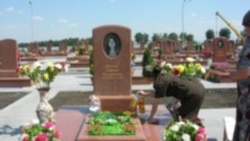
At the specially built cemetery on the edge of town, the newly laid gravestones of Beslan’s more than 330 victims glisten under the sun.
Between the rows of graves, mourners sit, clad in black, their heads bowed with sorrow.
Galina Dagueva has come to visit her daughter Karima’s grave. Gently, she places bottles of fizzy drinks on the gravestone -- a symbolic gesture to alleviate the thirst that tortured the hostages for three days.
Karima, a girl with silky black hair, was 16 when she died in the school siege. Nearly a year has passed since then. But time has not eased Galina’s grief.
“It’s been a year already, but it feels as though it was yesterday. The pain is still as strong,” Galina said.
In the gymnasium of School No. 1, mourners and former hostages have also come to pay homage to those who suffered and died there. They carefully lay flowers, toys, and water bottles on the gym’s windowsills and charred floorboard. In the wrecked classrooms, torn schoolbooks lay scattered amid spent ammunition.
The mourning has extended to almost everyone in this small Caucasus town, where even distant relatives are considered close family.
Alexandr Venger is a Moscow psychologist who has been following former hostages and their families in Beslan since the tragedy.
He says the entire town is still traumatized by the siege.
“Even if people can be found who don’t have any relatives among the hostages, they are nonetheless in a state called ‘secondary trauma’ -- they were affected by the general atmosphere. The whole city is in continual mourning. Everyone in the street is dressed in black, there are continual funerals: that, in itself, has a strong effect! We were very severely affected ourselves,” Venger said.
Of the children who survived the siege, only a few have been able to fully resume their schooling. Venger says these children will need at least three years of work with a psychologist to overcome the shock of what they experienced.
But the people of Beslan also say they need to hear the full truth about the massacre before they are able to move on.
So far, the authorities have failed to provide a clear account of the chaotic standoff between the hostage-takers and Russian special forces, which ended the siege, and in which most victims died.
Many questions remain unanswered: How did the battle begin? What started the blaze that caused the gym’s roof to collapse, crushing, and killing many of the hostages? How did the attackers manage to reach Beslan along some of the country’s most heavily guarded roads?
Tears roll down the cheeks of Izrail Totoonti, a middle-aged man who helped carry out victims from the school’s smoldering ruins, as he recounts the horror.
But his grief quickly gives way to anger.
Like most people in Beslan, he is incensed at the authorities’ refusal to negotiate with the hostage-takers, who were demanding Chechnya’s independence.
“Those [terrorists] who went there, they are bastards, man-eaters. But in the name of the children, of their lives, we should have gone to any lengths, any lengths at all. We failed them. And the greater one’s power, the more he is at fault. We are all to blame. They are not here anymore, and we are alive,” Izrail said.
Izrail, like other witnesses, is convinced that Russian forces used flame-throwers and tanks to attack the school during the rescue operation, even though hostages were still alive inside. Authorities have vehemently denied the claim.
Anger also simmers at the Beslan Mothers Committee. The bereaved women there blame incompetent and corrupt officials for making the bloodshed worse and accuse the government of now trying to cover up blunders.
Russian President Vladimir Putin has launched investigations. Court proceedings have begun against Nurpashi Kulaev, who authorities say was the only hostage-taker taken alive.
Five senior policemen have also been charged with criminal negligence for failing to guard the school. But the Beslan Mothers say this is not enough.
Zalina Guburova, a member of the committee, lost her mother Ira and her 8-year-old son Soslan in the siege.
“Those who allowed all this to happen, who did not help, have to be punished. Many have to sit next to Kulaev, beginning with Putin. I will never forget the [1999] television interview in which Putin said: ‘we will waste them [terrorists] in the outhouse’. This time, he mixed up outhouse and school,” Zalina said.
Putin’s brief pre-dawn visit to Beslan immediately after the massacre left most people cold. Ever since, the Beslan Mothers have been asking for a meeting with Putin. They say they want to demand he tell them the truth about what happened.
Putin recently invited the mothers for a meeting with him in the Kremlin. But the timing of the meeting -- on 2 September, in the middle of the mourning ceremonies -- is seen by the fiercely traditional people of Beslan as an additional affront.
After much debate, a handful of mothers have, however, agreed to travel to Moscow.
They are determined to tell Putin that he must share the blame for the death of their children, and that lessons must be learned from official mistakes to make sure Beslan’s tragedy is the last.
Susanna Dudiyeva, the head of the Beslan Mothers, lost her son in the massacre. She says she intends to make the president feel the full force of her grief:
"Our children were killed. Now we know the price of happiness and the price of unhappiness. Perhaps the president does not know the price of that happiness. He is a father himself, he has two children. Or maybe he knows only about happiness, and we will tell him what unhappiness is."
See also:
RFE/RL Special: Remembering Beslan
Audio Slide Show -- Beslan: One Year Later. Real Player, Windows Media
At the specially built cemetery on the edge of town, the newly laid gravestones of Beslan’s more than 330 victims glisten under the sun.
Between the rows of graves, mourners sit, clad in black, their heads bowed with sorrow.
Galina Dagueva has come to visit her daughter Karima’s grave. Gently, she places bottles of fizzy drinks on the gravestone -- a symbolic gesture to alleviate the thirst that tortured the hostages for three days.
Karima, a girl with silky black hair, was 16 when she died in the school siege. Nearly a year has passed since then. But time has not eased Galina’s grief.
"Our children were killed. Now we know the price of happiness and the price of unhappiness."
“It’s been a year already, but it feels as though it was yesterday. The pain is still as strong,” Galina said.
In the gymnasium of School No. 1, mourners and former hostages have also come to pay homage to those who suffered and died there. They carefully lay flowers, toys, and water bottles on the gym’s windowsills and charred floorboard. In the wrecked classrooms, torn schoolbooks lay scattered amid spent ammunition.
The mourning has extended to almost everyone in this small Caucasus town, where even distant relatives are considered close family.
Alexandr Venger is a Moscow psychologist who has been following former hostages and their families in Beslan since the tragedy.
He says the entire town is still traumatized by the siege.
“Even if people can be found who don’t have any relatives among the hostages, they are nonetheless in a state called ‘secondary trauma’ -- they were affected by the general atmosphere. The whole city is in continual mourning. Everyone in the street is dressed in black, there are continual funerals: that, in itself, has a strong effect! We were very severely affected ourselves,” Venger said.
Of the children who survived the siege, only a few have been able to fully resume their schooling. Venger says these children will need at least three years of work with a psychologist to overcome the shock of what they experienced.
But the people of Beslan also say they need to hear the full truth about the massacre before they are able to move on.
So far, the authorities have failed to provide a clear account of the chaotic standoff between the hostage-takers and Russian special forces, which ended the siege, and in which most victims died.
Many questions remain unanswered: How did the battle begin? What started the blaze that caused the gym’s roof to collapse, crushing, and killing many of the hostages? How did the attackers manage to reach Beslan along some of the country’s most heavily guarded roads?
Tears roll down the cheeks of Izrail Totoonti, a middle-aged man who helped carry out victims from the school’s smoldering ruins, as he recounts the horror.
But his grief quickly gives way to anger.
Like most people in Beslan, he is incensed at the authorities’ refusal to negotiate with the hostage-takers, who were demanding Chechnya’s independence.
“Those [terrorists] who went there, they are bastards, man-eaters. But in the name of the children, of their lives, we should have gone to any lengths, any lengths at all. We failed them. And the greater one’s power, the more he is at fault. We are all to blame. They are not here anymore, and we are alive,” Izrail said.
Izrail, like other witnesses, is convinced that Russian forces used flame-throwers and tanks to attack the school during the rescue operation, even though hostages were still alive inside. Authorities have vehemently denied the claim.
Anger also simmers at the Beslan Mothers Committee. The bereaved women there blame incompetent and corrupt officials for making the bloodshed worse and accuse the government of now trying to cover up blunders.
Russian President Vladimir Putin has launched investigations. Court proceedings have begun against Nurpashi Kulaev, who authorities say was the only hostage-taker taken alive.
Five senior policemen have also been charged with criminal negligence for failing to guard the school. But the Beslan Mothers say this is not enough.
Zalina Guburova, a member of the committee, lost her mother Ira and her 8-year-old son Soslan in the siege.
“Those who allowed all this to happen, who did not help, have to be punished. Many have to sit next to Kulaev, beginning with Putin. I will never forget the [1999] television interview in which Putin said: ‘we will waste them [terrorists] in the outhouse’. This time, he mixed up outhouse and school,” Zalina said.
Putin’s brief pre-dawn visit to Beslan immediately after the massacre left most people cold. Ever since, the Beslan Mothers have been asking for a meeting with Putin. They say they want to demand he tell them the truth about what happened.
Putin recently invited the mothers for a meeting with him in the Kremlin. But the timing of the meeting -- on 2 September, in the middle of the mourning ceremonies -- is seen by the fiercely traditional people of Beslan as an additional affront.
After much debate, a handful of mothers have, however, agreed to travel to Moscow.
They are determined to tell Putin that he must share the blame for the death of their children, and that lessons must be learned from official mistakes to make sure Beslan’s tragedy is the last.
Susanna Dudiyeva, the head of the Beslan Mothers, lost her son in the massacre. She says she intends to make the president feel the full force of her grief:
"Our children were killed. Now we know the price of happiness and the price of unhappiness. Perhaps the president does not know the price of that happiness. He is a father himself, he has two children. Or maybe he knows only about happiness, and we will tell him what unhappiness is."
See also:
RFE/RL Special: Remembering Beslan
Audio Slide Show -- Beslan: One Year Later. Real Player, Windows Media

