




One of the first issues raised by the National Assembly's lower house, the People's Council (Wolesi Jirga), concerned security barriers erected around the capital Kabul. Such barricades are employed primarily by foreign diplomatic missions, military units, and nongovernmental organizations (NGOs) for reasons of security, and they cause enormous traffic jams and make parts of the city inaccessible for residents.
'Remove The Barriers'
Reports suggested that the parliamentary debate on such a popular topic prompted President Hamid Karzai to order the Interior Ministry to issue a notice on 31 December declaring all barriers that block "footpaths, streets, and roads" illegal and ordering all foreign missions and NGOs to remove them within a week. The notice cautioned that if the barriers were not removed, the "ministry will take action" against those responsible. The Interior Ministry said that there were 46 such blockages, without identifying them.
A People's Council member and former planning minister within Karzai's Transitional Administration with a history of populist rhetoric, Ramazan Bashardost, told the parliament recently, "We have to open the roads that have been closed by foreign princes and war princes," according to "The New York Times."
Nonprofits Targeted
Another fiery issue among Afghans has been the real or perceived notion that the multitude of NGOs functioning in their country -- estimated at more than 3,000 -- has been profiting excessively from aid money earmarked for Afghanistan. Soon after his appointment as planning minister in March 2004, Bashardost launched a probe to evaluate the activities of nongovernmental groups in the country. Bashardost said at the time that those organizations had a negative impact on Afghan reconstruction and had wasted millions of dollars in aid money. After his electoral victory in October 2004, President Karzai reportedly came under pressure from foreign governments to exclude Bashardost from his new cabinet, and the Planning Ministry was in fact abolished.
Now the People's Council has decided to summon NGO representatives to question them on issues of accountability.
The independent Kabul daily "Cheragh," in a 4 January editorial, accused NGOs of embezzling international aid and welcomed the legislature's efforts to increase such groups' accountability. "If the Afghan parliament takes the plundering NGOs to task and quizzes them, they will indeed be bringing the enemies of the people to justice and people will be happy with this measure," the editorial asserted.
Effective Strategy?
When it ordered the removal of unauthorized security barriers, the Karzai administration essentially conceded that the new parliament can already force issues upon it. If the administration grants exemptions to some of those foreign organizations who seek to negotiate over the removal of security barriers (as some have suggested they will), the executive branch's credibility would almost certainly be challenged by voices inside the People's Council. Moreover, the opposition would be handed a popular issue that pits the parliament against the government and could be interpreted as demonstrating government disregard for the public and weakness in the face of foreign pressure.
 The lower house can maneuver the government into a similar corner if it decides to curtail the activities of a large number of foreign NGOs. After his selection as speaker of the People's Council in late December, Mohammad Yunos Qanuni resigned as head the unofficial National Understanding Front -- a loose alliance of would-be opposition parties -- and pledged to work constructively with the government.
But Qanuni and his allies appear willing and ready to flex their muscles and challenge Karzai's dominance in the Afghan power structure. The first high-profile opportunity to challenge the government will come when the cabinet faces a vote of confidence.
Muscling In
The weekly "Payam-e Mojahed," the official mouthpiece of the Jami'at-e Islami party to which Qanuni once belonged, asserted in an editorial on 4 January that the Afghan political system is "semi-presidential," as the 2004 constitution grants parliament a supervisory role vis-a-vis the executive branch. In a possible sign of things to come, the weekly added that while President Karzai "chairs the cabinet...he does not have full authority to form the cabinet. A vote of confidence from the parliament is required. That is why the next cabinet will be a mixed one" that would include Karzai supporters and opponents alike.
Karzai worked hard to avoid the establishment of a parliamentary system with a prime minister and to prevent political parties from gaining a strong foothold. Enter the National Assembly, which may well trumpet its new presence by challenging presidential authority and drawing Karzai into popular contests that he simply cannot win.
'Remove The Barriers'
Reports suggested that the parliamentary debate on such a popular topic prompted President Hamid Karzai to order the Interior Ministry to issue a notice on 31 December declaring all barriers that block "footpaths, streets, and roads" illegal and ordering all foreign missions and NGOs to remove them within a week. The notice cautioned that if the barriers were not removed, the "ministry will take action" against those responsible. The Interior Ministry said that there were 46 such blockages, without identifying them.
A People's Council member and former planning minister within Karzai's Transitional Administration with a history of populist rhetoric, Ramazan Bashardost, told the parliament recently, "We have to open the roads that have been closed by foreign princes and war princes," according to "The New York Times."
Nonprofits Targeted
Another fiery issue among Afghans has been the real or perceived notion that the multitude of NGOs functioning in their country -- estimated at more than 3,000 -- has been profiting excessively from aid money earmarked for Afghanistan. Soon after his appointment as planning minister in March 2004, Bashardost launched a probe to evaluate the activities of nongovernmental groups in the country. Bashardost said at the time that those organizations had a negative impact on Afghan reconstruction and had wasted millions of dollars in aid money. After his electoral victory in October 2004, President Karzai reportedly came under pressure from foreign governments to exclude Bashardost from his new cabinet, and the Planning Ministry was in fact abolished.
Now the People's Council has decided to summon NGO representatives to question them on issues of accountability.
The independent Kabul daily "Cheragh," in a 4 January editorial, accused NGOs of embezzling international aid and welcomed the legislature's efforts to increase such groups' accountability. "If the Afghan parliament takes the plundering NGOs to task and quizzes them, they will indeed be bringing the enemies of the people to justice and people will be happy with this measure," the editorial asserted.
Effective Strategy?
When it ordered the removal of unauthorized security barriers, the Karzai administration essentially conceded that the new parliament can already force issues upon it. If the administration grants exemptions to some of those foreign organizations who seek to negotiate over the removal of security barriers (as some have suggested they will), the executive branch's credibility would almost certainly be challenged by voices inside the People's Council. Moreover, the opposition would be handed a popular issue that pits the parliament against the government and could be interpreted as demonstrating government disregard for the public and weakness in the face of foreign pressure.
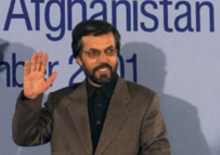
Qanuni is a charismatic leader with strong mujahedin credentials
But Qanuni and his allies appear willing and ready to flex their muscles and challenge Karzai's dominance in the Afghan power structure. The first high-profile opportunity to challenge the government will come when the cabinet faces a vote of confidence.
Muscling In
The weekly "Payam-e Mojahed," the official mouthpiece of the Jami'at-e Islami party to which Qanuni once belonged, asserted in an editorial on 4 January that the Afghan political system is "semi-presidential," as the 2004 constitution grants parliament a supervisory role vis-a-vis the executive branch. In a possible sign of things to come, the weekly added that while President Karzai "chairs the cabinet...he does not have full authority to form the cabinet. A vote of confidence from the parliament is required. That is why the next cabinet will be a mixed one" that would include Karzai supporters and opponents alike.
Karzai worked hard to avoid the establishment of a parliamentary system with a prime minister and to prevent political parties from gaining a strong foothold. Enter the National Assembly, which may well trumpet its new presence by challenging presidential authority and drawing Karzai into popular contests that he simply cannot win.
Afghanistan's Musical Revival
Afghanistan's Musical Revival
BACK IN THE GROOVE Decades of war and the Taliban's five-year ban on music took their toll on Afghan classical music. Musicians have been trying to resuscitate the art since the end of Taliban rule. But they face serious economic and artistic challenges -- including the threat of possible attack by Taliban fighters if they perform in provincial areas...(more)