

Prague, 17 January 2006 -- The European Union says its patience with Iran regarding Tehran's nuclear activities has run out.
Belgian Foreign Minister Karel de Gucht summed it up when he spoke to journalists at the United Nations on 16 January in New York: "After two years of attempts to come to a negotiated solution, Iran has now made actions that make it practically impossible to continue these negotiations. And that's why we think the questions should now be referred to the Security Council."
Since late 2003, the EU has been trying to persuade Iran to end its nuclear-fuel activities in exchange for a package of political and economic incentives.
Tehran's recent actions have led the Europeans to make common cause with Washington, increasing the chances a date for Security Council referral will be set. For years, the United States has pushed for referring Iran to the UN Security Council.
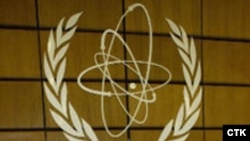
But the IAEA Board of Governors has set no date for referring the issue to the UN's top body.
The Question Of Sanctions
That could change if the Europeans manage to win over the other countries on the IAEA's 35-member Board of Governors at the upcoming meeting.
If Iran were referred to the Security Council, what would happen next is unclear. Although Russian President Vladimir Putin said on 16 January that Moscow's position on Iran is "very close" to the Europeans', Foreign Minister Sergei Lavrov said today that Russia remains a long way from supporting possible sanctions against Tehran.
"The question of sanctions puts the cart before the horse," Lavrov said. "First of all we must do everything to get as much information as possible within the IAEA framework, professionally, on the basis of inspections that are under way in Iran, to allow us to find answers to questions regarding Iran's past nuclear program."
China -- the other permanent Security Council member that has until now opposed sanctions against Iran -- has indicated its position remains unchanged.
Stop And Start
At first, Iran appeared ready to negotiate and it suspended its nuclear work. But Tehran restarted uranium conversion in mid-2005. Since then, it has been insisting that it has the right to pursue its nuclear program -- which it says is for peaceful purposes.
Iran then removed IAEA seals from uranium-enrichment equipment in early January, precipitating the latest crisis. Enrichment is the next step in manufacturing nuclear fuel and, at high levels of enrichment, producing material for nuclear bombs.
The IAEA, led by Muhammad el-Baradei, has found no hard evidence of U.S.-led claims that Tehran seeks to manufacture nuclear weapons. But it has also been unable to confirm Tehran's nuclear program is purely peaceful, and el-Baradei expressed "serious concerns" over Iran's activities in a statement on 10 January.
In September, the IAEA Board of Governors declared Iran had failed to comply with its obligations under the Nuclear Non-Proliferation Treaty (NPT) Safeguards Agreement. The IAEA resolution also accused Iran of "pursuing a policy of concealment."
Belgian Foreign Minister Karel de Gucht summed it up when he spoke to journalists at the United Nations on 16 January in New York: "After two years of attempts to come to a negotiated solution, Iran has now made actions that make it practically impossible to continue these negotiations. And that's why we think the questions should now be referred to the Security Council."
Since late 2003, the EU has been trying to persuade Iran to end its nuclear-fuel activities in exchange for a package of political and economic incentives.
Tehran's recent actions have led the Europeans to make common cause with Washington, increasing the chances a date for Security Council referral will be set. For years, the United States has pushed for referring Iran to the UN Security Council.
But the IAEA Board of Governors has set no date for referring the issue to the UN's top body.
The Question Of Sanctions
That could change if the Europeans manage to win over the other countries on the IAEA's 35-member Board of Governors at the upcoming meeting.
If Iran were referred to the Security Council, what would happen next is unclear. Although Russian President Vladimir Putin said on 16 January that Moscow's position on Iran is "very close" to the Europeans', Foreign Minister Sergei Lavrov said today that Russia remains a long way from supporting possible sanctions against Tehran.
"The question of sanctions puts the cart before the horse," Lavrov said. "First of all we must do everything to get as much information as possible within the IAEA framework, professionally, on the basis of inspections that are under way in Iran, to allow us to find answers to questions regarding Iran's past nuclear program."
China -- the other permanent Security Council member that has until now opposed sanctions against Iran -- has indicated its position remains unchanged.
Stop And Start
At first, Iran appeared ready to negotiate and it suspended its nuclear work. But Tehran restarted uranium conversion in mid-2005. Since then, it has been insisting that it has the right to pursue its nuclear program -- which it says is for peaceful purposes.
Iran then removed IAEA seals from uranium-enrichment equipment in early January, precipitating the latest crisis. Enrichment is the next step in manufacturing nuclear fuel and, at high levels of enrichment, producing material for nuclear bombs.
The IAEA, led by Muhammad el-Baradei, has found no hard evidence of U.S.-led claims that Tehran seeks to manufacture nuclear weapons. But it has also been unable to confirm Tehran's nuclear program is purely peaceful, and el-Baradei expressed "serious concerns" over Iran's activities in a statement on 10 January.
In September, the IAEA Board of Governors declared Iran had failed to comply with its obligations under the Nuclear Non-Proliferation Treaty (NPT) Safeguards Agreement. The IAEA resolution also accused Iran of "pursuing a policy of concealment."