



Those figures, provided during a press conference in Grozny on March 19, contradict earlier statistics cited by the Russian military and Interior Ministry. They also differ from estimates from the Chechen resistance leadership, which admits that not all groups of fighters are still under its direct control.
Fluctuating Figures
Yedelev's figure of 37 militant bands is down from his estimate of just six weeks earlier: "Rossiiskaya gazeta" on February 2 published an interview with him in which he gave the same total -- 450 men -- but estimated the number of individual groups at 46.
Two months before that, the resistance website kavkazcenter.com cited Colonel General Nikolai Rogozhkin, commander of the Interior Ministry forces, as estimating the number of Chechen resistance fighters at between 800-1,000.
And in early November 2006, the commander of the Group of Federal Forces in the North Caucasus, Colonel General Yevgeny Baryayev, was cited by kommersant.ru as providing a figure of 700.
It can be expected that the number of resistance fighters is likely to vacillate as a result of combat losses, but there are no indications that the resistance is short of volunteers.
In April 2006, then-Chechen Republic Ichkeria Vice President Doku Umarov told RFE/RL's North Caucasus in a long interview that more young men seek to join the resistance than can be accepted into its ranks, in light of limited funding available. He said only the toughest candidates -- those who can withstand the bitter cold of the mountains in winter -- are accepted.
Umarov, who in line with the Chechen Republic Ichkeria Constitution adopted in March 1992 became president after the death in June 2006 of Abdul-Khalim Sadulayev, repeated in a recent interview with the Ukrainian nationalist publication "Banderivets" that the number of would-be recruits constitutes "a huge problem for us" since "we cannot provide all of them with weapons."
He expanded on that point in an address to the Muslims of the Caucasus posted on March 5 on kavkazcenter.com, saying that "thousands of young men turn to us, asking us to give them the opportunity to participate in the jihad. Unfortunately, limited resources do not allow us to do so."
Autonomous Resistance
But whereas in 2006 Umarov expressed regret that those not accepted into the ranks of the resistance have no choice but to leave Chechnya, he said in the recent address that "many young Muslims, both in Ichkeria and in other regions of the Caucasus [and also in Russia] are organizing themselves into military jamaats and acting autonomously."
In other words, the days when the North Caucasus resistance -- and its offshoots in the Volga and Urals -- constituted a single unified force that reported to, and coordinated its activities with, the Chechen War Council, appear to be over.
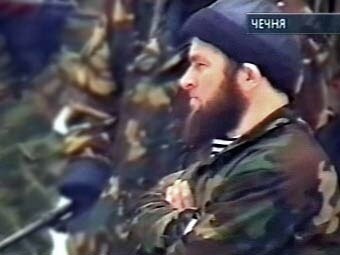
Doku Umarov see no lack of potential recruits (Rossia)
The emergence of autonomous jamaats could also impel Russia's Federal Security Service (FSB) to try to co-opt their less experienced members in a "false flag" recruitment with the aim of either infiltrating and destroying the Chechen War Council headed by Umarov, or tasking them with committing acts that could undermine the Chechen cause.
Nor is the emergence of autonomous jamaats the only factor likely to affect the ongoing low-level fighting. In his interview with "Banderivets," Umarov admitted that the killing in 2006 of both Sadulayev and radical field commander Shamil Basayev negatively affected the timing and nature of subsequent military operations. And, he said, as a result of those losses (and possibly also of the death of field commander Sultan Khadisov in September 2006), the resistance has decided to switch tactics.
New Tactics
Umarov spoke in greater detail of those changes in his recent address, explaining that "we have reorganized some military structures. Plans have been revised, tactics have been changed, communications and coordination between individual groups of modjaheds, and between fronts and sectors, have been strengthened. The past autumn and winter were given over to large-scale preparatory work.... The activities of the Volga and Urals fronts are taking off."
In short, the periodic estimates by Russian officers of the strength of the remaining resistance forces in Chechnya are largely irrelevant in light of the military flexibility and ideological commitment of the North Caucasus resistance, the influx of volunteer fighters, and the expansion of hostilities.
Crisis In Chechnya

RFE/RL's complete coverage of Russia's war-torn Republic of Chechnya.