




Gates will attempt to allay Russia's opposition to U.S. plans to deploy elements of a missile-defense shield in Poland and the Czech Republic.
Washington insists that the shield aims at countering missile attacks from "rogue" states. But Moscow says the system threatens Russia and has warned of possible retaliation.
The Pentagon chief may also be asked to clarify his recent remarks identifying Russia as a potential threat, together with China, Iran, and North Korea.
The Bigger Issue
This war of words reflects the growing chill between the former Cold War foes and suggests that the U.S. shield has grown into more than just a defense issue.
"Clearly, missile defense is an issue, and it gets to the broader questions of not so much whether that missile-defense system would be dangerous, but what it says about the way we're handling our broader diplomacy in Europe," said Michael O'Hanlon, a senior fellow in foreign and defense policy studies at the Brookings Institution, a Washington think tank. "For Gates, he can plead that we are not really acting in a bullish or hegemonic way, but it's probably more useful and convincing for him to try to be very workmanlike on some other problems, where he can show that we're listening and we're trying to cooperate, and try to make some progress on them -- such as the Iranian nuclear program, genocide in Darfur, North Korea."
Defense analysts say they expect no major breakthrough regarding the missile-shield standoff during Monday's talks.
Strategic Dispute?
Aleksandr Goltz, a Russian military expert, says Moscow may even see an interest in deepening the dispute.
"The problem is that the issue long ago entered the political sphere. Russia wants to be offended at something," Goltz said. "The United States' unreasonable policy in the area of antimissile defense gives [Russia] a chance to be offended and to point to another country's hostile plans. The current Russian leadership views this as an opportunity to boost the country's prestige and revive its superpower status."
U.S. attempts to soothe Russian misgivings over its missile-defense system ended in failure on April 19 at a NATO-Russia meeting in Brussels.
Speaking to reporters after the talks, Russia's ambassador to NATO, General Kontantin Totsky, reiterated Moscow's objections.
"We cannot easily accept that now, in Europe, for the first time since the end of the Cold War, there is a deployment of a first strategic element," Totsky said. "And we are against the fact that such decisions are taken unilaterally."
Also on Thursday, Russian Deputy Prime Minister Sergei Ivanov poured scorn on the U.S. missile plans, calling them "chimerical."
He ruled out the prospect of Russia agreeing to Washington's offer this week to work jointly in countering the threat of long-range missile attacks.
Europe Pacified
The United States, however, appears to have been successful in allaying European concerns over the U.S. missile plans.
NATO Secretary-General Jaap de Hoop Scheffer said NATO allies raised no objections to the project during the talks in Brussels. All member states, he said, also backed Washington's assertion that the bases in Central Europe pose no threat to Russia.
NATO allies and Russia will resume discussions on the issue next week during a meeting of foreign ministers in Oslo, Norway.
(RFE/RL correspondent Andrew Tully contributed to this report)
| FURTHER READING | |
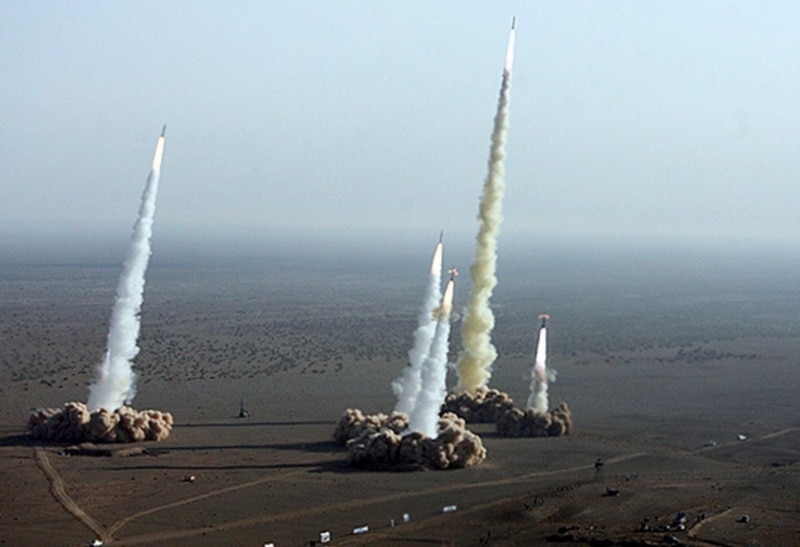 A U.S. official discusses the security threats that Washington feels justifies a missile-defense program. more
|
 Moscow has been uncompromisingly hostile to the U.S. missile-defense proposal. more
|


