




While the Communist Party received the most votes and seats in local polls, their popularity dropped substantially, and analysts have begun to wonder if an electoral shift is beginning before the 2009 parliamentary elections.
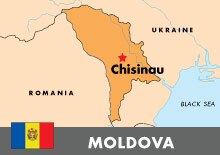
On June 17, residents of Moldova's capital city, Chisinau, lined up to vote in the second round of elections for the city's mayor. On four previous occasions, the city has attempted to elect a mayor to replace Serafim Urechean, who left office to become a member of parliament, and all four times turnout was too low for the elections to be valid.
This year there were no such problems, as the turnout of nearly 36 percent was well above the 25 percent threshold for the elections to be valid.
Not only did Chisinau's citizens elect their first full-term mayor in over two years, but they also delivered the ruling Communist Party its biggest defeat.
The Communist candidate, Veaceslav Iordan, was defeated by the 29-year-old candidate from the Liberal Party, Dorin Chirtoaca. Iordan received 38.83 percent of second-round votes, while Chirtoaca received 61.17 percent.
The victory of a young liberal in the most competitive of the local elections was only one of many events in an exciting election. Many now are asking what these results mean for future elections.
Most Trusted Party
Public opinion polls consistently show that the Communist Party and its leaders are the most trusted in Moldovan politics. Their performance in the polls has been bolstered by relatively strong economic growth since they first gained control of parliament in 2001.
Their support base, however, has waned in the face of economic problems caused largely by a Russian ban on wine and food exports from Moldova.
In the first round of elections, held June 3, the Communist Party won about 35 percent of all local council seats and 36 percent of all municipal seats. This compares to 45 percent and 48 percent respectively in 2003.
In both rounds of mayoral elections, the Communists won a total of 328 races, or about 37 percent. In 2003, they won 41 percent.
Arcadie Barbarosie, director of the Public Policy Institute of Moldova, suggested that these results represent a more general trend of declining support for the Communist Party. This is driven by several factors, including: tiredness of the old leadership, rising unemployment and poverty, and several unpopular policies. Barbarosie said that the 2009 parliamentary elections may see the Communist Party returning to the opposition.
Opposition Parties
The decline in the Communist Party's vote share, however, failed to produce a definitive winner from the various opposition parties.
Although it turned in the best national performance of the opposition parties, the results were varied. In the Chisinau municipal council race, MNA lost half of its seats, mostly to the Liberal Party.
Other significant parties were the Democrat Party, with 78 mayors, the Christian Democrats, with 62, and the Social Democracy Party, with 25. In total, 16 parties won at least one of the mayoral races and 135 of the seats were filled by independents, reflecting the continued fragmentation of Moldova's political scene.
While the Liberal Party claimed arguably the largest prize of the election with Chirtoaca's election in Chisinau, the party won only 11 other races, reflecting its limited organizational reach outside of the capital.
Individual, Not Party
That so many opposition parties continue to compete in the local races may pose a problem for parliamentary elections, since these are decided by party-list proportional representation.
Some of these results reflect more on the individual candidates fielded by the parties than on support for the parties themselves.
Barbarosie pointed to polls showing that the most likely reason for Moldovans to change their political opinion is if they do not like the candidate their party nominates. He suggests that this played a key role in the Chisinau elections, as a number of the traditional communist electorate simply did not show up to support Iordan.
While the competitiveness of local elections may have increased since 2003, the fairness of the elections is still being criticized by international observers.
The most commonly cited shortcomings have been the intimidation of election candidates and media bias.
Dieter Boden, head of the OSCE's election observer mission, said there were a number of cases throughout the country where candidates were threatened with dismissal or suspension from their jobs because of their political activities.
Monitors also noted substantial inequality in media access for candidates. In particular Boden highlighted the limited coverage received by some candidates, while the activities of state authorities were covered extensively, favoring pro-government candidates.
Susan Bolam, head of the delegation of the Council of Europe's Congress of Local and Regional Authorities, said in a news conference that, while the elections were generally well-administered, observers noted some problems in ballot secrecy and improper administration of polling stations.
RFE/RL Belarus, Ukraine, And Moldova Report

SUBSCRIBE For weekly news and analysis on Belarus, Ukraine, and Moldova by e-mail, subscribe to "RFE/RL Belarus, Ukraine, And Moldova Report."