



Sunni Saudi Arabia and Shi’ite Iran are already at odds over Iraq, where both accuse each other of supporting co-religionists to advance their own interests. But this week, the sense of rivalry spilled much deeper into the Arab world as Saudi Arabia accused Tehran of supporting what Riyadh called an attempted coup by the Shi’ite Hizballah Party in Lebanon.
“Of course, Iran is backing what happened in Lebanon, a coup, and supports it,” Saudi Foreign Minister Saud al-Faisal told reporters in Riyadh on May 13, adding, “This will affect [Iran’s] relations with all Arab countries, if not Islamic states, as well.”
The Saudi statement reprised a charge by Lebanon’s Prime Minister Fouad Siniora that Shi’ite fighters of the Hizballah and allied Amal militias tried to overthrow his government.
'Not Interfering'
Iran responded sharply to Riyadh’s charge.
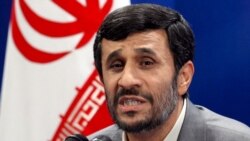
"Iran is the only country not interfering in Lebanon," President Mahmud Ahmadinejad said on May 13. "Who are those that call, support, encourage [what is happening]? Whose ambassador is running away?"
The reference to a fleeing ambassador was to the top Saudi diplomat in Beirut, who reportedly left the city when the street fighting began on May 6.
Ahmadinejad put responsibility for the fighting between Hizballah and supporters of the Sunni-led government on the United States and Israel.
Some 65 people died in Lebanon’s week of violence, the worst since the end of the country’s 15-year civil war in 1990. The fighting, which began after a government move to shut down Hizballah’s private telephone network, saw Shi’ite militiamen sweep through Sunni neighborhoods of western Beirut that support Siniora.
Riyadh’s accusation that Tehran supported an attempted coup in Lebanon underlines an increasing feeling of confrontation in the Sunni Arab world with Iran. The charge is among the most intense to be leveled by an Arab state at Iran since the nadir of Arab-Iranian relations during the 1980-88 Iraq-Iran war -- a war many Arab capitals saw as a regional struggle with Tehran.
The new sense of confrontation showed itself clearly in March as half of the Arab governments boycotted an Arab League conference hosted by Syria, Iran’s closest ally in the Arab world. The mostly Western-leaning states which refused to go to Damascus accuse Syria and Iran of seeking a proxy state in Lebanon.
The tensions over Lebanon now look likely to move Arab states critical of Iran closer to Washington’s argument that Tehran is a threat to Mideast stability. U.S. President George W. Bush has arrived in the Mideast on a trip partly intended to bolster that argument.
'Iran Causes A Lot Of Problems'
Bush said in an interview with the BBC's Arabic Service earlier this week that his trip, which begins in Israel, is to advance the Israel-Palestinian peace process and also to warn about Iran.
“A lot of my trip is to get people to focus not only on Lebanon, to remember Lebanon, but also to remember that Iran causes a lot of the problems,” he said. “I view [Iran] as a serious threat to peace. And, therefore, I spend a lot of time trying to convince other nations, other leaders, to join in this common concern.”
U.S. concerns focus on Iran’s nuclear program and its support for Hizballah and Hamas, which Washington lists as terrorist groups. Some U.S. policy experts see an integrated Iranian strategy in these diverse activities. Columnist Thomas Friedman of "The New York Times" observes that Iran is now in a position to respond to any attack on its nuclear facilities with bitter fighting by its allies on the Lebanese, Palestinian, and Iraqi fronts. He calls this “a sophisticated strategy of deterrence.”
Washington’s view of a regional standoff with Iran is publicly reciprocated in Tehran. In a May 11 editorial, the daily "Kayhan" wrote: “In the power struggle in the Middle East, there are only two sides -- Iran and the United States.”
The war of words is likely heat up further as Bush heads for Saudi Arabia and Egypt later this week. In Sharm al-Sheikh, he is due to meet with regional leaders including Lebanon’s Siniora.
