



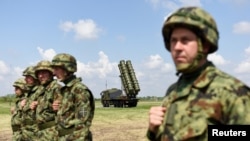
Amid growing tensions between global powers and continued instability in the Western Balkans, Serbia has intensified its military cooperation with China, acquiring advanced drones and air defense systems that signal a deepening strategic alignment.
While Belgrade continues to proclaim its military neutrality and maintains aspirations for European Union membership, its expanding defense partnership with Beijing highlights the complex geopolitics shaping its security policy.
Customs data reviewed by RFE/RL’s Balkan Service show that Serbia’s state-owned defense industry imported goods worth around $280 million from China in the last two years.
The records do not specify the types of weaponry purchased, but analysts believe the imports likely involve drone technology, air defense systems, and new equipment contracts stemming from previous deals.
From Russian Jets to Chinese Missiles
Serbia’s arms acquisitions in recent years reveal an increasingly diversified procurement strategy. Alongside Russian MiG-29 fighter jets and French Rafale aircraft, Belgrade has turned to Chinese suppliers for cutting-edge systems that are relatively affordable and politically low-risk.
According to the Stockholm International Peace Research Institute (SIPRI), China accounted for 57 percent of Serbia’s total arms imports between 2020 and 2024, ahead of Russia (20 percent) and France (7.4 percent).
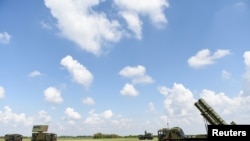
Though SIPRI did not record any new Chinese arms deliveries in 2024, these figures reflect sustained cooperation in the years prior, especially the delivery of FK-3 medium-range air defense systems, which dominate Serbia’s Chinese-sourced arsenal.
“The FK-3 is a major purchase and has a higher value than most other systems acquired in the last five years,” SIPRI researcher Katarina Dokic told RFE/RL. “China looks to become the leading country, from which Serbia imports weapons."
Neither Serbia’s Defense Ministry nor the Chinese Embassy in Belgrade responded to RFE/RL’s requests for comment on the reports.
Expanding The 'Steel Friendship'
Serbia’s defense pivot toward China accompanies what Serbian and Chinese leaders have repeatedly called a “steel friendship,” a phrase that underscores growing economic, political, and technological cooperation.
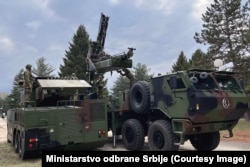
Serbia became the first European country to acquire Chinese CH-92 and CH-95 drones, as well as FK-3 and HQ-17 air defense systems, hardware that China previously exported mainly to Asian and Middle Eastern states.
Despite these acquisitions, Belgrade has not disclosed any official data on the number and specifications of the systems received.
“There are no fully reliable public records,” Dokic said. “We only know what the Serbian authorities have already displayed.”
Legally, Serbia must publish annual arms trade reports, but the most recent release covers only 2022.
Together with Belarus and Russia, Serbia remains one of the few European nations importing significant quantities of non-Western arms despite EU and US warnings about the security and political risks linked to Chinese military cooperation.
What the Data Reveals About Belgrade's Military Ties
SIPRI’s databases and the UN Register of Conventional Arms confirm that Serbia’s largest purchases from China occurred between 2019 and 2023. In 2019, Serbia ordered 50 FT-8 missiles, as well as six CH-92 UAVs designed for surveillance and precision strikes.
The drones arrived in 2020, followed by a 2020 order of three HQ-22 air-defense systems, the export version known as FK-3, along with 300 missiles, delivered between 2022 and 2023.
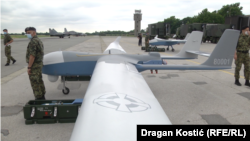
In 2022, Serbia purchased ten CH-95 reconnaissance-strike drones, which became operational the following year.
SIPRI data also records a 2023 purchase of four HQ-17A short-range air defense systems and 100 missiles, delivered in 2024 and showcased during the “Zastava 2024” military capabilities demonstration. The total value of these transactions was not publicly disclosed.
Did Serbia Acquire China's HQ-9 Surface-To-Air Missile?
Some media reports in Serbia suggested that Belgrade may be eyeing or has already received the long-range HQ-9 system, China’s top-tier surface-to-air missile platform with a 200-kilometer range.
Reports of Egyptian military cargo planes landing multiple times at Belgrade’s Batajnica Air Base in mid-2025 further fueled rumors of HQ-9 deliveries as aircraft of the same type were previously used for similar Chinese shipments.
RFE/RL verified one flight path in October this year that traced from Egypt toward China and back, including a final stop in Serbia. However, neither open-source databases nor government statements confirm that Serbia operates the HQ-9. Current known users include Egypt, Pakistan, Morocco, Uzbekistan, and Turkmenistan.
Why Are Chinese Systems Appealing To Serbia?
Cost, compatibility, and political flexibility all contribute to Serbia’s growing preference for Chinese systems, Dokic said.
According to her, China’s air defense systems are based on Soviet and Russian designs, making them technically compatible with Serbia’s existing inventory of Russian-origin weapons. For drones, Belgrade has emphasized technology transfer: Collaboration with Chinese developers of the CH-92 directly contributed to Serbia’s domestically produced “Pegaz” drone, unveiled in 2022.
Serbian Defense Minister Bratislav Gasic has announced that defense cooperation with China will increasingly focus on industrial exchanges and domestic production. “Costs play a big role in the interest in the Chinese weapons,” Dokic said, emphasizing Belgrade’s “willingness to sustain good political ties with China.”
She also said that other Western Balkan countries that are NATO members don't spend as much on defense. “And they have lower ambitions for purchasing weapons and military equipment,” she said.
According to SIPRI, Serbia has been the largest military spender in the region over the past five years.
Dokic stressed that Albania, North Macedonia, and Montenegro have very clear goals for military procurement, primarily infantry weapons or helicopters that can also be used for civilian purposes.
“Therefore, their ambitions are lower, and other countries have options that Serbia doesn't have, and they also don't want to buy from China because China is a strategic competitor to their main ally,” she said.
Dokic pointed out that the United States recognizes China as a strategic competitor, so countries that, unlike Serbia, are US allies in NATO are reluctant to buy weapons from China.
“It's unlikely that Serbia will be able to purchase weapons from the United States that NATO members are typically able to acquire,” she added.
Balancing Between East And West
Serbian President Aleksandar Vucic has repeatedly defended arms purchases from China as “legitimate and transparent,” calling them essential for modernizing Serbia’s defense capabilities.
During a visit to Beijing in September this year, Vucic attended a military parade and said he discussed additional acquisitions, though he ruled out ballistic or hypersonic missiles.
Belgrade and Beijing also held joint military exercises in July 2025.
The 10-day special forces exercises held in China's Hebei Province focused on drone tactics. The joint drills were conducted despite Brussels' warnings to Serbia.
As Serbia continues its cooperation with China in terms of military technology exchange and military exercises, it finds itself at a delicate crossroads. Its military modernization increasingly depends on Eastern partnerships, even as it pledges commitment to European integration.
The evolving relationship with Beijing is not only reshaping Serbia’s defense capabilities but also reflects its ongoing effort to balance geopolitical loyalties -- a balancing act that eventually may attract sharper attention from Brussels and Washington.