A dining hall at the Songdowon children's camp in North Korea, in a 2014 photo by Uri Tours, a tourism company.
Russia has been sending abducted Ukrainian children to a summer camp in North Korea, according to a European Union document seen by RFE/RL outlining a new round of planned sanctions.
The document lists people and entities to be included in new EU sanctions on Russia to be approved next week.
The people proposed for sanctioning are mainly leading officials in Russian-occupied territories in Crimea and Donbas but perhaps the most remarkable entry on the list is the Songdowon International Children’s Camp, which is run by the North Korean authorities.
The document notes that this camp “participates in organized programs involving the transfer of Ukrainian children from temporarily occupied territories of Ukraine to North Korea.”
The North Korean Missiles Russia Is Using Against Ukraine
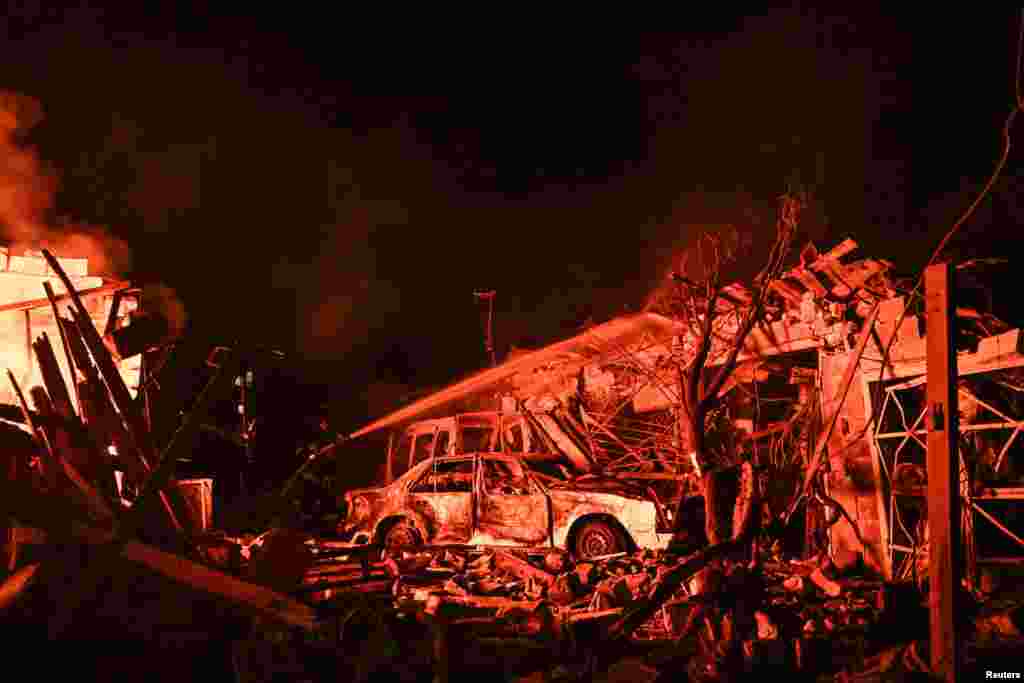
1/9A firefighter (center left) works under the light of a burning building after strikes on Zaporizhzhya on August 11.
A missile and drone attack on the city included a strike on a metalworking plant that killed seven people. Ukrainian President Volodymyr Zelenskiy claimed Russia used North Korean ballistic missiles in the Zaporizhzhya strikes.
As Kyiv struggles to counter deadly Russian missile strikes, Ukrainian officials say Moscow is once again using North Korean weaponry to hit cities in Ukraine. Here are the missiles that Pyongyang is reported to have supplied for Russia's war.
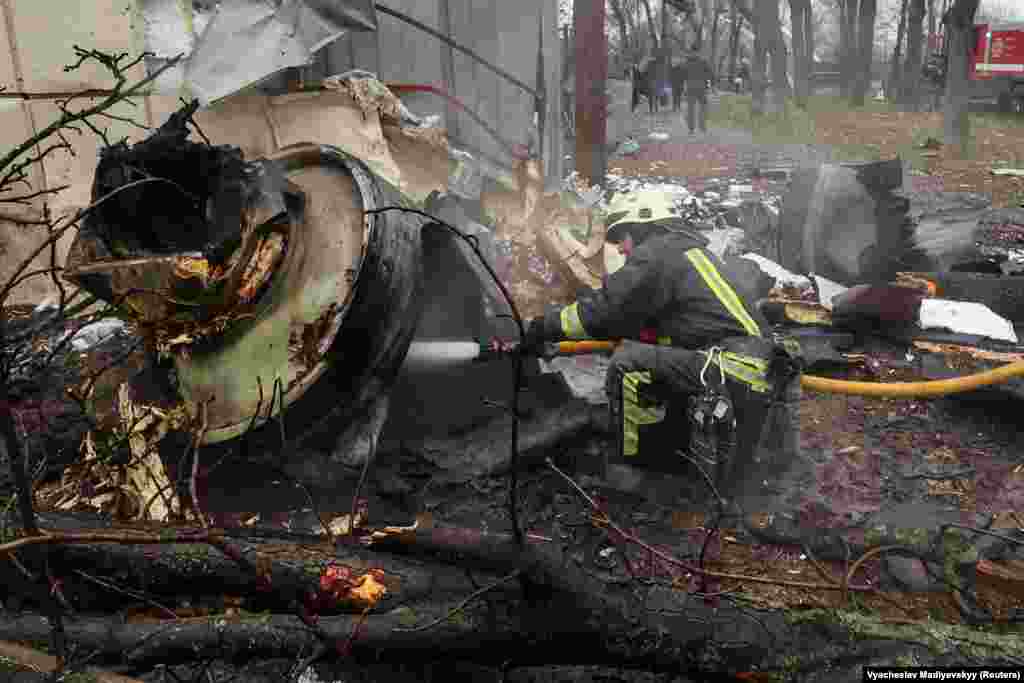
2/9If the Zaporizhzhya attack is confirmed to have included North Korean missiles, it will mark a resumption of Pyongyang’s weaponry being fired into Ukraine from Russia. This January 2024 image shows the remnants of what Ukraine later identified as a North Korean missile after it impacted a site in the eastern city of Kharkiv.
As Kyiv struggles to counter deadly Russian missile strikes, Ukrainian officials say Moscow is once again using North Korean weaponry to hit cities in Ukraine. Here are the missiles that Pyongyang is reported to have supplied for Russia's war.
3/9In an April 2026 report, Ukraine’s Defense Ministry identified two models of North Korean ballistic missiles it says have been used against Ukraine. According to the report, those missiles are the Hwasong-11A and Hwasong 11B, known under US naming conventions as KN-23 and KN-24 missiles, respectively.
As Kyiv struggles to counter deadly Russian missile strikes, Ukrainian officials say Moscow is once again using North Korean weaponry to hit cities in Ukraine. Here are the missiles that Pyongyang is reported to have supplied for Russia's war.
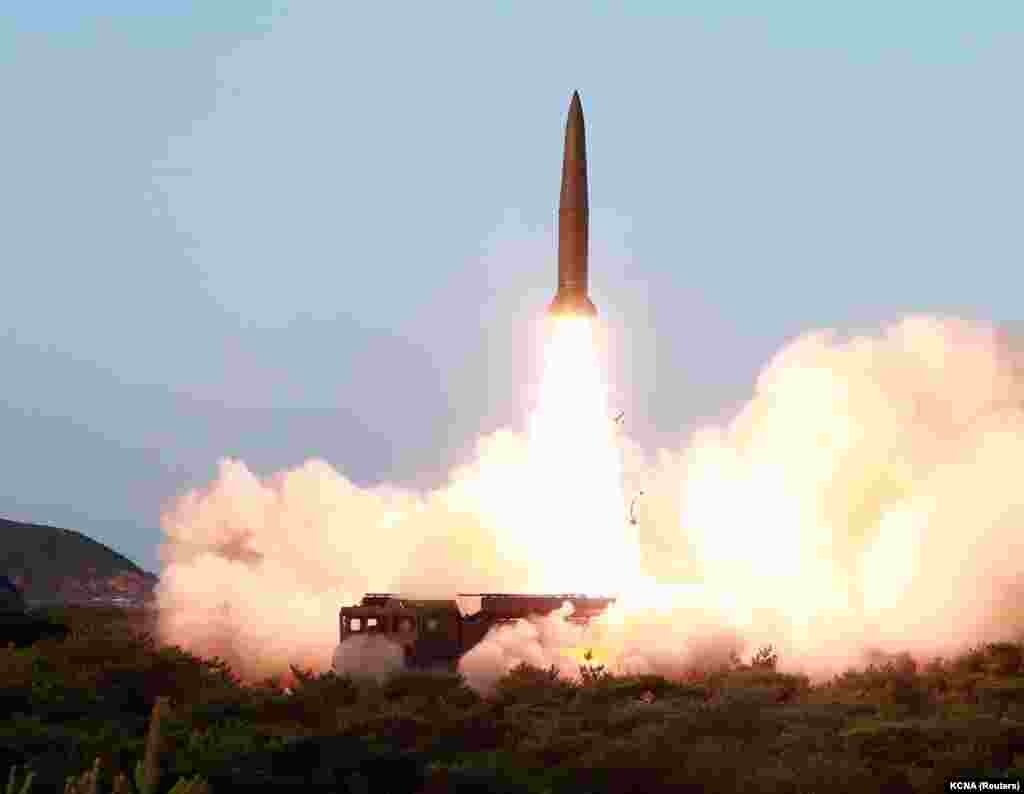
4/9A July 2019 photo of a KN-23 ballistic missile undergoing tests in North Korea.
The KN-23 is a vehicle-launched missile similar in appearance to Russia’s Iskander, but Ukraine’s military forensics analysis concluded that the weapons “are not direct copies of Soviet/Russian models.” The Ukrainian report describes them as being some 50 percent longer than Iskanders, allowing them to achieve a similar range despite using less efficient fuel.
As Kyiv struggles to counter deadly Russian missile strikes, Ukrainian officials say Moscow is once again using North Korean weaponry to hit cities in Ukraine. Here are the missiles that Pyongyang is reported to have supplied for Russia's war.
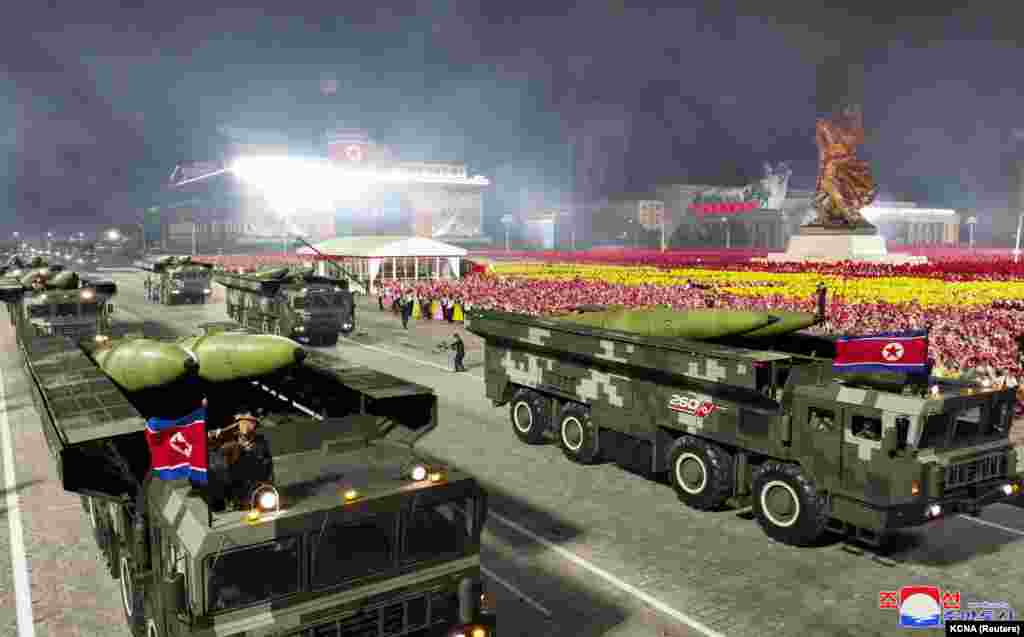
5/9KN-23 missiles paraded on their launch vehicles in Pyongyang in July 2023.
The KN-23 missile is believedto carry a warhead of some 500 kilograms and have a range of up to 600 kilometers. The weapon features fins that enable it to swerve in flight, complicating the work of interceptor missiles. Ukraine’s forensic analysis of the weapon found that the missile was made using outdated production techniques resembling those used some 50 years ago.
As Kyiv struggles to counter deadly Russian missile strikes, Ukrainian officials say Moscow is once again using North Korean weaponry to hit cities in Ukraine. Here are the missiles that Pyongyang is reported to have supplied for Russia's war.
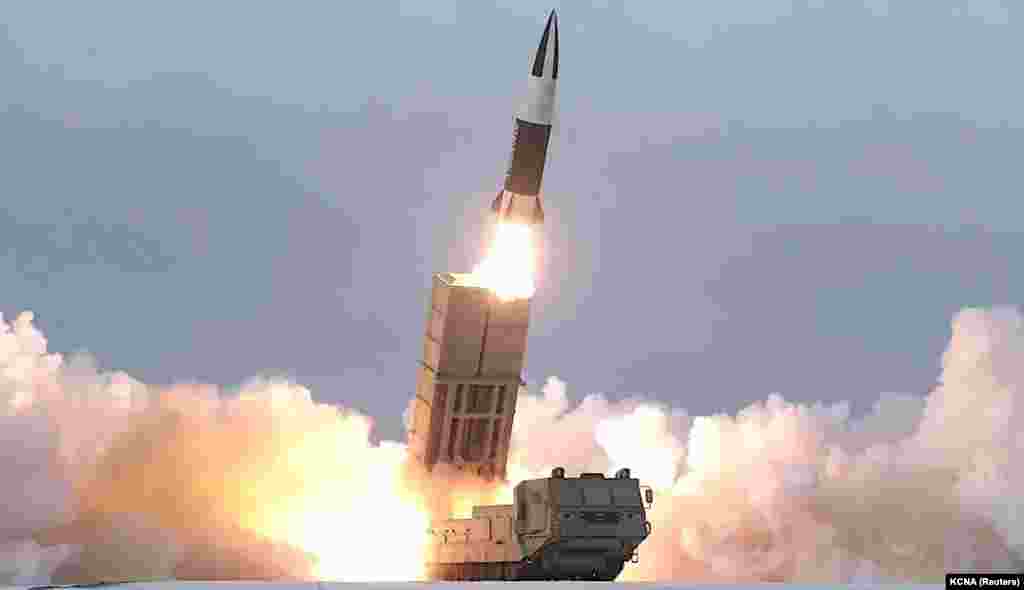
6/9The second model of missile used by Russia against Ukraine is reportedly the KN-24, pictured here during tests at an unknown date.
The KN-24 resembles the US ATACMS system in form and role. It was first tested in 2019 and features an estimated range of around 400 kilometers. Pyongyang describes the missile as a “tactical guided weapon.”
As Kyiv struggles to counter deadly Russian missile strikes, Ukrainian officials say Moscow is once again using North Korean weaponry to hit cities in Ukraine. Here are the missiles that Pyongyang is reported to have supplied for Russia's war.
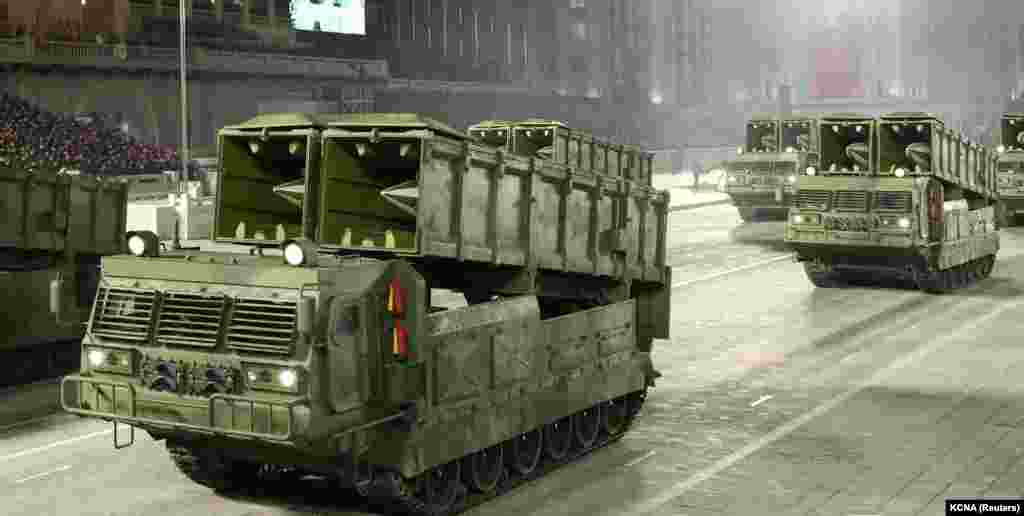
7/9KN-24 systems pictured during a parade in Pyongyang in January 2021.
KN-24s are reportedly able to “pull up” near the final phase of flight to orient and evade air defense systems. The missiles are believed to carry warheads of 400-500 kilograms.
As Kyiv struggles to counter deadly Russian missile strikes, Ukrainian officials say Moscow is once again using North Korean weaponry to hit cities in Ukraine. Here are the missiles that Pyongyang is reported to have supplied for Russia's war.
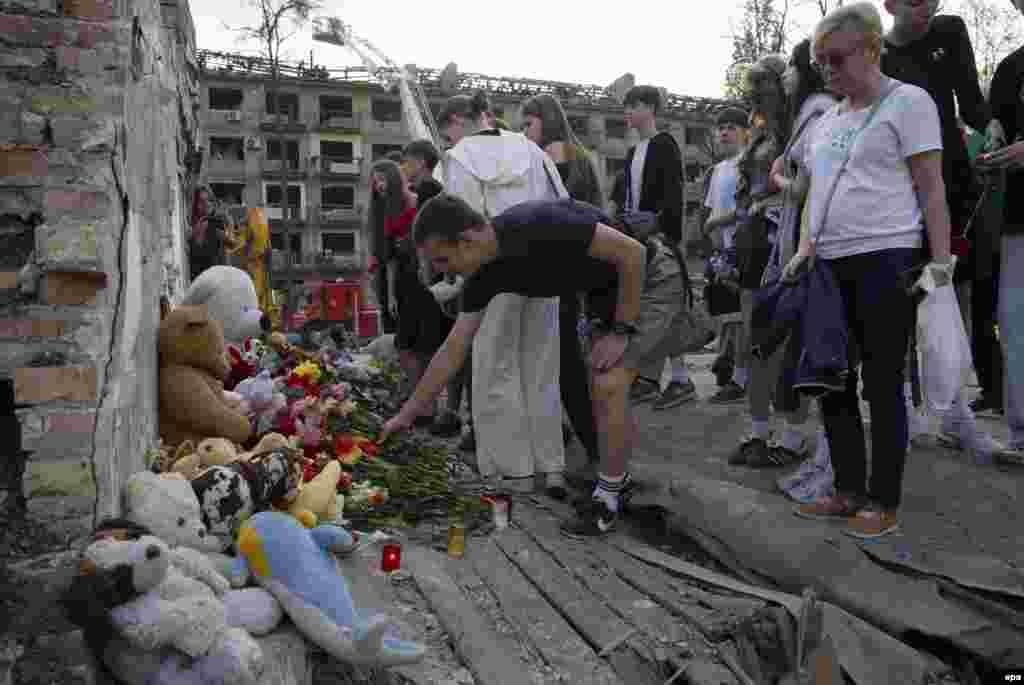
8/9Ukrainians lay flowers at the site of what Ukraine says was a Russian-launched North Korean missile strike on a residential area in Kyiv in April 2025 that killed several people.
According to the Institute For The Study Of War (ISW), Russia paused its use of North Korean missiles against Ukraine last year due to issues with accuracy.
As Kyiv struggles to counter deadly Russian missile strikes, Ukrainian officials say Moscow is once again using North Korean weaponry to hit cities in Ukraine. Here are the missiles that Pyongyang is reported to have supplied for Russia's war.
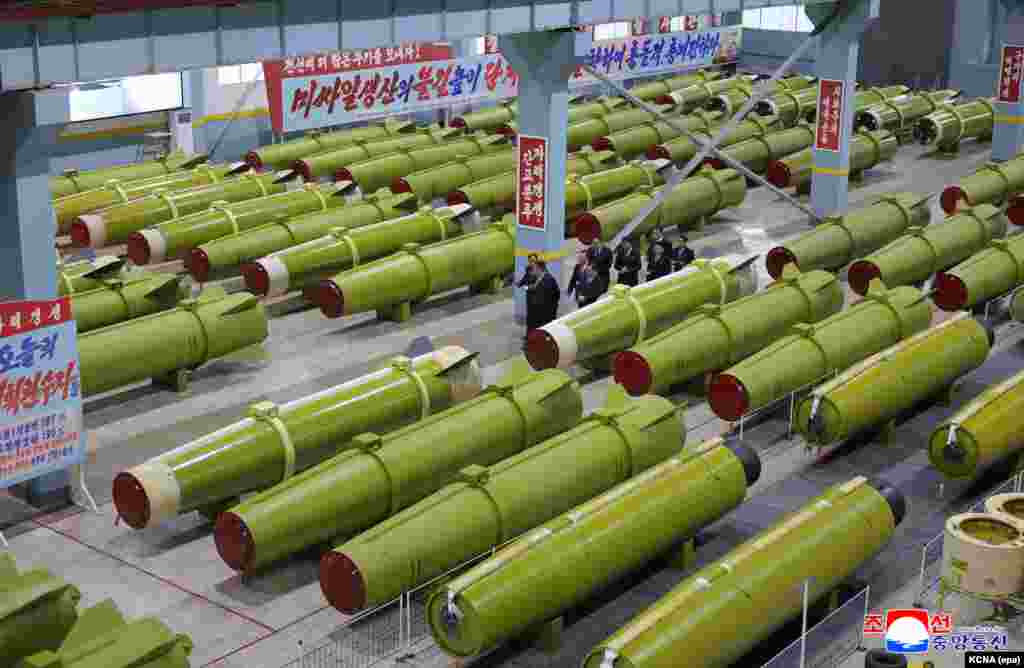
9/9A photo released in December 2025 showing a missile production facility in North Korea that appears to include KN-23 missiles.
According to the ISW, recent reports that Russia has returned to using North Korean projectiles may indicate it is “testing the missiles" after working with Pyongyang to improve them over the past year.
As Kyiv struggles to counter deadly Russian missile strikes, Ukrainian officials say Moscow is once again using North Korean weaponry to hit cities in Ukraine. Here are the missiles that Pyongyang is reported to have supplied for Russia's war.
Previous slide
Next slide
The transfers are coordinated by Russian officials and, while it is supposed to be “a cultural exchange,” the paper notes that it "serves a broader propagandistic function: Ukrainian children are exposed to curated...pro-Russian narratives.”
In other words, the document adds, the camp "is directly involved in the unlawful transfer, ideological indoctrination, and militarization of Ukrainian children in coordination with the Russian Federation."
The camp is located on the east coast of North Korea, on the Sea of Japan, some 95 kilometers from the border with South Korea.
Uri Tours, a North Korean company promoting the camp, says it is the largest in the country and was opened in 1960 for "promoting international friendship."
The camp was previously sanctioned by the United Kingdom in May for "providing support for the government of Russia’s program for the forced deportation and re-education of Ukrainian children."
North Korea responded by recalling its ambassador to London and downgrading relations.
The International Criminal Court (ICC) has issued an arrest warrant for Russian President Vladimir Putin for the "unlawful deportation...of Ukrainian children."
The involvement of North Korea in Russia's campaign of abducting children appears to ratchet up its role in the war.
North Korea sent an estimated 12,000 troops to fight alongside Russian forces in 2024 following Ukraine's incursion into the Kursk region. South Korean intelligence has reported that around 2,000 North Korean troops have been killed in fighting.
Recently, Ukrainian President Volodymyr Zelenskyy said more North Korean troopswould be sent to Russia, possibly to operate ballistic missiles manufactured by Pyongyang in attacks on Ukraine.
The other entities listed in the EU's sanctions list are other so-called “summer camps” in either Russia or in occupied regions of Ukraine.
According to the bloc, children taken there are exposed to programs that push “loyalty to Russia, Russian national identity, adoption of Russian national values, military historical themes, and participation in activities linked to military-patriotic organizations.”
The document notes that these sorts of deportations “constitute grave breaches of international law and a violation of the fundamental rights of the child with the aim to erase Ukrainian identity and undermine the preservation of its future generations.”
RFE/RL journalists report the news in 24 languages in 18 countries where a free press is banned by the government or not fully established. We provide what many people cannot get locally: uncensored news, responsible discussion, and open debate.