


Wednesday, June 19, 2013


TEXT SIZE - +

Disgraced Daghestani Official Denies Reported Suicide Attempt

The jailed mayor of Makhachkala, Said Amirov (in wheelchair), in a Moscow court on June 14.

Makhachkala Mayor Said Amirov, who was apprehended at his home on June 1 and charged three days later with having commissioned a contract killing, denied on June 14 media reports that he was hospitalized late on June 11 after slashing his veins in an apparent suicide attempt. Amirov has nonetheless reportedly been transferred from the detention center where he was being held in solitary confinement to the psychiatric hospital at the Butyrka prison.

The purported suicide attempt was reported early on June 14, first by the Russian daily "Izvestia" and then by other media outlets, including "Kommersant," and, more briefly, RIA Dagestan. The two Moscow dailies quoted federal penitentiary service officials as confirming that Amirov had slashed his veins. And when Amirov appeared in court later that day, wearing tracksuit trousers and a short-sleeved white T-shirt, his right arm was visibly bandaged just below the elbow. One of his lawyers claimed the bandage was to protect the wound caused by a botched intravenous injection.

The Moscow court session on June 14 also temporarily suspended Amirov as Makhachkala mayor. He did not voice any objection to that decision. On June 13, acting Republic of Daghestan President Ramazan Abdulatipov had named as acting city mayor Murtazali Rabadanov, 51, a physicist and career academic who had been appointed rector of Daghestan State University in 2007.

Rabadanov, like Amirov, is a Dargin. He is also a cousin of one of Amirov's closest associates, Rabadan Rabadanov, who owns the Adam International Bank plus a string of companies formed in 2008-12 to administer the privatized Makhachkala water, electricity, and heating suppliers.

Murtazali Rabadanov claimed his nomination as acting mayor was unexpected. He said he has no political ambitions, and does not anticipate the appointment will be for a long period.

Media speculation in the aftermath of Amirov's arrest identified nine possible successors as mayor. They are Abdulatipov's predecessor as Republic of Daghestan's president, Magomedsalam Magomedov (Dargin), currently a deputy head of the Russian presidential administration; Deputy Federation Council Chairman Ilyas Umakhanov (Dargin); State Duma deputy and former Daghestan First Deputy Prime Minister Rizvan Kurbanov (Lak); State Duma deputy Magomed Gadjiyev (Avar); Republic of Daghestan Pension Fund head Sagid Murtazaliyev (Avar); Deputy Prime Minister Abu-Supyan Kharkharov (Avar); Industry Minister and former Deputy Prime Minister Rizvan Gazimagomedov (Avar); acting Daghestan Minister of Transport Shirukhan Gadzhimuradov, who was Amirov's closest challenger in the 1998 mayoral election; and Abdulatipov's son-in-law, Strategic Council chairman Magomed Musayev.

Daghestani Police Thwart 'Anti-Azerbaijani' Protest

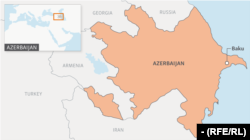
A view of the city of Derbent from the ancient citadel. Are city residents right to think Azerbaijan has designs on the town just across its northern border?

Police intervened on June 8 to prevent a protest by Derbent residents against the renaming of a street in honor of deceased Azerbaijani President Heydar Aliyev, even though the municipal authorities had raised no objection to holding the demonstration. Fourteen protest participants were briefly detained. Traffic police intercepted others on the outskirts of the city and prevented them from proceeding to the square where the demonstration was to take place.

The organizers now plan to convene a republic-level protest in Makhachkala. They stress that the protest is not directed against the Azerbaijani people, but against a perceived policy of discrimination and forced assimilation of Azerbaijan's ethnic minorities, including the Avars, Lezgins, Tsakhurs, and Aguls who are among Daghestan's 14 titular nationalities. So too are the Azerbaijanis, who account for an estimated 20 percent of the population of southern Daghestan, and an even larger share of the population of Derbent.

The incident has triggered an impassioned discussion among Daghestan's bloggers, and expressions of concern from public figures at the possible negative repercussions. Those comments focus on both the domestic political and the geopolitical aspects of the situation.

The Derbent municipal authorities, in particular Mayor Imam Yaraliyev, are criticized for having decided to rename Sovetskaya Street without having consulted with residents, 274 of whom reportedly signed a petition in protest. Some bloggers imply that Yaraliyev may have accepted inducements from the Azerbaijani leadership, or been won over by promises of investment.

x
The decision to rename the street in honor of Heydar Aliyev was reportedly made on May 8, prior to the arrest of powerful Makhachkala Mayor Said Amirov, with whom Yaraliyev is allegedly allied. That putative alliance led one blogger to suggest Yaraliyev decided to quash the protest to curry favor with acting Republic of Daghestan President Ramazan Abdulatipov. Prior to his arrest, Amirov was widely regarded as the most serious potential challenger to Abdulatipov in the event of direct election for republic head.

Akhmednabi Akhmednabiyev, who is deputy editor of the independent Daghestani weekly "Novoye delo," inferred that "there are clearly people in Daghestan, in particular in Derbent, who no longer consider themselves Daghestanis" and instead are lobbying the interests of a foreign country.

But it is also possible that the Derbent municipal authorities gave the green light for the renaming of Sovetskaya Street under pressure from the Russian leadership, which intends the gesture as an olive branch in the wake of the prolonged and acrimonious dispute with Baku over the continued use by Russia of the Qabala over-the-horizon radar station. 

Azerbaijani Influence In Daghestan

Other bloggers protest the planned glorification of a foreign political figure who, they claim, implemented a long-term policy of forced assimilation of ethnic minorities, in particular the Lezgins, in Azerbaijan. As part of that policy, during national censuses members of ethnic minorities are reportedly pressured to identify themselves as Azerbaijanis.

Those commentators also recall the removal of the plaque with the name of the unique 12th-century Lezgi mosque, and the destruction of a monument in Azerbaijan's northern Zakatala district to Daghestan's national hero, Imam Shamil.  They note that while ethnic minorities in Azerbaijan are deprived of education and TV and radio broadcasting in their native languages, Heydar Aliyev had transmitters built to ensure that the Azerbaijani population of southern Daghestan could watch Azerbaijani state TV. He also provided free of charge Azerbaijani-language textbooks for Azeri schools in southern Daghestan.

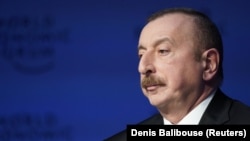
Some Lezgin commentators argue that since current President Ilham Aliyev succeeded his late father in 2003, that cultural assimilation has been parlayed into systematic geopolitical and economic expansion. They adduce as an example the border treaty signed between the Russian Federation and the Azerbaijani Republic in September 2010, under which Azerbaijan secured the right to the lion's share of the water from the Samur River that marks the border. One analyst commented that the Samur now provides drinking water for the entire Azerbaijani coast as far south as Baku, while Daghestan's share of the water is not enough to provide irrigation in the predominantly agricultural southern districts where unemployment is high.

Commentators also point to the transfer to Azerbaijani jurisdiction of two villages in Azerbaijan close to the border that until the signing of the 2010 treaty were designated Russian exclaves. The predominantly Lezgin inhabitants of Khrakhuba and Uryanuba were faced with the choice of applying for Azerbaijani citizenship or selling their homes and moving to Daghestan, where the authorities claimed to be unable to provide them with alternative accommodation. 

Other bloggers, however, argue that the Azerbaijani authorities' interest in Derbent is not an entirely negative phenomenon. They note the 10 truckloads of humanitarian aid provided in October 2012 to victims of flooding in the town, and predict that the renaming of Sovetskaya Street may lead to large-scale Azerbaijani investment in the region.

Even before the signing of the September 2010 border treaty, two Daghestani journalists had argued that Ilham Aliyev was already the most influential political figure in southern Daghestan by virtue of his close personal ties with then-President Magomedsalam Magomedov and with other prominent Daghestani politicians.  Whether he enjoys the same rapport with Abdulatipov is not clear.

In the case of the current altercation over renaming Sovetskaya Street Heydar Aliyev Street, it is the widely-held perception, whether accurate or not, that Baku has territorial ambitions in Daghestan that poses a threat to the harmonious coexistence in Derbent of the Azeris and Lezgins, who together account for the majority of the city's estimated 100,000 population. The renaming is scheduled to be formalized at a ceremony on June 15 in the presence of a government delegation from Azerbaijan.

Ingush Public Forum Calls On Republic Head To Resign

Ingushetian leader Yunus-Bek Yevkurov

Over the past two months, republic of Ingushetia head Yunus-Bek Yevkurov has set in motion a sequence of events that virtually guarantees his reelection for a second term, against the wishes of most of the republic’s population. Public figures, disparate opposition groups, and disillusioned local officials have now joined forces in a bid to avert that scenario.

Seven prominent Ingush, including a former presidential administration official, convened a so-called open congress of the Ingush people in Moscow on June 9.

Delegates adopted a resolution calling on Yevkurov to resign voluntarily and for a referendum among Ingushetia’s voters on whether the republic head should be elected by a direct ballot or by the parliament. The resolution will be sent to Russian President Vladimir Putin in an attempt to alert him to the multiple problems Ingushetia faces.

The Moscow congress was intended as a response and counterweight to a Congress of the Ingush People hastily convened by Yevkurov in April in the village of Nesterovskaya, allegedly in violation of relevant legislation. The Congress of the Ingush People is defined in Article 105 of the Ingushetia's constitution as a representative body that interacts with the authorities on issues that concern the spiritual and socioeconomic development.

At the congress in Nesterovskaya, a majority of the estimated 300 handpicked delegates, most of them either local or government officials or known supporters of Yevkurov, voted in favor of abolishing direct elections for republic head and empowering the parliament to select a person for this post from a shortlist of three candidates proposed by Putin.

The seven public figures who organized the Moscow congress told a press conference late last month that the vote by the Congress of the Ingush People was rigged, and that the 196 votes in favor were counted in just 17 seconds. Although resolutions adopted by a Congress of the Ingush People are not legally binding, the republic’s parliament duly voted to amend the constitution to abolish direct elections for republic head.

Yevkurov, whose term expires in late October, is thus virtually assured of reelection by subservient lawmakers. In a direct ballot he would have faced fierce competition from Afghan war hero and retired General Ruslan Aushev, who served as Ingushetia’s president from 1993-2002. Aushev initially said he would not run. But after 50,672 signatures were collected in support of his candidacy, he formally stated on April 16, just days before Yevkurov’s Congress, which he attended, that he he thought he had a moral obligation to participate in the ballot.

Controversial Figure

A former career military intelligence officer, Yevkurov is a controversial figure. When then-Russian President Dmitry Medvedev appointed him republic head in October 2008 to replace Murat Zyazikov, whose name had become a byword for corruption on a spectacular scale, the population reacted with jubilation.

Nonetheless, within two years Yevkurov managed to squander the trust and hope placed in him. He failed to bring about the long-hoped-for economic upswing and create new jobs to bring down an unemployment rate then estimated at 57 percent.  In addition, according to his detractors, he turned a blind eye to -- or possibly even encouraged -- corruption, inefficiency, and mismanagement on the part of the government and of members of his own family he had promoted to influential posts.
x

A poll conducted in 2010 by the opposition website ingushetia.org found that of 2,027 respondents, just 732 (36.1 percent) said they trusted Yevkurov and considered him honest, while 939 (46 percent) said he was "deceiving the people."  

However, under Yevkurov’s watch, the incidence of terrorist attacks, abductions, and extrajudicial killings in Ingushetia has plummeted, not least thanks to his promise of clemency to insurgents who voluntarily surrender and lay down their arms.

At a roundtable discussion in Moscow in late May, the organizers of the open congress enumerated further instances of Yevkurov’s perceived incompetence and venality.

Congress organizing committee chairman IlesTatiyev, who chairs a North Caucasus NGO that promotes cooperation between the executive branch and civil society, questioned the rationale for Yevkurov’s decision to build the largest flour mill in the North Caucasus in Ingushetia, when the republic does not produce grain.

Daud Garakoyev, a member of the All-Ingush Civic Union, said that despite Yevkurov’s pledge on taking office to combat corruption at all levels, the situation has since deteriorated rather than improved. He cited Audit Chamber statistics revealing the embezzlement of 350 million rubles ($10.7 million) allocated for investment in agriculture and a further 30 million rubles earmarked for youth programs, while 600 million rubles to reduce unemployment are unaccounted for.

In a subsequent interview with the radio station city-fm.ru, Garakoyev estimated the total amount stolen over the past five years to be 20 billion rubles; Ingushetia’s annual budget is 18 billion rubles.

Another speaker at the press conference claimed that up to 40 percent of the oil extracted in Ingushetia is stolen. The republican oil company Ingushneftegazprom is headed by Yevkurov’s brother Uvays.

Yevkurov has tasked Ingushetia’s interior minister, Federal Security Service head, and prosecutor with determining whether those allegations are true and, if not, formally refuting them.

Invitations to the Moscow congress were sent to republic of Ingushetia parliamentarians and the republic's representatives in the Russian State Duma and Federation Council, and to Yevkurov, Aushev, and Zyazikov, who is currently deputy presidential envoy to the Central Federal District. But none of the three showed up.

The organizers had stressed earlier in a separate statement that they do not support any alternative presidential candidate and are not lobbying on behalf of either Aushev, Zyazikov, or Moscow-based oligarch and Russneft CEO Mikheil Gutseriyev. Gutseriyev made clear in a recent interview that he has no interest in local Ingushetian politics and plans to devote his entire energies to his business empire.

Landmark Event

As of June 8, more than 500 delegates had registered to attend the congress. Only some 230 actually showed up, however, with most of them coming from Moscow or other parts of Russia or from the Commonwealth of Independent States. According to Garakoyev, many Ingush who had planned to travel from Ingushetia to Moscow were forcibly prevented from doing so.

Others may have been deterred by Tatiyev’s arrest on June 7 by the Ingush Interior Ministry while on his way to give an interview to the radio station Ekho Moskvy. Tatiyev has been charged with obtaining, by false pretences, a 20 million-ruble ($622,248) loan from Rosselkhozbank, and transported to Magas for questioning.

The Moscow congress was a landmark event in that, as co-organizer Daud Khuchiyev pointed out, it was the first time in recent years that all Ingushetia's opposition groupings had gathered under one roof (17 organizations were represented, including all four political parties registered in Ingushetia). Also present were members of the hard-line opposition movement Mekhk Kkhel, which for the past 18 months has taken the lead in campaigning for Yevkurov’s dismissal, bombarding first Medvedev and then Putin with denunciations and appeals.

There has been no official reaction to the congress to date from either the Russian or the Ingushetian authorities. But Assembly of Peoples of the Caucasus Chairman Ruslan Kutiyev was cautiously optimistic. He pointed out that the congress could not have taken place without the Kremlin’s approval, which, he reasoned, implies that there is a group jockeying for position within Putin’s "power vertical" that would be glad to see the back of Yevkurov.

On the other hand if, as many analysts surmise, Yevkurov is regarded as a valuable counterweight to Chechen Republic head Ramzan Kadyrov, any efforts to undermine him are a waste of time and energy.

Putin Fires Karachayevo-Cherkessia Interior Minister

Former Cherkessk deputy police chief Ruslan Rakhayev is on trial on charges of beating Dakhir Djankezov to death in October 2011. Djankezov had been taken into custody for being drunk. (illustrative photo)

Russian President Vladimir Putin has dismissed Major General Zhaudat Akhmetkhanov as Karachayevo-Cherkessia Republic interior minister and named Akhmetkhanov’s first deputy, career investigator Colonel Mukhammed Bzhunayev, as acting head of the ministry.

No reasons were cited for the dismissal of Akhmetkhanov, a Tatar who had spent his entire career in Kazan before being named Karachayevo-Cherkessia interior minister exactly three years ago by then-Russian President Dmitry Medvedev. A second regional interior minister whom Putin also fired on June 3, Pavel Gorchakov (Archangelsk Oblast), was also a Medvedev appointee.

The Karachayevo-Cherkessia Interior Ministry has come under scrutiny in recent months due to the high-profile trial of former Cherkessk deputy police chief Ruslan Rakhayev on charges of beating Dakhir Djankezov to death in October 2011. Djankezov had been taken into custody for being drunk. Rakhayev denies using violence on Djankezov. He says the injuries from which Djankezov died were inflicted hours before the man was brought to his office and that the case against him was fabricated.

Rakhayev, 33, is a Balkar. (The Balkars and the Karachais, the largest ethnic group in Karachayevo-Cherkessia, are ethnic cousins.) He began his career with the police in neighboring Kabardino-Balkaria, where he was awarded for his role in deflecting the multiple attacks by Islamic insurgents on police and security facilities in Nalchik in October 2005.

Rakhayev was named deputy Cherkessk police chief in September 2011 and says he immediately incurred the hostility of some of his subordinates by demanding they adopt a more conscientious approach to their duties. He says those demands led to a conflict with the officers on whose testimony the charge against him is based.

It is a measure of the general level of professionalism among Karachayevo-Cherkessia Interior Ministry personnel that Akhmetkhanov was the only officer to receive a satisfactory grade during an assessment in the spring of 2011.

Djankezov, a suspect in multiple burglaries, was detained late on October 6, 2011. In the early hours of the following morning, he was examined in the drugs unit by medical personnel who established he was under the influence of alcohol and drugs. But one of those doctors subsequently testified that, at that juncture, his body bore no marks of beating.

Djankezov was then taken back to a local police station to sober up and brought to the Cherkessk police department at 9:30 a.m. Video of him at around 10:45 a.m. shows bruises and dried blood on his face. Djankezov was taken to Rakhayev’s office only after midday. Witnesses for the prosecution say they left Djankezov alone in Rakhayev’s office for 40 minutes, during which time Rakhayev beat him brutally, breaking 10 of his ribs. Djankezov was found dead in a cell an hour later.

Rakhayev, for his part, denies ever being alone with Djankezov and says he made six telephone calls during the short time Djankezov and the officers escorting him were in his office. He says when Djankezov was brought to his office at 12:30 p.m., his face was bruised, there was swelling around his left eye, and he stank of ammonia. When Rakhayev asked about the swelling, one of the officers escorting Djankezov said he had got into a fight the previous night with one of the men he had been drinking with.

No traces of blood were found during a subsequent search of Rakhayev’s office.

The initial postmortem showed that the injuries Djankezov sustained were inflicted no later than four to six hours before his death, i.e. hours before he was taken to Rakhayev’s office. But in court, other medical experts queried the accuracy of those findings.

When Rakhayev was accused of Djankezov’s killing he fled back to Kabardino-Balkaria, where the FSB tracked him down in late February 2012. It is not clear whether there is any connection between Rakhayev’s trial and Akhmetkhanov’s dismissal.

More Details Emerge Of Makhachkala Mayor's Suspected Crimes

Investigative Committee head Aleskandr Bastrykin told a high-level anticorruption meeting that Makhachkala Mayor Said Amirov (pictured) had been under investigation for two years.

Three days after the spectacular detention of Makhachkala Mayor Said Amirov, the precise reason for it remains unclear. Federal and local officials have given diverging explanations.

On the day of Amirov's detention, Russian Investigative Committee spokesman Vladimir Markin said Amirov was suspected of involvement in the murder in December 2011 in Kaspiisk of Investigative Committee official Arsen Gadzhibekov. But in a joint statement two days later, the Daghestani authorities characterized Amirov's arrest as part of Russian President Vladimir Putin's campaign to eradicate corruption. Meanwhile, the Russian daily "Izvestia" reported without revealing its source that the case of Amirov and 10 of his associates has been entrusted to an investigator who specializes in terrorism in the North Caucasus. 

As of June 4, Amirov has been charged only with commissioning the murder of Gadzhibekov.

According to "Kommersant," Amirov reacted with outrage when Gadzhibekov had the temerity to question two municipal employees in the course of a routine corruption case. Amirov telephoned Gadzhibekov to warn him not to meddle. When Gadzhibekov nonetheless continued his line of inquiry, Amirov reportedly co-opted first his nephew, Kaspiisk Deputy Mayor Yusup Dzhafarov, and then Magomed Abdulgalimov (aka Tractor Driver or Kolkhoznik), a former assistant to the Kaspiisk city prosecutor, to silence him. They too have been charged in connection with Gadzhibekov's murder.

Gadzhibekov was shot dead from a passing car on his return to his Kaspiisk apartment late at night. That is a tactic frequently used by the insurgency, but investigators believe Gadzhibekov was in fact killed by members of an armed criminal group headed by Abdulgalimov and whose members included both insurgents and law enforcement personnel.

As one commentator on Amirov's arrest has pointed out, it is becoming increasingly difficult to differentiate between the fighters who constitute the military wing of insurgency; bandits engaged in extortion on behalf of, or in name of, the insurgency; and the armed formations subordinate to individual politicians. Amirov is rumored to have 700 armed men at his disposal.

Abdulgalimov was arrested in October 2012 on suspicion of having dealt in psychotropic drugs over a period of 10 years  and is currently being held in pretrial detention in Pyatigorsk. Officials have denied media reports that he tried to hang himself following Amirov's detention.

Other members of Abdulgalimov's group, which is believed responsible for a total of 10 murders, were apprehended in the following months. It was on the basis of their pretrial testimony that the federal Investigative Committee dispatched a team of 25-30 investigators to Makhachkala in April to probe the suspected involvement of Interior Ministry personnel in those killings. One arrested member of the group is reported to have incriminated Amirov.

Investigative Committee head Aleskandr Bastrykin told a high-level anticorruption meeting in Moscow on June 4, however, that Amirov has been under investigation for two years. That means the investigation must have started prior to Gadzhibekov's death, although Bastrykin did not divulge what triggered it.

Bastrykin's statement is at odds with the claim by Amirov's lawyer, Mark Kruter, that the case against Amirov was fabricated because Ramazan Abdulatipov, whom President Putin named acting Republic of Daghestan president four months ago, felt "uncomfortable" with Amirov. A poll conducted over the past two months by the independent Daghestani paper "Chernovik" found that in a direct election for republic head, Amirov would easily have defeated Abdulatipov. The paper's website has been subjected to repeated cyberattacks since Amirov's arrest. 

As for the timing of the operation to take Amirov into custody, security personnel say his movements were monitored for a period of two months beforehand. June 1 was selected because a soccer match in Grozny between Makhachkala's Anzhi and a Moscow team was scheduled for that afternoon. Most of Makhachkala's residents, including Amirov, were therefore glued to their TV screens and the city streets were deserted. That made it possible for the security squad from Moscow tasked with apprehending Amirov to cordon off his house and then simply ring the doorbell

Landmark Arrest

Amirov's arrest is a landmark event not simply because of his status as the de facto second-most-powerful political figure in Daghestan. For the first time, senior Russian officials are openly addressing the hitherto taboo topic of complicity or even active cooperation between senior officials and the insurgency. Asked in a recent interview whether, like other senior officials, he had received demands from the insurgency for cash, Amirov said no, because the insurgents would have known in advance he would have refused.

Russian security services nonetheless suspect a connection between Amirov and senior insurgency commander Ibragim Gadzhidadayev, whose reported death in a shoot-out in April has never been confirmed. Siradzhudin Guchuchaliyev, the commander of a Makhachkala-based insurgent group who was wounded and apprehended during a counterterror operation on the outskirts of Makhachkala on May 31, has reportedly provided details of Amirov's links with the insurgency. Guchuchaliyev has been taken to Moscow, together with the other suspects detained along with Amirov. 

Amirov's arrest, and the fact that his case has reportedly been assigned to a terrorism expert, suggests that Moscow has finally woken up to the need to address the problem of complicity, and to balance its military offensive against the insurgency with more effective measures to demolish the logistical and financial support it receives from corrupt local officials.

Tags:Daghestan


Interior Ministry Remains Georgian Government’s Achilles’ Heel

Bacho Akhalaya resigned as interior minister in September 2012 after TV stations showed prison guards beating a prisoner and sodomizing him with a broom handle.

In the eight months since Georgian President Mikheil Saakashvili’s United National Movement (ENM) ceded power in the wake of the October 1 parliamentary elections to the Georgian Dream coalition headed by billionaire businessman Bidzina Ivanishvili, at least a dozen senior Interior Ministry personnel, including former ministers Vano Merabishvili and Bacho Akhalaya, have been arrested and charged with abuse of office that in some cases resulted in fatalities.

Those arrests came as little surprise in the light of earlier allegations by two of Saakashvili’s close associates of the existence within the upper echelons of the Interior Ministry of a culture of violence and impunity.

Summoned in March to address the ENM parliament faction, Irakli Gharibashvili, whom Ivanishvili named as interior minister in the wake of the October parliament ballot, described the ministry as "a closed system which was under political diktat" and that functioned as a tool for "repressing" political opponents; he pledged to make it "transparent [and] open to public scrutiny."

Merabishvili served as interior minister from December 2004 until July 2012, when Saakashvili appointed him prime minister. Merabishvili, in turn, selected Akhalaya as his successor.

In his capacity as interior minister, Merabishvili presided over the much-publicized reform and purge of corruption within the lower echelons of the police force. But at the same time, according to former human rights ombudsman Sozar Subari, Merabishvili condoned the formation within the ministry of "a punitive group that stands above the law and that can liquidate any given individual, if doing so is considered expedient."

The independent daily "Rezonansi" on February 6, 2009 quoted members of the Independent Lawyers' Trade Union as calculating that since 2003, some 70 people had been killed by such "death squads."

Former Prime Minister Vano Merabishvili arrives for questioning at the Interior Ministry in Tbilisi on December 7.
Ivanishvili’s new government immediately launched an investigation of Merabishvili’s activities, which concluded he had abused his authority on two occasions. One was an attempt to shield ministry employees implicated in the murder in January 2006 of banker Sandro Girgvliani. The second centered on illegal surveillance of then-opposition Georgian Dream candidates in the run-up to the parliamentary election. The findings of that probe were sent to the Prosecutor-General’s Office in late November.

In a TV interview, Merabishvili laughed off as "unserious" the possibility he could be arrested, affirming his readiness "to stand accountable and to answer all questions" of interest to the judiciary and the public. Just days later, Merabishvili made headlines again by using a forged passport to visit Armenia as part of a Georgian presidential delegation. He denounced a summons for questioning in connection with that incident as "unprecedented pressure" and attributed it to his nomination by Saakashvili as new ENM head.

Merabishvili was summoned for questioning again in early February, together with former Health Minister Zurab Tchiaberashvili, about the spending by ENM activists of some 5.24 million laris ($3.2 million) in public funds for election campaign purposes under the guise of creating more than 20,000 jobs. Both men were subsequently arrested in mid-May and formally charged with that misuse of public funds.

Merabishvili has since also been charged with abuse of power in connection with the use of brute force by police in May 2011 to disperse demonstrators in Tbilisi, two of whom were found dead in circumstances that were never adequately explained.

As for Akhalaya, he gained notoriety as head of the penitentiary system as a results of prison riots in 2005 and 2006 that his detractors say were triggered by his gratuitous mistreatment of prisoners. Akhalaya was forced to resign as interior minister in September 2012 after two independent TV channels aired footage showing prison guards beating a prisoner and sodomizing him with a broom handle.

Akhalaya was arrested in early November and is currently on trial on charges of torture, illegal deprivation of freedom, and abuse of his official position.

An investigation conducted by human rights defender Ucha Nanuashvili found evidence that senior Interior Ministry personnel, in the first instance Deputy Minister Gia Lortkipanidze, were behind the clandestine operation last year to recruit young Chechens living in exile in Europe, train and arm them, transport them to a point in eastern Georgia close to the border with Russia, and then kill them in cold blood and claim the credit for thwarting a purported attempt by Russia to infiltrate Georgian territory. Neither Merabishvili nor Akhalaya has been interrogated in connection with that operation, but Georgian journalists have asked how it could have been undertaken without their knowledge.


An investigation by Georgian human rights defender Ucha Nanuashvili found evidence that that operation was coordinated by Deputy Interior Minister Gia Lortkipanidze.

Human rights activist Giorgi Paresashvili, a former activist for Prime Minister Bidzina Ivanishvili’s Georgian Dream coalition, conducted his own parallel investigation into the death of the Chechen fighters that, he says, established the involvement of Akhalaya, Merabishvili, and Lortkipanidze.

First Deputy Interior Minister Gela Khvedelidze was arrested on May 12 on suspicion of having posted to the Internet one week earlier video footage of Paresashvili engaged in sexual intercourse with two other persons.

Paresashvili suggests that Khvedelidze sought to compromise him in a bid to protect Lortkipanidze, who was Khvedelidze’s close friend.

Khvedelidze was elected to parliament in October as a member of Ivanishvili’s Georgian Dream coalition and appointed first deputy interior minister a few weeks later. His attempt to compromise Paresashvili raises the question of whether he, and possibly some Interior Ministry personnel, consider that their loyalty to that agency takes precedence over their party affiliation.

Khvedelidze is, moreover, by no means the only Interior Ministry official to have been arrested in connection with the illegal surveillance of persons whose activities were deemed to pose a threat to the authorities. A dozen Interior Ministry officials, including former Deputy Minister Shota Khizanishvili and Department of Constitutional Security Head Levan Kardava, were arrested last fall on charges of illegal surveillance of the then-opposition prior to the October parliamentary elections.

That practice of clandestine surveillance did not end with Georgian Dream’s advent to power, however, despite Gharibashvili’s pledge to make the functioning of his ministry "transparent." A conference in Tbilisi on May 24 established that during the first four months of 2013, law-enforcement agencies submitted to courts in Tbilisi alone 1,195 requests to approve wire-tapping, of which 1,069, or 89 percent, were approved.

A Transparency International-Georgia representative told that conference that "judges are typically not informed in-depth about the subject matter of the investigation and are not told the results of the surveillance. In the past, judges have rubber-stamped prosecutors' applications for surveillance and communication interception. It is not clear to what extent this is still the practice."

Human rights watchdogs have also called on the Interior Ministry to dismantle the "black boxes" in the server infrastructure of all major telecommunication companies that enable security agencies to monitor text messages, phone calls, and Internet traffic simultaneously from thousands of mobile phone numbers without any oversight.

The Interior Ministry has not yet responded to those allegations of ongoing wire-tapping. But four days before the Tbilisi conference, the parliament commissions for legal issues and human rights convened a joint session to address the issue of surveillance, at which parliament speaker David Usupashvili underscored the need to destroy all wire-tapping records not connected with criminal cases and to create “institutionalized guarantees” against continuing that practice. That will require amending existing legislation, according to Deputy Justice Minister Alesandre Baramidze.

Meanwhile, Deputy Interior Minister Levan Izoria said the incriminating records would be destroyed within the next week in the presence of journalists, but it remains unclear whether this has been done.

Makhachkala Mayor Arrested In Murder Investigation

Makhachkala Mayor Said Amirov (file photo)

Makhachkala mayor Said Amirov, whom a recent opinion poll showed would have beaten acting Republic of Daghestan President Ramazan Abdulatipov in a direct election for republic head, has been arrested at his home.

He was taken into custody on June 1 and transported by military helicopter to Moscow for questioning about his suspected involvement in the murder in December 2011 of Investigative Committee official Arsen Gadzhibekov in Kaspiisk.

That killing was one of several that the federal Investigative Committee launched an investigation into a few months ago.

A court in Moscow has since ordered that Amirov be held in pretrial detention for two months.

A statement from the federal Investigative Committee on June 2 said that mayor would be charged "within 10 days."

Ten of Amirov’s subordinates have also been detained, as has Amirov’s nephew, Deputy Kaspiisk Mayor Yusup Dzhafarov.

Amirov, 59, was first elected mayor in 1998. He has survived over a dozen assassination attempts, one of which, in 1993, left him paralyzed and wheelchair-bound. 

Under his watch, the population of the capital has doubled from 350,000 in 1989 to some 700,000; at the same time, its economy has taken off. Amirov recalled four years ago that while in 1998, 88 percent of the city’s budget comprised subsidies from the republic's budget, by 2009 it was a net donor, contributing 4 billion rubles annually to the republic's budget. At the same time, the municipality ran up eye-watering unpaid debts for electricity.
x

In addition, according to Amirov, the city has almost zero unemployment. The UN's International Labor Organization estimates the unemployment rate for the republic as a whole to be 12.8 percent; but in some districts it is far higher.

Efficient, pragmatic, blunt, and ruthless, in April Amirov was named the best mayor in Russia.

He has long been regarded as "more than just a mayor" and has been touted by some as a potential republic head.

Nonetheless,  he was passed over in 2006 when longtime ruler Magomedali Magomedov retired,  seemingly either because he had incurred the displeasure of then-Russian President Vladimir Putin, or because of his ethnicity: like Magomedov, Amirov is a Dargin (the second-largest of the republic’s 14 constitutionally acknowledged ethnic groups), and on Magomedov’s retirement the post apparently passed by unwritten agreement to an Avar, Mukhu Aliyev.

The Avars, of whom Abdulatipov is one, are the largest ethnic group, accounting for some 29 percent of the total population of approximately 3 million.

In early 2010, when Aliyev’s presidential term was about to expire, Amirov was again spoken of as a possible successor, and a campaign was launched to support him,  but his name was not included on the short list of six candidates that Daghestan’s parliament submitted to President Dmitry Medvedev.

The post went to another Dargin, Magomedov’s ineffective son Magomedsalam, whom Putin dismissed in January, two years before his term expired.

Rumors of Amirov’s imminent retirement began circulating in late March, two months after Abdulatipov’s appointment as Magomedsalam Magomedov’s successor. 

Asked recently about his working relationship with Abdulatipov, Amirov stressed that it is incumbent on all the republic’s officials to support the new head of the republic.

At the same time, Amirov came out unequivocally in favor of direct elections for the post of republic head, and clearly considers himself more than qualified for that post. He affirmed in a recent interview that "perhaps others speak better than I do and have other qualities of a public politician that I lack, but I know better than anyone what Daghestan wants, what its people want, what the population of Makhachkala wants." 

Whether Putin construed that statement as an open challenge to Abdulatipov, and the murder charge is simply a convenient pretext to disarm Amirov, is impossible to say at this juncture.

However, given Amirov’s reputation as head of one of the republic’s most powerful clans, the news of his arrest is unlikely to have raised any eyebrows among the population of a polity where contract killings are simply the continuation of local politics by other means.

About This Blog

This blog presents analyst Liz Fuller's personal take on events in the region, following on from her work in the "RFE/RL Caucasus Report." It also aims, to borrow a metaphor from Tom de Waal, to act as a smoke detector, focusing attention on potential conflict situations and crises throughout the region. The views are the author's own and do not represent those of RFE/RL.