



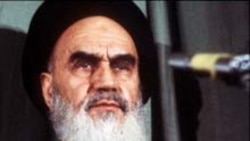
The major Shi'a cities in Iran are Qom and Mashhad. There are almost 60 seminaries in Qom, the most prominent of which are Fayzieh, Dar ul-Shafa, Hojjatieh, Sayteh, and Golpayegani. Qom also has 10 libraries, and several Islamic periodicals are published there. Mashhad is the site of the tomb of Imam Reza and 20 seminaries, including Khairat Khan, Mirza Jafar, and Navvah. There are also seminaries in Isfahan (ex: Chahar Bagh, Mullah Abdullah), Shiraz, Tabriz, Tehran, and Yazd.
Fifteen years ago, Nikola B. Schahgaldian wrote in "The Clerical Establishment in Iran," (RAND Publication Series prepared for the Office of the U.S. Undersecretary of Defense for Policy, [June 1989]), that the estimated number of Iranian clergymen ranged from 90,000 (media observers), to 200,000 (Iranian clerics themselves), to 300,000 (European sources). Another 50,000-60,000 Iranians had some religious training. There were about 40,000 theology students at Iranian seminaries. Finally, there were some 60,000 people with no formal training or qualifications who acted as urban preachers, rural-prayer leaders, and procession organizers.
In early September 2004, a prominent theologian told a reporter that Iran remains very attractive to religious scholars. Hojatoleslam Husseini-Bushehri, who is either director of the Qom Theological Seminaries (Howzeh-yi Elmieh-yi Qom) or the Qom Theological Lecturers Association (Jameh-yi Mudarresin-i Howzeh-yi Elmieh-yi Qom), announced that there are hundreds of scholars from around the world studying at religious institutions in Isfahan, Mashhad, Qom, Tehran, and other cities, "Resalat" reported on 5 September. In Qom alone, Husseini-Bushehri said, there are 50,000 students from 70 countries. There are 300 religious research centers in Qom, he added, and 3,000 seminaries in the entire country.
Other major Shi'a centers are in the Iraqi cities of Al-Najaf and Karbala, and the Baghdad neighborhood of Khazimiyah. "Najaf has been the revered center of Shiite Islam for 1,000 years; it is the most respected shrine," Iranian scholar Abdolkarim Soroush said in an interview ("Rise of Iraqi Shiites Threatens Iranian Theocrats," "New Perspectives Quarterly" vol. 21, no. 2 March 2004). The seminary in Qom, Soroush added, "is barely 100 years old." With the demise of Saddam Hussein's regime, therefore, Al-Najaf is likely to become a center of apolitical and quietist Shi'a Islam.
Lebanon's importance as a site of Shi'a learning is growing, particularly in terms of teaching Lebanese ulama (see Rula Jurdi Abisaab, "The Lebanese Hawza of al-Rasul al-Akram: Toward a Redefinition of the Shi'ite 'Alim," in "Distant Relations: Iran and Lebanon in the Last 500 Years," Houchang Chehabi and Hassan Mniemnieh, eds., [London: IB Tauris, 2004]).
The number of religious students and seminary instructors in Iran appears to remain high even if the exuberance of the early revolutionary years has worn off. There is a practical explanation: clerics have a "head start" in seeking government jobs, and their children get into the best schools (Christopher de Bellaigue, "Who Rules Iran?" "The New York Review of Books," vol. 49, no. 11, 27 June 2002). Moreover, students who study under popular clerics receive a stipend, which is important given the difficulty of finding real jobs. A visitor to Qom told the "RFE/RL Iran Report" that one encounters individuals who have spent many years in the seminary without completing their studies.
Some seminarians' lack of purpose or identity or sense of rootlessness is furthered by the disdain many people have for the lower echelons of the clerical classes. In fact, such disdain is not a new phenomenon. During the 1960s and 1970s the "clergy were often described in unflattering terms as venal, greedy, and hypocritical," whereas leading clerics "were generally described as pious and learned" (Eric Hooglund, "Social Origins of the Revolutionary Clergy," "The Iranian Revolution and The Islamic Republic," Nikki R. Keddie & Eric Hooglund, eds., Syracuse: Syracuse University Press, 1986, p. 80).
The 1979 revolution not only affected the nature of the Iranian government but it changed the relationship between religion and politics. The traditional criteria for judging a clergyman's stature (such as theological learning, writing, jurisprudence, knowledge of canon law, and the opinion of other top clerics) became less relevant, and political factors now play a greater role.
Three incidents illustrate this point. The 1989 succession to the supreme leadership by Ali Khamenei and his hasty promotion to the rank of ayatollah was one such case. Khamenei was only a hojatoleslam but had served as president; the constitution was amended so the supreme leader no longer had to be a source of emulation (see article 109). With the deaths of Grand Ayatollah Abolqasem Khoi (1992), Grand Ayatollah Mohammad Reza Golpayegani (1993), and Grand Ayatollah Ali Araki (died 1994), there was an attempt to promote Khamenei to the rank of source of emulation. Khamenei himself withdrew from consideration. (See "RFE/RL Iran Report," 23 November 1998.)
The third incident illustrating the impact of politics on the religious system relates to the 1997 presidential campaign. Thirty members of the Qom Theological Lecturers Association were invited to a meeting at which they were advised to declare their support for the leading conservative candidate. Several clerics avoided the meeting, but 14 of those in attendance informed the press that the seminary backed the conservative candidate. The clerics who did not attend the meeting subsequently expressed their dissent: "Those who pretend that none of the 30 members was against [conservative candidate Ali Akbar] Nateq-Nuri forget that Ayatollahs Mohammad Fazel [-Lankarani], Nasser Makarem [-Shirazi], [Ebrahim] Amini [-Najafabadi], [Ali Akbar] Masudi [-Khomeini], myself [Karimi] and a few others are also members of that association." (Azadeh Kian-Thiebaut, "Time for reform of the Islamic revolution," "Le Monde Diplomatique," January 1998.)
Some clerics' rejection of political involvement or a theocratic state was not completely unexpected. In the mid-1980s scholars were writing that some of the leading clergymen prefer "the looser visayat-i fuqaha, which they interpret as general supervision by the clergy over affairs.... At the most, these clerics are willing to concede the principle of vilayat-i faqih in times of exceptional turmoil but contend that it lapses when a government is installed, a parliament is elected and a new state order comes into being." (Sharough Akhavi, "The Revolutionary Clergy," "The Iranian Revolution and The Islamic Republic," Nikki R. Keddie & Eric Hooglund, eds., [Syracuse: Syracuse University Press, 1986], p. 61.)
By the mid-1990s, withdrawal was, in some cases, becoming opposition to the Khomeini interpretation of the Islamic state in which clerics hold executive power. "Already, the higher-ranking ulama, under the banner of the institution of marja'iyat, are moving to their traditional role of opposing the state with seemingly traditional reasoning, i.e. the illegitimacy of the state in the absence of the Lord of the Age." (Maziar Behrooz, "The Islamic State and the Crisis of Marja'iyat in Iran," Comparative Studies of South Asia, Africa, and the Middle East, Vol. XVI, No. 2 [1996].)
The leading clerics' unhappiness with the country's politics is illustrated by the point that eight of the top 12 ayatollahs reportedly refused to vote in the February 2004 parliamentary elections (Grand Ayatollah Yusef Sanei, cited by the "Chicago Tribune," 2 May 2004).
Nevertheless, there still are many clerics in Iranian governmental institutions. In this case, it is the middle-ranking clerics who dominate and they are not likely to want the system to change because of its benefits to them.
"First, those mollas [sic] who have gained political power can be expected to be reluctant to return to the mosques to become once again simply preachers. Second, the fact that so many politically active mollas [sic] come from lower-class backgrounds, and also that so many of the tullab [religious students] have similar origins, means that their support of the concept of clerical political activism is tantamount to having an assured means of upward mobility. Third, clerical control of the government has meant clerical control of government revenues, and thus financial independence form the traditional support of private, lay persons." (Eric Hooglund, "Social Origins of the Revolutionary Clergy," "The Iranian Revolution and The Islamic Republic," Nikki R. Keddie & Eric Hooglund, eds., [Syracuse: Syracuse University Press, 1986], p. 82.)
Developments in Iraq, combined with the 25 years of mismanagement by the Iranian theocracy, indicate that the Shi'a community will undergo major changes in the coming decade. The Iranian theocracy is faced with two choices: complying with public sentiments and basing its legitimacy more on popular support than on religion, or continuing to impose itself on the Iranian people.
Fifteen years ago, Nikola B. Schahgaldian wrote in "The Clerical Establishment in Iran," (RAND Publication Series prepared for the Office of the U.S. Undersecretary of Defense for Policy, [June 1989]), that the estimated number of Iranian clergymen ranged from 90,000 (media observers), to 200,000 (Iranian clerics themselves), to 300,000 (European sources). Another 50,000-60,000 Iranians had some religious training. There were about 40,000 theology students at Iranian seminaries. Finally, there were some 60,000 people with no formal training or qualifications who acted as urban preachers, rural-prayer leaders, and procession organizers.
Leading clerics' unhappiness with the country's politics is illustrated by the point that eight of the top 12 ayatollahs reportedly refused to vote in the February 2004 elections.
In early September 2004, a prominent theologian told a reporter that Iran remains very attractive to religious scholars. Hojatoleslam Husseini-Bushehri, who is either director of the Qom Theological Seminaries (Howzeh-yi Elmieh-yi Qom) or the Qom Theological Lecturers Association (Jameh-yi Mudarresin-i Howzeh-yi Elmieh-yi Qom), announced that there are hundreds of scholars from around the world studying at religious institutions in Isfahan, Mashhad, Qom, Tehran, and other cities, "Resalat" reported on 5 September. In Qom alone, Husseini-Bushehri said, there are 50,000 students from 70 countries. There are 300 religious research centers in Qom, he added, and 3,000 seminaries in the entire country.
Other major Shi'a centers are in the Iraqi cities of Al-Najaf and Karbala, and the Baghdad neighborhood of Khazimiyah. "Najaf has been the revered center of Shiite Islam for 1,000 years; it is the most respected shrine," Iranian scholar Abdolkarim Soroush said in an interview ("Rise of Iraqi Shiites Threatens Iranian Theocrats," "New Perspectives Quarterly" vol. 21, no. 2 March 2004). The seminary in Qom, Soroush added, "is barely 100 years old." With the demise of Saddam Hussein's regime, therefore, Al-Najaf is likely to become a center of apolitical and quietist Shi'a Islam.
Lebanon's importance as a site of Shi'a learning is growing, particularly in terms of teaching Lebanese ulama (see Rula Jurdi Abisaab, "The Lebanese Hawza of al-Rasul al-Akram: Toward a Redefinition of the Shi'ite 'Alim," in "Distant Relations: Iran and Lebanon in the Last 500 Years," Houchang Chehabi and Hassan Mniemnieh, eds., [London: IB Tauris, 2004]).
The number of religious students and seminary instructors in Iran appears to remain high even if the exuberance of the early revolutionary years has worn off. There is a practical explanation: clerics have a "head start" in seeking government jobs, and their children get into the best schools (Christopher de Bellaigue, "Who Rules Iran?" "The New York Review of Books," vol. 49, no. 11, 27 June 2002). Moreover, students who study under popular clerics receive a stipend, which is important given the difficulty of finding real jobs. A visitor to Qom told the "RFE/RL Iran Report" that one encounters individuals who have spent many years in the seminary without completing their studies.
Some seminarians' lack of purpose or identity or sense of rootlessness is furthered by the disdain many people have for the lower echelons of the clerical classes. In fact, such disdain is not a new phenomenon. During the 1960s and 1970s the "clergy were often described in unflattering terms as venal, greedy, and hypocritical," whereas leading clerics "were generally described as pious and learned" (Eric Hooglund, "Social Origins of the Revolutionary Clergy," "The Iranian Revolution and The Islamic Republic," Nikki R. Keddie & Eric Hooglund, eds., Syracuse: Syracuse University Press, 1986, p. 80).
The 1979 revolution not only affected the nature of the Iranian government but it changed the relationship between religion and politics. The traditional criteria for judging a clergyman's stature (such as theological learning, writing, jurisprudence, knowledge of canon law, and the opinion of other top clerics) became less relevant, and political factors now play a greater role.
Three incidents illustrate this point. The 1989 succession to the supreme leadership by Ali Khamenei and his hasty promotion to the rank of ayatollah was one such case. Khamenei was only a hojatoleslam but had served as president; the constitution was amended so the supreme leader no longer had to be a source of emulation (see article 109). With the deaths of Grand Ayatollah Abolqasem Khoi (1992), Grand Ayatollah Mohammad Reza Golpayegani (1993), and Grand Ayatollah Ali Araki (died 1994), there was an attempt to promote Khamenei to the rank of source of emulation. Khamenei himself withdrew from consideration. (See "RFE/RL Iran Report," 23 November 1998.)
The third incident illustrating the impact of politics on the religious system relates to the 1997 presidential campaign. Thirty members of the Qom Theological Lecturers Association were invited to a meeting at which they were advised to declare their support for the leading conservative candidate. Several clerics avoided the meeting, but 14 of those in attendance informed the press that the seminary backed the conservative candidate. The clerics who did not attend the meeting subsequently expressed their dissent: "Those who pretend that none of the 30 members was against [conservative candidate Ali Akbar] Nateq-Nuri forget that Ayatollahs Mohammad Fazel [-Lankarani], Nasser Makarem [-Shirazi], [Ebrahim] Amini [-Najafabadi], [Ali Akbar] Masudi [-Khomeini], myself [Karimi] and a few others are also members of that association." (Azadeh Kian-Thiebaut, "Time for reform of the Islamic revolution," "Le Monde Diplomatique," January 1998.)
Some clerics' rejection of political involvement or a theocratic state was not completely unexpected. In the mid-1980s scholars were writing that some of the leading clergymen prefer "the looser visayat-i fuqaha, which they interpret as general supervision by the clergy over affairs.... At the most, these clerics are willing to concede the principle of vilayat-i faqih in times of exceptional turmoil but contend that it lapses when a government is installed, a parliament is elected and a new state order comes into being." (Sharough Akhavi, "The Revolutionary Clergy," "The Iranian Revolution and The Islamic Republic," Nikki R. Keddie & Eric Hooglund, eds., [Syracuse: Syracuse University Press, 1986], p. 61.)
By the mid-1990s, withdrawal was, in some cases, becoming opposition to the Khomeini interpretation of the Islamic state in which clerics hold executive power. "Already, the higher-ranking ulama, under the banner of the institution of marja'iyat, are moving to their traditional role of opposing the state with seemingly traditional reasoning, i.e. the illegitimacy of the state in the absence of the Lord of the Age." (Maziar Behrooz, "The Islamic State and the Crisis of Marja'iyat in Iran," Comparative Studies of South Asia, Africa, and the Middle East, Vol. XVI, No. 2 [1996].)
The leading clerics' unhappiness with the country's politics is illustrated by the point that eight of the top 12 ayatollahs reportedly refused to vote in the February 2004 parliamentary elections (Grand Ayatollah Yusef Sanei, cited by the "Chicago Tribune," 2 May 2004).
Nevertheless, there still are many clerics in Iranian governmental institutions. In this case, it is the middle-ranking clerics who dominate and they are not likely to want the system to change because of its benefits to them.
"First, those mollas [sic] who have gained political power can be expected to be reluctant to return to the mosques to become once again simply preachers. Second, the fact that so many politically active mollas [sic] come from lower-class backgrounds, and also that so many of the tullab [religious students] have similar origins, means that their support of the concept of clerical political activism is tantamount to having an assured means of upward mobility. Third, clerical control of the government has meant clerical control of government revenues, and thus financial independence form the traditional support of private, lay persons." (Eric Hooglund, "Social Origins of the Revolutionary Clergy," "The Iranian Revolution and The Islamic Republic," Nikki R. Keddie & Eric Hooglund, eds., [Syracuse: Syracuse University Press, 1986], p. 82.)
Developments in Iraq, combined with the 25 years of mismanagement by the Iranian theocracy, indicate that the Shi'a community will undergo major changes in the coming decade. The Iranian theocracy is faced with two choices: complying with public sentiments and basing its legitimacy more on popular support than on religion, or continuing to impose itself on the Iranian people.