



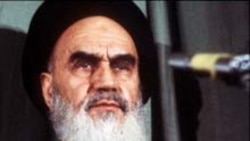
Prague, 11 March 2005 (RFE/RL) -- Ayatollah Khomeini's death sentence against Salman Rushdie captured the world's attention when it was announced in February 1989.
In the fatwa -- which was never shown to the public in its original written form -- Khomeini called on Muslims of the world to try to assassinate Rushdie, promising that they would be regarded as "martyrs" if they were killed in the attempt.
The fatwa was quickly given added weight by substantial financial rewards offered to any successful assassin. Those rewards were backed by different religious bodies, such as the 15th of Khordad Foundation.
Rushdie was already a controversial author in some parts of the Muslim world even before the fatwa was announced. The reason was that his novel "The Satanic Verses" had made references to verses in the Koran that refer to the worship of idols, something forbidden in Islam. The verses are generally believed by Muslims to have been surreptitiously inserted by Satan into the Prophet Muhammad's message from God.
A number of Muslim leaders in India and Pakistan argued that the novel contained insults to Islam, and some bookshops selling the novel were attacked. In Iran, where the book was translated and published in 1988, it was also labeled as blasphemous by some newspapers. But none of those attacks compared in scale to that of the Islamic Republic's supreme leader.
Experts on Iranian politics continue to discuss today why Ayatollah Khomeini sentenced Rushdie to death. The action shocked the Western world and set back prospects for the Islamic Republic to rebuild trade relations with Europe, even as some capitals suggested Iran was becoming more moderate 10 years after the Islamic Revolution.
Ahmad Salamatian is a former Iranian parliament member and a political analyst in Paris. He says the fatwa was issued mainly to overcome a series of domestic and international crises the Iranian regime was then trying to weather. They included the challenges of recovering from the 1980--88 Iran-Iraq War and the worsening of Ayatollah Khomeini's health.
"The fatwa against Rushdie was one of the Islamic Republic's biggest shows [aimed at] finding an extraordinary presence in domestic and international arenas in order to mobilize parts of its supporters again," Salamatian said. "In that sense, it is somehow similar to the [November 1979-January 1981 U.S. Embassy] hostage crisis. It coincides with the Islamic Republic's failure to export its revolution through a disastrous eight-year classical war, admitting its failure by the metaphor of 'drinking a goblet of poison.' It also coincides with a major crisis among key bodies of the Islamic Republic following the execution of thousands of political prisoners. It also marks the intensifying of Ayatollah Khomeini's illness 18 months earlier, such that according to his associates, he would fall into a coma for several days or weeks. In the likely absence of Mr. Khomeini, the establishment would have three pillars: Mr. Ahmad Khomeini, Mr. Khamenei, and Mr. Hashemi Rafsanjani, all of whom were in harsh disagreement over the issue of succession."
One of the fatwa's clear effects was that it created enormous public sympathy for Rushdie in the West. That sympathy increased as Rushdie, who was forced to go into hiding with round-the-clock police protection, showed defiance in the face of the death threat.
Rushdie labeled the antireligious interpretation of his novel as misguided -- protesting that he had not intended to insult religious concepts. But he also challenged the right of religious leaders to control any author's freedom of expression.
"It showed this is a latest stage in a campaign that began with smears and vilifications and distortions of a book, which has escalated into all sorts and levels of violence," Rushdie said. "And frankly, I wish I had written a more critical book. I mean, religious leaders who are able to behave like this and then say that this is a religion which must be above any whisper of criticism, this doesn't add up. It seems to be that Islamic fundamentalism could do with a little criticism right now."
Ayatollah Khomeini's fatwa has been criticized by many religious scholars and even some senior clerics in the Muslim world.
Mehdi Haeri Yazdi, one of Khomeini's prominent pupils and the grandson of the founder of the influential Qom Seminary, wrote that the fatwa was inconsistent with the principles of Islamic law, or Shari'a. He also said it was against the interests of Muslim society, which should come before any Shari'a tenet.
But if the fatwa against Rushdie is today controversial in parts of the Muslim world, there are no signs that it can safely be ignored. The author continues to live under security restrictions. He has, however, increased his public appearances in an effort to enjoy some semblance of a normal life.
The risks were evident recently when supporters marked 16 years since the Rushdie fatwa was issued.
Iran's Islamic Revolution Guards Corps, which answers directly to the current Iranian supreme leader, Ayatollah Ali Khamenei, issued a statement saying it considers the fatwa valid and "irrevocable." The statement warned that "the day will come when they will punish the apostate Rushdie for his scandalous acts and insults against the Koran and the Prophet [Muhammad]."
The statement comes despite the fact that the government of Iranian President Mohammad Khatami has long distanced itself from the fatwa in an effort to improve relations with Britain and the European Union.
London and Tehran today enjoy normal diplomatic ties and growing commerce, largely based on the Islamic Republic's assurances that it now rejects terrorism.
See also:
Iran: Difficult Relations With U.S. Marked By Mutual Distrust (Part 1)
Iran: U.S. Accuses Tehran Of Extending Its Support For Mideast Terrorist Groups (Part 2)
Iran: Reformers Insist Hard-Liners' History Of Political Assassinations Continues (Part 3)
In the fatwa -- which was never shown to the public in its original written form -- Khomeini called on Muslims of the world to try to assassinate Rushdie, promising that they would be regarded as "martyrs" if they were killed in the attempt.
The fatwa was quickly given added weight by substantial financial rewards offered to any successful assassin. Those rewards were backed by different religious bodies, such as the 15th of Khordad Foundation.
Rushdie was already a controversial author in some parts of the Muslim world even before the fatwa was announced. The reason was that his novel "The Satanic Verses" had made references to verses in the Koran that refer to the worship of idols, something forbidden in Islam. The verses are generally believed by Muslims to have been surreptitiously inserted by Satan into the Prophet Muhammad's message from God.
A number of Muslim leaders in India and Pakistan argued that the novel contained insults to Islam, and some bookshops selling the novel were attacked. In Iran, where the book was translated and published in 1988, it was also labeled as blasphemous by some newspapers. But none of those attacks compared in scale to that of the Islamic Republic's supreme leader.
"I wish I had written a more critical book. I mean, religious leaders who are able to behave like this and then say that this is a religion which must be above any whisper of criticism, this doesn't add up. It seems to be that Islamic fundamentalism could do with a little criticism right now." - Rushdie
Experts on Iranian politics continue to discuss today why Ayatollah Khomeini sentenced Rushdie to death. The action shocked the Western world and set back prospects for the Islamic Republic to rebuild trade relations with Europe, even as some capitals suggested Iran was becoming more moderate 10 years after the Islamic Revolution.
Ahmad Salamatian is a former Iranian parliament member and a political analyst in Paris. He says the fatwa was issued mainly to overcome a series of domestic and international crises the Iranian regime was then trying to weather. They included the challenges of recovering from the 1980--88 Iran-Iraq War and the worsening of Ayatollah Khomeini's health.
"The fatwa against Rushdie was one of the Islamic Republic's biggest shows [aimed at] finding an extraordinary presence in domestic and international arenas in order to mobilize parts of its supporters again," Salamatian said. "In that sense, it is somehow similar to the [November 1979-January 1981 U.S. Embassy] hostage crisis. It coincides with the Islamic Republic's failure to export its revolution through a disastrous eight-year classical war, admitting its failure by the metaphor of 'drinking a goblet of poison.' It also coincides with a major crisis among key bodies of the Islamic Republic following the execution of thousands of political prisoners. It also marks the intensifying of Ayatollah Khomeini's illness 18 months earlier, such that according to his associates, he would fall into a coma for several days or weeks. In the likely absence of Mr. Khomeini, the establishment would have three pillars: Mr. Ahmad Khomeini, Mr. Khamenei, and Mr. Hashemi Rafsanjani, all of whom were in harsh disagreement over the issue of succession."
One of the fatwa's clear effects was that it created enormous public sympathy for Rushdie in the West. That sympathy increased as Rushdie, who was forced to go into hiding with round-the-clock police protection, showed defiance in the face of the death threat.
Rushdie labeled the antireligious interpretation of his novel as misguided -- protesting that he had not intended to insult religious concepts. But he also challenged the right of religious leaders to control any author's freedom of expression.
"It showed this is a latest stage in a campaign that began with smears and vilifications and distortions of a book, which has escalated into all sorts and levels of violence," Rushdie said. "And frankly, I wish I had written a more critical book. I mean, religious leaders who are able to behave like this and then say that this is a religion which must be above any whisper of criticism, this doesn't add up. It seems to be that Islamic fundamentalism could do with a little criticism right now."
Ayatollah Khomeini's fatwa has been criticized by many religious scholars and even some senior clerics in the Muslim world.
Mehdi Haeri Yazdi, one of Khomeini's prominent pupils and the grandson of the founder of the influential Qom Seminary, wrote that the fatwa was inconsistent with the principles of Islamic law, or Shari'a. He also said it was against the interests of Muslim society, which should come before any Shari'a tenet.
But if the fatwa against Rushdie is today controversial in parts of the Muslim world, there are no signs that it can safely be ignored. The author continues to live under security restrictions. He has, however, increased his public appearances in an effort to enjoy some semblance of a normal life.
The risks were evident recently when supporters marked 16 years since the Rushdie fatwa was issued.
Iran's Islamic Revolution Guards Corps, which answers directly to the current Iranian supreme leader, Ayatollah Ali Khamenei, issued a statement saying it considers the fatwa valid and "irrevocable." The statement warned that "the day will come when they will punish the apostate Rushdie for his scandalous acts and insults against the Koran and the Prophet [Muhammad]."
The statement comes despite the fact that the government of Iranian President Mohammad Khatami has long distanced itself from the fatwa in an effort to improve relations with Britain and the European Union.
London and Tehran today enjoy normal diplomatic ties and growing commerce, largely based on the Islamic Republic's assurances that it now rejects terrorism.
See also:
Iran: Difficult Relations With U.S. Marked By Mutual Distrust (Part 1)
Iran: U.S. Accuses Tehran Of Extending Its Support For Mideast Terrorist Groups (Part 2)
Iran: Reformers Insist Hard-Liners' History Of Political Assassinations Continues (Part 3)