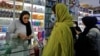




Prague, 8 August 2005 (RFE/RL) -- People in Central Asia who sympathize with the banned Islamic group Hizb ut-Tahrir will not give their names when they talk to reporters. But they will talk about their hopes for the future.
Like this woman in Tajikistan: “As for as I know, Hizb ut-Tahrir would like to convey the message of truth to the people by peaceful, bloodless, and nonviolent means and with the help of governments. The reality is this that the society is corrupt and only a peaceful Islamic government can solve this problem.”
The promise to establish Islamic government in all traditionally Muslim lands is central to the Hizb ut-Tahrir’s platform.
Imran Waheed, spokesman for Hizb ut-Tahrir’s office in exile in London, stated the group's goal in a recent interview: “Hizb ut-Tahrir has a very clear objective, which is re establishment of the Islamic Caliphate and it is working toward that.”
Last week, British Prime Minister Tony Blair banned Hizb ut-Tahrir in Britain.
The group's supporters use the term “Islamic Caliphate” to refer to an ideal system of government they believe existed during the early years of Islam. At the time, both religious and temporal authority were in the hands of the Prophet Muhammad or his immediate successors.
Hizb ut-Tahrir is believed to have first taken root in the Uzbek-controlled part of the Ferghana Valley shortly after the collapse of the Soviet Union. It soon spread to adjacent parts of the valley within Tajikistan and Kyrgyzstan, making it Central Asia’s single-most-widespread Islamic political movement. It has also spread to Kazakhstan and parts of Russia.
Today, Hizb ut-Tahrir is banned by the Uzbek, Tajik, Kyrgyz, and Kazakh governments, which claim it seeks to overthrow them by force.
Nabi Rahimov, the deputy prosecutor in Tajikistan's Sughd region, described the organization’s activities this way: “What are the intentions of this criminal union? The documents and papers that we have confiscated from its members shows that their aim is to encourage ethnic, religious, and national animosity and regionalism. In some documents you can see that they are working in contrary to the 307th clause of the constitution. In other words, they are trying to topple the constitutional government by force and violent means.”
The Uzbek government, which continues to Hizb ut-Tahrir’s main target of criticism, accuses the group of involvement in a series of bombings and other unrest in Tashkent and other cities in recent years that has killed scores of people.
Tashkent also accuses Hizb ut-Tahrir of links to Al-Qaeda and the Taliban and to the armed Islamic Movement of Uzbekistan (IMU). Hizb ut-Tahrir denies this.
Between 1999 and 2001, using Tajikistan’s remote mountainous areas as its base, the IMU carried out kidnappings, assassinations, and a series of armed raids deep into Kyrgyzstan and Uzbekistan. It stated objective is to establish an Islamic state in Uzbekistan.
The IMU later relocated its base to Afghanistan and it is believed to have largely been destroyed in the U.S.-led operation to topple Afghanistan’s Taliban regime in late 2001.
Regional governments also accuse both Hizb ut-Tahrir and the IMU of getting money and inspiration from extremist Islamist groups elsewhere in the Muslim world.
However, Hizb ut-Tahrir denies it advocates anything but peaceful change and says it is homegrown. It accuses the region’s governments, in turn, of using charges of terrorism to suppress all opposition movements they cannot control.
Analysts say Hizb ut-Tahrir has never been proven to have links to violent acts but they do not rule out that the group could be willing to use violence to achieve an Islamic revolution. But Michael Hall, the Bishkek-based head of the International Crisis Group’s Central Asia Project, says government action against the group is often so harsh that it risks turning members violent if they are not already so.
“Insulting family members of Hizb ut-Tahrir followers is one of the factors that could increase anger among party members and could force them to turn to violence,” Hall told RFE/RL.
Crackdowns in Uzbekistan, where the group appears to have the most members, include mass arrests of suspected sympathizers and lengthy detentions while awaiting trial. According to independent Uzbek estimates, there may be as many as 7,000 alleged Hizb ut-Tahrir members in Uzbek prisons.
Human rights groups say suspected militants are subjected to torture during interrogation and called on the government to investigate complaints.
But as regional governments try to crack down on groups like Hizb ut-Tahrir, there is no sign yet that the movements are disappearing. One member of Hizb ut-Tahrir, who introduced himself as Abulkhair, told RFE/RL’s Tajik Service that underground cells of the party are active in different parts of that country and government pressure is not discouraging recruitment efforts.
“They are active in Kulab, they are active in Khatlon and Hisar also. We hope and pray to god that their ranks will grow more. Despite detentions, torture, and oppression, God willing, their number will increase day by day,” Abulkhair said.
Experts say that Hizb ut-Tahrir in Tajikistan and Kyrgyzstan is most active among Uzbek minorities in these countries, raising the danger that crackdowns against them will have ethnic overtones.
Some analysts caution that the governments efforts to control political Islam -- including by arresting members of Islamic organizations that refuse to join the state-approved religious establishment -- could eventually backfire. Regional security expert Ahmad Rashid, the author of “Jihad: The Rise of Militant Islam in Central Asia,” says lack of political freedoms drive people to join radical groups.
"The enormous repression of the [Central Asian] regimes and the lack of any kind of political expression naturally forces politically oriented people to go underground and to become radicalized, and then join these Islamist groups," Rashid told RFE/RL.
In the last part of our four-part series on Islam in Central Asia, we will look at the revival of madrasahs, or religious schools, as a central part of Muslim life in the region.
See also:
Part 1: Central Asia Returns To Muslim Roots
Part 2: Regional Leaders Try to Control Islam
Like this woman in Tajikistan: “As for as I know, Hizb ut-Tahrir would like to convey the message of truth to the people by peaceful, bloodless, and nonviolent means and with the help of governments. The reality is this that the society is corrupt and only a peaceful Islamic government can solve this problem.”
The promise to establish Islamic government in all traditionally Muslim lands is central to the Hizb ut-Tahrir’s platform.
Imran Waheed, spokesman for Hizb ut-Tahrir’s office in exile in London, stated the group's goal in a recent interview: “Hizb ut-Tahrir has a very clear objective, which is re establishment of the Islamic Caliphate and it is working toward that.”
Last week, British Prime Minister Tony Blair banned Hizb ut-Tahrir in Britain.
The group's supporters use the term “Islamic Caliphate” to refer to an ideal system of government they believe existed during the early years of Islam. At the time, both religious and temporal authority were in the hands of the Prophet Muhammad or his immediate successors.
Hizb ut-Tahrir is believed to have first taken root in the Uzbek-controlled part of the Ferghana Valley shortly after the collapse of the Soviet Union. It soon spread to adjacent parts of the valley within Tajikistan and Kyrgyzstan, making it Central Asia’s single-most-widespread Islamic political movement. It has also spread to Kazakhstan and parts of Russia.
Today, Hizb ut-Tahrir is banned by the Uzbek, Tajik, Kyrgyz, and Kazakh governments, which claim it seeks to overthrow them by force.
Nabi Rahimov, the deputy prosecutor in Tajikistan's Sughd region, described the organization’s activities this way: “What are the intentions of this criminal union? The documents and papers that we have confiscated from its members shows that their aim is to encourage ethnic, religious, and national animosity and regionalism. In some documents you can see that they are working in contrary to the 307th clause of the constitution. In other words, they are trying to topple the constitutional government by force and violent means.”
The Uzbek government, which continues to Hizb ut-Tahrir’s main target of criticism, accuses the group of involvement in a series of bombings and other unrest in Tashkent and other cities in recent years that has killed scores of people.
"The enormous repression of the [Central Asian] regimes and the lack of any kind of political expression naturally forces politically oriented people to go underground and to become radicalized, and then join these Islamist groups." - analyst
Tashkent also accuses Hizb ut-Tahrir of links to Al-Qaeda and the Taliban and to the armed Islamic Movement of Uzbekistan (IMU). Hizb ut-Tahrir denies this.
Between 1999 and 2001, using Tajikistan’s remote mountainous areas as its base, the IMU carried out kidnappings, assassinations, and a series of armed raids deep into Kyrgyzstan and Uzbekistan. It stated objective is to establish an Islamic state in Uzbekistan.
The IMU later relocated its base to Afghanistan and it is believed to have largely been destroyed in the U.S.-led operation to topple Afghanistan’s Taliban regime in late 2001.
Regional governments also accuse both Hizb ut-Tahrir and the IMU of getting money and inspiration from extremist Islamist groups elsewhere in the Muslim world.
However, Hizb ut-Tahrir denies it advocates anything but peaceful change and says it is homegrown. It accuses the region’s governments, in turn, of using charges of terrorism to suppress all opposition movements they cannot control.
Analysts say Hizb ut-Tahrir has never been proven to have links to violent acts but they do not rule out that the group could be willing to use violence to achieve an Islamic revolution. But Michael Hall, the Bishkek-based head of the International Crisis Group’s Central Asia Project, says government action against the group is often so harsh that it risks turning members violent if they are not already so.
“Insulting family members of Hizb ut-Tahrir followers is one of the factors that could increase anger among party members and could force them to turn to violence,” Hall told RFE/RL.
Crackdowns in Uzbekistan, where the group appears to have the most members, include mass arrests of suspected sympathizers and lengthy detentions while awaiting trial. According to independent Uzbek estimates, there may be as many as 7,000 alleged Hizb ut-Tahrir members in Uzbek prisons.
Human rights groups say suspected militants are subjected to torture during interrogation and called on the government to investigate complaints.
But as regional governments try to crack down on groups like Hizb ut-Tahrir, there is no sign yet that the movements are disappearing. One member of Hizb ut-Tahrir, who introduced himself as Abulkhair, told RFE/RL’s Tajik Service that underground cells of the party are active in different parts of that country and government pressure is not discouraging recruitment efforts.
“They are active in Kulab, they are active in Khatlon and Hisar also. We hope and pray to god that their ranks will grow more. Despite detentions, torture, and oppression, God willing, their number will increase day by day,” Abulkhair said.
Experts say that Hizb ut-Tahrir in Tajikistan and Kyrgyzstan is most active among Uzbek minorities in these countries, raising the danger that crackdowns against them will have ethnic overtones.
Some analysts caution that the governments efforts to control political Islam -- including by arresting members of Islamic organizations that refuse to join the state-approved religious establishment -- could eventually backfire. Regional security expert Ahmad Rashid, the author of “Jihad: The Rise of Militant Islam in Central Asia,” says lack of political freedoms drive people to join radical groups.
"The enormous repression of the [Central Asian] regimes and the lack of any kind of political expression naturally forces politically oriented people to go underground and to become radicalized, and then join these Islamist groups," Rashid told RFE/RL.
In the last part of our four-part series on Islam in Central Asia, we will look at the revival of madrasahs, or religious schools, as a central part of Muslim life in the region.
See also:
Part 1: Central Asia Returns To Muslim Roots
Part 2: Regional Leaders Try to Control Islam