



Iran
- By Breffni O'Rourke
Iran: Film On Ancient Persian-Greek Battle Angers Iranians
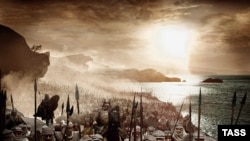
A scene from "300" (ITAR-TASS) March 21, 2007 (RFE/RL) -- A Hollywood film with the simple title "300" is arousing anger in Iran. Directed by up-and-coming filmmaker Zack Snyder, the film portrays the ancient battle of Thermopylae, where 300 Greek Spartans barred the way to the grand army of Persian King Xerxes I.
But many Iranians say the movie gives a distorted view of the Persians as decadent, cruel, and stupid.
The Iranian government has taken the row over "300" to the United Nations. In a letter to the UN Educational, Scientific, and Cultural Organization (UNESCO), Iranian Ambassador Mohammad-Reza Dehshiri described the film as an "insult" to Iranian culture.
He called on UNESCO to take up its responsibility to promote coexistence rather than "hatred, war, and arrogance."
In Tehran, "Time" magazine correspondent Azadeh Moaveni says there is a general sense of outrage among Iranians. Iranians living abroad are also disturbed.
"Sparta was a slave society, so the whole idea of them being upholders of democracy is kind of ridiculous," one film critic told RFE/RL.
MORE: Coverage in Persian from Radio Farda.
'I Was Shocked'
"It's very important for me not to remain silent, particularly about issues that are very sensitive in my view, and national honor and prestige are among them," Mitra Farokhzad, an Iranian living in the U.S. state of Arizona, told Radio Farda. "When I watched the movie's trailer and some parts of it, first I didn't understand it because it was very weird. But when I saw how they are portraying King Xerxes, I was shocked and thought, why are they giving such a [negative] picture of a great person?"
Some observers believe the Iranian government is exploiting the anger over the Hollywood production to advance its own political agenda. They say the authorities are provoking nationalistic feelings to get Iranians to rally in support of the government at a time when the Islamic republic is under international pressure over its nuclear program.
The U.S. film distributors, Warner Brothers, deny that "300" is deliberately meant to disparage any culture. They say it is a fictional work with the sole purpose of entertaining audiences. The film is proving something of a hit among the public, taking in $70 million in its first week.
History And Art
"300" tells the story of the battle of Thermopylae in 480 BC, when 300 Greek Spartans were able for three days to block the advance of a Persian army numbering in the hundreds of thousands.
Thermopylae is a narrow pass between the mountains and the sea, where the sheer numbers of the Persians was to no advantage. Repeatedly the Persians attacked, only to be thrown back with heavy casualties.
In the end, through an act of Greek treachery, King Xerxes' army was able to surround the Spartans, who were all killed, along with their leader, King Leonidas.
The film sticks closely to the account given by ancient historians, including Herodotus, a Greek. It's the portrayal of the two warring sides that has caused the antagonism. The Greeks are seen as noble defenders of Western culture, while the invading Persians are seen as decadent, irrational, and barbarous, with King Xerxes receiving a particularly unflattering portrait.
Victors Write The History
But U.S.-based film critic Joe Queenan questions the need for so much fuss over "300." He told RFE/RL that the film is merely "ridiculous," with its comic-book style and likeness to a video game.
Queenan also notes that history is written by the victor, in this case the Greeks, who have elevated the story to the level of myth. He says the Persians have their own stories and, if they don't like the Greek version of Thermopylae, they could have written their own version.

A poster for "300" (AFP)
"If the Iranians made a film about Genghiz Khan's invasion and destruction of Persia in the 13th century, then the Mongols might turn around and complain about the way they were portrayed," he argues.
Queenan also takes issue with the film's underlying suggestion that Spartans had set out to protect proto-Western democratic values from the Asian hordes.
"Sparta was a slave society, so the whole idea of them being upholders of democracy is kind of ridiculous," Queenan says. "The Athenians did not let women vote and had a lot of slaves, but still the situation [concerning democracy] was not completely out of control there like in Sparta, where they killed children. They killed deformed children. They killed off a lot of girls. It was a total militaristic society, so there is a direct line from the Spartans to the junkers and Prussian military, to the Nazis."
The battle of Thermopylae gave heart to the Greeks, who later that year won a decisive naval victory at Salamis. A victory on land followed the next year, and Xerxes withdrew, ending the Persian attempt to extend its empire into Europe.
Central Asian Cinema
 Gulnara Abikaeyeva's June 29 presentation in Prague (RFE/RL)
EAST OF THE WEST: On June 29, RFE/RL's Prague broadcasting center hosted a presentation by GULNARA ABIKEYEVA, director of the Central Asian Cinematography Center in Almaty, Kazakhstan. Abikeyeva is a leading expert on Kazakh and Central Asian cinema, a chairwoman of the jury of this year's East Of The West section of the Karlovy Vary film festival. Abikaeyeva gave an overview of major trends in Central Asian cinema since the 1960s. Abikeyeva has just completed a major DVD collection of the most popular films of the five Central Asian countries and is now beginning work on a similar collection of Central Asian documentaries.
LISTEN
Listen to the complete presentation (45 minutes):Real Audio Windows Media
Other Articles On Central Asian Culture:
Silk Road Revival Grows As More Sites Protected
Central Asian Directors Discuss Issues Behind The Camera
Ancient European Music Meets Central Asian Masters
Central Asian Masters Revive Old Ways Of Teaching Traditional Music
ARCHIVE
To view an archive of RFE/RL's reporting on culture throughout its broadcast area, click here.

THE COMPLETE STORY: Click on the icon to view a dedicated webpage bringing together all of RFE/RL's coverage of Kazakhstan, Kyrgyzstan, Tajikistan, Turkmenistan, and Uzbekistan.
More News
- By Kian Sharifi
Why Are U.S. Sanctions Against Iran's Oil Exports Ineffective?

Iran is one of the most sanctioned countries in the world. But restrictions imposed by the United States have largely failed to stymie Iran's oil exports, the backbone of its flailing economy.
U.S. sanctions have cut off Iran from most of its traditional customers, forcing Tehran to find new buyers and sell its oil at discounted prices.
But China’s willingness to buy record amounts of Iranian oil, Tehran's mastery of sanctions-evading tactics, and Washington's reluctance to strictly enforce sanctions have made U.S. measures against Iran’s energy exports ineffective, analysts say.
'Dark' Fleet Of Tankers
The lifting of U.S. sanctions as part of the 2015 nuclear deal with world powers allowed Iran to sell its oil to customers in Europe and East Asia. Oil exports reached a peak in 2018.

But exports plummeted after then-President Donald Trump reneged on the nuclear agreement later that year.
Iran has boosted its sales in recent years by circumventing sanctions, including using its "dark fleet" of tankers to illegally transport oil shipments to China.
The tactic involves ship-to-ship operations to offload the oil, middlemen, hidden money transfers, and rebranding the oil to mask its Iranian origin and make it appear to come from a third country.
"Iran is continuously developing and expanding not just the network of middlemen and trading companies involved in the sale of its oil, but also its own fleet of tankers that it predominantly uses to move its crude," said Nader Itayim, the Middle East editor at the U.K.-based Argus Media.
Chinese Appetite
Growing demand for Iranian oil in China has been key to the surge in Iran's oil sales.
Ship tracking data collected by Argus shows Iran’s oil exports currently hovering at 1.5 million barrels per day, with around 85 to 90 percent going to China.
Tehran gives China a steep discount to take its banned oil, taking up to 15 percent off the price of each barrel to make it worthwhile for Beijing to take on the liability of skirting sanctions.
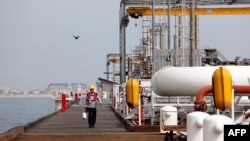
The discounts have raised questions about the long-term profitability of Iran’s business with China. But experts said that Tehran still stands to gain.
"Even at heavy discounts, selling Iranian oil is extremely profitable and sustainable," said Steve Hanke, a professor of applied economics at Johns Hopkins University. "That’s because the marginal cost of production in Iran is roughly $15 or less per barrel."
Gregory Brew, an Iran and energy analyst at the U.S.-based Eurasia Group, says U.S. sanctions were once effective at blocking oil exports to China, but that is no longer the case.
"China's rising stature as a new global power lends it greater freedom to defy U.S. sanctions," Brew said.
Reluctance To Enforce Sanctions
Some analysts said Washington has been reluctant to strictly enforce sanctions, while others maintain that sanctions in general have failed.
Resources are required to enforce restrictions while new sectors would need to be sanctioned to keep up the pressure, according to Itayim of Argus Media.
"Otherwise, the target finds ways to evade the sanctions, while at the same time the buyer becomes more complacent as it sees enforcement waning. In the case of Iran and China, I think we have seen a bit of both," Itayim said.
Analysts also argue that Washington is reluctant to strictly enforce sanctions due to the risks associated with forcing Iranian oil off the world market.
"Apart from the impact such action would have on the price of oil, which carries political and economic importance to [U.S. President Joe] Biden in an election year, aggressive enforcement would provoke both Iran and China, at a time when the United States is trying to manage escalatory risk both in the Middle East and East Asia," Brew said.
The lax enforcement of oil sanctions also extends to Venezuela and Russia, Itayim says, noting that it "has been key to keeping a lid" on oil prices.
U.S. Congress last month passed a security package that included the Iran-China Energy Sanctions Act, giving the government the authority to further restrict Iran's oil exports.
But experts are not convinced that more sanctions will have an impact.
Hanke said any new measures "will join the long list of failed Western sanctions" on the Islamic republic.
"Sanctions are always subject to workarounds that render the enforcement of sanctions futile," he added.
- By RFE/RL
Iran Hits U.S., U.K. Targets With Sanctions Over Israel Support
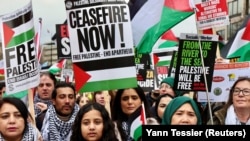
Tehran has imposed a round of sanctions on a group of American and British companies and individuals, including British Defense Minister Grant Shapps, over their support for Israel in its war in the Gaza Strip.
In a statement on May 2, the Iranian Foreign Ministry said British officials and entities were sanctioned because of the United Kingdom’s “deliberate support” for Israel, including “committing terrorist acts” that threatened regional peace.
The sanctions also target several military officials, including Simon Cloke, commander of Royal Air Force Akrotiri, a British air base in Cyprus used by RAF fighter jets to target the Iran-aligned Huthi rebels in Yemen.
In a separate tranche of sanctions, Iran targeted U.S.-based arms manufacturers and senior members of hawkish think tanks for their support of Israel.
Sanction targets include Lockheed Martin and General Dynamics, as well as the energy company Chevron.
Among the individuals sanctioned by Iran is Brad Cooper, who is identified as the commander of the United States Navy’s Fifth Fleet in the Middle East. Cooper turned over command of the Fifth Fleet to George Wikoff on February 1.
The targets of the sanctions will have their bank accounts in Iran frozen and will not be issued visas to enter Iranian territory.
While the impact of these measures remains unclear, they appear to be largely symbolic.
U.S. and U.K. fighter jets targeted Huthi positions several times earlier this year in response to the Yemeni rebels targeting commercial shipping in the Red Sea. The Huthis pledged to continue their attacks unless there was a ceasefire was reached in Gaza.
Israel launched its Gaza offensive in October 2023 in retaliation for a surprise attack on Israeli settlements led by Hamas, which is designated as a terrorist organization by the United States and the European Union.
Nearly 1,200 people, mostly civilians, were killed in the Hamas-led attack. The health ministry in the Hamas-run Gaza Strip says more than 34,000 people have been killed in the Israeli offensive.
Trucker Protests Over Fuel Cuts Feed Labor Unrest Sweeping Iran
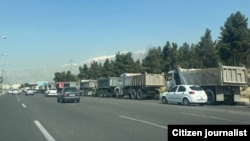
A surge of labor unrest, buffeted by widespread protests over sharp cuts to fuel quotas for truck drivers, has swept across Iran as economic hardship and poor living standards wrack the country’s workforce.
Several cities and provinces have seen large-scale protests by truck drivers in recent days ahead of the May 1 international labor day holiday, as they vent their anger of a cut in monthly fuel allocations from 3,000 liters to just 500 liters.
The reduction in fuel quotas has increased costs for operators, in turn raising the prices of goods and services for the broader population.
The protests have coincided with other protests by retired workers and in various industrial sectors across the country, which is reeling from the bite of economic sanctions on the economy over Tehran’s nuclear program.
In Arak, retired workers voiced their discontent against what they perceive as government mismanagement of the economy, while workers from Pars Paper Mill in Haft Tappeh and retirees in Shush rallied against local officials, demanding accountability and improved living conditions.
Local authorities in several regions, including Dashtyari, have reportedly ignored the protests, leading to increased frustration among the demonstrators.
According to the Free Union of Iranian Workers, the local governor in Dashtyari left his office without engaging with the protesters, exacerbating tensions.
In an attempt to quell dissent ahead of International Workers Day, several labor and social activists in Sanandaj were summoned and interrogated by local intelligence services, rights groups said.
Unrest -- including months of protests by workers -- has rattled Iran in recent years in response to declining living standards, wage arrears, and a lack of welfare support.
Labor Ministry data show Iran's poverty rate doubled in 2021, with one-third of the population living in "extreme poverty." Since then, conditions have failed to improve.
In September 2023, Iran's Misery Index, calculated by the Iranian Statistics Center, rose to 60.4 -- its highest point ever and more than double what it was six years ago. The higher the rating, the worse off people feel.
Labor laws in Iran do not recognize the right of workers to form independent unions.
Written by Ardeshir Tayebi based on an original story in Persian by RFE/RL's Radio Farda
Secret Documents Show Iranian Forces Assaulted And Molested Teen Killed In Custody, Says BBC

"Highly confidential" documents uncovered by British broadcaster BBC indicate that Nika Shakarami, a 17-year-old Iranian protester, was sexually assaulted and killed after being detained by security forces during unrest sparked by the Women, Life, Freedom protests in 2022.
According to a report published by the BBC on April 30, the documents contain detailed minutes and a report of Shakarami's case as compiled by the Islamic Revolutionary Guards Corps (IRGC). It reportedly includes the names of the individuals responsible for her death and senior commanders who allegedly tried to cover up what occurred.
RFE/RL has not been able to independently verify the BBC report.
"This document summarizes the appalling actions taken against Nika Shakarami, detailing her arrest and the subsequent cover-up attempts by senior commanders," the BBC said.
Shakarami went missing during protests in September 2022 in Tehran over the death of Mahsa Amini, who died while in police custody for allegedly wearing her head scarf improperly.
In her last communication with her friends, Shakarami said she was being chased by security forces.
Eight days later, Nika's body was returned to her family. The government said she had committed suicide.

The BBC report said documents showed Shakarami was forcibly taken into a refrigerated van, where she was handcuffed and assaulted by a male officer. As she was being assaulted, Shakarami fought back, prompting the officers to beat her with batons, they added.
Nasrin Shakarami, Nika’s mother, told RFE/RL’s Radio Farda in an exclusive video message that “the forensic medical certificate indicated that my daughter died from multiple blows from a hard object to her head.”
The BBC’s investigation revealed that a former Iranian security officer confirmed the authenticity of the documents through contacts within the IRGC’s archive, utilizing an "official code issued daily to senior intelligence officers." Questions remain about how the former agent still had access to the changing security codes.
"The document explicitly states that after being apprehended, Ms. Shakarami was placed in a van with several security agents," according to the BBC. One of the agents, as per the document, admitted to becoming “aroused” during the assault, although he later denied certain actions attributed to him.
In the document, Behruz Sadeghi, a member of the security team, is quoted as saying that it was "completely dark" inside the van and "we could only see each other with the light from our mobile phones."
When Shakarami became restive, Sadeghi says, two of his colleagues, Arash Kalhor and Sadegh Manjazi, moved to forcibly restrain her.
"She started cursing again which led to Arash Kalhor gagging her with his sock, while Sadegh laid her on the van floor and sat on her to calm her down.”
The documents quoted Kalhor as saying in a statement that, when Shakarami started yelling and struggling again, "I turned on my mobile phone and saw Sadegh Manjazi sitting on her with his hand in her trousers."
Iranian authorities and the IRGC did not respond to inquiries made by the BBC about the documents.
Following her death, the authorities were ordered by senior officials to ditch Shakarami’s body on a quiet street next to the Yadegar Imam highway in Tehran, the BBC reported, citing the documents.
During the "Women, Life, Freedom" protests, Iranian state media attempted to claim that Shakarami had committed suicide by jumping from an unfinished building near her aunt’s home, where she was living.
Her family has stated that they were not allowed to see her body, only viewing parts of her severely damaged head and face.
"Who do we complain to when no one in the government will take responsibility for killing Nika?" her mother said in despair.

The incident was similar in some ways to what Amini endured before her death.
Authorities have said she fell into a coma soon after her arrest because of health problems. But her family says she was in good health, while eyewitnesses said the 22-year-old was beaten while she was being detained.
Public anger at Amini's death has been widely seen as one of the biggest threats to Iran's clerical establishment since the foundation of the Islamic republic in 1979.
At least 500 people have been killed around the country since authorities began a crackdown on her supporters, with thousands more detained or harassed.
Written by Ardeshir Tayebi based on an original story in Persian by RFE/RL's Radio Farda
- By Reuters
Nuclear Watchdog Chief Set To Visit Iran On May 6-8

International Atomic Energy Agency (IAEA) chief Rafael Grossi is scheduled to visit Iran to take part in a nuclear conference from May 6 to May 8 and to meet Iranian officials, Iran's semiofficial Mehr news agency said on April 30. "Grossi will meet Iranian officials in Tehran before participating in the International Conference of Nuclear Sciences and Technologies held in Isfahan," the agency reported. The IAEA chief said in February that he was planning a visit to Tehran to tackle a "drifting apart" in relations between the agency and the Islamic republic.
Jailed Iranian Scholar Released From Prison Due To Health Issues

Imprisoned Islamic scholar and civil activist Sedigheh Vasmaghi has been released on bail amid concerns over her deteriorating health after she was moved to a hospital from Tehran's notorious Evin prison earlier this month.
Her release was reported on April 29 by the Emtadad Telegram channel, which said her state of health had worsened. The news was confirmed by a source speaking to RFE/RL's Radio Farda.
Vasmaghi, a vocal critic of Iran's mandatory hijab policy, was initially detained at her home on March 16, on charges of "propaganda against the system in cyberspace" and "public appearances without Shari'a-compliant hijab."
Doctors had urged for her transfer to a hospital from prison, but officials had refused several times to carry out the move. Her deteriorating health caused her to go blind.
Prior to her release, Vasmaghi penned a letter to a United Nations fact-finding committee detailing her experiences while detained by the Islamic republic, highlighting her wrongful arrest on charges of removing her hijab, or Islamic head scarf, and the subsequent brutal treatment and torture she endured at the hands of state officials.
Vasmaghi underscored in her letter that, despite her blindness, she was repeatedly taken for interrogation without legal representation and was transferred to serve her sentence without undergoing due legal process.
In November 2023, she posted a video on social media where she wasn't wearing a hijab in defiance of Iran's strict dress codes for women.
Speaking to RFE/RL’s Radio Farda at the time, Vasmaghi said she regarded her action as a protest against the religious regime's oppressive policies toward women, and advocated for the right of women to choose their own attire.

From inside Evin prison, Vasmaghi declared the mandatory hijab policy a failure. In her communication with the UN, she urged international human rights organizations to continue their efforts to hold Tehran accountable for its oppressive actions, particularly against women.
Vasmaghi has also been highly critical of Iranian Supreme Leader Ayatollah Ali Khamenei, calling him a dictator and slamming the country's "oppressive" leadership.
The death of Mahsa Amini in police custody in September 2022 after her arrest for allegedly improperly wearing her head scarf led to months of nationwide protests that thrust women's rights and public disapproval of the hijab law to the fore.
Iranian authorities responded by carrying out a violent crackdown that resulted in the deaths of over 500 protesters. They have also implemented a stricter hijab law with harsher penalties and longer prison sentences for those who disobey it.
The fact-finding committee of the UN Human Rights Council labeled these government actions against women as a "crime against humanity."
Written by Ardeshir Tayebi based on an original story in Persian by RFE/RL's Radio Farda
Former Prisoners In Iran Slam Swedish Government For Inaction In Djalali Case

A group of former prisoners who were once detained in Iran have slammed the Swedish government, saying it had failed to take enough action to secure the release of Ahmadreza Djalali, a Swedish-Iranian physician facing the death penalty in Iran.
The 15 signatories of the letter, including prominent figures such as Barry Rosen and Nazanin Zaghari-Ratcliffe, said the Swedish government’s efforts had been "insufficient" as Djalali approaches his eighth year behind bars.
"The inaction and lack of a clear strategy on Sweden's part is alarming," Siamak Namazi, one of the signatories, told RFE/RL's Radio Farda.
"It is imperative that the Swedish government upholds its responsibility towards its citizens."
Djalali, a medical professional and university professor, was detained in May 2016 by Iran's intelligence services during a visit for a scientific conference. He was subsequently sentenced to death in 2017 on charges of "espionage and selling information to Israel" and "corruption on Earth," charges he denies.
Vida Mehrannia, Djalali's wife, voiced her frustrations with the lack of progress in the case in an interview with Swedish Radio.
"The silence from the government is deafening," she said in the interview.
"We are desperate for action and engagement that can bring Ahmadreza home," she added.
The letter by the group of former prisoners underlines Iran's practice of detaining foreigners to use as bargaining chips in international negotiations.
They called on the Swedish government to collaborate internationally to combat the practice of hostage taking by establishing severe penalties as a deterrence.
Djalali’s case has also drawn attention to other Swedes detained in Iran, including Johan Floderus, and long-running tensions between Stockhokm and Tehran, particularly after the conviction of Hamid Nouri in Sweden for his role in the 1988 mass executions in Iran.
Written by Ardeshir Tayebi based on an original story in Persian by RFE/RL's Radio Farda
Toomaj Salehi, The Iranian Rapper Sentenced To Death Amid Global Outcry


There has been global outrage after Iran handed a death sentence to Toomaj Salehi, a 33-year-old rapper who was detained for supporting nationwide protests following the death in custody of Mahsa Amini in 2022. As his lawyers press ahead to appeal the decision, one prominent supporter has told RFE/RL she hopes Tehran will back down to avoid sparking a new wave of mass protests.
Iran Bans Egyptian TV Series On Life Of 11th-Century Figure Hassan Sabah
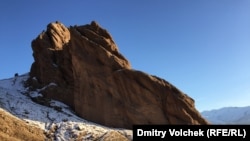
Iranian authorities have banned the controversial Egyptian television series Hashashin (Assassin) about the life of Hassan Sabah, citing historical “distortions,” state media reported on April 28. Mehdi Seifi, director of the SATRA regulatory authority, said that "the serial's narrative of Islamic history involves many distortions that seem to have been produced by a politically biased approach," IRNA reported. The 30-part series depicts Sabah and his group, which operated as a Shi'ite sect in the 11th century from mountain fortresses in northern and western Iran and were known for violent political assassinations. The series is being broadcast in Egypt and is gaining popularity throughout the Middle East. To read the original story by RFE/RL’s Radio Farda, click here.
- By dpa
Iran Unveils New 'Kamikaze' Drone
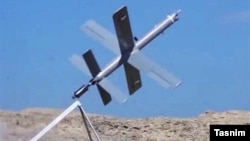
The Iranian military on April 28 presented a new attack drone designed to fly into targets and explode, like the kind used by Russia in the war in Ukraine. According to the state Tasnim news agency, the new Iranian drone -- which has not yet been publicly named -- is similar to the Russian Zala Lancet drone, which was first produced in 2020. Tasnim published a video of the new drone in the report. Iran has made great progress in the production of drones in recent years, and Iranian-produced drones have been used extensively by Russian forces in Ukraine.
Bus Traveling From Yerevan To Iran Crashes, Killing At Least 5
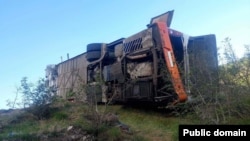
At least five people were killed in a bus accident in southern Armenia, the Caucasus nation’s Interior Ministry said on April 27. A statement said nine others were injured in the accident. Armenian media said the bus drove off a ravine near the village of Khotanan in the Syunik region. The Armenian website news.am quoted the ministry as saying the bus was traveling from Yerevan to Iran and that the passengers were Iranian nationals. Other unconfirmed media reports said the bus had Iranian license plates. To read the original story by RFE/RL's Armenian Service, click here.
- By Reuters
Iran Says Crew Of Israel-Linked Ship To Be Released

Iran’s foreign minister said the crew of a seized Portuguese-flagged ship linked to Israel have been granted consular access and are expected to be freed, Iranian media reported on April 27. Iran's Islamic Revolutionary Guards Corps seized the container vessel MSC Aries with a crew of 25 in the Strait of Hormuz on April 13, days after Tehran vowed to retaliate for a suspected Israeli strike on its consulate in Damascus. Iran had said it could close the crucial shipping route. Recent attacks on merchant shipping in the Red Sea and the Gulf of Aden by Yemen's Iran-aligned Huthis, claiming solidarity with Palestinians in Gaza during Israel's war with Hamas, have affected global shipping.
Language Teacher Sentenced To 11 Years Amid Iran's Crackdown On Kurds
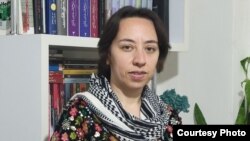
A Kurdish-language teacher in the Iranian city of Sanandaj has been sentenced to 11 years in prison for her cultural activities and support for the Women, Life, Freedom protests that have roiled the country since the death of Mahsa Amini in September 2022.
Soma Pourmohammadi, who is involved with the socio-cultural association Nojin, told RFE/RL’s Radio Farda that the first sentence handed down by Branch 1 of the Sanandaj Islamic Revolutionary Court was for a term of 10 years due to her association's activities, saying that it "disrupts national security."
In a second, related case, she said she received an additional one-year suspended sentence linked to her participation in the Women Life Freedom movement, again for "disrupting national security."
Pourmohammadi denied the accusations and criticized the Iranian judiciary and said she has little hope of receiving a reduced sentence on appeal.
During a recounting of her interrogation process, Pourmohammadi said she was blindfolded, forced to face a wall, and physically dragged and thrown outside in cold weather.
She was also forced to speak Persian despite her commitment to using only Kurdish, her mother tongue.
Amini, a 22-year-old Iranian-Kurdish woman, died while in police custody for an alleged hijab infraction in 2022.
Human rights groups say that since Amini’s death, authorities have launched an intense crackdown in provinces with significant Kurdish populations, including Kurdistan, Kermanshah, and West Azerbaijan.
Nojin, which has been officially licensed since 2009, focuses on the education and empowerment of women through the teaching of Kurdish and on raising cultural and social awareness in Kurdistan.
Despite its legal status, its members, including Pourmohammadi, frequently face state scrutiny and intimidation.
Pourmohammadi’s case, activists say, reflects a broader pattern of cultural suppression in Iran, particularly against ethnic minorities and their linguistic rights.
Pourmohammadi's sentencing coincides with increased actions against members of the Nojin association, including other educators who have faced similar charges.
Written by Ardeshir Tayebi based on an original story in Persian by RFE/RL's Radio Farda
- By RFE/RL
U.S. Targets Iranian Drone Industry In New Sanctions Announcement
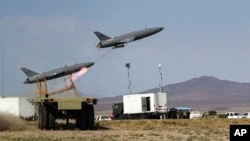
The U.S. Treasury Department has issued further sanctions targeting companies that manufacture, sell, and ship Iranian drones as part of an effort to curb their use by Russia in its full-scale war in Ukraine.
The sanctions announced on April 25 have been imposed on more than a dozen entities, individuals, and vessels “that have played a central role in facilitating and financing the clandestine sale of Iranian unmanned aerial vehicles (UAVs) for Iran’s Ministry of Defense and Armed Forces Logistics (MODAFL).”
The MODAFL is in turn supporting Iran’s Islamic Revolutionary Guards Corps (IRGC) and Russia’s war in Ukraine, the department said in a news release.
The department’s Office of Foreign Assets Control (OFAC) singled out the company Sahara Thunder, saying it is the main front company that oversees MODAFL’s commercial activities in support of the IRGC and Russia's war in Ukraine.
The company plays a key role in the design, development, manufacture, and sale of thousands of drones, many of which are ultimately transferred to Russia for use in its war against Ukraine, the Treasury Department said.
Among the individuals designated for sanctions are three officials of Sahara Thunder -- Kazem Mirzai Kondori, Hossein Bakshayesh, and Hojat Abdulahi Fard.
OFAC is also designating two companies and a vessel that it says are involved in the shipment of Iranian commodities for Sepehr Energy Jahan Nama Pars, a company that plays a leading role in the commercial activities of Iran’s Armed Forces General Staff (AFGS), the Treasury said.
The Treasury Department said its actions were concurrent with sanctions announced on April 25 by Britain and Canada targeting several entities and individuals involved in Iran’s UAV procurement and other military-related activities.
“Iran’s Ministry of Defense continues to destabilize the region and world with its support to Russia’s war in Ukraine, unprecedented attack on Israel, and proliferation of UAVs and other dangerous military hardware to terrorist proxies,” Treasury Undersecretary for Terrorism and Financial Intelligence Brian E. Nelson said in the news release.
He said the United States will continue its close coordination with Britain and Canada and continue to use "all means available to combat those who would finance Iran’s destabilizing activities."
The new sanctions also hit an Iran-based company involved in the procurement and development of drones, quadcopters, engines, and electronic and digital parts along with its leadership and an Iranian cargo airline.
The United States and Britain last week announced sanctions on Iran targeting its drone production capabilities in response to its April 13 attack on Israel.
The U.S. designated 16 individuals and two entities on April 18 for allegedly enabling Iran’s drone production, including engine types that power Iran’s Shahed drones.
The sanctions freeze any assets the individuals and entities have in U.S. jurisdiction and generally bar Americans from dealing with them.
Iranian Activists Slam Government For Stepped Up Hijab Enforcement
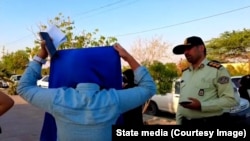
Iranian civil political activists, including several who are currently imprisoned, have condemned the government's "military" aggression toward women through its renewed enforcement of the mandatory hijab, according to a document made available to RFE/RL’s Radio Farda.
The statement criticizes the "government's mobilization" against women and highlights what it calls "a persistent campaign of arrests and repression" and emphasizes that, despite "the oppressive measures, the people of Iran remain committed to seeking freedom."
Following the death of in September 2022 of Mahsa Amini, who died while detained by the morality police, and the subsequent nationwide protests it sparked, the presence of morality police vehicles in cities had noticeably decreased.
But since April 14, law enforcement and plainclothes officers have escalated violent tactics against women and girls in Tehran and other cities in enforcing the Hijab and Chastity Law, resulting in numerous detentions following public assaults.
The activists' statement accuses the government of using the law as a tool to control lifestyles and maintain the state's power through fear.
Signatories to the statement include prominent figures such as Narges Mohammadi, Mostafa Tajzadeh, and Faezeh Hashemi, who called the government's actions inhumane and illegal.
They argued that the state's treatment of women resisting the hijab mandate not only violates human rights, but also demonstrates the regime's "misogynistic stance."
The new crackdown on women for not adhering to the hijab, or Islamic head scarf, intensified after Iran’s Supreme Leader Ayatollah Ali Khamenei gave a directive during the recent Eid al-Fitr prayer sermon to step up enforcement measures against what he called "religious norm-breaking" within Iranian society.
Khamenei also emphasized that the mandatory hijab law was a "definite religious decree," underscoring the obligation of all to adhere to this the same as other legal decrees.
The resurgence of the morality police has sparked increased tensions and confrontations across various cities.
Despite the backlash and public outcry, including from some regime supporters, the national police command says the crackdown will continue.
The hijab became compulsory for women and girls over the age of 9 in 1981, two years after the Islamic Revolution in Iran. The move triggered protests that were swiftly crushed by the new authorities. Many women have flouted the rule over the years and pushed the boundaries of what officials say is acceptable clothing.
Written by Ardeshir Tayebi based on an original story in Persian by RFE/RL's Radio Farda
Iran Sentences Dissident Rapper To Death

Iranian rapper Toomaj Salehi, detained during the nationwide protests of 2022, has been sentenced to death in what activists called "a new low" in Tehran's crackdown on dissent.
The charges against Salehi also include aiding in rebellion, assembly and conspiracy, propaganda against the regime, and inciting chaos -- all offenses classified under corruption on Earth, as per Article 286 of the Criminal Code.
Surprisingly, the court also imposed additional penalties, including a two-year travel ban and a prohibition on engaging in artistic activities.
Amir Raisian, Salehi’s attorney, said on April 24 that the Isfahan Revolutionary Court issued the sentence for a new charge of "corruption on Earth" while refusing to acknowledge a prior Supreme Court ruling that might have mitigated the case.
Raisian criticized the judgment, saying that, given its legal inconsistencies, his client would launch an appeal.
"The primary court's verdict has clear legal contradictions, particularly ignoring the Supreme Court's guidance which had advised reducing the charge count and considering a pardon," Raisian said in an interview with the Tehran-based Sharq newspaper.
Since unrest rattled the country following the death of Mahsa Amini in September 2022 in police custody for a supposed head-scarf violation, Iranian authorities have launched a crackdown on even the slightest hint of dissent.
Thousands have been detained, hundreds have died, and there have been credible reports of torture, including by Salehi.
Still, the Center for Human Rights in Iran (CHRI) said Salehi's death sentence "underscores the glaring unlawfulness and injustice of the Islamic republic's judicial system, which has been weaponized and used as a tool by the state security forces to crush dissent and perpetuate political repression."
"This grotesque manipulation of the judicial process aims to silence dissent. Toomaj's imprisonment stems from his vocal advocacy against state oppression. It is imperative that supporters of free speech and dissent unite to demand his immediate release," CHRI Executive Director Hadi Ghaemi said.
Raisian noted that the same court previously acquitted Salehi of other serious allegations, such as disturbing public order and insulting leadership, due to insufficient evidence.

Salehi, 33, was initially arrested in October 2022 after making public statements in support of the protests, which had erupted the previous month following Amini's death.
He spent much of his pretrial detention in solitary confinement and was subsequently sentenced to more than six years in prison but released after the Supreme Court, on appeal, found "flaws in the original sentence." His case was sent back to a lower court for reexamination and possible retrial.
He was released on bail in November after spending over a year in prison, including 252 days in solitary confinement, but rearrested two weeks later after publicly talking about his alleged torture in prison in a video.
Raisian said reports in local media about a possible pardon or sentence reduction citing Salehi's youth were false. The court, he said, only requested leniency from the pardon commission, which does not impact the execution sentence.
Salehi gained prominence for lyrics that rail against corruption, widespread poverty, executions, and the killing of protesters in Iran.
His songs also point to a widening gap between ordinary Iranians and the country's leadership, accusing the authorities of "suffocating" the people without regard for their well-being.
Written by Ardeshir Tayebi based on an original story in Persian by RFE/RL's Radio Farda
- By RFE/RL
With Conflicts Raging In Ukraine, Middle East, Amnesty Warns Rights Under Threat
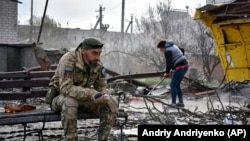
Rights watchdog Amnesty International has warned that world order is under threat amid a wave of international rule breaking, deepening global inequality, superpower rivalries, and accelerating climate change.
The group said in its annual report on the state of global human rights, released on April 24, that the world is "reaping a harvest of terrifying consequences" from the pressures of escalating conflict and "a near breakdown" of international law, with advances in artificial intelligence likely to exacerbate the situation.
Amnesty said its report "presents a stark assessment of the betrayal of human rights principles by today’s leaders and institutions," and that in the face of multiplying conflicts, "the actions of many powerful states have further damaged the credibility of multilateralism and undermined the global rules-based order first established in 1945."
"Alongside Russia's ongoing aggression against Ukraine, the growing number of armed conflicts, and massive human rights violations witnessed, for example, in Sudan, Ethiopia and [Burma] – the global rule-based order is at risk of decimation," said Amnesty Secretary General Agnes Callamard.
The report noted that the war in Ukraine, launched by neighboring Russia in February 2022, was another key contributor to the decline in the global human rights situation.
Amnesty called out indiscriminate attacks by Russian forces "on populated areas and civilian energy and grain export infrastructure."
"Both Russian and Ukrainian forces used cluster munitions despite their inherently indiscriminate nature and lasting risks for civilians," the report reads.
The report pointedly criticizes the United States for its "brazen use" of its veto power to "paralyze" the UN Security Council for months as it tried to mediate a halt in fighting between Israel and Hamas, which has been designated a terrorist organization by Washington and the European Union, in the Gaza Strip.
It also slams the "grotesque double standards" of European countries such as the United Kingdom and Germany, given their "well-founded protestations" about war crimes by Russia and Hamas, while they simultaneously bolster the actions of Israeli and U.S. authorities in this conflict.
The violence erupted after Hamas launched an attack on Israel on October 7 that killed some 1,200 people, mostly citizens, while around 240 others were taken back to Gaza as hostages. Since then, an Israeli offensive aimed at neutralizing Hamas has killed almost 35,000 people, according to the Hamas-led Health Ministry in Gaza.
“The confounding failure of the international community to protect thousands of civilians -- a horrifically high percentage of them children -- from being killed in the occupied Gaza Strip makes patently clear that the very institutions set up to protect civilians and uphold human rights are no longer fit for purpose. What we saw in 2023 confirms that many powerful states are abandoning the founding values of humanity and universality enshrined in the Universal Declaration of Human Rights,” Callamard said.
Iran's 'Ambassadors Of Kindness' Enforce Hijab In New Head Scarf Crackdown
Iran’s Islamic Revolutionary Guards Corps (IRGC) has established a new unit in Tehran to enforce religious dress codes amid a fresh crackdown (called the "Light Initiative") on women not wearing a hijab, or head scarf. Calling its members "Ambassadors of Kindness," the unit has issued cheery music videos showing girls happily receiving head scarves. But footage emerging on social media reveals a different picture of Iranian women without a hijab being bundled into vans.
- By RFE/RL
Latest U.S. Sanctions On Iran Target Four People, Two Companies Suspected Of Hacking
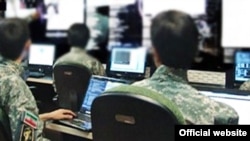
The United States on April 23 imposed more sanctions against Iran, designating four people and two companies that the U.S. Treasury Department said were "involved in malicious cyber-activity" on behalf of the country's military.
"These actors targeted more than a dozen U.S. companies and government entities through cyberoperations, including spear phishing and malware attacks," on behalf of Iran's Islamic Revolutionary Guards Corps' Cyber-Electronic Command (IRGC-CEC), the Treasury Department said in a statement.
In addition to the sanctions, the U.S. Justice Department and FBI unsealed an indictment against the four individuals for their alleged roles in cyberactivity targeting U.S. entities.
The defendants are accused of engaging in a coordinated hacking campaign originating in Iran that targeted more than a dozen American companies and the U.S. Treasury and State departments, Attorney General Merrick Garland said in a statement. The activity started in about 2016 and continued through about April 2021, the Justice Department said.
The Treasury Department said Iranian cyber-actors "continue to target the United States using a wide range of malicious cyber-activity, from conducting ransomware attacks against critical infrastructure to conducting spear phishing and other social-engineering campaigns against individuals, companies, and government entities."
It said the IRGC-CEC was one of the Iranian government organizations behind the malicious cyber-activity and worked through a series of front companies to target the United States and several other countries.
Much of the Iranian public is not aware that some companies in Iran such as Mehrsam Andisheh Saz Nik, one of the two companies designated for sanctions on April 23, are used as front companies to support the IRGC-CEC, the department said.
"The Iranian public should be aware that the IRGC-CEC uses private companies and their employees to achieve illegal goals," it added.
The sanctions freeze any assets the entities and individuals have in U.S. jurisdiction and generally bar Americans from dealing with them.
Writers, Artists Demand Iran Release Cartoonist Arrested For Trying To Hang Picture

PEN America, along with a group of organizations that support cartoonists and artists, has condemned the violent arrest of Atena Farghadani, an Iranian cartoonist currently being held in Tehran's notorious Evin prison for attempting to hang one of her drawings on a wall near the presidential palace.
Farghadani's lawyer, Mohammad Moghimi, said she was violently arrested on April 12 by intelligence officers of the Islamic Revolutionary Guards Corps and sustained facial injuries that were visible during her arrest.
Moghimi said in a post on social media that Farghadani refused bail in protest against her violent arrest and was initially transferred to Qarchak prison, only to be moved to Evin prison due to the refusal of Qarchak to accept her because of her injuries.
A statement issued jointly on April 22 by PEN America, Cartooning for Peace, Cartoonists Rights, and the Freedom Cartoonists Foundation expressed outrage over the treatment of Farghadani by Iranian authorities, noting her work in support of human rights and democratic values.
"We call on the Iranian authorities to immediately and permanently cease their deliberate and brutal campaign against artistic freedom, and artists like Farghadani, and for the charges against her to be dropped immediately," Julie Trebault, managing director of Artists at Risk Connection, said in the statement.

The groups highlighted Farghadani's courage in upholding democratic values under "severe repression" and called for her "unconditional and immediate release."
At a recent United Nations Human Rights Council meeting, PEN America joined an international coalition that urged the extension of a mandate of a commission that is investigating human rights abuses in Iran, underscoring ongoing concerns about the suppression of free expression in the country.
In 2022, the association reported that Iran was responsible for imprisoning over one-third of all female writers jailed worldwide, emphasizing the systemic suppression of women's voices amid their struggle for full human rights.
Farghadani was previously detained in 2015 and served 18 months on various charges including "propaganda against the regime."
Written by Ardeshir Tayebi based on an original story in Persian by RFE/RL's Radio Farda
Iran Homing In On Africa With Trade Promises, Chaos
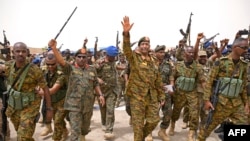
Iran is expanding its footprint in Africa, offering arms, partnerships, and chaos as it works to boost its influence on the continent.
It is part of a major strategic shift that has involved high-level Iranian diplomatic and trade delegations as well as weapons deliveries to Africa.
In return, experts say, Iran hopes to build partnerships that will help it bypass international sanctions while carving out new ground for its "axis of resistance" against its global and regional adversaries.
"Iran has been seeking to expand its political and economic reach further beyond its region," said Lucas Webber, co-founder of Militant Wire. And due to Western sanctions, Webber said, "Iran has extra incentive to pursue new trade opportunities with African countries."
Iranian officials have lauded the potential to gain access to Africa's agricultural and mineral wealth while finding new destinations for Iranian exports, including sophisticated weapons. President Ebrahim Raisi, underscoring the importance of the strategy, made a three-country tour to Africa in July -- the first by an Iranian president to the continent in more than a decade.

This week, Iran is touting the second Iran-Africa trade summit in just over a year, with representatives from more than 40 African countries expected for the April 26-29 event in Tehran.
An Iranian official responsible for the promotion of international business said this week that "the future of world trade will be determined in Africa." And unlike with other major powers that have sought to tap into Africa's "unexploited virgin resources," he said, African countries do not have "political angles" with Iran.
But Iran's engagement in Africa -- marked by efforts to export Tehran's version of political Islam, the establishment of proxies, and weapons supplies to both states and nonstate actors -- often coincides with instability and anti-Western sentiment, fitting in with Iran's broader aims.
"Iran is advancing its multipronged global 'resistance' strategy in Africa, whereby it seeks to secure partnerships that offset Western influence and isolation of Iran," said Liam Karr, an analyst with the American Enterprise Institute's Critical Threats Project.
In recent months, Iran has made its presence felt from the Horn of Africa to the Sahel, allowing it to put more pressure on regional adversaries and to attempt to derail Israel's offensive in the Gaza Strip.

With Iranian-backed Huthi rebels in Yemen wreaking havoc on international shipping in solidarity with the Palestinian cause, Tehran has solidified its position across the Bab al-Mandel Strait, a narrow passage to the Red Sea.
Iran's "expanded supply of weapons and ammunition to various regional markets" is evident in the Horn of Africa, Webber said, with Somalia serving as a hub. Iran has also provided the Ethiopian government with weapons to fight opposition armed groups.
With Tehran's strained relations with rival Saudi Arabia restored in early 2023, normalized ties with Horn countries have followed. In September, Iran reestablished relations with Djibouti, which cut ties with Iran seven years ago at Riyadh's urging.
Tehran has also worked to patch things up with Eritrea and Sudan, which fell out with Iran after joining a Saudi-led coalition against the Huthis.
Iranian weapons sales to Sudan's armed forces, which are fighting a civil war against rebels, have recently allowed the military to reverse losses and regain territory.
They have also provided Iran with an opening.
In March, Iran reportedly sought permission to establish a permanent naval base in Port Sudan, which serves as the military's de facto capital. The request was refused, and denied by Iran, but exposed Tehran's efforts to extend its presence along the western banks of the Red Sea.
"An Iranian naval base at Port Sudan would directly support Iranian out-of-area naval operations and attacks on international shipping," while allowing Tehran to counter regional rivals, Karr said.
From Sudan, Iran has carved out a sphere of influence that extends across the Sahel to the Atlantic, an area the West fears could become a refuge for Islamist militants.
Karr said Iran's efforts have been most successful in Nigeria, where Tehran has established a proxy group called the Islamic Movement of Nigeria that "functions like other [Iranian] proxies insofar as Lebanese Hizballah and the Iranian regime have provided financial, military, and political support."
Iran has also seized on the opportunity to reach out to a trio of anti-Western military juntas that have taken power in Burkina Faso, Mali, and Niger, which Karr said fits Tehran's broader efforts "to increase economic engagement to undermine Western sanctions."
There are also indications that Iran is seeking to capitalize on recent rifts between junta leaders and Western countries, whose forces are being pushed out.
"With the military withdrawals and declining French influence in West Africa, for instance, Iran has sought to increase its influence through security cooperation and infrastructure development projects," Webber said.
Iran has also said international security cooperation is needed in the fight against terrorism in Africa, suggesting it could help fill a role previously played by Western forces.
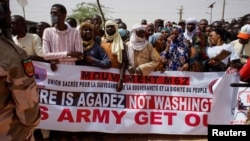
Since the Niger junta seized power in July, leading to the withdrawal of French and European forces from the region, its budding relationship with Iran has not gone unnoticed.
A U.S. delegation traveled to the country last month to express concerns about Niger's relations with Iran and its ally Russia, which is also expanding its influence in Africa.
Shortly after the visit, Niger terminated its counterterrorism alliance with Washington, reportedly after the U.S. officials accused the military junta of exploring a secret deal that would provide Iran access to its uranium reserves.
The ruling junta, which has called the U.S. military presence in Niger "illegal," rejected the allegations. Last week, the United States announced plans to withdraw 1,000 military personnel in what was seen as a victory for Iran's and Russia's aims in the region.
Sister Of Iranian Teen Killed In Anti-Government Protests Released From Prison
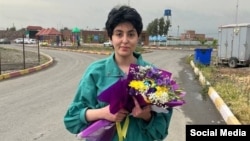
The sister of a 16-year-old killed in 2022 in anti-government protests has been freed from an Iranian jail. Aida Shakarami, sister of Nika Shakarami, was released on April 23 after about a week of detention for violating Iran’s hijab law. Shakarami was arrested by the morality police during the government's attempt to reimpose the compulsory head scarf. Nasrin Shakarami, the mother of Nika and Aida, said the judge in the case had insulted and threatened her daughter, including accusations of promoting corruption and prostitution. Pictures of Aida Shakarami on social media after her release showed her without a hijab. To read the original story by RFE/RL's Radio Farda, click here.
The Iranian Cartoonist Arrested For Her Art
Prominent Iranian cartoonist Atena Farghadani has been detained by the Revolutionary Guards (IRGC) after attempting to post her work on a wall near the presidential palace in Tehran, multiple sources in Iran have told Radio Free Europe/Radio Liberty (RFE/RL).
- By RFE/RL
U.S. Report Highlights Worsening Human Rights Abuses In Russia, Iran, Afghanistan
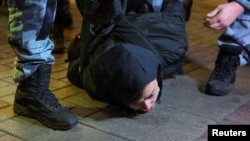
Russia has continued to show blatant disregard for human rights both in its unprovoked war against Ukraine and in the treatment of its own citizens over the past year, the U.S. State Department has said in its latest annual report on human rights around the globe, which also highlights the abuses committed by Iran's theocratic regime and the Taliban's mistreatment of Afghans -- especially its discrimination against women and girls.
Russian troops continued to commit numerous abuses and atrocities, some amounting to war crimes, the report says, highlighting the issuance by the International Criminal Court of arrest warrants for Russian President Vladimir Putin and his children's rights commissioner, Maria Lvova-Belova, for their role in the forced deportation of Ukrainian children to Russia.
"There were credible reports of summary execution, torture, rape, and attacks killing and injuring civilians and damaging or destroying civilian infrastructure by Russia's forces in Ukraine, as well as war crimes, including those involving forced deportation or transfer of civilians, and the forced placement in foster care or adoption of Ukrainian children," the report notes.
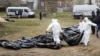
At home, Russian authorities continued to step up the pressure on dissent and independent expression, imprisoning political opponents and anti-war protesters, clamping down on the media, prosecuting numerous people for expressing their opinions online, and forcibly closing down nongovernmental organizations.
More moves were made to persecute opposition politicians such as the sentencing of Vladimir Kara-Murza to 25 years in prison on charges including treason and the slapping of an extra 19 years for "extremism" on the already imprisoned Aleksei Navalny, who subsequently died under suspicious circumstances in February in a penitentiary in Russia's Arctic region.
"Tragically, as we saw with Aleksei Navalny's unjust imprisonment in a Russian penal colony, incarceration can come with horrific conditions -- with abuse, even death," Secretary of State Antony Blinken said on April 22 while presenting the report.

The report also highlights a multitude of other human rights abuses committed by Russian authorities on Russia's territory and abroad, such as, but not limited to, arbitrary or unlawful killings, including extrajudicial killings; enforced disappearances; pervasive torture or cruel, inhuman, or degrading treatment by the government; harsh and life-threatening prison conditions; arbitrary arrest or detention; and serious problems with the independence of the judiciary.
Harsh Punishments Meted Out In Iran
Brutal human rights abuses continue to take place and even worsen in Iran, where women and members of marginalized communities bear the brunt of the regime's human rights violations and abuses, the report says, highlighting the harsh punishment meted out to prisoners, including executions, for bogus or unjust reasons.
"Women continued to face discrimination, including through enhanced means for enforcing the mandatory dress code, which led to acts of civil disobedience," the report says, adding that many people have reportedly disappeared during extended protests that were triggered by the death of 22-year-old Mahsa Amini in the custody of morality police in September 2022.
The number of executions was up by more than one-third last year compared to 2022, with 798 people being put to death, some of them political dissidents.
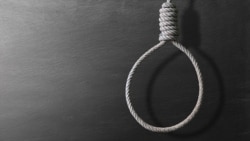
"The government often charged political dissidents with vague crimes, some of which carried the death penalty, such as 'antirevolutionary behavior,' 'corruption on earth,' 'siding with global arrogance,' 'waging war against God,' and 'crimes against Islam,'" the report notes.
The Iranian regime is also guilty of serious violations outside its borders, which include enabling abuses by terrorist groups throughout the region by the Syrian government, Iran-aligned militia groups in Iraq, and Yemeni Huthi militants, as well as the unlawful recruitment or use of child soldiers, the document said.
Systemic Mistreatment, Discrimination In Afghanistan
In Afghanistan, the Taliban has resorted to systemic mistreatment of and discrimination against Afghanistan’s women and girls since it returned to power in August 2021 following the hasty withdrawal of U.S.-led forces.
"In Afghanistan, the Taliban have limited work opportunities for women, shuttered institutions found educating girls, and increasing floggings for women and men accused of, quote, 'immoral behavior,' end quote," Blinken said.
The report says Taliban authorities have issued more than 50 pieces of legislation "that effectively erase women from public life."
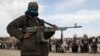
The Taliban authorities have shown continuous and widespread "disregard for the rule of law and official impunity for those responsible for human rights abuses," the document says, adding that both the Taliban and their current arch-foe, the Islamic State group, have been using child soldiers.
Taliban spokesman Zabihullah Mujahid on April 23 pushed back against the criticism, emphasizing the Taliban's commitment to upholding Shari'a law, which he argued defines and guarantees the rights of Afghan citizens based on their wishes.
"The Islamic Emirate of Afghanistan has a Shari'a and Islamic obligation to give the rights of its citizens," Mujahid said on state-controlled RTA Radio. "When America or other Western countries talk about rights, they should not impose Western culture on other countries. What is defined as rights in America may not be the same in Afghanistan."
Referring to the ongoing war in Gaza that was triggered by an October 7 attack on Israel by Hamas, which has been designated a terrorist organization by the United States and the European Union, the report notes "serious abuses...by Hamas and Israel."
It says those abuses include unlawful or widespread civilian deaths and harm, enforced disappearances or abductions, torture, as well as "violence or threats against journalists."
Iranian Rapper's Death Sentence Changed To 5 Years In Prison

Iranian dissident rapper Saman Yasin, who was detained during nationwide protests in 2022, has been sentenced to five years in prison, according to a verdict obtained by RFE/RL’s Radio Farda.
In sentencing Yasin, Branch 15 of Tehran's Islamic Revolutionary Court said Yasin will serve the punishment at a prison in the city of Kerman, as dictated by a fatwa from the Islamic republic's leader that bars Yasin from associating with others. Yasin is from the northwestern Kurdish region of Iran, while Kerman is located near the southeastern part of the country.
Legal sources noted that Yasin, who was involved in the "Women, Life, Freedom" protests sparked by the death of a young woman in police custody for an alleged head-scarf violation, was initially sentenced to death, but that sentence was overturned by the Supreme Court.
Hossein Sartipi, Yasin’s lawyer, confirmed on social media platform X (formerly Twitter) that the sentence had been changed, remarking, "Saman Yasin was saved from execution."
Yasin has been in temporary detention for over 18 months. Sartipi said he plans to appeal the latest sentence.
The 25-year-old rapper recently made a plea from prison to the judiciary to "issue my death sentence" rather than continue holding him indefinitely without a trial after multiple court dates were set and then delayed.
Yasin described enduring a "mock execution" set up by prison officials before being moved to a prison in Karaj.
He has consistently maintained his innocence, releasing multiple audio recordings to publicize his claims. He has also reportedly launched at least one hunger strike in protest.
After the September 2022 death of Mahsa Amini in custody after she was detained for allegedly wearing her head scarf improperly, Iranians took to the streets across the country to protest a lack of rights, with women and schoolgirls making unprecedented shows of support in the biggest threat to the Islamic government since the 1979 revolution.
The judiciary, at the urging of lawmakers, has instituted harsh penalties, including the death sentence, for offenders.
Written by Ardeshir Tayebi based on an original story in Persian by RFE/RL's Radio Farda
RFE/RL has been declared an "undesirable organization" by the Russian government.
If you are in Russia or the Russia-controlled parts of Ukraine and hold a Russian passport or are a stateless person residing permanently in Russia or the Russia-controlled parts of Ukraine, please note that you could face fines or imprisonment for sharing, liking, commenting on, or saving our content, or for contacting us.
To find out more, click here.
Editors' Picks







Top Trending
With ATACMS In Hand, Ukraine Looks To Neutralize Putin's Fortress In Crimea
2Some 400 Naturalized Russians Stripped Of Citizenship Under New Law
3Austin Calls On Countries That Have Patriot Air Defense Systems To Transfer Them To Ukraine
4Eyewitnesses Say Georgian Police Used Rubber Bullets In Crackdown On Protesters
5Kadyrov Appoints Son, 16, As Supervisor Of Special Forces School In Chechnya
6U.S. Weapons Are Coming To Ukraine. But Russian Forces Have The Momentum.
7Russia Breached Global Chemical Weapons Ban In Ukraine War, U.S. Says
8Duchess Sophie Visits Ukraine In First Trip By British Royal Since Start Of War
9As Telegram's Popularity Soars, Is It 'A Spy In Every Ukrainian's Pocket'?
10Live Briefing: Russia Invades Ukraine
Subscribe

