



Every year, Iran's Islamic regime devotes an entire week to the glorification of the Basij Resistance Force. This year, Basij Week ended on November 27 with extensive media coverage and a raft of activities, including a high-profile review march by 15,000 Basij members in Tehran.
The Basij (Persian for mobilization) is a large and omnipresent paramilitary organization with multifaceted roles, and which acts as the eyes and ears of the Islamic regime. It is present in schools, universities, state and private institutions, factories, and even among tribes.
The Basij was formed by order of Ayatollah Ruhollah Khomeini in November 1979 and was intended to function as the nucleus of what the founder of the Islamic republic called "the army of 20 million" with the aim of defending the Islamic regime against both domestic and foreign threats.
Between 700,000-800,000 Basij volunteers were sent to the front during the eight-year Iran-Iraq War, when self-sacrifice was the quintessential value of the Islamic revolution. They were used as cannon fodder when the Islamic regime, deprived of access to Western technology and arms, embarked on a series of disastrous human-wave attacks against Iraqi forces during the final years of the war. The sacrifice made by the Basij in the war with Iraq ensured that the force became one of the five main components of the Islamic Revolutionary Guards Corps (IRGC), together with the army, navy, air force, and Quds Force.
After the war, the Basij was reorganized and gradually developed into one of the Islamic regime's primary guarantors of domestic security. Though poorly armed and trained, the importance of the Basij to the Islamic regime has increased significantly, and in the process its numbers have multiplied exponentially.
According to a former commander of the Basij, Brigadier General Mohammad Hejazi, the strength of the force in 2004 was 10.3 million. By 2007, its strength stood at 12.6 million. The current commander of the Basij, Hasan Taeb, told the semi-official Fars news agency on November 25 that the force now numbers 13.6 million, which is about 20 percent of the total population of Iran. Of this number, about 5 million are women and 4.7 million are schoolchildren.
At first glance, these figures appear impressive, given that a paramilitary force of 13.6 million is a formidable force for any country. But this figure is misleading and open to dispute. In fact the Basij may be able to mobilize no more than 1.5 million men and women of military age.
Grassroots Support
The Basij is subdivided into five units: the Pupil Basij, the Student Basij, the University Basij, the Public Service Basij, and the Tribal Basij. The diverse range of these units is indicative of the various roles of the force and the fact that the aim of the Basij is to reinforce support for the current regime through, among other things, promoting its interpretation of Islamic values.
 Basij members on review in Tehran on November 27Members of the younger Pupil Basij are aged between 12-15 and those of the elder Pupil Basij between 15-18. There are special summer camps for members of the Pupil Basij. These two sub-sections of the Pupil Basij are similar to the "young pioneers" and Komsomol in the Soviet Union. In other words, they constitute a mass youth movement that helps to encourage regime support from an early age.
The backbone of the Basij comprises 2,500 Al-Zahra (for women) and Ashura battalions, numbering 300–350 personnel each. The IRGC aims to arm 30 percent of these battalions with semi-heavy and heavy weapons. However, all members of the battalions are trained to use light arms and rifles. Since Major General Mohammad Ali Jafari assumed command of the IRGC on September 1, 2007, the Basij have received extensive organizational and logistical support by the Revolutionary Guards that has enabled it to form 30,000 new combat cells, each of them 15-20 members strong, named Karbala and Zolfaqar. These units cooperate closely with the army of the IRGC.
The mission of the Basij as a whole can be broadly defined as helping to maintain law and order; enforcing ideological and Islamic values and combating the "Western cultural onslaught"; assisting the IRGC in defending the country against foreign threats; and involvement in state-run economic projects.
In terms of maintaining law and order, Basij members act as "morality police" in towns and cities by enforcing the wearing of the hijab; arresting women for violating the dress code; prohibiting male-female fraternization; monitoring citizens' activities; confiscating satellite dishes and "obscene" material; intelligence gathering; and even harassing government critics and intellectuals. Basij volunteers also act as bailiffs for local courts.
During this year's Basij Week, one of the commanders of the IRGC, Abdollah Eraqi, stressed that after a long lapse, the Basij will again start patrolling the streets of Tehran to help police maintain the Islamic dress code and arrest hardened criminals.
Doing The Dirty Work
It is noteworthy that the organizational structure of Basij units and the training they receive varies from one province to another, according to the nature and severity of the potential threats identified by the IRGC and Basij commanders in different regions. Basij members in the border provinces of Khuzestan and Sistan va Baluchistan perform different duties to those stationed in central Iran.
 Female Basij members have led crackdowns on women's dress.In Sistan va Baluchistan and Khorasan, which border Pakistan and Afghanistan, respectively, Basij members are deployed against drug traffickers, while in the province of Khuzestan, adjacent to Iraq, they carry out border-guard duties, and in the littoral provinces of Hormuzgan and Bushehr, they assist the IRGC's naval forces in combating the smuggling of banned goods from the Arabian Peninsula.
The Ashura battalions of the Basij are regularly trained in riot-control tactics and how to deal with domestic uprisings. Basij members played a central role in breaking up the widespread student riots in Tehran in 1999. They were also instrumental in quelling several outbreaks of ethnic unrest in the oil-rich province of Khuzestan, which is home to the majority of Iran's ethnic-Arab population.
Since the Basij was directly subordinated to Major General Jafari last year, it has been given legal authority to engage in economic projects. Earlier this year, at the initiative of President Mahmud Ahmadinejad's government, the Majlis passed a law to the effect that government construction and economic projects can be contracted to the Basij. Several members of the Majlis vehemently criticized this law, arguing that it violates Article 44 of the constitution, but to no avail.
Lacking the necessary skills to implement such projects, the Basij is likely to solicit help from the IRGC, which has extensive experience in this area. The IRGC is, after all, the third-wealthiest organization in Iran after the National Iranian Oil Company and the Imam Reza Endowment (named after the eighth Shi'ite imam).
Playing Politics
The Basij also plays a key role in preserving the political status quo. Although the constitution bans members of the IRGC and the Basij from involvement in politics, Basij support contributed to Ahmadinejad's victory in the 2005 presidential election. The Basij under the tutelage of the IRGC was also heavily involved in the March 2008 parliamentary elections, during which Basij and IRGC commanders openly backed Ahmadinejad's principalists (osulgarayan). In February 2008, Major General Jafari said that "the principlists are in control of the executive and legislative branches and, God willing, the judiciary will soon follow suit." Hasan Taeb, then deputy commander of the Basij, similarly stressed that Basij members should have a "maximum presence" in the elections.
Taeb, who is now Basij commander, said during this year's Basij Week that his organization will not interfere in next year's presidential vote. However, history suggests that both the IRGC and the Basij will ultimately follow the orders of Supreme Leader Ayatollah Ali Khamenei and senior clerics, given that the commanders of both forces firmly believe that political interference is justified on revolutionary grounds. An IRGC commander told former Intelligence Minister Ali Yunesi in early May: "We joined the [Revolutionary] Guards in order to interfere. During the [Iran-Iraq] War, we interfered in politics and we do so now because it is an act of revolution."
Those plans to co-opt the Basij and the IRGC underline the primary concern of the Iranian leadership, which is deflecting and countering internal threats and preserving domestic political stability at a time when grave economic problems, including high inflation and growing poverty and unemployment, have undermined support for Ahmadinejad and triggered a series of domestic uprisings among reformers, students, and ethnic minorities.
Given the convoluted power structure of Iranian politics, Ayatollah Khamenei is increasing looking toward the former IRGC commanders, as well as the IRGC and the Basij, to help maintain his position as de facto the most powerful man in Iran, neutralize popular dissatisfaction over the deteriorating economic situation, stifle demands for political reform, and undercut pressure related to the nuclear issue.
There is no guarantee that Ahmadinejad will be reelected president next June. But even if he is not, domestic tensions are likely to persist, enhancing the role of the Basij as guarantor of political stability.
The Basij (Persian for mobilization) is a large and omnipresent paramilitary organization with multifaceted roles, and which acts as the eyes and ears of the Islamic regime. It is present in schools, universities, state and private institutions, factories, and even among tribes.
The Basij was formed by order of Ayatollah Ruhollah Khomeini in November 1979 and was intended to function as the nucleus of what the founder of the Islamic republic called "the army of 20 million" with the aim of defending the Islamic regime against both domestic and foreign threats.
Between 700,000-800,000 Basij volunteers were sent to the front during the eight-year Iran-Iraq War, when self-sacrifice was the quintessential value of the Islamic revolution. They were used as cannon fodder when the Islamic regime, deprived of access to Western technology and arms, embarked on a series of disastrous human-wave attacks against Iraqi forces during the final years of the war. The sacrifice made by the Basij in the war with Iraq ensured that the force became one of the five main components of the Islamic Revolutionary Guards Corps (IRGC), together with the army, navy, air force, and Quds Force.
After the war, the Basij was reorganized and gradually developed into one of the Islamic regime's primary guarantors of domestic security. Though poorly armed and trained, the importance of the Basij to the Islamic regime has increased significantly, and in the process its numbers have multiplied exponentially.
According to a former commander of the Basij, Brigadier General Mohammad Hejazi, the strength of the force in 2004 was 10.3 million. By 2007, its strength stood at 12.6 million. The current commander of the Basij, Hasan Taeb, told the semi-official Fars news agency on November 25 that the force now numbers 13.6 million, which is about 20 percent of the total population of Iran. Of this number, about 5 million are women and 4.7 million are schoolchildren.
At first glance, these figures appear impressive, given that a paramilitary force of 13.6 million is a formidable force for any country. But this figure is misleading and open to dispute. In fact the Basij may be able to mobilize no more than 1.5 million men and women of military age.
Grassroots Support
The Basij is subdivided into five units: the Pupil Basij, the Student Basij, the University Basij, the Public Service Basij, and the Tribal Basij. The diverse range of these units is indicative of the various roles of the force and the fact that the aim of the Basij is to reinforce support for the current regime through, among other things, promoting its interpretation of Islamic values.
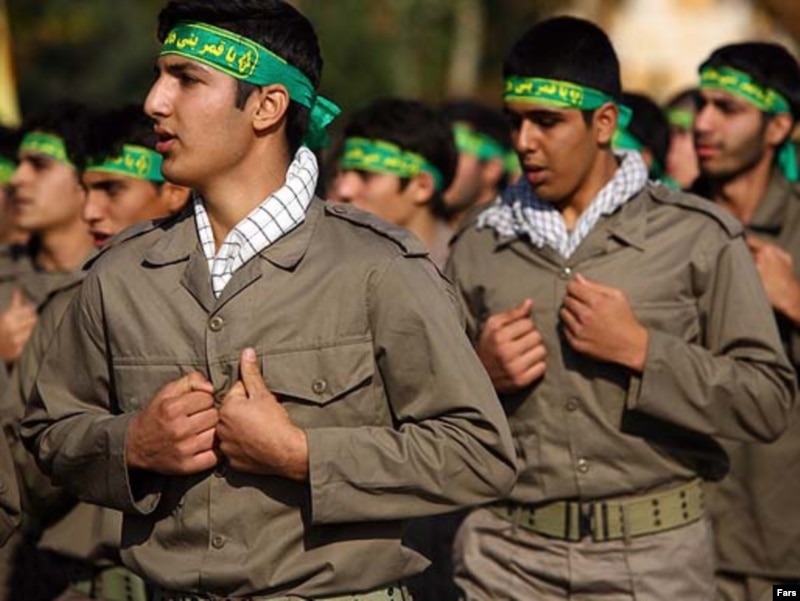
The backbone of the Basij comprises 2,500 Al-Zahra (for women) and Ashura battalions, numbering 300–350 personnel each. The IRGC aims to arm 30 percent of these battalions with semi-heavy and heavy weapons. However, all members of the battalions are trained to use light arms and rifles. Since Major General Mohammad Ali Jafari assumed command of the IRGC on September 1, 2007, the Basij have received extensive organizational and logistical support by the Revolutionary Guards that has enabled it to form 30,000 new combat cells, each of them 15-20 members strong, named Karbala and Zolfaqar. These units cooperate closely with the army of the IRGC.
The mission of the Basij as a whole can be broadly defined as helping to maintain law and order; enforcing ideological and Islamic values and combating the "Western cultural onslaught"; assisting the IRGC in defending the country against foreign threats; and involvement in state-run economic projects.
In terms of maintaining law and order, Basij members act as "morality police" in towns and cities by enforcing the wearing of the hijab; arresting women for violating the dress code; prohibiting male-female fraternization; monitoring citizens' activities; confiscating satellite dishes and "obscene" material; intelligence gathering; and even harassing government critics and intellectuals. Basij volunteers also act as bailiffs for local courts.
During this year's Basij Week, one of the commanders of the IRGC, Abdollah Eraqi, stressed that after a long lapse, the Basij will again start patrolling the streets of Tehran to help police maintain the Islamic dress code and arrest hardened criminals.
Doing The Dirty Work
It is noteworthy that the organizational structure of Basij units and the training they receive varies from one province to another, according to the nature and severity of the potential threats identified by the IRGC and Basij commanders in different regions. Basij members in the border provinces of Khuzestan and Sistan va Baluchistan perform different duties to those stationed in central Iran.
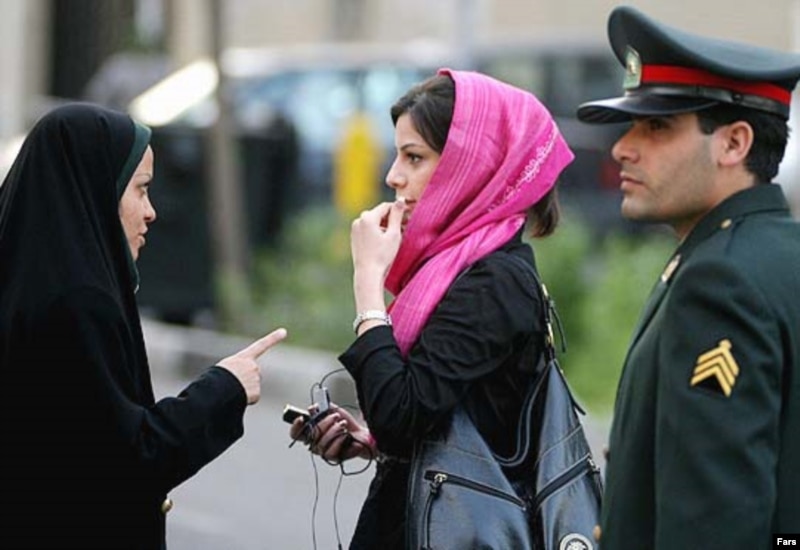
The Ashura battalions of the Basij are regularly trained in riot-control tactics and how to deal with domestic uprisings. Basij members played a central role in breaking up the widespread student riots in Tehran in 1999. They were also instrumental in quelling several outbreaks of ethnic unrest in the oil-rich province of Khuzestan, which is home to the majority of Iran's ethnic-Arab population.
Since the Basij was directly subordinated to Major General Jafari last year, it has been given legal authority to engage in economic projects. Earlier this year, at the initiative of President Mahmud Ahmadinejad's government, the Majlis passed a law to the effect that government construction and economic projects can be contracted to the Basij. Several members of the Majlis vehemently criticized this law, arguing that it violates Article 44 of the constitution, but to no avail.
Lacking the necessary skills to implement such projects, the Basij is likely to solicit help from the IRGC, which has extensive experience in this area. The IRGC is, after all, the third-wealthiest organization in Iran after the National Iranian Oil Company and the Imam Reza Endowment (named after the eighth Shi'ite imam).
Playing Politics
The Basij also plays a key role in preserving the political status quo. Although the constitution bans members of the IRGC and the Basij from involvement in politics, Basij support contributed to Ahmadinejad's victory in the 2005 presidential election. The Basij under the tutelage of the IRGC was also heavily involved in the March 2008 parliamentary elections, during which Basij and IRGC commanders openly backed Ahmadinejad's principalists (osulgarayan). In February 2008, Major General Jafari said that "the principlists are in control of the executive and legislative branches and, God willing, the judiciary will soon follow suit." Hasan Taeb, then deputy commander of the Basij, similarly stressed that Basij members should have a "maximum presence" in the elections.
Taeb, who is now Basij commander, said during this year's Basij Week that his organization will not interfere in next year's presidential vote. However, history suggests that both the IRGC and the Basij will ultimately follow the orders of Supreme Leader Ayatollah Ali Khamenei and senior clerics, given that the commanders of both forces firmly believe that political interference is justified on revolutionary grounds. An IRGC commander told former Intelligence Minister Ali Yunesi in early May: "We joined the [Revolutionary] Guards in order to interfere. During the [Iran-Iraq] War, we interfered in politics and we do so now because it is an act of revolution."
Those plans to co-opt the Basij and the IRGC underline the primary concern of the Iranian leadership, which is deflecting and countering internal threats and preserving domestic political stability at a time when grave economic problems, including high inflation and growing poverty and unemployment, have undermined support for Ahmadinejad and triggered a series of domestic uprisings among reformers, students, and ethnic minorities.
Given the convoluted power structure of Iranian politics, Ayatollah Khamenei is increasing looking toward the former IRGC commanders, as well as the IRGC and the Basij, to help maintain his position as de facto the most powerful man in Iran, neutralize popular dissatisfaction over the deteriorating economic situation, stifle demands for political reform, and undercut pressure related to the nuclear issue.
There is no guarantee that Ahmadinejad will be reelected president next June. But even if he is not, domestic tensions are likely to persist, enhancing the role of the Basij as guarantor of political stability.