




The ancient Silk Road trading hub of Kashgar, in China's northwest Xinjiang Uyghur Autonomous Region, is being threatened by an ambitious government redevelopment plan that some say has a hidden political agenda.
Kashgar's old city has survived the centuries, and remains an important Islamic cultural center for the Uyghurs, the Turkic ethnic group living in Xinjiang.
According to Matthew Hu Xinyu, an adviser to the nongovernmental Beijing Cultural Protection Center, the densely packed houses and narrow lanes of old Kashgar are the best-preserved examples of a traditional Islamic city in all of China.
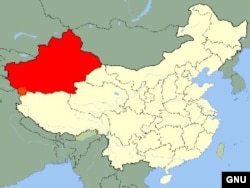 Xinjiang Uyghur Autonomous Province in northwest China
But the government's reconstruction plan, Hu says, is threatening to destroy the picturesque labyrinth that makes up old Kashgar.
"Last fall, I heard that the plan would be carried out through the next three years. I thought we would have some time to organize experts or architects to work on a constructive plan -- to suggest a more conservative plan -- so that the city's heritage can be preserved," Hu said. "But early this year the total investment for the plan has been increased to [$440 million], and the demolition of the old houses started very quickly."
City officials have been moving a number of families out of Kashgar's city center, saying they need to rebuild old, dangerous houses and improve infrastructure. In total, the government says it plans to renovate or reconstruct more than 5 million square meters of old homes and resettle some 45,000 households.
Officials say the project is necessary because an earthquake could destroy old buildings, putting residents at risk. Indeed, earthquakes frequently rock Xinjiang. In 2003, a quake killed some 270 people.
Reports say wrecking crews razed the historic Xanliq madrasah, one of the province's protected cultural sites, on June 15. Mahmud al-Kashgari, the 11th-century scholar, is believed to have studied at the madrasah.
Traditional Lives
Dominated by a gigantic statue of Mao, old Kashgar has seen many changes in recent decades, including the construction of a main street running through the old town center. Cars, buses, and trucks clog the city streets.
Still, many residents manage to live a far more traditional life. They live in tumbledown mud-brick rentals or two-story homes that open onto courtyards. Artisans hammer metal bowls, pans, and pots, carve wood, and hone brightly decorated knives.
Street vendors sell hand-made candy, fresh mutton, or hand-sewn skull caps. Donkey-cart drivers navigate the narrow streets.
It’s unclear what will remain of the design and way of life of the city, which is hundreds of years old, after the reconstruction project is completed. The city says important buildings will be preserved, while many homes will be rebuilt to better withstand earthquakes while still preserving Uyghur building styles. However, several sectors are expected to be rebuilt with modern apartment buildings, public plazas, and schools.
Officials say infrastructure such as water, electricity, and sewers systems also will be installed.
No Details Forthcoming
The Beijing Cultural Protection Center says nobody denies Uyghurs the right to development, modernization, and security. But the center worries that it has been unable to obtain any details of the reconstruction plan, which Hu says should ensure the preservation of the city’s unique heritage.
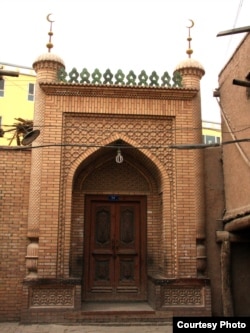 A gate in Kashgar's Old City
“If we look at every single one of these Uyghur people's homes [individually], it's not significant, [although] some of them have very interesting carvings on the door frame or on the architecture, the wooden parts," Hu says.
"But this group of [homes] shows a way of life [and] a way of urban planning -- how the city can be organized around different mosques. If we have the houses removed and rebuilt, then this layout will disappear, and the significance of the city will disappear," he said.
China and Central Asian states support a plan to propose major Silk Road sites for inclusion on the UNESCO World Heritage List, an incentive for governments to preserve areas of historical and cultural significance.
Beijing, however, has not included old Kashgar in its list of proposed sites.
Henryk Szadziewski, manager of the Uyghur Human Rights Project in Washington, D.C., taught for several years in Kashgar in the 1990s. He tells RFE/RL that there's no clear indication of what is going to be done with the remaining old city.
"As far as we understand the project, a remainder of the old city would be left, I imagine, to attract tourists. But who is going to manage that area and profit from the tourist revenue?" Szadziewski asks. "The tourist industry is worth about [$90 million] a year in Kashgar. We also have to remember that we have no indication that there was any meaningful participatory process that meant that the old city residents were party to the decision making."
Political Aspects Seen
The preservation of Kashgar's old town is facing challenges similar to those facing the preservation of other Chinese cities. But many see a political aspect to the redevelopment project in Kashgar, which Chinese officials consider a breeding ground for Uyghur separatism.
Chinese officials in recent years have alleged that Kashgar harbors terrorist cells. Uyghur extremists were blamed for a fatal attack on border police; two of the alleged organizers were executed this spring.
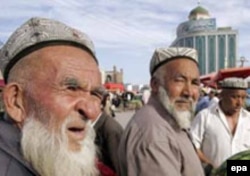 Uyghurs at a bazaar in KashgarMany see the Kashgar project as an attempt to remove the cultural roots of Uyghur separatism.
“There's definitely a difference between what's happening in eastern China and in Kashgar. That's largely due to the sensitivity over the Uyghurs and their particular concerns over human rights issues," Szadziewski says.
"The [Kashgar] project appears to be a tool to assimilate Uyghurs and to actually stifle peaceful dissent by putting old city residents from an organic living arrangement into a regimented, government-organized living arrangement. The [Chinese] authorities are able to monitor the activity of any peaceful dissent among Uyghurs,” he says.
Szadziewski says the assimilation process is taking place on many different fronts.
“One particular area is language, and we've seen a marginalization of Uyghur language in the economic sphere and the educational sphere," he says. "A 'China Daily' report said that learning Mandarin Chinese will help fight terrorism. The statement in itself may cast a sort of aspersion on Uyghur language itself, that it was a suspect language."
Critics accuse Beijing of using claims of terrorism as an excuse to crack down on peaceful pro-independence sentiment and expressions of Uyghur identity.
Kashgar's old city has survived the centuries, and remains an important Islamic cultural center for the Uyghurs, the Turkic ethnic group living in Xinjiang.
According to Matthew Hu Xinyu, an adviser to the nongovernmental Beijing Cultural Protection Center, the densely packed houses and narrow lanes of old Kashgar are the best-preserved examples of a traditional Islamic city in all of China.

"Last fall, I heard that the plan would be carried out through the next three years. I thought we would have some time to organize experts or architects to work on a constructive plan -- to suggest a more conservative plan -- so that the city's heritage can be preserved," Hu said. "But early this year the total investment for the plan has been increased to [$440 million], and the demolition of the old houses started very quickly."
City officials have been moving a number of families out of Kashgar's city center, saying they need to rebuild old, dangerous houses and improve infrastructure. In total, the government says it plans to renovate or reconstruct more than 5 million square meters of old homes and resettle some 45,000 households.
Officials say the project is necessary because an earthquake could destroy old buildings, putting residents at risk. Indeed, earthquakes frequently rock Xinjiang. In 2003, a quake killed some 270 people.
Reports say wrecking crews razed the historic Xanliq madrasah, one of the province's protected cultural sites, on June 15. Mahmud al-Kashgari, the 11th-century scholar, is believed to have studied at the madrasah.
Traditional Lives
Dominated by a gigantic statue of Mao, old Kashgar has seen many changes in recent decades, including the construction of a main street running through the old town center. Cars, buses, and trucks clog the city streets.
If we have the houses removed and rebuilt, then this layout will disappear, and the significance of the city will disappear.

Street vendors sell hand-made candy, fresh mutton, or hand-sewn skull caps. Donkey-cart drivers navigate the narrow streets.
It’s unclear what will remain of the design and way of life of the city, which is hundreds of years old, after the reconstruction project is completed. The city says important buildings will be preserved, while many homes will be rebuilt to better withstand earthquakes while still preserving Uyghur building styles. However, several sectors are expected to be rebuilt with modern apartment buildings, public plazas, and schools.
Officials say infrastructure such as water, electricity, and sewers systems also will be installed.
No Details Forthcoming
The Beijing Cultural Protection Center says nobody denies Uyghurs the right to development, modernization, and security. But the center worries that it has been unable to obtain any details of the reconstruction plan, which Hu says should ensure the preservation of the city’s unique heritage.
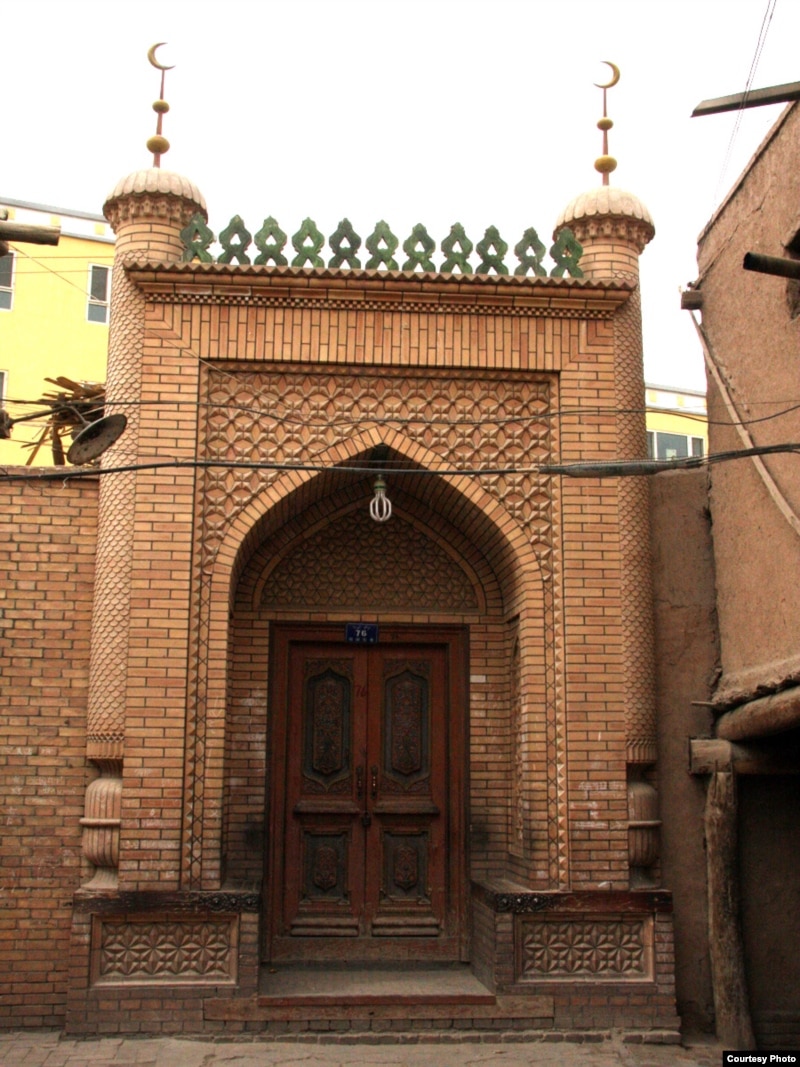
"But this group of [homes] shows a way of life [and] a way of urban planning -- how the city can be organized around different mosques. If we have the houses removed and rebuilt, then this layout will disappear, and the significance of the city will disappear," he said.
China and Central Asian states support a plan to propose major Silk Road sites for inclusion on the UNESCO World Heritage List, an incentive for governments to preserve areas of historical and cultural significance.
Beijing, however, has not included old Kashgar in its list of proposed sites.
Henryk Szadziewski, manager of the Uyghur Human Rights Project in Washington, D.C., taught for several years in Kashgar in the 1990s. He tells RFE/RL that there's no clear indication of what is going to be done with the remaining old city.
"As far as we understand the project, a remainder of the old city would be left, I imagine, to attract tourists. But who is going to manage that area and profit from the tourist revenue?" Szadziewski asks. "The tourist industry is worth about [$90 million] a year in Kashgar. We also have to remember that we have no indication that there was any meaningful participatory process that meant that the old city residents were party to the decision making."
Political Aspects Seen
The preservation of Kashgar's old town is facing challenges similar to those facing the preservation of other Chinese cities. But many see a political aspect to the redevelopment project in Kashgar, which Chinese officials consider a breeding ground for Uyghur separatism.
Chinese officials in recent years have alleged that Kashgar harbors terrorist cells. Uyghur extremists were blamed for a fatal attack on border police; two of the alleged organizers were executed this spring.

“There's definitely a difference between what's happening in eastern China and in Kashgar. That's largely due to the sensitivity over the Uyghurs and their particular concerns over human rights issues," Szadziewski says.
"The [Kashgar] project appears to be a tool to assimilate Uyghurs and to actually stifle peaceful dissent by putting old city residents from an organic living arrangement into a regimented, government-organized living arrangement. The [Chinese] authorities are able to monitor the activity of any peaceful dissent among Uyghurs,” he says.
Szadziewski says the assimilation process is taking place on many different fronts.
“One particular area is language, and we've seen a marginalization of Uyghur language in the economic sphere and the educational sphere," he says. "A 'China Daily' report said that learning Mandarin Chinese will help fight terrorism. The statement in itself may cast a sort of aspersion on Uyghur language itself, that it was a suspect language."
Critics accuse Beijing of using claims of terrorism as an excuse to crack down on peaceful pro-independence sentiment and expressions of Uyghur identity.