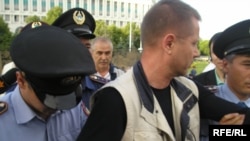
Less than a month after covering Turkmenistan's parliamentary elections, two journalists in the Central Asian country have endured a tough start to the new year.
Osman Hallyev, a correspondent for RFE/RL's Turkmen Service in the country's northeastern Lebap Province, was briefly arrested at the beginning of the month and says he has essentially been under house arrest since then.
His life, he says, has become depressing and unbearable. His phone line has been cut and his every movement watched.
"Wherever I go, I'm under surveillance, even if I go to a gas station," Hallyev says. "If I visit my neighbors, officials contact them and ask why I visited them and what we talked about. It's impossible to leave home -- whomever I visit would be immediately interrogated by officials."
And the harassment, Hallyev says, is not only confined to him. He claims that several family members, including his son and pregnant daughter-in-law, have been fired from their jobs.
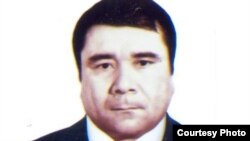 Turkmen correspondent Osman Hallyev has endured government pressure.Dovletmurat Yazguliev, another RFE/RL correspondent who covered the elections in Turkmenistan, was summoned in late December along with his wife and threatened by local officials in his native Ahal Province.
Since then, Yazguliev says, he has come under additional pressure from the authorities. Last week, he said he has come to realize that his continued reporting for Western media could lead to his imprisonment in Turkmenistan, where independent media is virtually nonexistent and free speech is not tolerated.
Targeting Journalists
While Turkmenistan is widely considered the most restrictive media environment in the region, journalists elsewhere in Central Asia experience similar difficulties.
In Tajikistan in the past week, another RFE/RL contributor, Abdumumin Sherkhonov, was beaten by three men -- one of whom allegedly introduced himself as an Interior Ministry employee.
Two of the men have reportedly been detained by the authorities.
And in Kazakhstan, a journalist accused of publishing state secrets in his weekly newspaper is in custody after security officials escorted him from his hospital room last week to face charges.
Ramazan Esergepov, editor in chief of the "Alma-Ata Info" weekly, who was receiving treatment for high blood pressure and heart disease, is now being held in a Kazakh prison pending trial.
His wife, Raushan Esergepova, said her husband is being held handcuffed in solitary confinement, where he has begun a hunger strike.
"He has been taken from an isolated cell in the detention center to another cell without windows, he told me. There he got a kidney inflammation," Esergepova said.
"It's freezing cold in that cell, his hands have turned blue with cold. And he is constantly handcuffed," she continued. "It really makes me angry -- why should a journalist, an editor of a newspaper, be held handcuffed? Is it because they want to insult and humiliate him?"
Bringing Trend To Light
Although there are no obvious connections between the four cases, some see them as further evidence that the state of free speech and media freedom in Central Asia continues to deteriorate.
 Ramazan Esergepov was arrested in the hospital.Elsa Vidal, the chief of the desk for Europe and former Soviet countries for the Paris-based Reporters Without Borders, says it was a "black week" for Central Asian media and a serious blow for freedom of speech in the region.
Vidal says that in Central Asia, "journalists can be attacked or assaulted because they have written a very specific article that is threatening the interest of a representative of the government or a local public servant."
But Vidal adds that "more generally speaking, those who tend not to comply with intimidation, those who resist attempts to make them write what they don't think they should write, all these journalists that are not serving the power," can be targeted.
Reporters Without Borders has been trying to bring the issue of attacks on media freedom to the attention of influential institutions, such as the European Union, Vidal says.
It has repeatedly called on the EU to put pressure on Central Asian governments to respect their citizens' rights to freedom of speech.
But many journalists in the region say not enough is being done, and express fears that Central Asia's energy wealth may be the reason.
In numerous articles, journalists from the region have accused the West and the EU in particular of turning a blind eye to human rights and media-freedom issues.
Geopolitical interests and the growing need for oil and gas, they say, cause Western politicians to think twice before criticizing Central Asian governments. And governments in the region, the same journalists say, are acutely aware of their advantage.
RFE/RL's Kazakh and Turkmen services contributed to this report
Osman Hallyev, a correspondent for RFE/RL's Turkmen Service in the country's northeastern Lebap Province, was briefly arrested at the beginning of the month and says he has essentially been under house arrest since then.
His life, he says, has become depressing and unbearable. His phone line has been cut and his every movement watched.
"Wherever I go, I'm under surveillance, even if I go to a gas station," Hallyev says. "If I visit my neighbors, officials contact them and ask why I visited them and what we talked about. It's impossible to leave home -- whomever I visit would be immediately interrogated by officials."
And the harassment, Hallyev says, is not only confined to him. He claims that several family members, including his son and pregnant daughter-in-law, have been fired from their jobs.
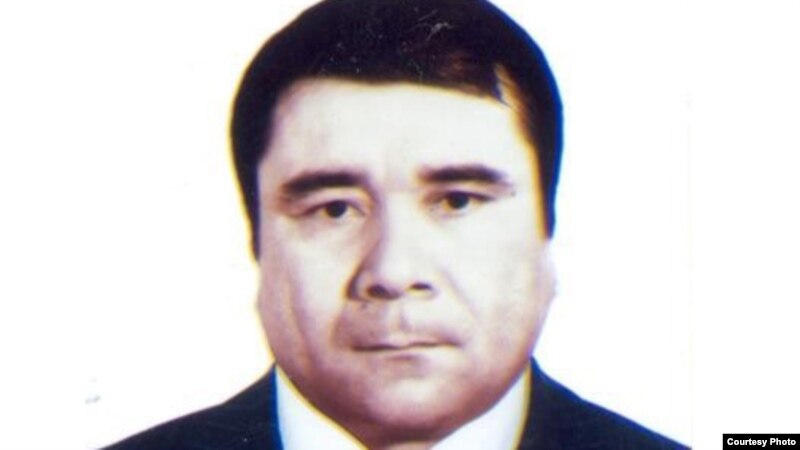
Since then, Yazguliev says, he has come under additional pressure from the authorities. Last week, he said he has come to realize that his continued reporting for Western media could lead to his imprisonment in Turkmenistan, where independent media is virtually nonexistent and free speech is not tolerated.
Targeting Journalists
While Turkmenistan is widely considered the most restrictive media environment in the region, journalists elsewhere in Central Asia experience similar difficulties.
In Tajikistan in the past week, another RFE/RL contributor, Abdumumin Sherkhonov, was beaten by three men -- one of whom allegedly introduced himself as an Interior Ministry employee.
Two of the men have reportedly been detained by the authorities.
And in Kazakhstan, a journalist accused of publishing state secrets in his weekly newspaper is in custody after security officials escorted him from his hospital room last week to face charges.
Ramazan Esergepov, editor in chief of the "Alma-Ata Info" weekly, who was receiving treatment for high blood pressure and heart disease, is now being held in a Kazakh prison pending trial.
His wife, Raushan Esergepova, said her husband is being held handcuffed in solitary confinement, where he has begun a hunger strike.
"He has been taken from an isolated cell in the detention center to another cell without windows, he told me. There he got a kidney inflammation," Esergepova said.
"It's freezing cold in that cell, his hands have turned blue with cold. And he is constantly handcuffed," she continued. "It really makes me angry -- why should a journalist, an editor of a newspaper, be held handcuffed? Is it because they want to insult and humiliate him?"
Bringing Trend To Light
Although there are no obvious connections between the four cases, some see them as further evidence that the state of free speech and media freedom in Central Asia continues to deteriorate.

Vidal says that in Central Asia, "journalists can be attacked or assaulted because they have written a very specific article that is threatening the interest of a representative of the government or a local public servant."
But Vidal adds that "more generally speaking, those who tend not to comply with intimidation, those who resist attempts to make them write what they don't think they should write, all these journalists that are not serving the power," can be targeted.
Reporters Without Borders has been trying to bring the issue of attacks on media freedom to the attention of influential institutions, such as the European Union, Vidal says.
It has repeatedly called on the EU to put pressure on Central Asian governments to respect their citizens' rights to freedom of speech.
But many journalists in the region say not enough is being done, and express fears that Central Asia's energy wealth may be the reason.
In numerous articles, journalists from the region have accused the West and the EU in particular of turning a blind eye to human rights and media-freedom issues.
Geopolitical interests and the growing need for oil and gas, they say, cause Western politicians to think twice before criticizing Central Asian governments. And governments in the region, the same journalists say, are acutely aware of their advantage.
RFE/RL's Kazakh and Turkmen services contributed to this report