


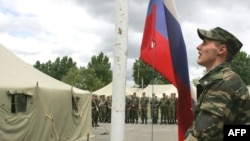
A year after the five-day military conflict between Georgia and Russia that left Russian forces occupying the breakaway Georgian regions of South Ossetia and Abkhazia, tensions in the region are rising again.
Georgian officials continue to place their hopes on the ability of the international community to resolve the situation.
"The international community and international law are on Georgia's side," lawmaker David Darchiashvili, who chairs the Georgian parliament's Committee for European Integration, told journalists recently.
"And we have nothing to be desperate about regardless of the recent provocations from the Russian occupying side," he added. "The international community, with all its capabilities, is always going to be able to overcome the actions of one, single, irrational, aggressive state, no matter how big that state might be."
But the jury remains out on how the major international players -- Russia, the European Union, and NATO -- fared during the crisis and how the war changed the balance of power among them. EU and NATO sanctions imposed against Russia after the war were both toothless and short-lived.
Perhaps what the war revealed most clearly is that for countries bordering Russia like Georgia and Ukraine, Russia wields powerful short-term tools of influence, while the West, potentially, offers the alluring promise of long-term engagement that can boost their development and independence.
Daniel Korski, a senior policy fellow at the European Council on Foreign Relations and a former policy adviser in the U.S. State Department, says the August war did not reshape the political landscape as some had initially believed.
"A year after the event, it is harder to see the kind of fundamental change that people assumed to be the case immediately after the conflict," Korski says.
Russia Wins, And Loses
Although Russia held the field when the gunfire died down, its military performance was less than resounding. The Russian Army took five days to subdue a much smaller, unprepared neighbor with no international support. Its performance has, over the last year, provided considerable stimulus to the Kremlin's drive to reform its creaking military.
Although the crisis showed Moscow is willing to resort to force when it feels it is necessary, Korski says the war revealed the short-sightedness of its policies. The Kremlin seems to have had no plan for what to do with the "statelets" it has adopted or how to move forward in its relations with Georgia.
 Russia now has little soft-power influence in the region."Russia still has very little soft power, beyond the military power -- which is considerable -- beyond the energy power, there is less soft power and that means that fewer people are going to be persuaded to what it is that Russia represents, even in the neighborhood," Korski explains.
Edward Lucas, author of "The New Cold War" and the Central and Eastern Europe correspondent for "The Economist," agrees that if the Kremlin intended to send a signal to the capitals of what it calls its "near abroad," it may have miscalculated.
"Russia is now just beginning to realize that being feared and distrusted by your neighbors isn't necessarily the basis for getting what you want in policy," Lucas says.
In addition, the war accelerated a process throughout the region by which countries have sought to reduce their economic and energy dependence on Russia. Georgia has seen Russia impose boycotts on its wines and mineral waters and use other economic levers during the long-running dispute between the two countries.
"One of the benefits over the last couple of years is probably a very silver-lining benefit, you know with these economic spats with Russia -- it's forced Georgians to have to find new markets and a way to move out of the sphere of Russia's economic influence, the way that, you know, several years ago you could really see a much stronger economic connection," says Nikolas Gvosdev, a professor of national security studies at the U.S. Naval War College.
Korski agrees that helping countries in Eastern Europe and the Caucasus reduce their economic -- and particularly energy -- dependence on Russia offers an opportunity for the European Union to provide the kind of tangible and fundamental assistance that it is often accused of being unable to bring to the table.
"The real question is how to assist that very small number of countries that are particularly vulnerable [to Russia's energy dominance]," Korski says, "and that really has to do with creating an integrated European gas market so that it isn't a question of selling to, say, Slovakia or pressuring Bulgaria, but it's about selling into a European gas market. That is a challenge for European policymakers to overcome internal resistance, corporate interests, and so forth."
Unrealistic Expectations
As for the United States, the war demonstrated for many that Georgia is not a top priority for Washington, although the new administration has staunchly rejected Russian claims to a special sphere of influence in the post-Soviet space.
 Vice President Joe Biden came encouraging reform in Georgia.U.S. administration officials also reject assertions that "resetting" Washington's relations with Moscow necessarily entails sacrificing the interests of Russia's neighbors. They say improved relations with Russia will, on the contrary, reduce Moscow's anxiety over the efforts of those countries to further integrate with the West.
Washington seems to be pushing a go-slow approach, urging countries like Georgia and Ukraine to move ahead on political and economic reforms that will make them better prepared and more attractive for deeper Western engagement. This was the message that U.S. Vice President Joe Biden carried during his trip last month to Kyiv and Tbilisi.
The NATO-membership aspirations of those two countries are definitely on hold, but most analysts agree that neither is politically or militarily ready for membership and that their hopes - sometimes irresponsibly fanned by the West - were unrealistic. Korski says the war opened the West's eyes to this fact and to the strength of Russia's objections.
"So there's no point in discussing this now, and there's certainly no point in discussing it if it so provokes Russia and it's unrealistic," he says.
Despite the shock of the violence last August, the predicted shake-up of the international order never occurred. Russia and the West are still learning how to cooperate in areas where they agree and to manage the areas where they disagree. With Russia's occupation and recognition of South Ossetia and Abkhazia, the sphere of disagreement has been expanded, but the dynamic remains unchanged.
"I would say that we are still 'frienemies' with the Russians. To some extent, they are our friends and we need to collaborate on a number of really important issues -- weapons of mass destruction proliferation, Iran, counterterrorism, Afghanistan, and perhaps also missile reduction -- but at the same time we are going to continue to disagree over how to deal with Eastern Europe and the Caucasus," Korski says.
"And, to some extent, that was the case before the war and that remains the case today."
RFE/RL correspondent Brian Whitmore contributed to this report

Georgian officials continue to place their hopes on the ability of the international community to resolve the situation.
"The international community and international law are on Georgia's side," lawmaker David Darchiashvili, who chairs the Georgian parliament's Committee for European Integration, told journalists recently.
"And we have nothing to be desperate about regardless of the recent provocations from the Russian occupying side," he added. "The international community, with all its capabilities, is always going to be able to overcome the actions of one, single, irrational, aggressive state, no matter how big that state might be."
But the jury remains out on how the major international players -- Russia, the European Union, and NATO -- fared during the crisis and how the war changed the balance of power among them. EU and NATO sanctions imposed against Russia after the war were both toothless and short-lived.
Perhaps what the war revealed most clearly is that for countries bordering Russia like Georgia and Ukraine, Russia wields powerful short-term tools of influence, while the West, potentially, offers the alluring promise of long-term engagement that can boost their development and independence.
Daniel Korski, a senior policy fellow at the European Council on Foreign Relations and a former policy adviser in the U.S. State Department, says the August war did not reshape the political landscape as some had initially believed.
"A year after the event, it is harder to see the kind of fundamental change that people assumed to be the case immediately after the conflict," Korski says.
Russia Wins, And Loses
Although Russia held the field when the gunfire died down, its military performance was less than resounding. The Russian Army took five days to subdue a much smaller, unprepared neighbor with no international support. Its performance has, over the last year, provided considerable stimulus to the Kremlin's drive to reform its creaking military.
Although the crisis showed Moscow is willing to resort to force when it feels it is necessary, Korski says the war revealed the short-sightedness of its policies. The Kremlin seems to have had no plan for what to do with the "statelets" it has adopted or how to move forward in its relations with Georgia.
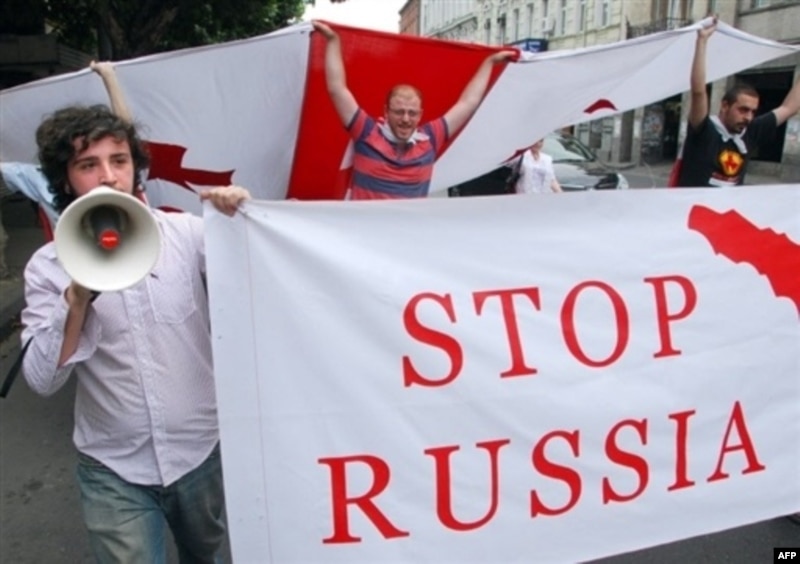
Edward Lucas, author of "The New Cold War" and the Central and Eastern Europe correspondent for "The Economist," agrees that if the Kremlin intended to send a signal to the capitals of what it calls its "near abroad," it may have miscalculated.
"Russia is now just beginning to realize that being feared and distrusted by your neighbors isn't necessarily the basis for getting what you want in policy," Lucas says.
In addition, the war accelerated a process throughout the region by which countries have sought to reduce their economic and energy dependence on Russia. Georgia has seen Russia impose boycotts on its wines and mineral waters and use other economic levers during the long-running dispute between the two countries.
"One of the benefits over the last couple of years is probably a very silver-lining benefit, you know with these economic spats with Russia -- it's forced Georgians to have to find new markets and a way to move out of the sphere of Russia's economic influence, the way that, you know, several years ago you could really see a much stronger economic connection," says Nikolas Gvosdev, a professor of national security studies at the U.S. Naval War College.
Korski agrees that helping countries in Eastern Europe and the Caucasus reduce their economic -- and particularly energy -- dependence on Russia offers an opportunity for the European Union to provide the kind of tangible and fundamental assistance that it is often accused of being unable to bring to the table.
"The real question is how to assist that very small number of countries that are particularly vulnerable [to Russia's energy dominance]," Korski says, "and that really has to do with creating an integrated European gas market so that it isn't a question of selling to, say, Slovakia or pressuring Bulgaria, but it's about selling into a European gas market. That is a challenge for European policymakers to overcome internal resistance, corporate interests, and so forth."
Unrealistic Expectations
As for the United States, the war demonstrated for many that Georgia is not a top priority for Washington, although the new administration has staunchly rejected Russian claims to a special sphere of influence in the post-Soviet space.
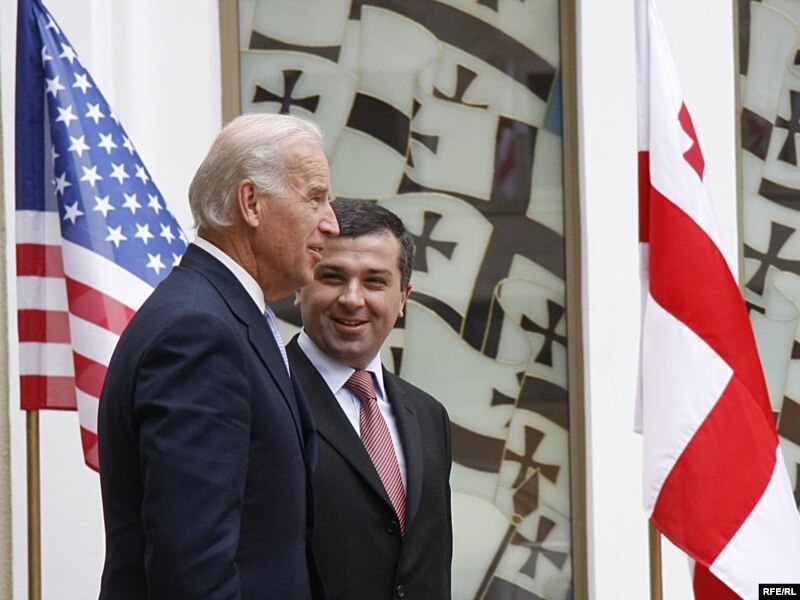
Washington seems to be pushing a go-slow approach, urging countries like Georgia and Ukraine to move ahead on political and economic reforms that will make them better prepared and more attractive for deeper Western engagement. This was the message that U.S. Vice President Joe Biden carried during his trip last month to Kyiv and Tbilisi.
The NATO-membership aspirations of those two countries are definitely on hold, but most analysts agree that neither is politically or militarily ready for membership and that their hopes - sometimes irresponsibly fanned by the West - were unrealistic. Korski says the war opened the West's eyes to this fact and to the strength of Russia's objections.
"So there's no point in discussing this now, and there's certainly no point in discussing it if it so provokes Russia and it's unrealistic," he says.
Despite the shock of the violence last August, the predicted shake-up of the international order never occurred. Russia and the West are still learning how to cooperate in areas where they agree and to manage the areas where they disagree. With Russia's occupation and recognition of South Ossetia and Abkhazia, the sphere of disagreement has been expanded, but the dynamic remains unchanged.
"I would say that we are still 'frienemies' with the Russians. To some extent, they are our friends and we need to collaborate on a number of really important issues -- weapons of mass destruction proliferation, Iran, counterterrorism, Afghanistan, and perhaps also missile reduction -- but at the same time we are going to continue to disagree over how to deal with Eastern Europe and the Caucasus," Korski says.
"And, to some extent, that was the case before the war and that remains the case today."
RFE/RL correspondent Brian Whitmore contributed to this report
Chronology Of The Russia-Georgia Conflict
Video
Chronology Of A Conflict
One year after war broke out between Russia and Georgia, many issues remain unresolved. South Ossetia and the breakaway region of Abkhazia unilaterally declared independence, tens of thousands of Georgians are still displaced, and political tensions between Tbilisi and Moscow are simmering. Here is a look back at the key events in the conflict over the past 12 months. Play