




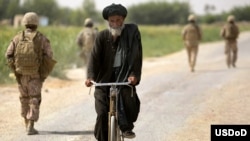
(RFE/RL) -- Afghans are expressing mixed feelings about a new strategy announced by U.S. President Barack Obama that entails deploying an additional 30,000 American troops in Afghanistan beginning in early 2010 to counter the insurgency led by Al-Qaeda and the Taliban.
In a major speech before cadets at the United States Military Academy at West Point, Obama outlined his plans for the war effort in Afghanistan, which will bring the total number of U.S. forces in the country to about 100,000.
However, many Afghans questioned by Radio Free Afghanistan said they are convinced that military force alone cannot bring peace and stability to their country.
Sadeq Yusufi, a young journalist, said the United States should focus on the training and upgrading of Afghan forces.
"How long do we sit and wait for the U.S. to solve our problems?" Yusufi says. "The United States should train our army and police. Then there wouldn't be any need to deploy troops here."
During his address Obama sketched out an exit strategy for U.S. troops deployed in Afghanistan, saying the U.S. military commitment in Afghanistan is not "open-ended."
Obama said his administration's plan is for U.S. forces to begin pulling out of Afghanistan in July 2011.
Until that time, Obama said, "We will pursue a military strategy that will break the Taliban's momentum and increase Afghanistan's capacity over the next 18 months."
Speed Up 'Afghanization'
Afghan Foreign Minister Dadfar Spanta said he is confident that the 18-month time frame will be adequate to train and strengthen Afghan national forces to take responsibility for the security of their own country.
"An 18-month time frame is appropriate for us. We have to speed up the process of the 'Afghanization' of security responsibilities and nation-building," Spanta says.
"At the end of the day, Afghans should take responsibility. We are not alone in this process. The [U.S.] president has said they will provide us with the assistance necessary for us to become capable of defending our country."
WATCH: RFE/RL Radio Free Afghanistan Director Akbar Ayazi talks about reservations among Afghans toward Obama's new AfPak strategy:
Obama's speech was broadcast live on Afghan television channels, including the private television stations Aryana and Shamshad. In remote areas, Afghans were able to listen to Obama's speech by radio, including on Radio Free Afghanistan (known as Radio Azadi) and the BBC.
Wais, a man from Kabul's Wazeer Akbarkhan neighborhood who would only give his first name, described Obama's strategy announcement as "the news of the day in Afghanistan."
He said he believes the presence of additional U.S. forces will "bring positive results" in defeating the insurgency in Afghanistan, "as long as the U.S. knows where to deploy them."
The 30,000 new U.S. troops are reportedly to be deployed mainly in southern and eastern Afghanistan and will focus on establishing security in urban centers such as Kabul, Khost, and Kandahar.
Wais suggested that "the U.S. soldiers should be deployed in border areas near Pakistan and target Taliban and Al-Qaeda leaders."
"They shouldn't stay among residents in Kabul and other towns and villages...and they should be able to differentiate between a Taliban and an ordinary village man," Wais added.
During his speech, Obama stressed the importance of establishing a partnership with Pakistan based on "mutual interest, mutual respect, and mutual trust" in order to combat insurgents. The U.S. president mentioned Al-Qaeda numerous times, while naming the Taliban by name sparingly.
Taliban 'Will Use It As An Excuse'
In a statement issued today, Pakistan's Foreign Ministry agreed that "Pakistan and the U.S. need to closely coordinate their efforts to achieve shared objectives. There is certainly the need for clarity and coordination on all aspects of the implementation of the strategy."
But the statement also said that Washington must work with Islamabad to ensure "there would be no adverse fallout on Pakistan."
Hares Kakar, an Afghan media worker questioned in Kabul, warned that the deployment of extra U.S. troops could be used by the Taliban to boost their cause.
"We already have some 100,000 foreign troops in our country, and they couldn't achieve much in bringing security," Kakar says. "I don't think sending additional foreign troops will benefit Afghanistan. I'm afraid the Taliban will use it as an excuse to try to gain support for their cause among some people."
The Taliban was, indeed, quick to capitalize on Obama's speech, telling numerous outlets that it planned to step up its campaign against U.S. forces and that more U.S. troops would only strengthen its resolve.
"Obama will witness lots of coffins heading to America from Afghanistan," Taliban spokesman Yousuf Ahamdi told the French news agency AFP.
"The extra 30,000 troops that will come to Afghanistan will provoke stronger resistance and fighting," he added.
In a major speech before cadets at the United States Military Academy at West Point, Obama outlined his plans for the war effort in Afghanistan, which will bring the total number of U.S. forces in the country to about 100,000.
However, many Afghans questioned by Radio Free Afghanistan said they are convinced that military force alone cannot bring peace and stability to their country.
Sadeq Yusufi, a young journalist, said the United States should focus on the training and upgrading of Afghan forces.
"How long do we sit and wait for the U.S. to solve our problems?" Yusufi says. "The United States should train our army and police. Then there wouldn't be any need to deploy troops here."
During his address Obama sketched out an exit strategy for U.S. troops deployed in Afghanistan, saying the U.S. military commitment in Afghanistan is not "open-ended."
Obama said his administration's plan is for U.S. forces to begin pulling out of Afghanistan in July 2011.
Until that time, Obama said, "We will pursue a military strategy that will break the Taliban's momentum and increase Afghanistan's capacity over the next 18 months."
Speed Up 'Afghanization'
Afghan Foreign Minister Dadfar Spanta said he is confident that the 18-month time frame will be adequate to train and strengthen Afghan national forces to take responsibility for the security of their own country.
"An 18-month time frame is appropriate for us. We have to speed up the process of the 'Afghanization' of security responsibilities and nation-building," Spanta says.
"At the end of the day, Afghans should take responsibility. We are not alone in this process. The [U.S.] president has said they will provide us with the assistance necessary for us to become capable of defending our country."
WATCH: RFE/RL Radio Free Afghanistan Director Akbar Ayazi talks about reservations among Afghans toward Obama's new AfPak strategy:


Obama's speech was broadcast live on Afghan television channels, including the private television stations Aryana and Shamshad. In remote areas, Afghans were able to listen to Obama's speech by radio, including on Radio Free Afghanistan (known as Radio Azadi) and the BBC.
Wais, a man from Kabul's Wazeer Akbarkhan neighborhood who would only give his first name, described Obama's strategy announcement as "the news of the day in Afghanistan."
He said he believes the presence of additional U.S. forces will "bring positive results" in defeating the insurgency in Afghanistan, "as long as the U.S. knows where to deploy them."
The 30,000 new U.S. troops are reportedly to be deployed mainly in southern and eastern Afghanistan and will focus on establishing security in urban centers such as Kabul, Khost, and Kandahar.
Wais suggested that "the U.S. soldiers should be deployed in border areas near Pakistan and target Taliban and Al-Qaeda leaders."
"They shouldn't stay among residents in Kabul and other towns and villages...and they should be able to differentiate between a Taliban and an ordinary village man," Wais added.
During his speech, Obama stressed the importance of establishing a partnership with Pakistan based on "mutual interest, mutual respect, and mutual trust" in order to combat insurgents. The U.S. president mentioned Al-Qaeda numerous times, while naming the Taliban by name sparingly.
Taliban 'Will Use It As An Excuse'
In a statement issued today, Pakistan's Foreign Ministry agreed that "Pakistan and the U.S. need to closely coordinate their efforts to achieve shared objectives. There is certainly the need for clarity and coordination on all aspects of the implementation of the strategy."
But the statement also said that Washington must work with Islamabad to ensure "there would be no adverse fallout on Pakistan."
Hares Kakar, an Afghan media worker questioned in Kabul, warned that the deployment of extra U.S. troops could be used by the Taliban to boost their cause.
"We already have some 100,000 foreign troops in our country, and they couldn't achieve much in bringing security," Kakar says. "I don't think sending additional foreign troops will benefit Afghanistan. I'm afraid the Taliban will use it as an excuse to try to gain support for their cause among some people."
The Taliban was, indeed, quick to capitalize on Obama's speech, telling numerous outlets that it planned to step up its campaign against U.S. forces and that more U.S. troops would only strengthen its resolve.
"Obama will witness lots of coffins heading to America from Afghanistan," Taliban spokesman Yousuf Ahamdi told the French news agency AFP.
"The extra 30,000 troops that will come to Afghanistan will provoke stronger resistance and fighting," he added.