




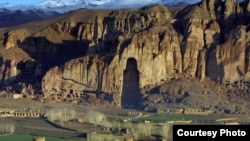
The Bamiyan Valley is nestled among green fields, ochre cliffs, and eroded geological wonders in Afghanistan's central highlands.
In recent history, it is best-known for the Taliban's destruction of the Bamiyan Buddhas in 2001. The dynamiting of the two giant statues, carved into sandstone cliffs along the ancient Silk Road in the sixth century, sparked an international outcry.
But tourists continue to be attracted to the site's cultural riches and ancient ruins that remain, including the network of caves dug into the rock face by Buddhist monks.
Another attraction is nearby Band-e Amir, a series of deep blue lakes that became the centerpiece of Afghanistan's first national park earlier this year. The park is home to the ibex goat and to the urial sheep, along with the Afghan snow finch, the only bird found exclusively in Afghanistan.
But continued instability and violence in the country and the lack of proper infrastructure is certainly not helping the tourism business in Bamiyan, a remote but generally safe place.
"For foreigners, the security situation is not good in Afghanistan. Bamiyan itself is peaceful; but, you know, there's no direct flights from foreign countries, so everybody must [come through] Kabul by road," says Hiromi Yasui, the owner of Hotel Silk Road Bamiyan.
"It's very bumpy [and it takes] around eight-nine hours. In 2007, we had some tour groups from Japan, America, England, but after that the situation [got] very bad."
Yasui arrived in Afghanistan in the 1990s, taking on work as a freelance photojournalist and as tour leader for a Japanese travel company.
In 2002, she and her Afghan husband, with the help of a Japanese investor, purchased a plot of land in the central city of Bamiyan to build a hotel that is now in its second year of business.
With rooms costing at least $100 a night, Hotel Silk Road Bamiyan attracts mainly foreigners working in Afghanistan, including workers for nongovernmental organizations, diplomats, and United Nations officials.
Returning To Bamiyan
During the 1960s and 1970s, Afghanistan was a destination for foreign visitors ranging from archaeologists and ethnographers to Western youth looking for adventure.
 The Hotel Silk Road BamyianThree decades of fighting slowed the inflow to a virtual halt, but the situation is showing some signs of life.
The Bamiyan central highlands today draw thousands of Afghan tourists annually (as well as foreigners living and working in the country). And the nonprofit Aga Khan Development Network (AKDN) is implementing a program to help local people to welcome foreign visitors back.
The Bamiyan Ecotourism Program, funded by the government of New Zealand, got under way this year. It involves the preparation of brochures and a website, as well as the training of local guides. Training will also help establish private guesthouses and upgrade the quality of services at hotels and restaurants.
A tourist information office has also been established, which, in cooperation with the United Nations Educational, Scientific, and Cultural Organization (UNESCO), organized a workshop in late September on the protection of monuments and the promotion of tourism in the region.
Bamiyan Governor Habiba Sarabi attended the launching ceremony of the workshop, in which 35 officials, elders, and UN representatives participated.
"If we keep our monuments, tourism could develop and it will be very valuable for the next generations. Sarabi told RFE/RL's Radio Free Afghanistan.
"And it is very important that the local residents, police, and all other administration understand the importance of tourism and try preserve historical monuments."
The Bamiyan Valley was added to UNESCO's List of World Heritage in Danger in 2003.
Rediscovering Afghanistan
Besides Bamiyan, AKDN runs a similar eco-tourism program in the remote, peaceful northeastern Wakhan Corridor, sandwiched between Pakistan, China, and Tajikistan.
Adventurous travelers can explore the valley of the upper Amu Darya River, surrounded by some of the highest mountains of the Hindu Kush, by vehicle, by horse, by yak, or by foot. They can camp in yurts in the high summer pastures of Kyrgyz nomads.
Getting to Wakhan takes more than three days and involves a propeller-plane flight from Kabul, a trip by vehicle, and trekking by pony over a mountain pass.
Visitors can also get to the valley via Ishkashim, a border crossing from Tajikistan's eastern Gorno-Badakhshan region.
The AKDN, which supports an eco-tourism program in the Tajik Pamirs, hopes that tourists visiting Tajikistan will make an excursion into Afghanistan.
Areas that have generally remained safe are feeling the violence spreading across Afghanistan. In recent months, Taliban militants have been increasingly active on Bamiyan's provincial borders, but Yasui remains optimistic.
"This is like a gamble. In the future, peace will come to Afghanistan and Bamiyan [will become] a very, very touristic place," she says.
"Before the war, every day 2,000 or 3,000 tourists came to Bamiyan. So we are dreaming that, in the future, who wants to come, come[s] again."
RFE/RL's Radio Free Afghanistan contributed to this report
In recent history, it is best-known for the Taliban's destruction of the Bamiyan Buddhas in 2001. The dynamiting of the two giant statues, carved into sandstone cliffs along the ancient Silk Road in the sixth century, sparked an international outcry.
But tourists continue to be attracted to the site's cultural riches and ancient ruins that remain, including the network of caves dug into the rock face by Buddhist monks.
Another attraction is nearby Band-e Amir, a series of deep blue lakes that became the centerpiece of Afghanistan's first national park earlier this year. The park is home to the ibex goat and to the urial sheep, along with the Afghan snow finch, the only bird found exclusively in Afghanistan.
But continued instability and violence in the country and the lack of proper infrastructure is certainly not helping the tourism business in Bamiyan, a remote but generally safe place.
"For foreigners, the security situation is not good in Afghanistan. Bamiyan itself is peaceful; but, you know, there's no direct flights from foreign countries, so everybody must [come through] Kabul by road," says Hiromi Yasui, the owner of Hotel Silk Road Bamiyan.
"It's very bumpy [and it takes] around eight-nine hours. In 2007, we had some tour groups from Japan, America, England, but after that the situation [got] very bad."
Yasui arrived in Afghanistan in the 1990s, taking on work as a freelance photojournalist and as tour leader for a Japanese travel company.
In 2002, she and her Afghan husband, with the help of a Japanese investor, purchased a plot of land in the central city of Bamiyan to build a hotel that is now in its second year of business.
With rooms costing at least $100 a night, Hotel Silk Road Bamiyan attracts mainly foreigners working in Afghanistan, including workers for nongovernmental organizations, diplomats, and United Nations officials.
Returning To Bamiyan
During the 1960s and 1970s, Afghanistan was a destination for foreign visitors ranging from archaeologists and ethnographers to Western youth looking for adventure.
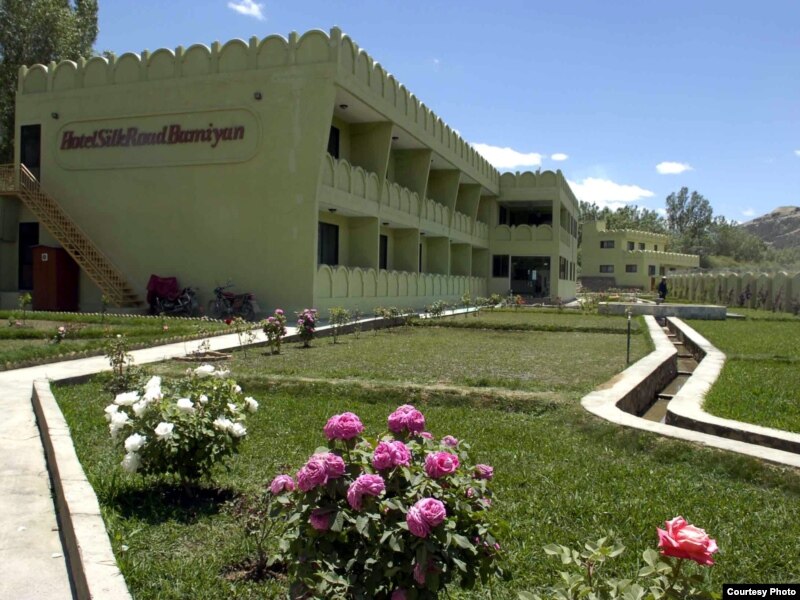
The Bamiyan central highlands today draw thousands of Afghan tourists annually (as well as foreigners living and working in the country). And the nonprofit Aga Khan Development Network (AKDN) is implementing a program to help local people to welcome foreign visitors back.
The Bamiyan Ecotourism Program, funded by the government of New Zealand, got under way this year. It involves the preparation of brochures and a website, as well as the training of local guides. Training will also help establish private guesthouses and upgrade the quality of services at hotels and restaurants.
A tourist information office has also been established, which, in cooperation with the United Nations Educational, Scientific, and Cultural Organization (UNESCO), organized a workshop in late September on the protection of monuments and the promotion of tourism in the region.
Bamiyan Governor Habiba Sarabi attended the launching ceremony of the workshop, in which 35 officials, elders, and UN representatives participated.
"If we keep our monuments, tourism could develop and it will be very valuable for the next generations. Sarabi told RFE/RL's Radio Free Afghanistan.
"And it is very important that the local residents, police, and all other administration understand the importance of tourism and try preserve historical monuments."
The Bamiyan Valley was added to UNESCO's List of World Heritage in Danger in 2003.
Rediscovering Afghanistan
Besides Bamiyan, AKDN runs a similar eco-tourism program in the remote, peaceful northeastern Wakhan Corridor, sandwiched between Pakistan, China, and Tajikistan.
Adventurous travelers can explore the valley of the upper Amu Darya River, surrounded by some of the highest mountains of the Hindu Kush, by vehicle, by horse, by yak, or by foot. They can camp in yurts in the high summer pastures of Kyrgyz nomads.
Getting to Wakhan takes more than three days and involves a propeller-plane flight from Kabul, a trip by vehicle, and trekking by pony over a mountain pass.
Visitors can also get to the valley via Ishkashim, a border crossing from Tajikistan's eastern Gorno-Badakhshan region.
The AKDN, which supports an eco-tourism program in the Tajik Pamirs, hopes that tourists visiting Tajikistan will make an excursion into Afghanistan.
Areas that have generally remained safe are feeling the violence spreading across Afghanistan. In recent months, Taliban militants have been increasingly active on Bamiyan's provincial borders, but Yasui remains optimistic.
"This is like a gamble. In the future, peace will come to Afghanistan and Bamiyan [will become] a very, very touristic place," she says.
"Before the war, every day 2,000 or 3,000 tourists came to Bamiyan. So we are dreaming that, in the future, who wants to come, come[s] again."
RFE/RL's Radio Free Afghanistan contributed to this report

