


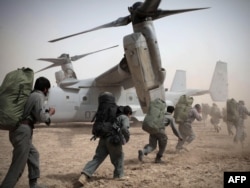
As Operation "Moshtarak" (Together) in the Marjah and Nad Ali districts of southern Helmand Province enters its final stage, preparations are already under way to launch another full-fledged military campaign named "Omaid" (Hope) in the Zirai and Panjawai districts of Kandahar.
The conventional wisdom among Western military generals and diplomats is that such operations are crucial in order to halt the advance of the Taliban, who now control large swathes of rural Afghanistan.
Afghanistan's emerging security establishment too is eager to see these operations implemented. Afghan deputy intelligence chief Naim Baluch recently declared that the insurgents pose a serious security threat to 15 provinces of Afghanistan (consisting of well over 100 districts). Ten districts in those 15 provinces have already fallen into Taliban hands since the Taliban resurgence began in 2005.
Afghanistan has 34 provinces with a total of 364 districts. The question now is: how many more military operations will be needed to secure the whole country. Perhaps another hundred? Operation Moshtarak is already into its second month. If most of the next 100 operations take as long, it will be another 100 months (eight years) before they are over. But there is still no guarantee these offensives will yield the desired results.
In Marjah, the results so far have been mixed. While the 15,000-strong Afghan and NATO-led International Security Assistance Force (ISAF) contingent may have pushed the Taliban and other extremists out of Marjah and Nad Ali, the operation has caused large-scale displacement and some civilian casualties. In addition, dozens of Afghan and ISAF soldiers have been killed, while thousands of displaced civilians remain stranded between the warring sides.
 How many more operations will be needed in Afghanistan?Unfortunately, there was no contingency plan to help the local residents displaced by this intense battle, and that failure in turn compounded the local population's anger and distrust. Afghans believe that such mistakes during military operations only push more youngsters to join the Taliban.
Tribal Realities On The Ground
The basic challenge is that the international community in Afghanistan is convinced that its approach is appropriate and correct. It seems reluctant to take into account the centuries-old tribal structure and traditions in Afghanistan, particularly in the region around Kandahar where the insurgency is strongest. Unless there is a genuine effort to understand the roots of the crisis and ultimately solve it in accordance with local tradition and practice, it will be almost impossible to convince the pro-Taliban fighters to lay down their weapons and pledge support for the government.
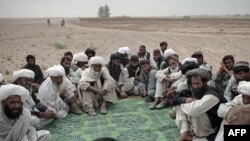
Instead of resorting to such devastating military operations, the international community should encourage Kabul to convene an inclusive regional tribal jirga (council) in Kandahar that would bring together all tribal chiefs from the provinces of Kandahar, Helmand, Zabul, Oruzgan, Ghazni, and Farah. The international community should create a neutral mechanism for convening and hosting the Jirga to enable the tribal elders to express their wider concerns freely. Once those concerns are understood and addressed, then a military plan could be prepared to isolate and ultimately knock out the insurgents.
That approach has been successful before, eliminating insurgents from certain areas of Afghanistan. The once-volatile Spin Boldak district in Kandahar Province on the Pakistani border was tamed this way in 2003.General Abdul Razeq, with a battalion of 350 police officers recruited with the consent of the tribal chieftains, succeeded in expelling the Taliban from the whole district.
The grand jirga of the Shinwari tribe in Nangarhar Province just six weeks ago is another landmark example the success of those tactics. The Shinwari tribesmen agreed to expel the Taliban from their region and warned that those who accommodated them would be severely punished by the tribal authorities. Consequently, there is no longer any significant Taliban presence in this strategic belt along the border with Pakistan.
Afghanistan has a complicated tribal system with centuries-old rivalries. Geographically, over two-thirds of the country is mountainous, with 30 million people living in 40,000 villages. Unless you find a way to bring those people into the security system, address their concerns, and win their consent, there is no way that posting security guards can stop Taliban infiltration into the villages. Without a concerted effort to understand the Afghan people and address their wider concerns, any plan for bringing peace and stability will be doomed to failure.
Mohammad Amin Mudaqiq is the head of the Kabul bureau of RFE/RL's Radio Free Afghanistan. The views expressed in this commentary are his own, and do not necessarily reflect those of RFE/RL
The conventional wisdom among Western military generals and diplomats is that such operations are crucial in order to halt the advance of the Taliban, who now control large swathes of rural Afghanistan.
Afghanistan's emerging security establishment too is eager to see these operations implemented. Afghan deputy intelligence chief Naim Baluch recently declared that the insurgents pose a serious security threat to 15 provinces of Afghanistan (consisting of well over 100 districts). Ten districts in those 15 provinces have already fallen into Taliban hands since the Taliban resurgence began in 2005.
Afghanistan has 34 provinces with a total of 364 districts. The question now is: how many more military operations will be needed to secure the whole country. Perhaps another hundred? Operation Moshtarak is already into its second month. If most of the next 100 operations take as long, it will be another 100 months (eight years) before they are over. But there is still no guarantee these offensives will yield the desired results.
In Marjah, the results so far have been mixed. While the 15,000-strong Afghan and NATO-led International Security Assistance Force (ISAF) contingent may have pushed the Taliban and other extremists out of Marjah and Nad Ali, the operation has caused large-scale displacement and some civilian casualties. In addition, dozens of Afghan and ISAF soldiers have been killed, while thousands of displaced civilians remain stranded between the warring sides.

Tribal Realities On The Ground
The basic challenge is that the international community in Afghanistan is convinced that its approach is appropriate and correct. It seems reluctant to take into account the centuries-old tribal structure and traditions in Afghanistan, particularly in the region around Kandahar where the insurgency is strongest. Unless there is a genuine effort to understand the roots of the crisis and ultimately solve it in accordance with local tradition and practice, it will be almost impossible to convince the pro-Taliban fighters to lay down their weapons and pledge support for the government.
Instead of resorting to such devastating military operations, the international community should encourage Kabul to convene an inclusive regional tribal jirga (council) in Kandahar that would bring together all tribal chiefs from the provinces of Kandahar, Helmand, Zabul, Oruzgan, Ghazni, and Farah. The international community should create a neutral mechanism for convening and hosting the Jirga to enable the tribal elders to express their wider concerns freely. Once those concerns are understood and addressed, then a military plan could be prepared to isolate and ultimately knock out the insurgents.
That approach has been successful before, eliminating insurgents from certain areas of Afghanistan. The once-volatile Spin Boldak district in Kandahar Province on the Pakistani border was tamed this way in 2003.General Abdul Razeq, with a battalion of 350 police officers recruited with the consent of the tribal chieftains, succeeded in expelling the Taliban from the whole district.
The grand jirga of the Shinwari tribe in Nangarhar Province just six weeks ago is another landmark example the success of those tactics. The Shinwari tribesmen agreed to expel the Taliban from their region and warned that those who accommodated them would be severely punished by the tribal authorities. Consequently, there is no longer any significant Taliban presence in this strategic belt along the border with Pakistan.
Afghanistan has a complicated tribal system with centuries-old rivalries. Geographically, over two-thirds of the country is mountainous, with 30 million people living in 40,000 villages. Unless you find a way to bring those people into the security system, address their concerns, and win their consent, there is no way that posting security guards can stop Taliban infiltration into the villages. Without a concerted effort to understand the Afghan people and address their wider concerns, any plan for bringing peace and stability will be doomed to failure.
Mohammad Amin Mudaqiq is the head of the Kabul bureau of RFE/RL's Radio Free Afghanistan. The views expressed in this commentary are his own, and do not necessarily reflect those of RFE/RL