



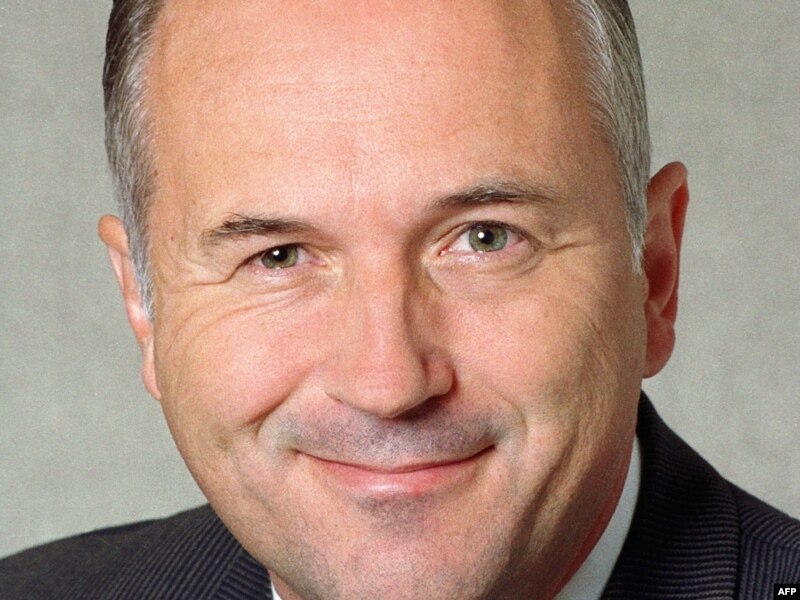
(RFE/RL) -- Austria's Valentin Inzko can expect a mixed reception as he settles into work as the new international peace envoy in Bosnia-Herzegovina.
The 59-year-old career diplomat, who served as Vienna's first postwar ambassador in Sarajevo, is not new to the rough terrain of Balkans-style politics. But he is set to enter the job at a time when its relevance and powers are increasingly coming into question.
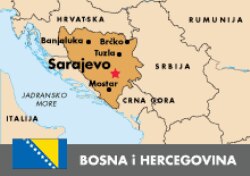
Several local authorities have called in recent days for the elimination of the Office of High Representative for Bosnia (OHR), the post established as part of the Dayton peace agreement ending the 1992-95 war. That post, which is typically held by the EU special representative in a unique "two-hat" system, comes with special privileges that allow the OHR ultimate authority over local officials.
The privileges, known as the "Bonn powers," allow the high representative to dismiss any politicians he feels are acting against the letter or spirit of the Dayton accords.
Not surprisingly, the Bonn powers have met with growing resentment among local authorities, particularly Bosnian Serbs, who see them as a challenge to their goal of greater independence from Bosnia's current federal structure.
Milorad Dodik, the prime minister of Bosnia's Serbian "mini-state," Republika Srpska, has called for the OHR to be closed down by June, when the post's mandate is set to expire. And the Serbian chairman of Bosnia's three-member multiethnic presidency has argued that Bosnia cannot pursue greater integration with Europe as long as it remains what he called an "international protectorate."
 Valentin Inzko is likely to be the last appointee to the post -- again.The Bosnian Serbs have threatened to secede from Bosnia's other mini-state, the Muslim-Croat Federation. The Bosnian Serb parliament on March 11 voted overwhelmingly to declare the city of Banja Luka, where they sit, to be the capital of the Republika Srpska, instead of Sarajevo. But further agitation could be held in check by a high representative who chooses to take full advantage of the Bonn powers.
Igor Radojicic, the president of the Bosnian Serb parliament, says that this is now the fourth "last" high representative to be named, and it's time for the post to be abolished once and for all.
"I don't think that the individual character of the high representative is of any importance, since he's just there to implement the policy of the international community," Radojicic added. "There may be a difference in personal style in terms of how a policy is implemented, but the choice of one candidate over another doesn't make any difference."
Seeking Approval
Croats and Muslim Bosniaks, who want to see the country unified, take a different view. They argue that the OHR could remain in place until a new administrative arrangement is agreed on to replace the Dayton accords.
A Croatian representative in the central parliament, Ivo Miro Jovic, welcomes the appointment of Inzko, who is currently serving as Vienna's ambassador to Slovenia and is a member of the Slovenian minority in the Karinthia region of Austria.
"I can say, unfortunately, that we still need a high representative," Jovic says. "If this is obligatory, it's very good that he comes from [among] our neighbors, and that he is a man who knows the problems of this country. It makes communications easier."
The United States was reported as initially being cool toward Inzko's appointment. Washington feared the Austrian diplomat would not use the Bonn powers to keep the growing unruliness of local politicians in line.
Inzko, who visited Washington on March 6, apparently succeeded in reassuring U.S. skeptics that he was ready to take a strong line, if necessary. The United States and the EU have both approved him for the post.
Reasons For Skepticism
But not everyone is as convinced of the value of the Bonn powers. The outgoing high representative, Miroslav Lajcak of Slovakia, quit last month citing frustrations with the post. He says that the Bonn powers have prevented local Bosnian authorities from learning how to take care of their problems themselves.
"I am opposing any view that the success of the high representative is being measured just by counting how many times he used his Bonn powers. I disagree with that," Lajcak says.
"I said a number of times that every time the Bonn powers are used, each time local politicians use the powers of the high representative to paper over their own activities, it only prolongs a state of irresponsibility," he adds. "It postpones a time that has to come -- the time when Bosnia-Herzegovina has to stand on its own feet."
Inzko is likely to be the last high representative appointed. The mandate for the post was originally due to expire in 2007, but was extended until June 30 this year because of rising unrest in Bosnia and the fact that a number of conditions for ending the protectorate have not yet been met.
 The Peace Implementation Council, a body that oversees the conditions of the Dayton agreement, will meet on March 26-27 to confirm Inzko's appointment and decide whether to extend his mandate further in order to give local politicians more time to enact the required reforms.
The International Crisis Group (ICG) think tank issued a report this week recommending that the post be extended to at least the end of the year. The ICG says that "now is the wrong time to rush the transition."
If and when the OHR is dissolved, it will be replaced by the office of the European Union's special representative to Bosnia -- also set to be held by Inzko.
This will be a difficult role, particularly as the Bonn powers will no longer exist to give the representative leverage in his dealings with local officials.
Some Bosnians are not impressed by the EU's efforts so far. "I think that it is important for Bosnian citizens to keep their minds free of fear, because we've seen a number of gloomy predictions and rumors published in recent weeks about future conflicts in Balkans. That has been a cause of additional frustration," says Predrag Prastalo, general secretary of the Sarajevo-based Bosnian Movement for Europe.
"Bosnian citizens trust the United States the most. Our major objection to Europe may be related to the fact that, in the past 14 years, the EU hasn't managed to make it clear to our citizens that Europe is Bosnia's major partner in its process of Euro-integration," Prastalo adds.
In its report, the ICG notes that the EU will have a hard time in future dealings with Bosnia because hard-liners on all sides recognize that advancing toward Europe actually means giving up their ideal notions of Bosnia's future.
The Serbs know that as Bosnia draws closer to Brussels, it will be harder for them to break away; the Muslims fear that reducing Serbian autonomy will be impossible. This gives both a reason to hold back.
by RFE/RL's South Slavic and Albanian Languages Service
The 59-year-old career diplomat, who served as Vienna's first postwar ambassador in Sarajevo, is not new to the rough terrain of Balkans-style politics. But he is set to enter the job at a time when its relevance and powers are increasingly coming into question.
Several local authorities have called in recent days for the elimination of the Office of High Representative for Bosnia (OHR), the post established as part of the Dayton peace agreement ending the 1992-95 war. That post, which is typically held by the EU special representative in a unique "two-hat" system, comes with special privileges that allow the OHR ultimate authority over local officials.
The privileges, known as the "Bonn powers," allow the high representative to dismiss any politicians he feels are acting against the letter or spirit of the Dayton accords.
Not surprisingly, the Bonn powers have met with growing resentment among local authorities, particularly Bosnian Serbs, who see them as a challenge to their goal of greater independence from Bosnia's current federal structure.
Milorad Dodik, the prime minister of Bosnia's Serbian "mini-state," Republika Srpska, has called for the OHR to be closed down by June, when the post's mandate is set to expire. And the Serbian chairman of Bosnia's three-member multiethnic presidency has argued that Bosnia cannot pursue greater integration with Europe as long as it remains what he called an "international protectorate."
Igor Radojicic, the president of the Bosnian Serb parliament, says that this is now the fourth "last" high representative to be named, and it's time for the post to be abolished once and for all.
"I don't think that the individual character of the high representative is of any importance, since he's just there to implement the policy of the international community," Radojicic added. "There may be a difference in personal style in terms of how a policy is implemented, but the choice of one candidate over another doesn't make any difference."
Seeking Approval
Croats and Muslim Bosniaks, who want to see the country unified, take a different view. They argue that the OHR could remain in place until a new administrative arrangement is agreed on to replace the Dayton accords.
I said a number of times that every time the Bonn powers are used, each time local politicians use the powers of the high representative to paper over their own activities, it only prolongs a state of irresponsibility.
A Croatian representative in the central parliament, Ivo Miro Jovic, welcomes the appointment of Inzko, who is currently serving as Vienna's ambassador to Slovenia and is a member of the Slovenian minority in the Karinthia region of Austria.
"I can say, unfortunately, that we still need a high representative," Jovic says. "If this is obligatory, it's very good that he comes from [among] our neighbors, and that he is a man who knows the problems of this country. It makes communications easier."
The United States was reported as initially being cool toward Inzko's appointment. Washington feared the Austrian diplomat would not use the Bonn powers to keep the growing unruliness of local politicians in line.
Inzko, who visited Washington on March 6, apparently succeeded in reassuring U.S. skeptics that he was ready to take a strong line, if necessary. The United States and the EU have both approved him for the post.
Reasons For Skepticism
But not everyone is as convinced of the value of the Bonn powers. The outgoing high representative, Miroslav Lajcak of Slovakia, quit last month citing frustrations with the post. He says that the Bonn powers have prevented local Bosnian authorities from learning how to take care of their problems themselves.
"I am opposing any view that the success of the high representative is being measured just by counting how many times he used his Bonn powers. I disagree with that," Lajcak says.
"I said a number of times that every time the Bonn powers are used, each time local politicians use the powers of the high representative to paper over their own activities, it only prolongs a state of irresponsibility," he adds. "It postpones a time that has to come -- the time when Bosnia-Herzegovina has to stand on its own feet."
Inzko is likely to be the last high representative appointed. The mandate for the post was originally due to expire in 2007, but was extended until June 30 this year because of rising unrest in Bosnia and the fact that a number of conditions for ending the protectorate have not yet been met.
The International Crisis Group (ICG) think tank issued a report this week recommending that the post be extended to at least the end of the year. The ICG says that "now is the wrong time to rush the transition."
If and when the OHR is dissolved, it will be replaced by the office of the European Union's special representative to Bosnia -- also set to be held by Inzko.
This will be a difficult role, particularly as the Bonn powers will no longer exist to give the representative leverage in his dealings with local officials.
Some Bosnians are not impressed by the EU's efforts so far. "I think that it is important for Bosnian citizens to keep their minds free of fear, because we've seen a number of gloomy predictions and rumors published in recent weeks about future conflicts in Balkans. That has been a cause of additional frustration," says Predrag Prastalo, general secretary of the Sarajevo-based Bosnian Movement for Europe.
"Bosnian citizens trust the United States the most. Our major objection to Europe may be related to the fact that, in the past 14 years, the EU hasn't managed to make it clear to our citizens that Europe is Bosnia's major partner in its process of Euro-integration," Prastalo adds.
In its report, the ICG notes that the EU will have a hard time in future dealings with Bosnia because hard-liners on all sides recognize that advancing toward Europe actually means giving up their ideal notions of Bosnia's future.
The Serbs know that as Bosnia draws closer to Brussels, it will be harder for them to break away; the Muslims fear that reducing Serbian autonomy will be impossible. This gives both a reason to hold back.
by RFE/RL's South Slavic and Albanian Languages Service