




Senior Azerbaijani officials have reacted with anger and threats to media reports that Turkey will soon sign a landmark protocol with Armenia paving the way to the establishment of formal diplomatic ties and the opening of the two countries' shared border.
Baku has long insisted that any such formal agreement by Turkey on closer relations with Armenia should be contingent on key concessions by the latter on the terms for a solution of the Nagorno-Karabakh conflict.
Azerbaijan's President Ilham Aliyev, who assured the Turkish parliament last November that "today Turkish-Azerbaijani unity is a stabilizing factor in the region," was quoted by the Turkish daily "Hurriyet" as threatening on April 1 to suspend natural-gas exports to Turkey, a threat tantamount to cutting off his nose to spite his face in light of the fall in world oil prices to half the $80 per barrel on which Azerbaijan's state budget expenditure for 2009 was predicated.
Then on April 6, "Hurriyet" confirmed a report published two days earlier in the online daily zerkalo.az that Aliyev has cancelled his participation in the NATO Dialogue of Civilizations conference in Istanbul on April 6-7, despite efforts by Turkish President Abdullah Gul and the U.S. State Department to persuade him to attend.
Baku's anger derives in large part from the perception that it has been stabbed in the back by the country that it has, despite periodic disagreements, long regarded as its closest ally, partner, and protector. That perception is rooted partly in the very close ethnic and linguistic ties between the two states, and partly in their close cooperation over the past 15 years in the export to Western markets of Azerbaijan's Caspian oil and gas. (Both main export pipelines run via Georgia to Turkey.) In addition, Ankara has provided guidance and advice to the Azerbaijani military.
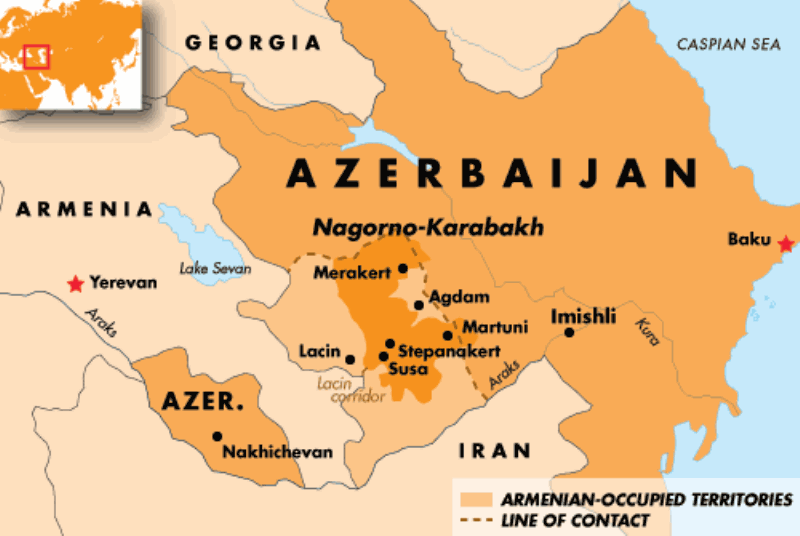
But most crucially of all, it has until now unequivocally backed Azerbaijan's hard-line position with regard to resolving the Nagorno-Karabakh conflict, pegging any real rapprochement with Armenia to a solution of that conflict on Azerbaijan's terms. Azerbaijani Foreign Minister Elmar Mammadyarov was quoted as telling journalists in Tbilisi on April 2 that if Turkey does not insist as a condition for opening the border that Armenia first withdraw its troops from at least some of the seven districts of Azerbaijan they currently occupy contiguous to the unrecognized Nagorno-Karabakh republic, "this would be detrimental to Azerbaijan's national interests."
 Informed analysts have identified as one of the reasons why Ankara has responded positively to repeated overtures over the past two years by Armenian President Serzh Sarkisian frustration that Turkish foreign policy was being held hostage by Azerbaijan's unyielding position with regard to the Karabakh conflict. On April 5, Interfax circulated a question-and-answer with Armenian Foreign Minister Eduard Nalbandian, who said that "the normalization of Armenian-Turkish relations should have no preconditions, and it is with this mutual understanding that we have been negotiating with the Turkish side. Normalization of relations has no linkage to the resolution of the Nagorno-Karabakh conflict."
On April 6, however, "Hurriyet" reported, quoting unnamed "reliable sources," that the Turkish-Armenian draft protocol contains the wording "sufficient progress on the resolution of the Nagorno-Karabakh conflict is required before the opening of the [Turkish-Armenian] border," and that President Aliyev is seeking clarification of what precisely is meant by "sufficient progress."
The Azerbaijani presidential administration told RFE/RL's Azerbaijani Service on April 6 they have no idea what the "Hurriyet" article was referring to. But as of mid-afternoon Baku time on April 6, Aliyev had not left for Istanbul.
Speculation that Azerbaijan is out to thwart the signing of the anticipated Turkish-Armenian protocol was fuelled by the unexpected visit to Baku on April 3 by U.S. Assistant Deputy Secretary of State Matthew Bryza for talks with President Aliyev and Foreign Minister Mammadyarov. Bryza was quoted as telling journalists on his arrival that Washington believes that "the positive changes in the region, that is achieving results in resolving the Nagorno-Karabakh conflict and the warming in Turkish-Armenian relations, should proceed parallel with one another."
Bryza also reaffirmed the prediction made in late February by Ambassador Bernard Fassier, the French co-chairman of the OSCE Minsk Group that seeks to mediate a solution to the Karabakh conflict, that President Aliyev is likely to meet with his Armenian counterpart Serzh Sarkisian on the sidelines of the EU summit in Prague on May 7-8. When that time frame was first made public, it seemed probable that the meeting between the two presidents was intended to finalize the so-called Basic Principles for resolving the conflict that have been on the table for the past three years.
During their talks in Moscow in early November with Russian President Dmitry Medvedev, Aliyev and Sarkisian reaffirmed their shared commitment to reaching a solution to the conflict that would reflect those principles. Bryza, who is the U.S. Minsk Group co-chairman, told RFE/RL in late January that the co-chairs were hoping that the Basic Principles would be signed in early summer, possibly in June. The Basic Principles entail a withdrawal of Armenian forces from five of the seven occupied Azerbaijani districts; "special arrangements" are to be instituted for the strategic Lachin Corridor that links the NKR with the Republic of Armenia, and for the district of Kelbacar that similarly lies between them.
Bryza's estimated time frame for the signing of the Basic Principles may, however, be derailed if Azerbaijan continues either to try to pressure Turkey, or to insist on a separate agreement on the withdrawal of Armenian forces as a preliminary to endorsing (or not) the remaining Basic Principles.
Not that Aliyev has any real leverage he could bring to bear. Speculation that Azerbaijan might withdraw its support for the planned Nabucco export pipeline for Caspian gas (from which Turkey would derive considerable profit in transit fees) and opt instead for the planned White Stream pipeline (the brainchild of Ukrainian Prime Minister Yulia Tymoshenko, it would run across the Black Sea bed from the Georgian terminal at Supsa to a Ukrainian port) seems far-fetched, although it cannot be ruled out completely. The Georgian government signed a memorandum of mutual understanding on April 3 with the White Stream Pipeline Company in which the two sides affirmed their commitment to that project, Caucasus Press reported.
Baku has long insisted that any such formal agreement by Turkey on closer relations with Armenia should be contingent on key concessions by the latter on the terms for a solution of the Nagorno-Karabakh conflict.
Azerbaijan's President Ilham Aliyev, who assured the Turkish parliament last November that "today Turkish-Azerbaijani unity is a stabilizing factor in the region," was quoted by the Turkish daily "Hurriyet" as threatening on April 1 to suspend natural-gas exports to Turkey, a threat tantamount to cutting off his nose to spite his face in light of the fall in world oil prices to half the $80 per barrel on which Azerbaijan's state budget expenditure for 2009 was predicated.
Then on April 6, "Hurriyet" confirmed a report published two days earlier in the online daily zerkalo.az that Aliyev has cancelled his participation in the NATO Dialogue of Civilizations conference in Istanbul on April 6-7, despite efforts by Turkish President Abdullah Gul and the U.S. State Department to persuade him to attend.
Baku's anger derives in large part from the perception that it has been stabbed in the back by the country that it has, despite periodic disagreements, long regarded as its closest ally, partner, and protector. That perception is rooted partly in the very close ethnic and linguistic ties between the two states, and partly in their close cooperation over the past 15 years in the export to Western markets of Azerbaijan's Caspian oil and gas. (Both main export pipelines run via Georgia to Turkey.) In addition, Ankara has provided guidance and advice to the Azerbaijani military.
But most crucially of all, it has until now unequivocally backed Azerbaijan's hard-line position with regard to resolving the Nagorno-Karabakh conflict, pegging any real rapprochement with Armenia to a solution of that conflict on Azerbaijan's terms. Azerbaijani Foreign Minister Elmar Mammadyarov was quoted as telling journalists in Tbilisi on April 2 that if Turkey does not insist as a condition for opening the border that Armenia first withdraw its troops from at least some of the seven districts of Azerbaijan they currently occupy contiguous to the unrecognized Nagorno-Karabakh republic, "this would be detrimental to Azerbaijan's national interests."
On April 6, however, "Hurriyet" reported, quoting unnamed "reliable sources," that the Turkish-Armenian draft protocol contains the wording "sufficient progress on the resolution of the Nagorno-Karabakh conflict is required before the opening of the [Turkish-Armenian] border," and that President Aliyev is seeking clarification of what precisely is meant by "sufficient progress."
The Azerbaijani presidential administration told RFE/RL's Azerbaijani Service on April 6 they have no idea what the "Hurriyet" article was referring to. But as of mid-afternoon Baku time on April 6, Aliyev had not left for Istanbul.
Speculation that Azerbaijan is out to thwart the signing of the anticipated Turkish-Armenian protocol was fuelled by the unexpected visit to Baku on April 3 by U.S. Assistant Deputy Secretary of State Matthew Bryza for talks with President Aliyev and Foreign Minister Mammadyarov. Bryza was quoted as telling journalists on his arrival that Washington believes that "the positive changes in the region, that is achieving results in resolving the Nagorno-Karabakh conflict and the warming in Turkish-Armenian relations, should proceed parallel with one another."
Bryza also reaffirmed the prediction made in late February by Ambassador Bernard Fassier, the French co-chairman of the OSCE Minsk Group that seeks to mediate a solution to the Karabakh conflict, that President Aliyev is likely to meet with his Armenian counterpart Serzh Sarkisian on the sidelines of the EU summit in Prague on May 7-8. When that time frame was first made public, it seemed probable that the meeting between the two presidents was intended to finalize the so-called Basic Principles for resolving the conflict that have been on the table for the past three years.
During their talks in Moscow in early November with Russian President Dmitry Medvedev, Aliyev and Sarkisian reaffirmed their shared commitment to reaching a solution to the conflict that would reflect those principles. Bryza, who is the U.S. Minsk Group co-chairman, told RFE/RL in late January that the co-chairs were hoping that the Basic Principles would be signed in early summer, possibly in June. The Basic Principles entail a withdrawal of Armenian forces from five of the seven occupied Azerbaijani districts; "special arrangements" are to be instituted for the strategic Lachin Corridor that links the NKR with the Republic of Armenia, and for the district of Kelbacar that similarly lies between them.
Bryza's estimated time frame for the signing of the Basic Principles may, however, be derailed if Azerbaijan continues either to try to pressure Turkey, or to insist on a separate agreement on the withdrawal of Armenian forces as a preliminary to endorsing (or not) the remaining Basic Principles.
Not that Aliyev has any real leverage he could bring to bear. Speculation that Azerbaijan might withdraw its support for the planned Nabucco export pipeline for Caspian gas (from which Turkey would derive considerable profit in transit fees) and opt instead for the planned White Stream pipeline (the brainchild of Ukrainian Prime Minister Yulia Tymoshenko, it would run across the Black Sea bed from the Georgian terminal at Supsa to a Ukrainian port) seems far-fetched, although it cannot be ruled out completely. The Georgian government signed a memorandum of mutual understanding on April 3 with the White Stream Pipeline Company in which the two sides affirmed their commitment to that project, Caucasus Press reported.