




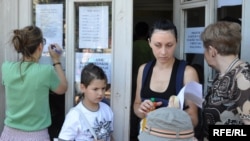
Bosnian citizens, or least Bosniaks (Bosnian Muslims), are furious about the European Commission's move to adopt visa liberalization for Macedonia, Montenegro, and Serbia, and to leave Kosovo, Albania, and Bosnia-Herzegovina out of the equation. But their outrage is misplaced.
For now, the European Union will remain off limits to Bosniaks, who, unlike their dual-citizenship-holding Bosnian Croat and Bosnian Serb counterparts, will not be able to travel unless they are willing to undergo the multitude of humiliations associated with attempting to obtain a visa -- everything from the challenge of rounding up countless obscure documents to outright begging and pleading.
While there are scores of individuals and institutions to blame for this -- local and international -- the bulk of responsibility for such a horrific failure must go to the Bosnian government, which managed, with its trademark incapacity, to leave nearly 50 European Commission requirements unfulfilled.
It is thus fair to argue that the Bosnian leadership has not earned EU visa liberalization.
It is also fair to say that the Bosnian public deserves what it gets from this unstable democracy, insistent on maintaining the shabby status quo and voting into office the same nationalist culprits time and again. While many are keen to point out that the Bosnian public has suffered long enough for its government's incompetence, it is also true that the very same public voted those officials into power -- and a certain amount of responsibility accompanies every vote.
Brussels Bungling?
The EU is also to blame to some extent, and the political undertones of the visa-liberalization policy cannot be ignored. Nor can the threats to regional destabilization and European security be too quickly brushed aside.
It is worth noting that for technical reasons, Bulgaria and Romania were ushered into the EU club in 2007 despite serious failings in terms of corruption and human trafficking, which both countries vowed to resolve belatedly.
In the case of Serbia, the EU has clearly been keen to reward President Boris Tadic, whom it perceives as a pro-Western leader with whom it is fairly easy to deal - despite the fact that the country has failed to cooperate fully with the Hague-based International Criminal Tribunal for the former Yugoslavia (ICTY).
Last spring, when narrow elections were expected in Serbia pitting pro-EU forces against radicals, Western countries openly urged Serbian citizens to vote for democratic parties and promised they would be rewarded for doing so. Two weeks before the parliamentary elections, Serbia and the EU signed a Stabilization and Association Agreement (SAA), and EU foreign ministers promised Serbia a visa-free regime.
Serbia still has two political aces up its sleeve -- aces it is likely to use in final EU accession talks: the arrest of wanted war criminal General Ratko Mladic and the recognition of Kosovo's independence.
Although the EC cited Bosnia's technical failures to justify leaving it out of the visa-liberalization program, this can be perceived as unfair. Even the next possible date for a review of visa liberalization for Bosnia -- July 2010 -- is now in question.
Late last week, the Bosnian government presented to the public a sample of the new biometric passports, announcing that the new passports would be issued beginning on October 15. Considering the fact that the first EC inspection will arrive in the country on October 1, it is likely that Bosnia will once again be snubbed for not having completed this requirement on time.
Though the necessary introduction of biometric passports has largely been characterized by administrative incompetence, the system has, in fact, been introduced. Moreover, it will likely be running more smoothly by January, when the visa-free regime would be implemented.
Blame All Around
Certainly it is also fair to question the EC's decision from another point of view. Plenty of figures -- not only Bosnian officials but also Western diplomats -- say the decision to leave Bosnia out of the visa-free plan is distinctly anti-Muslim and could create Muslim ghettos, with only Bosniaks (Bosnian Muslims) affected, as Bosnian Croats and Bosnian Serbs can hold dual citizenship and enjoy visa liberalization.
Indeed the international community can be blamed for once again contributing to the further ethnic division of the country.
In practice, the EC decision could lead those Bosnian Serbs who have returned to the Bosniak- and Bosnian Croat-dominated federation entity since the war to relocate to the Bosnian Serb-dominated entity of Republika Srpska, for instance.
Since the beginning of the year, when it became clear that Bosnian officials lacked the political will to meet EC requirements, more than 20,000 Bosnian citizens have applied for Croatian, Serbian, and Montenegrin citizenship. Now those numbers are expected to rise further.
Plenty of others warn that the decision could destabilize the region and create a security threat for Europe.
Homegrown Trouble
But the prime culprit is clearly the Bosnian government, and those who have put them in power.
Certainly the Bosnian authorities proved amateur negotiators throughout. Working toward Bosnia's EU integration was a major campaign promises in the past election, and now the leaders should be taken to task for their grievous failures.
And while it is easy enough to condemn the EU for its so-called anti-Muslim decision, the fact that Bosnian Croats and Bosnian Serbs tend to hold dual citizenship with Croatia and Serbia can only be seen as "anti-Bosnian," and a reflection of the government's failure to convince all the country's residents that Bosnia is their homeland.
Furthermore, Bosnian Serb officials continued to obstruct the passing of the reforms required to qualify for visa liberalization, in what is increasingly becoming the rule of the day – but this blatant political obstruction is unlikely to harm Bosnian Serb citizens, as they can enjoy dual citizenship with Serbia.
When it came to negotiating with the EU, Bosnian "experts" showed a clear lack of enthusiasm and foreign-language and diplomacy skills. They were not up to the task.
Unlike the neighboring countries, who managed to win visa-free travel for their citizens, and who sent to Brussels their best diplomats and lawyers, Bosnia sent randomly chosen ruling nationalist party members. According to their CVs, they appeared to be experts in everything or nothing: some with dossiers indicating a background in fighting terrorism and illegal migration, others with no experience at all. Certainly they were not serious candidates.
Often, only two or three of the delegation's nine members would even bother to show up in Brussels for negotiations. Clearly, they did not share the public's enthusiasm for visa liberalization.
This, sadly, suggests another possibility: Perhaps Bosnia's leaders have no desire to move toward EU integration. Certainly Bosnian politics would have a hard time of it in Brussels, and those who wish to hold on to their dubious careers might find that having to answer to the EU a form of political suicide. This will become clearer next year, when the EC reviews its decision on Bosnia.
Anes Alic is the Sarajevo-based executive director of ISA Consulting and a senior analyst for ISN Security Watch. The views expressed in this commentary are the author's own and do not necessarily reflect those of RFE/RL
For now, the European Union will remain off limits to Bosniaks, who, unlike their dual-citizenship-holding Bosnian Croat and Bosnian Serb counterparts, will not be able to travel unless they are willing to undergo the multitude of humiliations associated with attempting to obtain a visa -- everything from the challenge of rounding up countless obscure documents to outright begging and pleading.
While there are scores of individuals and institutions to blame for this -- local and international -- the bulk of responsibility for such a horrific failure must go to the Bosnian government, which managed, with its trademark incapacity, to leave nearly 50 European Commission requirements unfulfilled.
It is thus fair to argue that the Bosnian leadership has not earned EU visa liberalization.
It is also fair to say that the Bosnian public deserves what it gets from this unstable democracy, insistent on maintaining the shabby status quo and voting into office the same nationalist culprits time and again. While many are keen to point out that the Bosnian public has suffered long enough for its government's incompetence, it is also true that the very same public voted those officials into power -- and a certain amount of responsibility accompanies every vote.
Brussels Bungling?
The EU is also to blame to some extent, and the political undertones of the visa-liberalization policy cannot be ignored. Nor can the threats to regional destabilization and European security be too quickly brushed aside.
It is worth noting that for technical reasons, Bulgaria and Romania were ushered into the EU club in 2007 despite serious failings in terms of corruption and human trafficking, which both countries vowed to resolve belatedly.
In the case of Serbia, the EU has clearly been keen to reward President Boris Tadic, whom it perceives as a pro-Western leader with whom it is fairly easy to deal - despite the fact that the country has failed to cooperate fully with the Hague-based International Criminal Tribunal for the former Yugoslavia (ICTY).
Last spring, when narrow elections were expected in Serbia pitting pro-EU forces against radicals, Western countries openly urged Serbian citizens to vote for democratic parties and promised they would be rewarded for doing so. Two weeks before the parliamentary elections, Serbia and the EU signed a Stabilization and Association Agreement (SAA), and EU foreign ministers promised Serbia a visa-free regime.
Serbia still has two political aces up its sleeve -- aces it is likely to use in final EU accession talks: the arrest of wanted war criminal General Ratko Mladic and the recognition of Kosovo's independence.
Although the EC cited Bosnia's technical failures to justify leaving it out of the visa-liberalization program, this can be perceived as unfair. Even the next possible date for a review of visa liberalization for Bosnia -- July 2010 -- is now in question.
Late last week, the Bosnian government presented to the public a sample of the new biometric passports, announcing that the new passports would be issued beginning on October 15. Considering the fact that the first EC inspection will arrive in the country on October 1, it is likely that Bosnia will once again be snubbed for not having completed this requirement on time.
Though the necessary introduction of biometric passports has largely been characterized by administrative incompetence, the system has, in fact, been introduced. Moreover, it will likely be running more smoothly by January, when the visa-free regime would be implemented.
Blame All Around
Certainly it is also fair to question the EC's decision from another point of view. Plenty of figures -- not only Bosnian officials but also Western diplomats -- say the decision to leave Bosnia out of the visa-free plan is distinctly anti-Muslim and could create Muslim ghettos, with only Bosniaks (Bosnian Muslims) affected, as Bosnian Croats and Bosnian Serbs can hold dual citizenship and enjoy visa liberalization.
Indeed the international community can be blamed for once again contributing to the further ethnic division of the country.
In practice, the EC decision could lead those Bosnian Serbs who have returned to the Bosniak- and Bosnian Croat-dominated federation entity since the war to relocate to the Bosnian Serb-dominated entity of Republika Srpska, for instance.
Since the beginning of the year, when it became clear that Bosnian officials lacked the political will to meet EC requirements, more than 20,000 Bosnian citizens have applied for Croatian, Serbian, and Montenegrin citizenship. Now those numbers are expected to rise further.
Plenty of others warn that the decision could destabilize the region and create a security threat for Europe.
Homegrown Trouble
But the prime culprit is clearly the Bosnian government, and those who have put them in power.
Certainly the Bosnian authorities proved amateur negotiators throughout. Working toward Bosnia's EU integration was a major campaign promises in the past election, and now the leaders should be taken to task for their grievous failures.
And while it is easy enough to condemn the EU for its so-called anti-Muslim decision, the fact that Bosnian Croats and Bosnian Serbs tend to hold dual citizenship with Croatia and Serbia can only be seen as "anti-Bosnian," and a reflection of the government's failure to convince all the country's residents that Bosnia is their homeland.
Furthermore, Bosnian Serb officials continued to obstruct the passing of the reforms required to qualify for visa liberalization, in what is increasingly becoming the rule of the day – but this blatant political obstruction is unlikely to harm Bosnian Serb citizens, as they can enjoy dual citizenship with Serbia.
When it came to negotiating with the EU, Bosnian "experts" showed a clear lack of enthusiasm and foreign-language and diplomacy skills. They were not up to the task.
Unlike the neighboring countries, who managed to win visa-free travel for their citizens, and who sent to Brussels their best diplomats and lawyers, Bosnia sent randomly chosen ruling nationalist party members. According to their CVs, they appeared to be experts in everything or nothing: some with dossiers indicating a background in fighting terrorism and illegal migration, others with no experience at all. Certainly they were not serious candidates.
Often, only two or three of the delegation's nine members would even bother to show up in Brussels for negotiations. Clearly, they did not share the public's enthusiasm for visa liberalization.
This, sadly, suggests another possibility: Perhaps Bosnia's leaders have no desire to move toward EU integration. Certainly Bosnian politics would have a hard time of it in Brussels, and those who wish to hold on to their dubious careers might find that having to answer to the EU a form of political suicide. This will become clearer next year, when the EC reviews its decision on Bosnia.
Anes Alic is the Sarajevo-based executive director of ISA Consulting and a senior analyst for ISN Security Watch. The views expressed in this commentary are the author's own and do not necessarily reflect those of RFE/RL