


When setting goals for the future, it is important to question one's assumptions. Russia today faces some crucial geopolitical and social tipping points, and so Moscow might do well to rethink some ideas that seem to be common currency in Russian political circles.
First, does a "strong" government mean a strong Russia? Under former President Vladimir Putin -- and now under President Dmitry Medvedev -- the Russian government has seemed obsessed with being "strong." Paradoxically, however, a government bent on controlling everything risks creating a hollow state.
Diminished democratic decision making reduces the feedback Russian society can give to the government, increasing the likelihood that popular and elite interests will diverge. Centralized, secretive processes also give scope for corruption, which in turn hastens the alienation of the people from the state and causes great harm to the country's developing business sector.
Softer Power
The state's domination of the media amplifies the trend of alienation at home and undercuts Russia's ability to tell its story beyond its borders, reducing its "soft power."
Securing direct or indirect government (elite) control over resource industries has been a leitmotif of the last decade in Russia. But a state that relies on resource extraction can easily lose the inclination to attend to other aspects of economic strength that are more stable and promising over the long term.
In addition, disruptions to business by a government demonstrating its power -- from leaning on foreign energy companies to Russia's overreaction to Georgian provocations this summer -- strike at the core of Russian economic competitiveness, undermining a key component of national strength.
Second, where do the real threats to Russia come from? In the face of NATO, EU, and U.S. encroachment on the former Soviet sphere of influence, Russia seems fixated on threats from the West. But this sense of danger is misplaced.
Although Western countries may be skeptical of various Russian choices and policies, there is no genuine hostility toward Russia. A military attack on Russia from the West is almost inconceivable.
Western Reality
Russia faces much more plausible security threats from the south and east. To the south, it has numerous possible points of collision with the Islamic world, from the Caucasus into Central Asia. Moscow's past actions in Afghanistan and Chechnya have brought it the active hostility of Islamic radicals. If they escaped state control, Pakistan's and North Korea's nuclear weapons -- and possible Iranian nukes -- are more likely to threaten Russian cities than are U.S or French weapons.
In the east, Chinese power will eclipse Russia's to a greater degree with each passing year. Even though they have resolved their border issues, the two giants will face each other across potentially unstable Central Asian states and along a vast Siberian frontier, whose Russian side is demographically empty and resource rich.
In the face of these longer-term threats, closer relations with the West are clearly in Russia's interest. In future crises, Russia will need global powers that view it sympathetically rather than indifferently or suspiciously. Nonetheless, Moscow is devoting resources to petty sparring with the United States: while China is following the money toward new markets and building relations with rising powers such as Brazil, Russia is preoccupied with geopolitical stunts with countries like Venezuela and Nicaragua.
Finally, what is the real greatest threat to Russia? The country is losing nearly 1 million people a year as death rates exceed birthrates by a wide margin. No foreign power is likely to do Russia as much harm as its dire demographic decline.
Not Adding Up
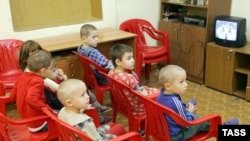
Russians -- especially men -- are dying at younger and younger ages of heart disease and other complications of drinking and smoking, as well as of diseases like tuberculosis that have been virtually eradicated in the West. Economically strapped young people are having few or no children.
Stated starkly, these trends portend the disappearance of a crucial component of national power -- a growing and healthy population. Russia's population is currently about one-half that of the United States. By 2030, according to some projections, Russia's population may have fallen to 124 million, about one-third of what the U.S. population is expected to be.
The government has paid some attention to this issue, offering subsidies to new parents and other enticements to have more children. But its basic priorities are open to question, as its actions clearly do not match the gravity or complexity of the problem. Demographer Murray Feshbach noted recently that Russia's defense budget is rising rapidly -- up to 26 percent per year -- but one-fifth of Russia's tuberculosis hospitals lack running water and some 70 percent of newborns suffer complications at birth because of prenatal deficiencies.
Long-range planning demands asking hard questions like the ones posed above -- and honest answers to them. A sober look at the driving trends in Russia's future casts serious doubt on many of the Kremlin's basic policies today. And Russia is a country that cannot afford to be shortsighted.
Josh Calder is an analyst at Social Technologies, a Washington-based foresight consulting firm. The views expressed in this commentary are the author's own and do not necessarily reflect those of RFE/RL
First, does a "strong" government mean a strong Russia? Under former President Vladimir Putin -- and now under President Dmitry Medvedev -- the Russian government has seemed obsessed with being "strong." Paradoxically, however, a government bent on controlling everything risks creating a hollow state.
Diminished democratic decision making reduces the feedback Russian society can give to the government, increasing the likelihood that popular and elite interests will diverge. Centralized, secretive processes also give scope for corruption, which in turn hastens the alienation of the people from the state and causes great harm to the country's developing business sector.
Softer Power
The state's domination of the media amplifies the trend of alienation at home and undercuts Russia's ability to tell its story beyond its borders, reducing its "soft power."
Securing direct or indirect government (elite) control over resource industries has been a leitmotif of the last decade in Russia. But a state that relies on resource extraction can easily lose the inclination to attend to other aspects of economic strength that are more stable and promising over the long term.
In addition, disruptions to business by a government demonstrating its power -- from leaning on foreign energy companies to Russia's overreaction to Georgian provocations this summer -- strike at the core of Russian economic competitiveness, undermining a key component of national strength.
Second, where do the real threats to Russia come from? In the face of NATO, EU, and U.S. encroachment on the former Soviet sphere of influence, Russia seems fixated on threats from the West. But this sense of danger is misplaced.
Although Western countries may be skeptical of various Russian choices and policies, there is no genuine hostility toward Russia. A military attack on Russia from the West is almost inconceivable.
Western Reality
Russia faces much more plausible security threats from the south and east. To the south, it has numerous possible points of collision with the Islamic world, from the Caucasus into Central Asia. Moscow's past actions in Afghanistan and Chechnya have brought it the active hostility of Islamic radicals. If they escaped state control, Pakistan's and North Korea's nuclear weapons -- and possible Iranian nukes -- are more likely to threaten Russian cities than are U.S or French weapons.
In the east, Chinese power will eclipse Russia's to a greater degree with each passing year. Even though they have resolved their border issues, the two giants will face each other across potentially unstable Central Asian states and along a vast Siberian frontier, whose Russian side is demographically empty and resource rich.
In the face of these longer-term threats, closer relations with the West are clearly in Russia's interest. In future crises, Russia will need global powers that view it sympathetically rather than indifferently or suspiciously. Nonetheless, Moscow is devoting resources to petty sparring with the United States: while China is following the money toward new markets and building relations with rising powers such as Brazil, Russia is preoccupied with geopolitical stunts with countries like Venezuela and Nicaragua.
Finally, what is the real greatest threat to Russia? The country is losing nearly 1 million people a year as death rates exceed birthrates by a wide margin. No foreign power is likely to do Russia as much harm as its dire demographic decline.
Not Adding Up
Russians -- especially men -- are dying at younger and younger ages of heart disease and other complications of drinking and smoking, as well as of diseases like tuberculosis that have been virtually eradicated in the West. Economically strapped young people are having few or no children.
Stated starkly, these trends portend the disappearance of a crucial component of national power -- a growing and healthy population. Russia's population is currently about one-half that of the United States. By 2030, according to some projections, Russia's population may have fallen to 124 million, about one-third of what the U.S. population is expected to be.
The government has paid some attention to this issue, offering subsidies to new parents and other enticements to have more children. But its basic priorities are open to question, as its actions clearly do not match the gravity or complexity of the problem. Demographer Murray Feshbach noted recently that Russia's defense budget is rising rapidly -- up to 26 percent per year -- but one-fifth of Russia's tuberculosis hospitals lack running water and some 70 percent of newborns suffer complications at birth because of prenatal deficiencies.
Long-range planning demands asking hard questions like the ones posed above -- and honest answers to them. A sober look at the driving trends in Russia's future casts serious doubt on many of the Kremlin's basic policies today. And Russia is a country that cannot afford to be shortsighted.
Josh Calder is an analyst at Social Technologies, a Washington-based foresight consulting firm. The views expressed in this commentary are the author's own and do not necessarily reflect those of RFE/RL