



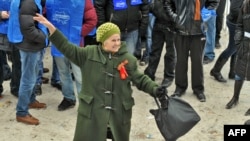
Ironically, the narrow victory of Viktor Yanukovych in Ukraine's presidential election marks the high point in the story of the so-called colored revolutions that between 2003 and 2005 challenged the post-Soviet order from Kyiv to Bishkek.
There are many varying opinions as to the events in Georgia in 2003, in Ukraine in 2004, and in Kyrgyzstan in 2005: Were they connected? Were they part of a genuine popular movement that was sweeping over the post-Soviet space? What was the involvement of foreign powers? Were they really revolutions, or merely power struggles? That discussion is now better left to historians.
More relevant for today is the legacy the colored revolutions have left, not only on the three countries directly affected, but on the whole post-Soviet space.
In Georgia, signs of problems ahead appeared soon after the dramatic events of November 2003. The presidential election held soon after President Eduard Shevardnadze was forced out of office ended with a 96 percent vote for Mikheil Saakashvili -- an impossibility even in the euphoric conditions of the moment.
From there, things got worse. Media were stifled, subsequent elections manipulated, and the judiciary tamed. A lack of checks and balances led to the tragic events that spiraled into a full-blown war with Russia in 2008, with disastrous consequences for Georgia. Georgia is today a better-organized state than it was in 2003; in many ways, though not all, it is also less corrupt. But one cannot say that it is more democratic or that it is any closer to achieving its elusive territorial integrity.
Kyrgyzstan is another story. Many doubt the spontaneity of the events in Bishkek in 2005, and it did not take long for the new rulers to settle into old habits. The influence of criminal gangs on the political process has increased. Elections have been criticized for serious shortcomings. The space for opposition and dissent is becoming narrower and narrower.
Upping The Ante
However, it was in Ukraine where the stakes around the success of the colored revolutions were the highest, both for the country itself and for the outside powers that took an interest in it. In 2004, Viktor Yushchenko emerged a winner after an unprecedented third ballot. But his five-year term in office has been a period of constant drama in Ukrainian politics, with an uneasy -- sometimes outright hostile -- atmosphere in the country's critical relations with Moscow.
Some criticize Yushchenko for not growing in the job, saying he was too weak, allowing the opposition to take the upper hand and the Russians to interfere in domestic politics. This sort of criticism is not only unkind made against a person who was nearly killed by poison in his struggle for democratic change, but also untrue. Yushchenko understood that the Orange Revolution had split Ukrainian society deeply, and split it to a large extent across its most dangerous fault line -- the traditional east-west divide based on language and religion resulting from the foreign occupation of past centuries. At all costs, he had to keep Ukraine united and avoid giving ammunition to those seeking to exploit these divisions.
Yushchenko was also determined not to follow in the footsteps of his predecessor and rule the country through deceit. He rightly believed that a president who had won power on the basis of fighting electoral fraud could not then commit such fraud himself. Yushchenko understood that the country would have to pay the price if he tried to cling to power and he rightly decided not to go down that road.
Ukraine has therefore emerged from the experience of the Orange Revolution still united as a country and, as a result of the recent elections, with strong democratic credentials. It has passed a test that will stand it in good stead in the future. Yushchenko became that rare breed of leader in the post-Soviet space -- a president who leaves office because he loses an election, not because he is forced out or is disqualified from running again because of the constitution.
This is the best legacy of the colored revolutions -- one the Ukrainian people must now ensure is not diluted by the winner of this week's election.
Lessons Learned
Yanukovych 's victory is wafer-thin. The divisions in Ukrainian society remain. Democracy has registered a major victory, but remains fragile. The new president has to show he is as wise as his predecessor, and that will require reaching out to his opponents. Whatever his achievements in office, his legacy will be judged on whether -- when the time comes -- he can hand over to his successor a Ukraine that is even more united and democratic than the one he receives.
The West must work with Yanukovych , despite the fact that he may not have been its favored candidate. The European Union in particular must keep Ukraine in its focus. Both the EU and the United States must show that they respect the outcomes of free election, regardless of who wins.
There are lessons here for all the other post Soviet republics also. The colored revolutions had a negative knock-on effect on freedom in other post-Soviet republics. Jittery governments tightened their control over democratic processes. Elections in Russia, Armenia, and Azerbaijan -- to say nothing of the Central Asian republics -- have generally been less free and fair since; media are also more tightly controlled.
Opposition movements may also have got the wrong message from the events in Tbilisi, Kyiv, and Bishkek, concentrating on street protests rather than on electoral processes with unfortunate consequences.
The ballot box, not street protests, should be the tool of choice to change governments. And all efforts, both domestically and by the international community, need to focus on ensuring level playing fields before elections, a clean ballot, and a transparent counting process. Where elections are rigged, governments should be named and shamed relentlessly. Those who, like Viktor Yushchenko, respect the sanctity of the ballot box need to be recognized and praised. The lessons from Ukraine are many. The colored revolutions may have achieved a victory for democracy after all.
Dennis Sammut is the executive director of the British NGO London Information Network on Conflicts and State-building (LINKS) and a longtime observer and commentator on the post-Soviet space. The views expressed in this commentary are the author's own and do not necessarily reflect those of RFE/RL
There are many varying opinions as to the events in Georgia in 2003, in Ukraine in 2004, and in Kyrgyzstan in 2005: Were they connected? Were they part of a genuine popular movement that was sweeping over the post-Soviet space? What was the involvement of foreign powers? Were they really revolutions, or merely power struggles? That discussion is now better left to historians.
More relevant for today is the legacy the colored revolutions have left, not only on the three countries directly affected, but on the whole post-Soviet space.
In Georgia, signs of problems ahead appeared soon after the dramatic events of November 2003. The presidential election held soon after President Eduard Shevardnadze was forced out of office ended with a 96 percent vote for Mikheil Saakashvili -- an impossibility even in the euphoric conditions of the moment.
From there, things got worse. Media were stifled, subsequent elections manipulated, and the judiciary tamed. A lack of checks and balances led to the tragic events that spiraled into a full-blown war with Russia in 2008, with disastrous consequences for Georgia. Georgia is today a better-organized state than it was in 2003; in many ways, though not all, it is also less corrupt. But one cannot say that it is more democratic or that it is any closer to achieving its elusive territorial integrity.
Kyrgyzstan is another story. Many doubt the spontaneity of the events in Bishkek in 2005, and it did not take long for the new rulers to settle into old habits. The influence of criminal gangs on the political process has increased. Elections have been criticized for serious shortcomings. The space for opposition and dissent is becoming narrower and narrower.
Upping The Ante
However, it was in Ukraine where the stakes around the success of the colored revolutions were the highest, both for the country itself and for the outside powers that took an interest in it. In 2004, Viktor Yushchenko emerged a winner after an unprecedented third ballot. But his five-year term in office has been a period of constant drama in Ukrainian politics, with an uneasy -- sometimes outright hostile -- atmosphere in the country's critical relations with Moscow.
Some criticize Yushchenko for not growing in the job, saying he was too weak, allowing the opposition to take the upper hand and the Russians to interfere in domestic politics. This sort of criticism is not only unkind made against a person who was nearly killed by poison in his struggle for democratic change, but also untrue. Yushchenko understood that the Orange Revolution had split Ukrainian society deeply, and split it to a large extent across its most dangerous fault line -- the traditional east-west divide based on language and religion resulting from the foreign occupation of past centuries. At all costs, he had to keep Ukraine united and avoid giving ammunition to those seeking to exploit these divisions.
Yushchenko was also determined not to follow in the footsteps of his predecessor and rule the country through deceit. He rightly believed that a president who had won power on the basis of fighting electoral fraud could not then commit such fraud himself. Yushchenko understood that the country would have to pay the price if he tried to cling to power and he rightly decided not to go down that road.
Ukraine has therefore emerged from the experience of the Orange Revolution still united as a country and, as a result of the recent elections, with strong democratic credentials. It has passed a test that will stand it in good stead in the future. Yushchenko became that rare breed of leader in the post-Soviet space -- a president who leaves office because he loses an election, not because he is forced out or is disqualified from running again because of the constitution.
This is the best legacy of the colored revolutions -- one the Ukrainian people must now ensure is not diluted by the winner of this week's election.
Lessons Learned
Yanukovych 's victory is wafer-thin. The divisions in Ukrainian society remain. Democracy has registered a major victory, but remains fragile. The new president has to show he is as wise as his predecessor, and that will require reaching out to his opponents. Whatever his achievements in office, his legacy will be judged on whether -- when the time comes -- he can hand over to his successor a Ukraine that is even more united and democratic than the one he receives.
The West must work with Yanukovych , despite the fact that he may not have been its favored candidate. The European Union in particular must keep Ukraine in its focus. Both the EU and the United States must show that they respect the outcomes of free election, regardless of who wins.
There are lessons here for all the other post Soviet republics also. The colored revolutions had a negative knock-on effect on freedom in other post-Soviet republics. Jittery governments tightened their control over democratic processes. Elections in Russia, Armenia, and Azerbaijan -- to say nothing of the Central Asian republics -- have generally been less free and fair since; media are also more tightly controlled.
Opposition movements may also have got the wrong message from the events in Tbilisi, Kyiv, and Bishkek, concentrating on street protests rather than on electoral processes with unfortunate consequences.
The ballot box, not street protests, should be the tool of choice to change governments. And all efforts, both domestically and by the international community, need to focus on ensuring level playing fields before elections, a clean ballot, and a transparent counting process. Where elections are rigged, governments should be named and shamed relentlessly. Those who, like Viktor Yushchenko, respect the sanctity of the ballot box need to be recognized and praised. The lessons from Ukraine are many. The colored revolutions may have achieved a victory for democracy after all.
Dennis Sammut is the executive director of the British NGO London Information Network on Conflicts and State-building (LINKS) and a longtime observer and commentator on the post-Soviet space. The views expressed in this commentary are the author's own and do not necessarily reflect those of RFE/RL