




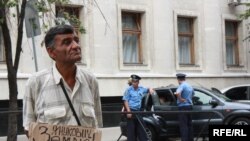
KYIV -- A group of Crimean Tatars has boycotted a meeting with Ukrainian President Viktor Yanukovych to protest the inclusion of some individuals from rival organizations, RFE/RL's Ukrainian Service reports.
Several members of the Presidential Council of Crimean Tatars -- who are also members of the Crimean Tatar parliament (Mejlis) -- did not show up for the meeting. The council's press service said they decided to boycott the meeting after learning that members from some Crimean Tatar organizations "they do not trust" were also invited to the talks with Yanukovych.
The Mejlis leaders officially asked Yanukovych to set another date for a meeting.
The decision to convene the meeting was made in May during talks between Yanukovych and Crimean Tatar leader Mustafa Dzhemilev. The two discussed the Crimean Tatars' right to own land and their integration into Ukrainian society.
Crimean Tatars were deported by Soviet leader Josef Stalin to Central Asia in the 1940s. They began returning to Crimea en masse after the collapse of the Soviet Union in 1991 but have faced problems in acquiring land and in adapting to local conditions.
There are currently more than 250,000 Tatars in Crimea, where they constitute more than 12 percent of the peninsula's population.
Several members of the Presidential Council of Crimean Tatars -- who are also members of the Crimean Tatar parliament (Mejlis) -- did not show up for the meeting. The council's press service said they decided to boycott the meeting after learning that members from some Crimean Tatar organizations "they do not trust" were also invited to the talks with Yanukovych.
The Mejlis leaders officially asked Yanukovych to set another date for a meeting.
The decision to convene the meeting was made in May during talks between Yanukovych and Crimean Tatar leader Mustafa Dzhemilev. The two discussed the Crimean Tatars' right to own land and their integration into Ukrainian society.
Crimean Tatars were deported by Soviet leader Josef Stalin to Central Asia in the 1940s. They began returning to Crimea en masse after the collapse of the Soviet Union in 1991 but have faced problems in acquiring land and in adapting to local conditions.
There are currently more than 250,000 Tatars in Crimea, where they constitute more than 12 percent of the peninsula's population.