




BRUSSELS -- In a signal of waning interest in its eastern neighborhood, the European Union's foreign policy chief, Cathering Ashton, has reportedly proposed abolishing the posts of EU special representatives for the South Caucasus and Moldova.
Diplomats say the proposal to scrap the positions came as a surprise to many member states, which would have to give final approval, as well as to the envoys themselves.
The move would downgrade the EU's presence on the ground in the regions, limit the access of their governments to Brussels, and send a strong signal that both Moldova and the South Caucasus are falling down the EU's list of priorities.
The move is likely to cause further controversy as it was announced to EU member states just before the two-day EU-Russia summit that begins today in Rostov-na-Donu.
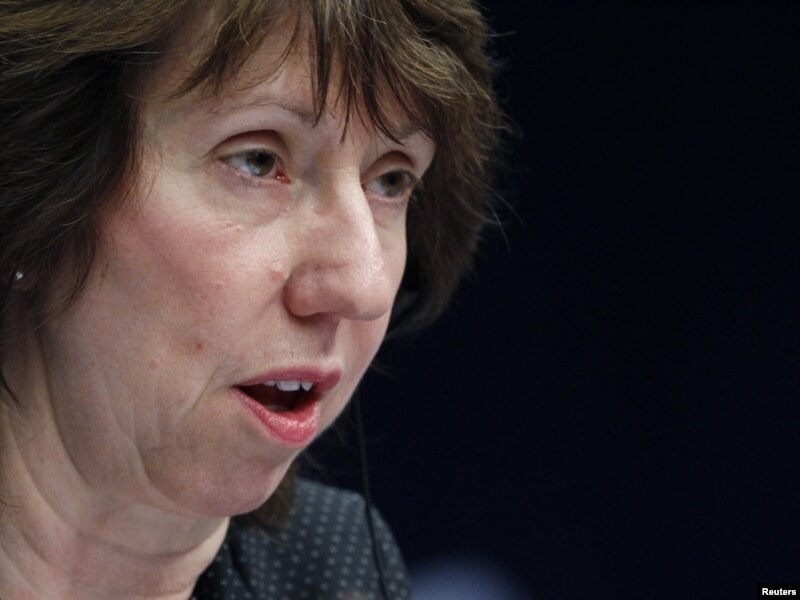
 EU foreign policy chief Catherine AshtonThe proposal was tabled at the end of an EU ambassadors meeting on May 28 by Ashton's right-hand man, the veteran British diplomat Robert Cooper.
Cooper was expanding on a letter sent by Ashton to EU foreign ministers on May 21. Described as "vague" by one EU diplomat, the letter outlined a number of general principles for the reorganization of the current structure of EU envoys. Called "special representatives," the envoys technically report to the EU's high representative for foreign policy but are nominated by the 27 member states in consensus and regularly consult with member-state ambassadors in Brussels.
Overhaul Of The System
The EU currently has 11 special representatives. In addition to Moldova and the South Caucasus, the representatives work in Sudan, Kosovo, Macedonia, Bosnia, Central Asia, Afghanistan, and Africa's Great Lakes region. Representatives have also been appointed to work with the African Union and the Middle East peace process.
Pierre Morel, the EU special representative to Central Asia, was granted an additional representative post for crisis management in Georgia following the August 2008 war.
The Ashton letter had suggested the scrapping of EU special representatives for geographically distant regions, merging some with existing European Commission delegations, and retaining only those seen as most important for the EU. Envoys performing a dual function -- such as those representing the international community as well as the bloc itself in Kosovo, Bosnia, and Macedonia -- would also stay.
The current creation of a consolidated EU diplomatic corps, called the External Action Service (EAS), was always expected to force an overhaul of the system, but one nowhere near as radical as that laid out by Cooper.
The South Caucasus and Moldova -- homes to Europe's most persistent "frozen conflicts" -- would lose their special representatives, currently Peter Semneby and Kalman Mizsei, respectively. So would the Middle East peace process. .
In Moldova, the special envoy's position would be merged with that of the European Commission's representative and later brought within the EAS. The three countries in the Caucasus would each undergo similar treatment, but in the process would also lose their regional significance for the EU.
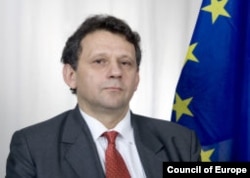 Kalman Mizsei, the EU's representative in MoldovaWaning Interest?
Diplomats critical of the new plan point out that Ashton plans to retain special representatives for Sudan, the Great Lakes area, and Central Asia. All of these are geographically more distant than the South Caucasus. The move, these diplomats say, could therefore be read as a signal of the bloc's waning interest in the South Caucasus, where the EU has had an envoy present since 2003, the year of the Rose Revolution in Georgia.
It also signals another lurch toward big-power politics within the EU, with the interests of the larger member states increasingly setting the bloc's agenda. Germany, France, and Britain all take a particularly keen interest in Central Asia, in view of their engagement in Afghanistan.
Officials in Brussels note that Ashton is bound to have cleared her plans with Berlin, Paris, and London first. Semneby and Miszei were not consulted in advance.
The move also constitutes a blow for Poland and other, mostly eastern EU member states pushing the bloc to upgrade its commitment to the South Caucasus by appointing a more senior figure -- ideally an ex-foreign minister -- as its next envoy. (The mandates for both Semneby and Miszei are due to expire on August 31 of this year.) It is unclear if Warsaw was informed of Ashton's proposal in advance, but it now has an almost insurmountable mountain to climb should Germany, France, and Britain already have closed ranks around the foreign policy chief.
Diplomats say that once Ashton's embattled new diplomatic service is finally launched late this year, the EU point man for the South Caucasus will be a mid-level manager in the EAS located in Brussels. This, EU sources suggest, would represent a drop of more than a notch in the bloc's relations with the region.
It would also negatively affect the access of regional governments and media to the EU. Semneby, the current special representative to the South Caucasus, spends most of his time in the region and is authorized to speak on behalf of the EU. His mandate is likely to be extended past the August 31 deadline, but only until the EAS has selected a replacement.
The downgrading of Moldova in the bloc's new diplomatic hierarchy is likely to leave the country increasingly dependent on its closest EU neighbor, Romania, for access to Brussels.
Diplomats say the proposal to scrap the positions came as a surprise to many member states, which would have to give final approval, as well as to the envoys themselves.
The move would downgrade the EU's presence on the ground in the regions, limit the access of their governments to Brussels, and send a strong signal that both Moldova and the South Caucasus are falling down the EU's list of priorities.
The move is likely to cause further controversy as it was announced to EU member states just before the two-day EU-Russia summit that begins today in Rostov-na-Donu.
Cooper was expanding on a letter sent by Ashton to EU foreign ministers on May 21. Described as "vague" by one EU diplomat, the letter outlined a number of general principles for the reorganization of the current structure of EU envoys. Called "special representatives," the envoys technically report to the EU's high representative for foreign policy but are nominated by the 27 member states in consensus and regularly consult with member-state ambassadors in Brussels.
Overhaul Of The System
The EU currently has 11 special representatives. In addition to Moldova and the South Caucasus, the representatives work in Sudan, Kosovo, Macedonia, Bosnia, Central Asia, Afghanistan, and Africa's Great Lakes region. Representatives have also been appointed to work with the African Union and the Middle East peace process.
Pierre Morel, the EU special representative to Central Asia, was granted an additional representative post for crisis management in Georgia following the August 2008 war.
The Ashton letter had suggested the scrapping of EU special representatives for geographically distant regions, merging some with existing European Commission delegations, and retaining only those seen as most important for the EU. Envoys performing a dual function -- such as those representing the international community as well as the bloc itself in Kosovo, Bosnia, and Macedonia -- would also stay.
The current creation of a consolidated EU diplomatic corps, called the External Action Service (EAS), was always expected to force an overhaul of the system, but one nowhere near as radical as that laid out by Cooper.
The South Caucasus and Moldova -- homes to Europe's most persistent "frozen conflicts" -- would lose their special representatives, currently Peter Semneby and Kalman Mizsei, respectively. So would the Middle East peace process. .
In Moldova, the special envoy's position would be merged with that of the European Commission's representative and later brought within the EAS. The three countries in the Caucasus would each undergo similar treatment, but in the process would also lose their regional significance for the EU.

Diplomats critical of the new plan point out that Ashton plans to retain special representatives for Sudan, the Great Lakes area, and Central Asia. All of these are geographically more distant than the South Caucasus. The move, these diplomats say, could therefore be read as a signal of the bloc's waning interest in the South Caucasus, where the EU has had an envoy present since 2003, the year of the Rose Revolution in Georgia.
It also signals another lurch toward big-power politics within the EU, with the interests of the larger member states increasingly setting the bloc's agenda. Germany, France, and Britain all take a particularly keen interest in Central Asia, in view of their engagement in Afghanistan.
Officials in Brussels note that Ashton is bound to have cleared her plans with Berlin, Paris, and London first. Semneby and Miszei were not consulted in advance.
The move also constitutes a blow for Poland and other, mostly eastern EU member states pushing the bloc to upgrade its commitment to the South Caucasus by appointing a more senior figure -- ideally an ex-foreign minister -- as its next envoy. (The mandates for both Semneby and Miszei are due to expire on August 31 of this year.) It is unclear if Warsaw was informed of Ashton's proposal in advance, but it now has an almost insurmountable mountain to climb should Germany, France, and Britain already have closed ranks around the foreign policy chief.
Diplomats say that once Ashton's embattled new diplomatic service is finally launched late this year, the EU point man for the South Caucasus will be a mid-level manager in the EAS located in Brussels. This, EU sources suggest, would represent a drop of more than a notch in the bloc's relations with the region.
It would also negatively affect the access of regional governments and media to the EU. Semneby, the current special representative to the South Caucasus, spends most of his time in the region and is authorized to speak on behalf of the EU. His mandate is likely to be extended past the August 31 deadline, but only until the EAS has selected a replacement.
The downgrading of Moldova in the bloc's new diplomatic hierarchy is likely to leave the country increasingly dependent on its closest EU neighbor, Romania, for access to Brussels.