





(RFE/RL) -- Lawmakers in Moldova have failed for a second time to elect a president to succeed longtime leader Vladimir Voronin. As a result, the deadlocked legislature will be disbanded and new legislative elections scheduled for later this summer or in the autumn.
This is either a disaster or an unprecedented opportunity, depending on which side of the deep and deepening division between the ruling Communist Party and opposition the situation is viewed.
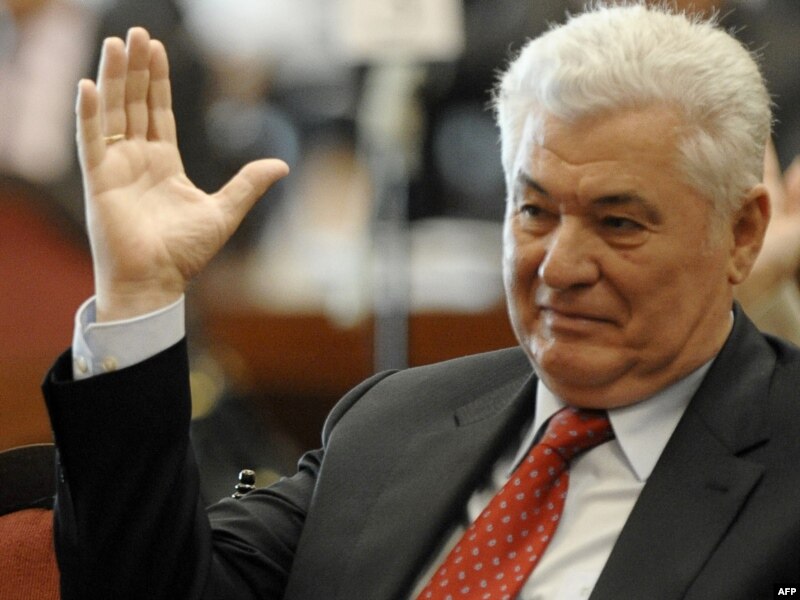
Former President and current parliament speaker Vladimir Voronin clearly blamed the opposition deputies for boycotting the presidential vote and forcing the dissolving of the legislature.
Voronin said that because only the 60 Communist deputies took part in the vote, this "has led to the blocking of the Moldovan presidential election, both on May 20 and today, June 3."
The presidential candidate of the ruling Communist Party, acting Prime Minister Zinaida Greceanii, failed again to receive the backing of even one opposition deputy. In her speech to lawmakers before the vote, Greceanii warned that a failure to elect a president this time would be "the darkest scenario" for Moldova.
Waste Of Time, Or New Opportunity?
Other Communists said after the vote that new elections were a distraction the impoverished country can ill afford.
"We will have to postpone the fulfillment of our campaign promises, of the electorate's will and commands," said Maria Postoicu, head of the Communist parliamentary faction.
"The business climate stands to lose; investment in the national economy will decrease. Moldova's international prestige will suffer. And these are only some of the costs of the event that took place today, on June 3, in the parliament."
 Vladimir Voronin had little doubt who was to blame.Opposition leaders, however, hailed the development as a milestone for the country and a chance to elect a new legislature with greater legitimacy. The last legislative elections in April were marred by charges of fraud that resulted in violent demonstrations in which two people died.
"Early elections were not a goal in themselves," said Corina Fusu, deputy head of the Liberal Party. "We believe that a snap election is a chance for Moldova to rehabilitate itself, to return to normality and legality."
The failed presidential vote means that Voronin, who earlier this month was elected speaker of parliament, will continue as interim president. On June 3, he submitted Greceanii's nomination to serve as his prime minister until the elections, and gave her until June 10 to submit a cabinet and government program.
The exact date of the new elections will be set by a presidential decree in the coming days.
Opposition Unity
Following the vote, opposition leaders were hopeful that the solidarity they demonstrated over the last two months could be carried over into the upcoming election campaign, possibly reshaping Moldova's political landscape through the formation of a force capable of countering the dominant Communists.
Veaceslav Untila, deputy head of the conservative opposition Our Moldova Alliance, called it an "historic moment" for Moldova.
Untila said that in addition to new elections, this was due to "the creation of a united and principled opposition that is responsible to its voters. Today, the opposition showed that the days when personal and party interests were above the voters' interests -- those days are gone."
Just as the opposition is showing unprecedented unity, the once-solid Communist Party, which remains Moldova's dominant political force, is showing signs of division.
Former parliament speaker Marian Lupu, who Voronin touted as his choice to become prime minister if Greceanii had won the presidency, criticized his own party in an interview with RFE/RL on June 2. He said the party makes decisions without taking opposing opinions into consideration.
Dumitru Diacov, head of the opposition Democratic Party, told the Unimedia news agency, that his party has had "several discussions with Marian Lupu" about the possibility of Lupu's joining it for the upcoming election campaign.
"We would be glad to have him in our party," Diacov was quoted as saying.
No Compromises
Independent political analyst Anatol Golea, of the TV7 television station, says the opposition's unity was driven largely by Voronin's unwillingness to compromise.
"Through its behavior, the Communist Party did not allow the opposition to step back [from the boycott]," Golea says. "The Communists did not invite them into civilized negotiations and didn't give them a chance to take part in the presidential elections."
Voronin seems to have forgotten the lessons of his own reelection as president in 2005. At that time, the Communists had fewer parliamentary seats (56) than they have now, but Voronin was able to gain the support of the Christian Democratic Popular Party and other parties by promising to pursue greater European integration.
This time, being just one vote short of the 61 needed to elect a hand-picked successor and ensure a Communist monopoly on the highest offices in the country, Voronin offered no public concessions.
As for the upcoming elections, much depends on when they are held. Quick elections held in the summertime could result in low turnout and invalid results. The Communists, however, might want to hold the vote before the autumn, when students return to campus and can be more easily mobilized by the opposition.
These elections will also offer an opportunity for other opposition parties that failed to win legislative mandates in the April elections. Louis O'Neill, who served as the Organization for Security and Cooperation in Europe's ambassador to Moldova in 2006-08, says this might make for unexpected developments.
"Of course it raises all kinds of interesting possibilities for other parties who didn't make it in last time to again be relevant and to play a role," O'Neill says. "You might see some parties throwing support behind other parties to change the mix, and that could be very interesting."
RFE/RL correspondents Mircea Ticudean and Robert Coalson contributed to this report
This is either a disaster or an unprecedented opportunity, depending on which side of the deep and deepening division between the ruling Communist Party and opposition the situation is viewed.
Former President and current parliament speaker Vladimir Voronin clearly blamed the opposition deputies for boycotting the presidential vote and forcing the dissolving of the legislature.
Voronin said that because only the 60 Communist deputies took part in the vote, this "has led to the blocking of the Moldovan presidential election, both on May 20 and today, June 3."
The presidential candidate of the ruling Communist Party, acting Prime Minister Zinaida Greceanii, failed again to receive the backing of even one opposition deputy. In her speech to lawmakers before the vote, Greceanii warned that a failure to elect a president this time would be "the darkest scenario" for Moldova.
Waste Of Time, Or New Opportunity?
Other Communists said after the vote that new elections were a distraction the impoverished country can ill afford.
"We will have to postpone the fulfillment of our campaign promises, of the electorate's will and commands," said Maria Postoicu, head of the Communist parliamentary faction.
"The business climate stands to lose; investment in the national economy will decrease. Moldova's international prestige will suffer. And these are only some of the costs of the event that took place today, on June 3, in the parliament."
"Early elections were not a goal in themselves," said Corina Fusu, deputy head of the Liberal Party. "We believe that a snap election is a chance for Moldova to rehabilitate itself, to return to normality and legality."
The failed presidential vote means that Voronin, who earlier this month was elected speaker of parliament, will continue as interim president. On June 3, he submitted Greceanii's nomination to serve as his prime minister until the elections, and gave her until June 10 to submit a cabinet and government program.
The exact date of the new elections will be set by a presidential decree in the coming days.
Opposition Unity
Following the vote, opposition leaders were hopeful that the solidarity they demonstrated over the last two months could be carried over into the upcoming election campaign, possibly reshaping Moldova's political landscape through the formation of a force capable of countering the dominant Communists.
Veaceslav Untila, deputy head of the conservative opposition Our Moldova Alliance, called it an "historic moment" for Moldova.
Untila said that in addition to new elections, this was due to "the creation of a united and principled opposition that is responsible to its voters. Today, the opposition showed that the days when personal and party interests were above the voters' interests -- those days are gone."
Just as the opposition is showing unprecedented unity, the once-solid Communist Party, which remains Moldova's dominant political force, is showing signs of division.
Former parliament speaker Marian Lupu, who Voronin touted as his choice to become prime minister if Greceanii had won the presidency, criticized his own party in an interview with RFE/RL on June 2. He said the party makes decisions without taking opposing opinions into consideration.
Dumitru Diacov, head of the opposition Democratic Party, told the Unimedia news agency, that his party has had "several discussions with Marian Lupu" about the possibility of Lupu's joining it for the upcoming election campaign.
"We would be glad to have him in our party," Diacov was quoted as saying.
No Compromises
Independent political analyst Anatol Golea, of the TV7 television station, says the opposition's unity was driven largely by Voronin's unwillingness to compromise.
"Through its behavior, the Communist Party did not allow the opposition to step back [from the boycott]," Golea says. "The Communists did not invite them into civilized negotiations and didn't give them a chance to take part in the presidential elections."
Voronin seems to have forgotten the lessons of his own reelection as president in 2005. At that time, the Communists had fewer parliamentary seats (56) than they have now, but Voronin was able to gain the support of the Christian Democratic Popular Party and other parties by promising to pursue greater European integration.
This time, being just one vote short of the 61 needed to elect a hand-picked successor and ensure a Communist monopoly on the highest offices in the country, Voronin offered no public concessions.
As for the upcoming elections, much depends on when they are held. Quick elections held in the summertime could result in low turnout and invalid results. The Communists, however, might want to hold the vote before the autumn, when students return to campus and can be more easily mobilized by the opposition.
These elections will also offer an opportunity for other opposition parties that failed to win legislative mandates in the April elections. Louis O'Neill, who served as the Organization for Security and Cooperation in Europe's ambassador to Moldova in 2006-08, says this might make for unexpected developments.
"Of course it raises all kinds of interesting possibilities for other parties who didn't make it in last time to again be relevant and to play a role," O'Neill says. "You might see some parties throwing support behind other parties to change the mix, and that could be very interesting."
RFE/RL correspondents Mircea Ticudean and Robert Coalson contributed to this report