




WATCH: Excerpts from "Russia 88." Viewer discretion is advised.
By Claire Bigg
When Pavel Bardin shot his film about Russian neo-Nazis, he was probably bracing for some controversy. But one thing he wasn't expecting was a legal campaign to ban his film on grounds that it propagates extremism.
"Russia 88" charts the daily lives of an imaginary skinhead gang in Moscow that attacks non-Slavic minorities and prepares videos of the assaults to post on the Internet.
In one scene, a leading gang member named Blade is seen in a Moscow metro carriage brutally beating up minorities, whom he repeatedly refers to as "parasites."

Russia is one of the world's most deadly countries for ethnic minorities, and rights groups have long accused authorities of contributing to racist violence by allowing offenders to get away with lenient sentences.
One of the most shocking cases saw a St. Petersburg court in 2006 sentence a group of teenagers to short prison terms for stabbing a 9-year-old Tajik girl to death, finding them guilty only of "hooliganism."
Legal Woes
Released in 2008 to critical acclaim, "Russia 88" took prizes at film festivals in Berlin and Khanty-Mansiisk and was hailed as the 2009 "event of the year" by the Russian film critics' guild. (The 88 in the title is a reference to "Heil, Hitler" -- H being the eighth letter of the alphabet.)
But despite the film's success, Bardin has spent much of the past year mired in a court case filed by prosecutors in the Volga city of Samara, who argue that the film contains hate speech and promotes racial supremacy.
He says authorities deeply misunderstood his work, which he says is meant to show the realities of Russian ultranationalism, not to condone it.
"People who suspect us of being underground marginals seeking to stage a revolution are mistaken," he tells RFE/RL's Russian Service. "We are happy to make our film available to anyone who wishes to use it to combat extremism. Many nongovernmental organizations have turned to us, but not a single state organization has done so.
"The first contact with authorities, unfortunately, was this lawsuit. We are not expecting cooperation, but I hope such misunderstandings won't arise again."
Bardin won a respite last month when the Prosecutor-General's Office ordered that the lawsuit be withdrawn pending a more detailed study of the film.
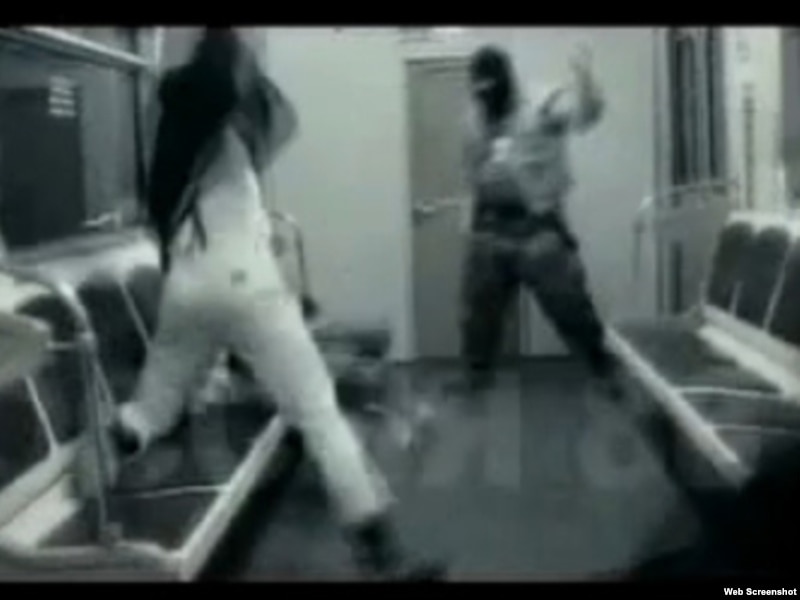
Most Russian movie theaters did not show "Russia 88" due to its sensitive subject matter. The film has largely been restricted to private viewings at universities and film clubs.
Not Just Fiction
While fictional, "Russia 88" is based on what is known of Russian neo-Nazi groups. It illustrates ties between gang members and the police, whose ranks in reality are believed to harbor many ultranationalist sympathizers.
The film also highlights a new, disturbing practice among ultranationalists: posting videos of attacks on the Internet. One of the most horrifying videos to date, released online in 2007, showed neo-Nazis brutally executing two men identified as a Tajik and a Daghestani.
"Russia 88" also includes interviews with real Muscovites speaking out against ethnic minorities, underscoring the xenophobia that remains widespread among ordinary Russians.
Before shooting "Russia 88," Bardin researched white-power gangs by surfing Russian Internet forums. He also consulted the Sova Center, an independent organization that monitors ultranationalist violence in the country.
Sova estimates that at least 71 people died and more than 330 were wounded last year in racially motivated attacks. The number, while high, is a sharp decline from previous years.
Sova's Galina Kozhevnikova attributes the drop to belated efforts by authorities to crack down on ultranationalists. She credits Bardin and "Russia 88," in turn, for doing much to raise awareness about the issue.
"It's a feature film that is accurate is some places and less accurate in others, but it doesn't matter, because the film's aim is not to give an exact portrait of the life of neo-Nazis," she says. "Its aim is to face society and each individual with this problem, and the film does this brilliantly."