


Jovid always dreamed of becoming a police officer, but now he finds himself taking exams to become a tax collector.
"My family couldn't afford the amount of bribe we would have had to pay to get a place at the police academy," the 18-year-old high-school graduate explains.
Seeking to ensure an affordable future for their son, his parents -- farmers in Tajikistan's northern Maschoh region -- instead paid out a $1,000 bribe to ensure he would be enrolled to study tax law at a Tajik finance university.
"We had to sell several of our cattle to raise the money," Jovid says. "The rest we borrowed from relatives. We didn't have any other choice. I wish it was possible to enter the university with my knowledge, but here things don't work like that."
Jovid says his parents paid the money to middlemen, who promised to pass it on to professors who would be making enrollment decisions based on exam results.
It is a common practice throughout Central Asia, where people say it is a fact of life that most university entrants must pay bribes to get enrolled into institutions of higher education.
Paying To Learn, Earn
In Turkmenistan, there is even a name for such bribes, "elaklyk," which literally means "thanks giving."
Throughout the region there are unofficial price lists for different universities and colleges, ranging from $600 to $15,000.
For instance, applicants have to pay at least $2,000 to get a place in the English-language department in Tajikistan's provincial universities.
In Turkmenistan, entrants may pay much more. Depending on the number of people competing for university places, prices in the most popular schools can rise to over $40,000.
The amount of the bribe often depends on the profitability of the future profession. The most popular among universities are law schools, because people believe lawyers are in a position to earn lots of money in a relevantly short period of time.
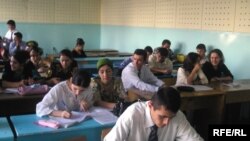
 Students gather for entry exams at Turkmenistan State University in Ashgabat. But will good results be enough?Alymbek Ata, whose son has applied to enter Kyrgyzstan's Osh University, says he accepts bribery as "today's reality," and questioning the practice has never crossed his mind.
"Other parents who brought their children are paying bribes, and so do I -- I'm not any different," he says.
Rot In The System
The problem of bribery in the education system has been a topic of political debate in Central Asia in recent years, with officials warning that corrupt practices and widespread bribery have severely damaged the quality of education.
High-school teachers throughout the region complain that students skip lessons and don't take their studies seriously, raising fears that they are not properly prepared as they take the next step in their education.
At the university level, corruption does not stop with the entrance exam. Once in the classroom, students routinely pay bribes to get better grades and to pass exams. It is common for professors to have different fees, so-called "stavki," to pass their exams.
Emil Sarybaev, who studies medicine in Osh university, says some students opt to pay bribes instead of attending classes.
"There are five or six students in my group who don't show up for lessons, but who take care of any problems with the professors. They pay about around $500-$600 to pass an exam," Sarybaev says.
"I can't even imagine what kind of doctors they will become, or how they would treat patients in Kyrgyzstan. I'm afraid that they won't be able to treat patients, they will kill them."
Local experts in the region warn that Central Asia is in danger of ending up with a generation of specialists who are not properly trained in their field.
Many people in the region have already lost their trust in university graduates, particularly in the medical field, leading them to seek out older doctors or graduates of foreign medical schools.
Arrest Teachers, Or Empower Them?
Meanwhile, education authorities insist they are fighting the rampant corruption in the system.
Last month, for example, several professors in the region -- including the head of the Ashgabat University of World Languages, a department head in Tajikistan's Khujand Medical College, and two university professors in Bishkek and Osh -- were fired in connection with bribery.
Prosecutors in the three countries in question have opened criminal cases against the professors, who now face corruption charges.
Public opinion, however, is unmoved by these individual cases. Few expect that weeding out a handful of offenders can really end the problem. Some even accuse the education officials themselves of being involved in corruption.
"I don't believe this issue will be solved as long as we have the current officials in place," says Faridun Rahnavard, a Dushanbe-based analyst.
Suggestions have been made that raising teachers' and university professors' wages could help eliminate corruption. State university professors throughout Central Asia receive meager wages, ranging between $70 and $400 a month.
Concerns have also been raised that the continuation of unfair practices will deny the children of non-wealthy families the opportunity to build a better future for themselves through education.
Regardless of the level of their knowledge, some already consider entering universities as beyond their reach, leading them to become migrant laborers instead.
RFE/RL's Central Asian services contributed to this report
"My family couldn't afford the amount of bribe we would have had to pay to get a place at the police academy," the 18-year-old high-school graduate explains.
Seeking to ensure an affordable future for their son, his parents -- farmers in Tajikistan's northern Maschoh region -- instead paid out a $1,000 bribe to ensure he would be enrolled to study tax law at a Tajik finance university.
"We had to sell several of our cattle to raise the money," Jovid says. "The rest we borrowed from relatives. We didn't have any other choice. I wish it was possible to enter the university with my knowledge, but here things don't work like that."
Jovid says his parents paid the money to middlemen, who promised to pass it on to professors who would be making enrollment decisions based on exam results.
It is a common practice throughout Central Asia, where people say it is a fact of life that most university entrants must pay bribes to get enrolled into institutions of higher education.
Paying To Learn, Earn
In Turkmenistan, there is even a name for such bribes, "elaklyk," which literally means "thanks giving."
Throughout the region there are unofficial price lists for different universities and colleges, ranging from $600 to $15,000.
For instance, applicants have to pay at least $2,000 to get a place in the English-language department in Tajikistan's provincial universities.
In Turkmenistan, entrants may pay much more. Depending on the number of people competing for university places, prices in the most popular schools can rise to over $40,000.
The amount of the bribe often depends on the profitability of the future profession. The most popular among universities are law schools, because people believe lawyers are in a position to earn lots of money in a relevantly short period of time.
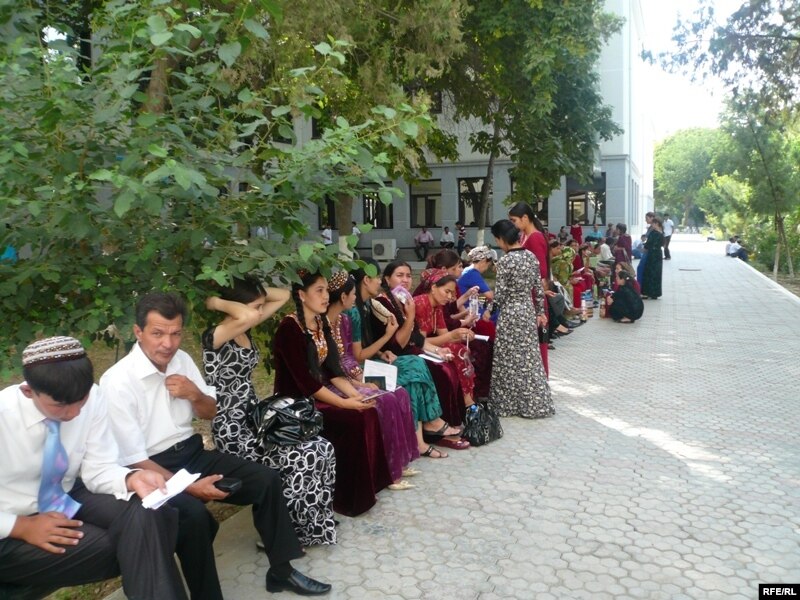
"Other parents who brought their children are paying bribes, and so do I -- I'm not any different," he says.
Rot In The System
The problem of bribery in the education system has been a topic of political debate in Central Asia in recent years, with officials warning that corrupt practices and widespread bribery have severely damaged the quality of education.
High-school teachers throughout the region complain that students skip lessons and don't take their studies seriously, raising fears that they are not properly prepared as they take the next step in their education.
At the university level, corruption does not stop with the entrance exam. Once in the classroom, students routinely pay bribes to get better grades and to pass exams. It is common for professors to have different fees, so-called "stavki," to pass their exams.
Emil Sarybaev, who studies medicine in Osh university, says some students opt to pay bribes instead of attending classes.
"There are five or six students in my group who don't show up for lessons, but who take care of any problems with the professors. They pay about around $500-$600 to pass an exam," Sarybaev says.
"I can't even imagine what kind of doctors they will become, or how they would treat patients in Kyrgyzstan. I'm afraid that they won't be able to treat patients, they will kill them."
Local experts in the region warn that Central Asia is in danger of ending up with a generation of specialists who are not properly trained in their field.
Many people in the region have already lost their trust in university graduates, particularly in the medical field, leading them to seek out older doctors or graduates of foreign medical schools.
Arrest Teachers, Or Empower Them?
Meanwhile, education authorities insist they are fighting the rampant corruption in the system.
Last month, for example, several professors in the region -- including the head of the Ashgabat University of World Languages, a department head in Tajikistan's Khujand Medical College, and two university professors in Bishkek and Osh -- were fired in connection with bribery.
Prosecutors in the three countries in question have opened criminal cases against the professors, who now face corruption charges.
Public opinion, however, is unmoved by these individual cases. Few expect that weeding out a handful of offenders can really end the problem. Some even accuse the education officials themselves of being involved in corruption.
"I don't believe this issue will be solved as long as we have the current officials in place," says Faridun Rahnavard, a Dushanbe-based analyst.
Suggestions have been made that raising teachers' and university professors' wages could help eliminate corruption. State university professors throughout Central Asia receive meager wages, ranging between $70 and $400 a month.
Concerns have also been raised that the continuation of unfair practices will deny the children of non-wealthy families the opportunity to build a better future for themselves through education.
Regardless of the level of their knowledge, some already consider entering universities as beyond their reach, leading them to become migrant laborers instead.
RFE/RL's Central Asian services contributed to this report