




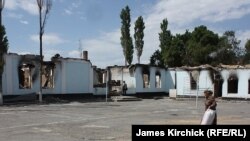
When the violence in Kyrgyzstan's southern city of Osh subsided in June, one thing was plain: whole neighborhoods of minority Uzbeks had been burned to the ground, while most buildings belonging to ethnic Kyrgyz remained standing.
More than 350 people had been killed and hundreds of thousands displaced. Now, as the city begins the slow task of rebuilding, Osh Mayor Melis Myrzakmatov says he wants to help prevent future violence by relocating residents into new neighborhoods that would include Uzbeks and Kyrgyz.
"Mixed neighborhoods didn't suffer during the violence," he said. "So we want to create integrated neighborhoods where children [of various ethnicities] play together and people live side by side and make friends."
Speaking to reporters in his office in July, Myrzakmatov said the city government would demolish old streets too narrow for firefighters' trucks to reach burning houses during the violence.
He said the gradual process would give victims the option of moving into high-rise buildings or houses in new neighborhoods.
"The violence was a terrible tragedy," he said, "people lost property and loved ones, so we're trying to act sensitively, give them all options."
But locals worry they'll be forced to leave their houses for smaller apartments, in a region where ethnic tensions are still escalating and the central government has little control.
Fear Of Moving
Myrzakmatov said the final decision on the city's plan will be made "with the population's participation."
But earlier this week, Deputy Mayor Taalai Sabirov told RFE/RL's Kyrgyz Service the plans have already been drawn up and that the authorities were "working" with those reluctant to leave their houses.
"We're telling them they should move in the interest of our city and country," he said. "If they don't want to live in apartments, we'll give them land. But they can't stay in their old locations because the general plan has already been completed."
But locals say they weren't consulted and many fear they'll be forced to move into apartment blocks against their will. Osh resident Mamlakat Emilova, an ethnic Uzbek, says she would rather rebuild her own house.
"I don't want to live in an apartment building," she says. "We may be living in tents now, but everyone in our neighborhood wants to remain here."
Experts agree that divided neighborhoods have exacerbated tensions between Kyrgyz and Uzbeks. Political analyst Mars Sariev says extended Uzbek families traditionally live in houses grouped together.
"That's a problem because they live in isolated communities unconnected to other neighborhoods," he says. "So the resettlement plan makes sense."
'We Want To Stay'
Still, Sariev says he understands why Uzbeks would be upset over a resettlement program that would end centuries-old social patterns, saying it's far from clear that implementing the plan is a good idea.
Aziza Abdurasulova, head of the Kylym Shamy human rights organization, believes it is. She says isolation breeds mistrust and that integration is vital for preventing future conflict.
"I don't want people's rights to be violated, but the recent violence was the third such major incident where hundreds died," she says. "We have to draw conclusions, to integrate and learn to live peacefully as neighbors."
Abdurasulova says the authorities don't have the right to force people off their land, a point President Roza Otunbaeva has made public as a condition tied to reconstruction aid from international donors. Her government is currently considering the reconstruction plan.
Legal experts say people can be deprived of private property only by a court decision in every individual case, and only if the state pays full market prices.
But that hasn't calmed worries among Uzbeks in Osh. Some say the local authorities, mainly ethnic Kyrgyz, are using June's violence as an excuse to carry out a previously existing reconstruction plan that targets their neighborhoods.
Saltamat Faizullaeva, another ethnic Uzbek resident, says the areas worst hit by the violence happen to be neighborhoods already slated for destruction.
"Nobody's explained the reconstruction plans to us," she says. "Uzbek and Kyrgyz Muslims can't fit into small apartments with our children. We want to stay on our land."
A New System?
The concerns have much to do with politics in southern Kyrgyzstan. The region was a stronghold of former President Kurmanbek Bakiev, who was ousted after street protests in April. Mayor Myrzakmatov is a onetime close ally of Bakiev, whom the government has accused of orchestrating the violence.
Many Kyrgyz in Osh still support Bakiev, while Uzbeks largely back the new government. As tensions continue rising between the two groups, Myrzakmatov has emerged as one of the biggest challenges to the new government, which has been unable to extend its control to the south. The mayor recently organized protests against plans for the Organization for Security and Cooperation in Europe (OSCE) to send unarmed police officers to the south, something analyst Sariev says highlights the real threat he poses the government.
"Such actions show signs of separatism on the part of the southern elite, which has installed its own commanders [in the security forces] since the violence in June," he says. "The central government won't be able to solve the challenge to its authority by force or administrative control. They'll have to acknowledge reality."
Otunbaeva, who carried out a referendum in June to change the constitution, has staked her presidency on parliamentary elections in October that she says will form the basis for a new democratic parliamentary system.
But so far, controversy over the reconstruction plans in Osh is adding to concerns about stability. As tensions continue to rise, no one is ruling out the possibility that more ethnic violence will undermine the government and play into the hands of politicians consolidating power in the south.
RFE/RL's Kyrgyz Service contributed to this article
More than 350 people had been killed and hundreds of thousands displaced. Now, as the city begins the slow task of rebuilding, Osh Mayor Melis Myrzakmatov says he wants to help prevent future violence by relocating residents into new neighborhoods that would include Uzbeks and Kyrgyz.
"Mixed neighborhoods didn't suffer during the violence," he said. "So we want to create integrated neighborhoods where children [of various ethnicities] play together and people live side by side and make friends."
Speaking to reporters in his office in July, Myrzakmatov said the city government would demolish old streets too narrow for firefighters' trucks to reach burning houses during the violence.
He said the gradual process would give victims the option of moving into high-rise buildings or houses in new neighborhoods.
"The violence was a terrible tragedy," he said, "people lost property and loved ones, so we're trying to act sensitively, give them all options."
But locals worry they'll be forced to leave their houses for smaller apartments, in a region where ethnic tensions are still escalating and the central government has little control.
Fear Of Moving
Myrzakmatov said the final decision on the city's plan will be made "with the population's participation."
But earlier this week, Deputy Mayor Taalai Sabirov told RFE/RL's Kyrgyz Service the plans have already been drawn up and that the authorities were "working" with those reluctant to leave their houses.
"We're telling them they should move in the interest of our city and country," he said. "If they don't want to live in apartments, we'll give them land. But they can't stay in their old locations because the general plan has already been completed."
But locals say they weren't consulted and many fear they'll be forced to move into apartment blocks against their will. Osh resident Mamlakat Emilova, an ethnic Uzbek, says she would rather rebuild her own house.
"I don't want to live in an apartment building," she says. "We may be living in tents now, but everyone in our neighborhood wants to remain here."
Experts agree that divided neighborhoods have exacerbated tensions between Kyrgyz and Uzbeks. Political analyst Mars Sariev says extended Uzbek families traditionally live in houses grouped together.
"That's a problem because they live in isolated communities unconnected to other neighborhoods," he says. "So the resettlement plan makes sense."
'We Want To Stay'
Still, Sariev says he understands why Uzbeks would be upset over a resettlement program that would end centuries-old social patterns, saying it's far from clear that implementing the plan is a good idea.
Aziza Abdurasulova, head of the Kylym Shamy human rights organization, believes it is. She says isolation breeds mistrust and that integration is vital for preventing future conflict.
"I don't want people's rights to be violated, but the recent violence was the third such major incident where hundreds died," she says. "We have to draw conclusions, to integrate and learn to live peacefully as neighbors."
Abdurasulova says the authorities don't have the right to force people off their land, a point President Roza Otunbaeva has made public as a condition tied to reconstruction aid from international donors. Her government is currently considering the reconstruction plan.
Legal experts say people can be deprived of private property only by a court decision in every individual case, and only if the state pays full market prices.
But that hasn't calmed worries among Uzbeks in Osh. Some say the local authorities, mainly ethnic Kyrgyz, are using June's violence as an excuse to carry out a previously existing reconstruction plan that targets their neighborhoods.
Saltamat Faizullaeva, another ethnic Uzbek resident, says the areas worst hit by the violence happen to be neighborhoods already slated for destruction.
"Nobody's explained the reconstruction plans to us," she says. "Uzbek and Kyrgyz Muslims can't fit into small apartments with our children. We want to stay on our land."
A New System?
The concerns have much to do with politics in southern Kyrgyzstan. The region was a stronghold of former President Kurmanbek Bakiev, who was ousted after street protests in April. Mayor Myrzakmatov is a onetime close ally of Bakiev, whom the government has accused of orchestrating the violence.
Many Kyrgyz in Osh still support Bakiev, while Uzbeks largely back the new government. As tensions continue rising between the two groups, Myrzakmatov has emerged as one of the biggest challenges to the new government, which has been unable to extend its control to the south. The mayor recently organized protests against plans for the Organization for Security and Cooperation in Europe (OSCE) to send unarmed police officers to the south, something analyst Sariev says highlights the real threat he poses the government.
"Such actions show signs of separatism on the part of the southern elite, which has installed its own commanders [in the security forces] since the violence in June," he says. "The central government won't be able to solve the challenge to its authority by force or administrative control. They'll have to acknowledge reality."
Otunbaeva, who carried out a referendum in June to change the constitution, has staked her presidency on parliamentary elections in October that she says will form the basis for a new democratic parliamentary system.
But so far, controversy over the reconstruction plans in Osh is adding to concerns about stability. As tensions continue to rise, no one is ruling out the possibility that more ethnic violence will undermine the government and play into the hands of politicians consolidating power in the south.
RFE/RL's Kyrgyz Service contributed to this article