


MOSCOW -- If one hard truth emerged from the January gas dispute, it's this: Europe cannot get by without Russian energy supplies.
Brussels first called for diversification of its energy supplies in 2000. Nearly a decade later, however, it is still dependent on Moscow for a quarter of its gas supplies -- and, as this month's crisis proved, virtually helpless when it dries up.
Without a fundamental change in that equation, observers say, Russia will emerge the victor in any energy dispute -- no matter how tattered its credibility as a supplier.
Neither Kyiv nor Moscow did itself any favors by making the EU an unwilling hostage in their highly political spat. But it is Ukraine, and not Russia, that is likely to face the greater consequences.
"I think it's well-recognized that the EU has to have a relationship with Russia," says Amanda Akcakoca, an analyst with the European Policy Center in Brussels. "The relationship between the EU and Russia is troubled; it goes up and down. This is just another blip on the radar. But things will progress. It's business as usual, really, with Russia."
Deep Freeze
The crisis began on New Year's Day, when Russian gas giant Gazprom, having failed to conclude a new contract with Kyiv, decreased gas flow into Ukrainian pipelines. There was still enough to ship through to its European clients, Moscow said, but none for Ukraine as long as the dispute went unresolved.
Six days later, however, countries in Eastern and Central Europe were reporting shortages. Moscow accused Kyiv of siphoning off supplies and cut off supplies completely, saying Ukraine could not be trusted as a transit partner and calling on the EU to intervene.
Kyiv denied that it was diverting gas, and said Moscow was trying to hold Europe hostage by unilaterally halting supplies.
The claims and counterclaims hurled between Kyiv and Moscow during the dispute were of little interest to Europe, which found itself enduring some of the coldest winter weather in years with little or no gas.
 Sawing firewood in Transdniester at the peak of the crisisBrussels was angry but refused to take sides, urging Kyiv and Moscow to honor their obligations and resolve their dispute bilaterally. In Ukraine, that neutrality was seen as proof that its dependency on gas has left it toothless in any standoff with Russia.
"It's partly the fault of Western Europeans," said Ivan Lozowy, the president of the Institute of Statehood and Democracy, and independent Kyiv-based NGO. "We should get to the bottom of this. I would put the blame on Europe's doorstep more than on Ukraine's. Where are the politicians that have the guts to come out and say, 'Russia, start behaving in a civilized fashion?'"
'Difficult' Relationship
Russia's behavior during the gas conflict was regarded by many as a simple case of bullying a smaller, pro-Western country -- an unsurprising follow-up to its August war with another ambitious neighbor, Georgia.
But even here, some analysts say, Russia has the advantage. After incurring the wrath of the West over its war with Georgia and surviving intact, Russia has demonstrated that where image is concerned, it has little to fear.
"I don't think that this dispute with Ukraine has damaged Russia's reputation too much," says Chris Weafer, a Moscow-based strategist with UralSib bank. "The expectations within Europe are that the relationship probably would always remain difficult.
 Did Yushchenko sink a late-2008 deal?Ukraine, whose Western-looking government must remain in Europe's good graces in order to fulfill its goals of joining NATO and the EU, appears by contrast to have lost its game of brinkmanship.
The EU, which labored to remain outside the gas fray, has since offered a harsh critique of Kyiv's role in prolonging the dispute.
Eneko Landaburu, the European Commission's director-general for external relations, accused Ukraine's president, Viktor Yushchenko, of sinking a first accord reached by Prime Minister Yulia Tymoshenko and her Russian counterpart, Vladimir Putin, before the close of 2008 that might have prevented the dispute outright.
Landaburu cited "political internal reasons" for the "internal row before president and the prime minister" for scuppering the earlier deal.
Kyiv's Can-Do Face?
The EU's growing disenchantment with Yushchenko and Ukraine's addiction to political squabbling has had a fringe benefit for Russia in wearing away support for the Ukrainian president.
Kremlin officials have a deep dislike for Yushchenko, who came to office in the Orange Revolution and has pushed strongly for Ukraine's Western integration. They view Tymoshenko -- his bitter rival and likely challenger in the country's 2010 presidential election -- as a pragmatist with whom they can do business.
Indeed, it was Tymoshenko, a former president of Unified Energy Systems of Ukraine, who brokered the deal with Russia that finally brought the gas war to its apparent end this week. Gas deliveries were resumed, with shipments beginning to reach European clients on January 21.
The deal, in the short term, is a political coup for Tymoshenko, who may now be viewed by Europe as the person in Ukraine who can get things done.
"It does support the view a lot of people have, which is that Moscow would prefer to deal with a President Tymoshenko, rather than a President Yushchenko," says Weafer. "So I guess that will enhance Tymoshenko's image as a can-do sort of politician, a pragmatic politician, and probably will do her no harm when it comes to the next presidential election."
Yushchenko, who was notably absent from the gas talks, has since criticized the deal as punishingly expensive for Ukraine. A top Yushchenko aide said on January 23 that Kyiv could seek changes later this year to the agreement.
Such efforts, however, may only be seen as a last-ditch effort by the president to challenge his rival to another round.
Mykhailo Pohrebinskyi, director of the Center for Political Research and Conflicts, suggests many people inside Ukraine have tired of the endless bickering that has characterized Ukrainian politics in recent years, and thrown Kyiv into constant conflict with Russia.
"Yushchenko was interested in extending and deepening this crisis to the maximum. Tymoshenko had a different goal. She had to find a way to crack this nut that was the crisis, because all the responsibility was on her," Pohrebinskyi tells RFE/RL's Ukrainian Service.
"The reason why nothing had been decided had mostly to do with the president," he added. "Thinking that it's necessary to unite the country behind a confrontation with Russia is absolute absurdity. What we need is to unite the country behind its national interest, which is to find agreement with its neighbors in a human way."
Losses All Around
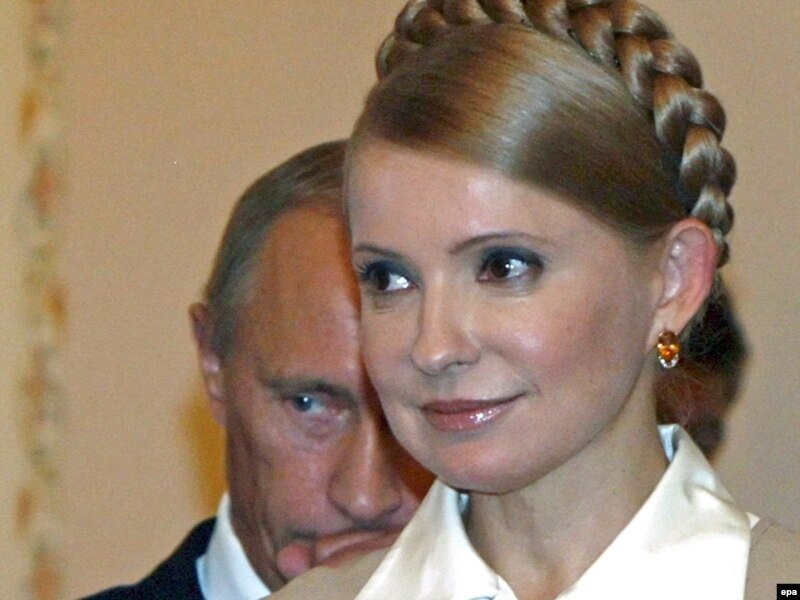
In financial terms, the agreement drawn up by Tymoshenko and Putin could be argued to be an honorable draw.
The terms of the deal give Ukraine a 20-percent discount from European rates. In the short term, this means a steep rise from $179.50 to $360 per 1,000 cubic meters -- and allows Moscow the satisfaction of saying it had finally achieved its long-standing aim to bring Kyiv's payments in line with market rates.
In the longer term, however, Ukraine could see its payments shrink. The rates will be recalculated on a quarterly basis. With global gas rates set to decline, Ukraine might soon be paying $250 or less for its gas.
 Tymoshenko and Putin found common ground.Tymoshenko, who has set her eye firmly on Ukraine's 2010 presidential election, has told potential voters that between the 20-percent discount and the expected dip in prices, the deal she brokered was a winner on two counts. (She has had less to say about Russia's transit fees, which will remain frozen at 2008 rates and will be adjusted to market rates only in 2010.)
In broader financial terms, however, the dispute has cost all sides dearly at a time of mounting economic uncertainty.
Ukraine was already waiting for a $16.5 billion emergency loan from the International Monetary Fund (IMF) before the dispute. If it is unable to meet its gas payments even in the short term, the country's gas-hungry metals and chemicals industries could be shut down.
Russia, meanwhile, appears to have lost out on the last peak in gas prices the world may see in some time. One-tenth of the country's GDP comes from its energy exports; Gazprom, which laboring under a $60 billion debt, reportedly lost $100 million a day in lost revenues during the European cutoff.
Europe, for its part, is only now counting its own cost -- in hundreds of millions of dollars -- of production and output lost during the gas crisis. It has been nearly a decade since the EU first called for energy diversification.
If the 20-day crisis ultimately compels them to move on it, then it may be Russia that proves the ultimate long-term loser.
"We will win the short race but lose the long race, because the European Union's desire to minimize its dependence on Russia will increase significantly after this row," Vladimir Ryzhkov, a former State Duma deputy, tells RFE/RL's Russian Service.
"Not only will its desire increase, but the EU will revise its policy and take measures to achieve that," Ryzhkov adds. "So, I think Russia would have incurred much less damage if it had only kept record of what had been stolen, if it had continued the debate on the price, without closing the tap, while saving its long-time reputation of a reliable supplier."
Brussels first called for diversification of its energy supplies in 2000. Nearly a decade later, however, it is still dependent on Moscow for a quarter of its gas supplies -- and, as this month's crisis proved, virtually helpless when it dries up.
Without a fundamental change in that equation, observers say, Russia will emerge the victor in any energy dispute -- no matter how tattered its credibility as a supplier.
Neither Kyiv nor Moscow did itself any favors by making the EU an unwilling hostage in their highly political spat. But it is Ukraine, and not Russia, that is likely to face the greater consequences.
"I think it's well-recognized that the EU has to have a relationship with Russia," says Amanda Akcakoca, an analyst with the European Policy Center in Brussels. "The relationship between the EU and Russia is troubled; it goes up and down. This is just another blip on the radar. But things will progress. It's business as usual, really, with Russia."
Deep Freeze
The crisis began on New Year's Day, when Russian gas giant Gazprom, having failed to conclude a new contract with Kyiv, decreased gas flow into Ukrainian pipelines. There was still enough to ship through to its European clients, Moscow said, but none for Ukraine as long as the dispute went unresolved.
Six days later, however, countries in Eastern and Central Europe were reporting shortages. Moscow accused Kyiv of siphoning off supplies and cut off supplies completely, saying Ukraine could not be trusted as a transit partner and calling on the EU to intervene.
Kyiv denied that it was diverting gas, and said Moscow was trying to hold Europe hostage by unilaterally halting supplies.
The claims and counterclaims hurled between Kyiv and Moscow during the dispute were of little interest to Europe, which found itself enduring some of the coldest winter weather in years with little or no gas.

"It's partly the fault of Western Europeans," said Ivan Lozowy, the president of the Institute of Statehood and Democracy, and independent Kyiv-based NGO. "We should get to the bottom of this. I would put the blame on Europe's doorstep more than on Ukraine's. Where are the politicians that have the guts to come out and say, 'Russia, start behaving in a civilized fashion?'"
'Difficult' Relationship
Russia's behavior during the gas conflict was regarded by many as a simple case of bullying a smaller, pro-Western country -- an unsurprising follow-up to its August war with another ambitious neighbor, Georgia.
But even here, some analysts say, Russia has the advantage. After incurring the wrath of the West over its war with Georgia and surviving intact, Russia has demonstrated that where image is concerned, it has little to fear.
"I don't think that this dispute with Ukraine has damaged Russia's reputation too much," says Chris Weafer, a Moscow-based strategist with UralSib bank. "The expectations within Europe are that the relationship probably would always remain difficult.
The EU, which labored to remain outside the gas fray, has since offered a harsh critique of Kyiv's role in prolonging the dispute.
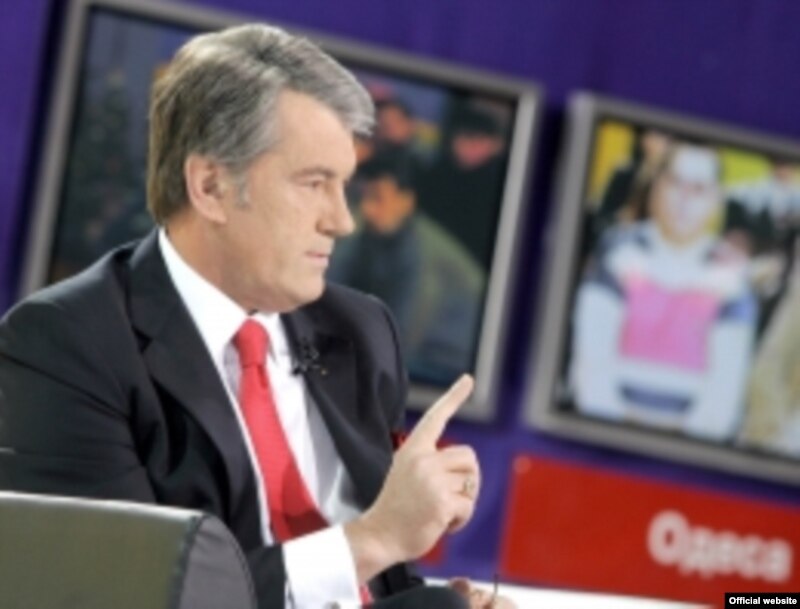
Eneko Landaburu, the European Commission's director-general for external relations, accused Ukraine's president, Viktor Yushchenko, of sinking a first accord reached by Prime Minister Yulia Tymoshenko and her Russian counterpart, Vladimir Putin, before the close of 2008 that might have prevented the dispute outright.
Landaburu cited "political internal reasons" for the "internal row before president and the prime minister" for scuppering the earlier deal.
Kyiv's Can-Do Face?
The EU's growing disenchantment with Yushchenko and Ukraine's addiction to political squabbling has had a fringe benefit for Russia in wearing away support for the Ukrainian president.
Kremlin officials have a deep dislike for Yushchenko, who came to office in the Orange Revolution and has pushed strongly for Ukraine's Western integration. They view Tymoshenko -- his bitter rival and likely challenger in the country's 2010 presidential election -- as a pragmatist with whom they can do business.
Indeed, it was Tymoshenko, a former president of Unified Energy Systems of Ukraine, who brokered the deal with Russia that finally brought the gas war to its apparent end this week. Gas deliveries were resumed, with shipments beginning to reach European clients on January 21.
The deal, in the short term, is a political coup for Tymoshenko, who may now be viewed by Europe as the person in Ukraine who can get things done.
"It does support the view a lot of people have, which is that Moscow would prefer to deal with a President Tymoshenko, rather than a President Yushchenko," says Weafer. "So I guess that will enhance Tymoshenko's image as a can-do sort of politician, a pragmatic politician, and probably will do her no harm when it comes to the next presidential election."
Yushchenko, who was notably absent from the gas talks, has since criticized the deal as punishingly expensive for Ukraine. A top Yushchenko aide said on January 23 that Kyiv could seek changes later this year to the agreement.
Such efforts, however, may only be seen as a last-ditch effort by the president to challenge his rival to another round.
Mykhailo Pohrebinskyi, director of the Center for Political Research and Conflicts, suggests many people inside Ukraine have tired of the endless bickering that has characterized Ukrainian politics in recent years, and thrown Kyiv into constant conflict with Russia.
"Yushchenko was interested in extending and deepening this crisis to the maximum. Tymoshenko had a different goal. She had to find a way to crack this nut that was the crisis, because all the responsibility was on her," Pohrebinskyi tells RFE/RL's Ukrainian Service.
"The reason why nothing had been decided had mostly to do with the president," he added. "Thinking that it's necessary to unite the country behind a confrontation with Russia is absolute absurdity. What we need is to unite the country behind its national interest, which is to find agreement with its neighbors in a human way."
Losses All Around
In financial terms, the agreement drawn up by Tymoshenko and Putin could be argued to be an honorable draw.
The terms of the deal give Ukraine a 20-percent discount from European rates. In the short term, this means a steep rise from $179.50 to $360 per 1,000 cubic meters -- and allows Moscow the satisfaction of saying it had finally achieved its long-standing aim to bring Kyiv's payments in line with market rates.
In the longer term, however, Ukraine could see its payments shrink. The rates will be recalculated on a quarterly basis. With global gas rates set to decline, Ukraine might soon be paying $250 or less for its gas.
In broader financial terms, however, the dispute has cost all sides dearly at a time of mounting economic uncertainty.
Ukraine was already waiting for a $16.5 billion emergency loan from the International Monetary Fund (IMF) before the dispute. If it is unable to meet its gas payments even in the short term, the country's gas-hungry metals and chemicals industries could be shut down.
Russia, meanwhile, appears to have lost out on the last peak in gas prices the world may see in some time. One-tenth of the country's GDP comes from its energy exports; Gazprom, which laboring under a $60 billion debt, reportedly lost $100 million a day in lost revenues during the European cutoff.
Europe, for its part, is only now counting its own cost -- in hundreds of millions of dollars -- of production and output lost during the gas crisis. It has been nearly a decade since the EU first called for energy diversification.
If the 20-day crisis ultimately compels them to move on it, then it may be Russia that proves the ultimate long-term loser.
"We will win the short race but lose the long race, because the European Union's desire to minimize its dependence on Russia will increase significantly after this row," Vladimir Ryzhkov, a former State Duma deputy, tells RFE/RL's Russian Service.
"Not only will its desire increase, but the EU will revise its policy and take measures to achieve that," Ryzhkov adds. "So, I think Russia would have incurred much less damage if it had only kept record of what had been stolen, if it had continued the debate on the price, without closing the tap, while saving its long-time reputation of a reliable supplier."