



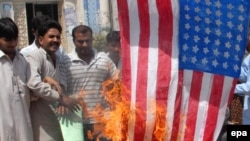
A new poll conducted in 20 countries representing more than 60 percent of the world's population says feelings toward the United States haven't changed much since Barak Obama became the U.S. president.
The poll finds that in 15 of 19 countries -- excluding the United States -- the majority sees Washington as bullying other countries with the threat of its powerful military. In 17 of 19 countries, according to the poll, the United States is seen as not obeying international law.
Yet majorities in 13 of the 19 countries -- an average of 61 percent -- expect Obama to have a good foreign policy, according to the poll, which was conducted by Worldpublicopinion.org. It conducts international polling for the Program on International Policy Attitudes at the University of Maryland.
What can account for this seeming paradox? According Steven Kull, the director of the polling center, it's not unlike recent U.S. polls, which show concern verging on alarm about the huge deficits Obama is creating with his economic-stimulus plan, and at the same time confidence that Obama is handling the economy well.
Kull says that -- outside the United States, at least -- people see Obama at the helm of a large ship that has been going in a specific direction for a few decades, and that he has what they see as "some limited capacity to steer that ship in a new direction."
As a result, Kull says, the poll respondents appear skeptical that change can come quickly.
"Even though it's some months into his [Obama's] administration, people still perceive the U.S. as having this kind of coercive quality and not following the rules. And they're not assuming that this is going to change immediately," he says.
'Show Me'
"There are a lot of things that drive U.S. foreign policy other than the president's preferences, and there's certainly a widespread perception that interest groups and the military as an institution play a big role, and that the president has to think about how Republicans might criticize him or accuse him of being weak," Kull adds. "Those are a lot of factors that he does deal with and that people assume that he has to deal with."
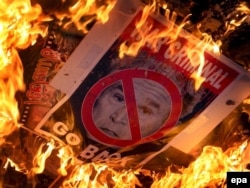 A new president has improved some respondent's opinion of the United States, but not all.This, of course, isn't so in the Muslim world.
Some 57 percent of respondents surveyed in Iraq, 60 percent in Egypt, 62 percent in Pakistan, and 67 percent in the Palestinian Territories say they have not too much confidence, or no confidence at all, in Obama.
Worldpublicopinion.org noted that the survey was conducted after Obama's speech in Turkey in early April and before his speech on the United States and the Muslim world in Cairo two months later.
Given the positive reaction to the Cairo speech, then, does Kull expect that Obama's approval ratings among Muslims would have been appreciably higher had the poll been taken afterward?
"Probably by a few percentage points, but I doubt that it would have been a decisive change," Kull says.
"We've seen some positive signs already. The people are hopeful, but they're not convinced. It's a kind of 'show-me' posture," Kull adds. "At a certain point, though, when a whole series of things come together and a new narrative emerges about who Obama is and who America is in the world now -- and if that gels, then you will have a kind of jump in views."
Positive Signals
There were similar results in Russia. The poll shows that Russia is the only non-Muslim-majority country polled whose majority -- 55 percent -- didn't express trust in Obama, while less than half that percentage expressed trust. The world average, on the other hand, found that 61 percent of respondents trust the U.S. leader.
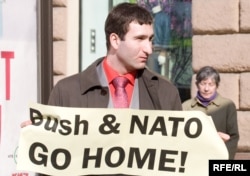 Many in Russia consider NATO expansion a direct challenge,But there were positive signals from Russia as well: A 47 percent plurality said the United States is cooperative, and 41 percent say it respects human rights.
But despite those signs of optimism, Kull says, the predominant position in Russia is that the United States wants to have its own way in what Russia views as its sphere of influence. That includes NATO expansion and support for the former Soviet republic of Georgia.
As a result, Kull says, it's easy to see why Russians hold both positive and negative views about the United States and Obama.
"Obama has sent a different signal [from his predecessor, President George W. Bush] in regard to the [missile-defense] radars in Eastern Europe. He's expressed some openness to negotiate on that -- that hasn't been consummated, but at least it's on the table, and that's a good sign, and probably contributed to that perception that he has a kind of cooperative orientation," Kull says.
"But the Russians certainly perceive that there's a kind of zero-sum game in the region around Russia, and that America's trying to win that game, and there's resentment about that."
Resentments aside, there are two areas in which the United States did well. One is that is seen as being cooperative with most countries, for the most part, according to an average of 59 percent of the 19 countries. They include Russia, at 47 percent, and China, at 51 percent.
The other area in which the United States did well was in respecting human rights. In, Azerbaijan, Kenya, Nigeria, and South Korea, around 80 percent of the respondents drew that conclusion. And in an average of all 19 countries -- again, excluding the United States -- 51 percent agreed.
The poll finds that in 15 of 19 countries -- excluding the United States -- the majority sees Washington as bullying other countries with the threat of its powerful military. In 17 of 19 countries, according to the poll, the United States is seen as not obeying international law.
Yet majorities in 13 of the 19 countries -- an average of 61 percent -- expect Obama to have a good foreign policy, according to the poll, which was conducted by Worldpublicopinion.org. It conducts international polling for the Program on International Policy Attitudes at the University of Maryland.
What can account for this seeming paradox? According Steven Kull, the director of the polling center, it's not unlike recent U.S. polls, which show concern verging on alarm about the huge deficits Obama is creating with his economic-stimulus plan, and at the same time confidence that Obama is handling the economy well.
Kull says that -- outside the United States, at least -- people see Obama at the helm of a large ship that has been going in a specific direction for a few decades, and that he has what they see as "some limited capacity to steer that ship in a new direction."
As a result, Kull says, the poll respondents appear skeptical that change can come quickly.
"Even though it's some months into his [Obama's] administration, people still perceive the U.S. as having this kind of coercive quality and not following the rules. And they're not assuming that this is going to change immediately," he says.
'Show Me'
"There are a lot of things that drive U.S. foreign policy other than the president's preferences, and there's certainly a widespread perception that interest groups and the military as an institution play a big role, and that the president has to think about how Republicans might criticize him or accuse him of being weak," Kull adds. "Those are a lot of factors that he does deal with and that people assume that he has to deal with."

Some 57 percent of respondents surveyed in Iraq, 60 percent in Egypt, 62 percent in Pakistan, and 67 percent in the Palestinian Territories say they have not too much confidence, or no confidence at all, in Obama.
Worldpublicopinion.org noted that the survey was conducted after Obama's speech in Turkey in early April and before his speech on the United States and the Muslim world in Cairo two months later.
Given the positive reaction to the Cairo speech, then, does Kull expect that Obama's approval ratings among Muslims would have been appreciably higher had the poll been taken afterward?
"Probably by a few percentage points, but I doubt that it would have been a decisive change," Kull says.
"We've seen some positive signs already. The people are hopeful, but they're not convinced. It's a kind of 'show-me' posture," Kull adds. "At a certain point, though, when a whole series of things come together and a new narrative emerges about who Obama is and who America is in the world now -- and if that gels, then you will have a kind of jump in views."
Positive Signals
There were similar results in Russia. The poll shows that Russia is the only non-Muslim-majority country polled whose majority -- 55 percent -- didn't express trust in Obama, while less than half that percentage expressed trust. The world average, on the other hand, found that 61 percent of respondents trust the U.S. leader.

But despite those signs of optimism, Kull says, the predominant position in Russia is that the United States wants to have its own way in what Russia views as its sphere of influence. That includes NATO expansion and support for the former Soviet republic of Georgia.
As a result, Kull says, it's easy to see why Russians hold both positive and negative views about the United States and Obama.
"Obama has sent a different signal [from his predecessor, President George W. Bush] in regard to the [missile-defense] radars in Eastern Europe. He's expressed some openness to negotiate on that -- that hasn't been consummated, but at least it's on the table, and that's a good sign, and probably contributed to that perception that he has a kind of cooperative orientation," Kull says.
"But the Russians certainly perceive that there's a kind of zero-sum game in the region around Russia, and that America's trying to win that game, and there's resentment about that."
Resentments aside, there are two areas in which the United States did well. One is that is seen as being cooperative with most countries, for the most part, according to an average of 59 percent of the 19 countries. They include Russia, at 47 percent, and China, at 51 percent.
The other area in which the United States did well was in respecting human rights. In, Azerbaijan, Kenya, Nigeria, and South Korea, around 80 percent of the respondents drew that conclusion. And in an average of all 19 countries -- again, excluding the United States -- 51 percent agreed.