



The Turkomans themselves express it best. Outside of Iraq, they say, people know about Sunnis, Shi'a, and Kurds. But almost nothing is known about the ethnically Turkic minority known as the Turkomans.
Now, in the wake of the March 7 parliamentary elections, Iraq's Turkoman community is determined to change that picture.
In the elections, the Turkomans -- the second-largest group in northern Iraq after the Kurds -- mostly allied with the nationalist Al-Iraqiyah list of former Prime Minister Iyad Allawi.
The alliance proved surprisingly successful. Five Turkoman candidates running with Al-Iraqiyah won local elections in Kirkuk and Mosul and will represent their community in the Baghdad legislature. That compares with just one Turkoman deputy in the previous legislature elected in 2005.
Now, Turkoman political leaders say, they plan to make their voice heard in the capital. And they say the neck-and-neck finish between the two front-running lists in the election gives them the chance to do it.
Orhan Ketene, an analyst and former Washington spokesman for the Iraq Turkoman Front, says that the Turkomans' five deputies give "a critical balance" to Al-Iraqiyah, because the difference between Al-Iraqiyah and Prime Minister Nuri al-Maliki's State of Law bloc is only two deputies.
"So, the [Turkomans] have five deputies, and if they pull out, Al-Iraqiyah will fall into second place and al-Maliki will be in first place," Ketene says. "So, they have a very delicate balancing role."
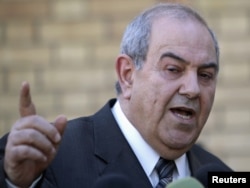 The Turkoman deputies hope to be part of an Iyad Allawi-led government.In other words, the Turkomans join the list of potential kingmakers in Baghdad -- a position they have never held before.
Coalition Calculus
It is a position they share with several other, larger ethnic or sectarian groupings that are currently not tied to either of the two front-running parties. Those include the Kurdistan Alliance and the Shi'ite religious parties' Iraqi National Alliance.
All these players are currently negotiating hard in Baghdad to form a bloc large enough to get a parliamentary majority. The first chance to propose a ruling coalition goes to Allawi's Al-Iraqiyah, as the narrow election winner. But there is nothing to rule out either defections among allies or new partnerships in bargaining that most observers expect will take months before a new government emerges.
Ketene says the Turkomans have two aims: "Their main aim is to preserve the unity of the country and, particularly, they would like to save Kirkuk from being included in the [Kurdish] northern autonomous region."
That goal, he says, is endorsed by both Allawi and Maliki. Whichever of the two leaders takes the strongest position on Kirkuk, he adds, is the one the Turkomans will follow.
In addition to the five Turkoman Al-Iraqiyah deputies, at least another two Turkoman candidates won parliamentary seats in alliances with Shi'ite religious parties. The two groups of Turkoman deputies can be expected to make common cause over the Turkomans' basic demands.
Fighting Over Kirkuk
The Turkomans' rising political strength highlights what many analysts believe could ultimately be Iraq's toughest hurdle on the way to future stability. That is, how to find a successful power-sharing arrangement in multiethnic, multilingual northern Iraq that can survive the withdrawal of U.S. forces.
In one measure of the challenge, the top U.S. commander in Iraq, General Ray Odierno, last month reportedly proposed keeping one combat brigade in Kirkuk beyond Washington's August deadline for withdrawing combat troops.
At stake in northern Iraq is oil, and the divided city of Kirkuk is at the heart of the tensions. The Kurdish regional government wants to bring Kirkuk and surrounding Tamim Province into its self-rule region, claiming it as the Iraqi Kurds' natural and historic capital.
 Iraq's demographics present a puzzle.The Turkomans, along with Kirkuk's Arab minority, adamantly oppose that, with the Turkomans also claiming the city as their historic cultural center.
"So far, no document has ever been found indicating Kirkuk is a Kurdish region. In all historical documents, Kirkuk has been recorded as a Turkoman city," says Muzaffer Arslan, the adviser to the Iraqi president on Turkoman affairs.
Federalism Versus Separatism
"The Kurdish claim is connected with the energy resources of Kirkuk," he adds. "In case of any independent Kurdish state in northern Iraq, everybody knows this energy would be their only economic resource for maintaining their independence. Therefore, they are struggling to include Kirkuk within their boundaries."
Those, of course, are fighting words in Iraq and the neighboring region, where the question of whether the Kurds intend to secede from Iraq is hotly debated. But such statements help to position the Turkomans as champions of Iraq's national unity and as the natural ally of both Allawi and Maliki, who campaigned as nationalist leaders.
Arslan, who is a Turkoman advising President Jalal Talabani, a Kurd, is on the front line of the sometimes violent rivalry between northern Iraq's two largest ethnic groups. He and other Turkoman leaders are pressing for a "special status" for Kirkuk as an alternative to either incorporating it into the Kurdish autonomous region or maintaining the current tense status quo.
One model proposed in recent years has been a so-called Brussels arrangement, where political power in the city is shared according to a quota system between its communities.
"Yes, this proposal was published many years ago in a newspaper, describing the Brussels model as a suitable solution for Kirkuk," Arslan says. "Frankly speaking, we are not against it. If there would be a healthy system in place, why not? The most important thing is, the administration of Kirkuk shouldn't belong to a single ethnic group."
A True Count
But if the Turkomans see the Brussels model as an alternative, a long fight looms ahead. Kurdish parties, which have at least 57 deputies in the new parliament, are expected to press hard for a referendum in northern Iraq to settle Kirkuk's future status.
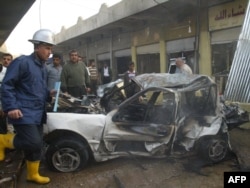 Kirkuk continues to be one of the more dangerous cities in Iraq.The referendum would be in accordance with Article 140 of the Iraqi Constitution, which originally set a date of no later than the end of 2007 for the poll. The Kurds want to set a new date, while the Turkomans and many nationalist politicians in Iraq say the expiration of the deadline means Article 140 should be null and void.
What all sides agree is needed to solve just about any question in northern Iraq is a census to resolve the many claims and counterclaims about which community holds a majority where.
Previous censuses conducted every 10 years during the Saddam Hussein era are hopelessly unreliable because of efforts at the time to "Arabize" northern Iraq. That included registering Kurds and Turkomans as Arabs, as well as the forced settlement of Arabs from other parts of Iraq in the region.
But all sides also know that conducting a fair census today in northern Iraq's tense atmosphere is all but impossible. In a reflection of those tensions, Baghdad exempted Tamim Province from provincial elections in 2009 for fear they might spark violence. Kirkuk's provincial parliament is still disputed, after Arabs and Turkomans largely stayed away from the first provincial election in 2005, handing the Kurds a majority.
History Intertwined With Iraq
Perhaps the only certainty to emerge now with the Turkomans' strong showing in last month's national elections is that the community will be emboldened to organize further.
The Turkomans trace their presence in Iraq to ancient times. Historical documents show Arab rulers of northern Iraq brought Turkic fighters into the region soon after the Islamic conquest to bolster their forces. That was in line with the long-standing tradition of so-called "slave soldiers" -- soldiers who in many cases went on to usurp a ruler's power for themselves.
At the time of the Seljuk conquests, many more Turkic tribes moved south from Central Asia into modern Iran, Iraq, and Turkey. The tribes, from the Oghuz branch of the Turks, shared similar cultures and languages and many of those ties survive to this day.
Iraq's Turkomans -- whose language is close to Azeri -- mostly live in northeastern Iraq, where they enjoyed a privileged status under the Ottoman Empire.
Following the collapse of the Ottoman Empire, Turkey claimed the oil-rich area around Mosul partly on the basis of the historic presence of a Turkic population. Instead, the area was included in British-mandate Iraq, whose authorities portrayed the Turkomans as distinct from the people of Turkey.
Since 2003, the Turkomans have emerged from decades of cultural suppression and now have their own language schools and a television station. Their activities receive some cultural and economic support from Turkey but no financial support from Baghdad.
There is no accurate estimate of the Turkoman population. Ketene puts it at some 3 million but says the true strength of the Turkoman community in Iraq has yet to be determined. That is because Turkomans not only exist in northern Iraq but historically also migrated to parts of central and southern Iraq, where they mixed with Arab tribes. He says these mixed tribes, which today speak Arabic, still feel a sense of separate identity.
"The [Turkoman] population is not only in Kirkuk or Mosul or Diyala, it is also in central Iraq, western Iraq, with the tribes of the Karagulis and Bayats," Ketene says. "But right now these are unused resources; they are dormant."
How much the Turkomans can organize politically across Iraq remains to be seen. It is something that is likely to be closely watched by Iraq's better-known communities -- the Shi'ite and Sunni Arabs and Kurds -- and now, perhaps, by many who are just beginning to learn of the Turkomans as well.
Now, in the wake of the March 7 parliamentary elections, Iraq's Turkoman community is determined to change that picture.
In the elections, the Turkomans -- the second-largest group in northern Iraq after the Kurds -- mostly allied with the nationalist Al-Iraqiyah list of former Prime Minister Iyad Allawi.
The alliance proved surprisingly successful. Five Turkoman candidates running with Al-Iraqiyah won local elections in Kirkuk and Mosul and will represent their community in the Baghdad legislature. That compares with just one Turkoman deputy in the previous legislature elected in 2005.
Now, Turkoman political leaders say, they plan to make their voice heard in the capital. And they say the neck-and-neck finish between the two front-running lists in the election gives them the chance to do it.
Orhan Ketene, an analyst and former Washington spokesman for the Iraq Turkoman Front, says that the Turkomans' five deputies give "a critical balance" to Al-Iraqiyah, because the difference between Al-Iraqiyah and Prime Minister Nuri al-Maliki's State of Law bloc is only two deputies.
"So, the [Turkomans] have five deputies, and if they pull out, Al-Iraqiyah will fall into second place and al-Maliki will be in first place," Ketene says. "So, they have a very delicate balancing role."

Coalition Calculus
It is a position they share with several other, larger ethnic or sectarian groupings that are currently not tied to either of the two front-running parties. Those include the Kurdistan Alliance and the Shi'ite religious parties' Iraqi National Alliance.
All these players are currently negotiating hard in Baghdad to form a bloc large enough to get a parliamentary majority. The first chance to propose a ruling coalition goes to Allawi's Al-Iraqiyah, as the narrow election winner. But there is nothing to rule out either defections among allies or new partnerships in bargaining that most observers expect will take months before a new government emerges.
Ketene says the Turkomans have two aims: "Their main aim is to preserve the unity of the country and, particularly, they would like to save Kirkuk from being included in the [Kurdish] northern autonomous region."
That goal, he says, is endorsed by both Allawi and Maliki. Whichever of the two leaders takes the strongest position on Kirkuk, he adds, is the one the Turkomans will follow.
In addition to the five Turkoman Al-Iraqiyah deputies, at least another two Turkoman candidates won parliamentary seats in alliances with Shi'ite religious parties. The two groups of Turkoman deputies can be expected to make common cause over the Turkomans' basic demands.
Fighting Over Kirkuk
The Turkomans' rising political strength highlights what many analysts believe could ultimately be Iraq's toughest hurdle on the way to future stability. That is, how to find a successful power-sharing arrangement in multiethnic, multilingual northern Iraq that can survive the withdrawal of U.S. forces.
In one measure of the challenge, the top U.S. commander in Iraq, General Ray Odierno, last month reportedly proposed keeping one combat brigade in Kirkuk beyond Washington's August deadline for withdrawing combat troops.
At stake in northern Iraq is oil, and the divided city of Kirkuk is at the heart of the tensions. The Kurdish regional government wants to bring Kirkuk and surrounding Tamim Province into its self-rule region, claiming it as the Iraqi Kurds' natural and historic capital.

"So far, no document has ever been found indicating Kirkuk is a Kurdish region. In all historical documents, Kirkuk has been recorded as a Turkoman city," says Muzaffer Arslan, the adviser to the Iraqi president on Turkoman affairs.
Federalism Versus Separatism
"The Kurdish claim is connected with the energy resources of Kirkuk," he adds. "In case of any independent Kurdish state in northern Iraq, everybody knows this energy would be their only economic resource for maintaining their independence. Therefore, they are struggling to include Kirkuk within their boundaries."
Those, of course, are fighting words in Iraq and the neighboring region, where the question of whether the Kurds intend to secede from Iraq is hotly debated. But such statements help to position the Turkomans as champions of Iraq's national unity and as the natural ally of both Allawi and Maliki, who campaigned as nationalist leaders.
Arslan, who is a Turkoman advising President Jalal Talabani, a Kurd, is on the front line of the sometimes violent rivalry between northern Iraq's two largest ethnic groups. He and other Turkoman leaders are pressing for a "special status" for Kirkuk as an alternative to either incorporating it into the Kurdish autonomous region or maintaining the current tense status quo.
One model proposed in recent years has been a so-called Brussels arrangement, where political power in the city is shared according to a quota system between its communities.
"Yes, this proposal was published many years ago in a newspaper, describing the Brussels model as a suitable solution for Kirkuk," Arslan says. "Frankly speaking, we are not against it. If there would be a healthy system in place, why not? The most important thing is, the administration of Kirkuk shouldn't belong to a single ethnic group."
A True Count
But if the Turkomans see the Brussels model as an alternative, a long fight looms ahead. Kurdish parties, which have at least 57 deputies in the new parliament, are expected to press hard for a referendum in northern Iraq to settle Kirkuk's future status.

What all sides agree is needed to solve just about any question in northern Iraq is a census to resolve the many claims and counterclaims about which community holds a majority where.
Previous censuses conducted every 10 years during the Saddam Hussein era are hopelessly unreliable because of efforts at the time to "Arabize" northern Iraq. That included registering Kurds and Turkomans as Arabs, as well as the forced settlement of Arabs from other parts of Iraq in the region.
But all sides also know that conducting a fair census today in northern Iraq's tense atmosphere is all but impossible. In a reflection of those tensions, Baghdad exempted Tamim Province from provincial elections in 2009 for fear they might spark violence. Kirkuk's provincial parliament is still disputed, after Arabs and Turkomans largely stayed away from the first provincial election in 2005, handing the Kurds a majority.
History Intertwined With Iraq
Perhaps the only certainty to emerge now with the Turkomans' strong showing in last month's national elections is that the community will be emboldened to organize further.
The Turkomans trace their presence in Iraq to ancient times. Historical documents show Arab rulers of northern Iraq brought Turkic fighters into the region soon after the Islamic conquest to bolster their forces. That was in line with the long-standing tradition of so-called "slave soldiers" -- soldiers who in many cases went on to usurp a ruler's power for themselves.
At the time of the Seljuk conquests, many more Turkic tribes moved south from Central Asia into modern Iran, Iraq, and Turkey. The tribes, from the Oghuz branch of the Turks, shared similar cultures and languages and many of those ties survive to this day.
Iraq's Turkomans -- whose language is close to Azeri -- mostly live in northeastern Iraq, where they enjoyed a privileged status under the Ottoman Empire.
Following the collapse of the Ottoman Empire, Turkey claimed the oil-rich area around Mosul partly on the basis of the historic presence of a Turkic population. Instead, the area was included in British-mandate Iraq, whose authorities portrayed the Turkomans as distinct from the people of Turkey.
Since 2003, the Turkomans have emerged from decades of cultural suppression and now have their own language schools and a television station. Their activities receive some cultural and economic support from Turkey but no financial support from Baghdad.
There is no accurate estimate of the Turkoman population. Ketene puts it at some 3 million but says the true strength of the Turkoman community in Iraq has yet to be determined. That is because Turkomans not only exist in northern Iraq but historically also migrated to parts of central and southern Iraq, where they mixed with Arab tribes. He says these mixed tribes, which today speak Arabic, still feel a sense of separate identity.
"The [Turkoman] population is not only in Kirkuk or Mosul or Diyala, it is also in central Iraq, western Iraq, with the tribes of the Karagulis and Bayats," Ketene says. "But right now these are unused resources; they are dormant."
How much the Turkomans can organize politically across Iraq remains to be seen. It is something that is likely to be closely watched by Iraq's better-known communities -- the Shi'ite and Sunni Arabs and Kurds -- and now, perhaps, by many who are just beginning to learn of the Turkomans as well.