




Sabatina James has one wish. She wants to enjoy the principles of the Universal Declaration of Human Rights (UDHR), which is 60 years old this week. But the 26-year-old Austrian of Pakistani heritage, in hiding since becoming Christian, is at the center of a storm between Islam and international human rights law.
After converting from Islam a few years ago, James had to flee from a father who wanted her killed for apostasy -- and from Austrian authorities who instead of protecting her, suggested she resolve the conflict by returning to Islam.
James, who uses a pseudonym, grew up in Linz, a city near the Alps more famous for chocolate than disputes between Islamic and international law. But when she renounced Islam, her father's verdict was clear. "He said, 'In two weeks you have to become a Muslim again or you're dead,'" says James, who fled to Germany, where she now lives under police protection.
On the anniversary of the UDHR's ratification, James's case dramatically illustrates Islam's growing challenge to the principles enshrined in the world's most translated document, including the freedom of thought, conscience, and worship -- and the right to change one's religion.
Many Muslim jurists say Shari'a does not envision such liberties -- and that apostasy is always punishable by death. Although there is growing debate about that interpretation, the tension between Islamic and international law is at the center of James's personal drama as well as Western attempts to accommodate Muslim citizens. It's also behind efforts by Muslim countries to establish new rights frameworks based on Shari'a.*
But what surprises James isn't that Muslim states have sought their own Shari'a-based rights charters. It's that in some Western countries she sees a willingness to have Shari'a applied to Muslim citizens at the expense of their tutelage under national and international laws.
For example, when she was first threatened by her father, James asked local police for help. "They said to me, 'Why don't you become Muslim again? Then you won't have problems, Madam. Why are you doing all that? It doesn't matter if you believe in Allah or Jesus.' But for me, it did matter, and I was living in a country which is not under Islamic law. And I was like, 'Why are these people taking the side of my parents?'"
Mounting Problem
There has been no recorded case of a Muslim being murdered for apostasy in Europe. What's more, such punishment is not regularly practiced in the Muslim world, where it is banned in many countries. Famously, it was outlawed in the Ottoman Empire but remains on the books in countries such as Saudi Arabia and Iran and a real threat to apostates in other countries, such as Pakistan and Afghanistan.
Europe, meanwhile, is increasingly grappling with the legal quandary stemming from Shari'a and a Muslim population that totals some 50 million. Some European courts, religious leaders, and officials have shown a willingness to defer to Muslim rules in the private sphere -- on marriage and divorce or finance, for example.
Last February, the Archbishop of Canterbury, Rowan Williams, said it might be "unavoidable" to allow aspects of Shari'a law, such as on marital disputes or finance, to be applied in Britain. Prime Minister Gordon Brown, who said British laws "should be based on British values," shot down his suggestion.
Last year in Germany, a judge refused an application by a Moroccan immigrant to quickly divorce her abusive husband, whom she claimed had threatened to kill her. In his decision, the judge referred to a passage in the Koran that some interpret to mean that a husband can beat his wife.
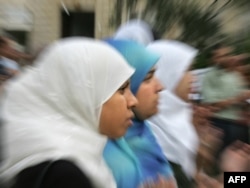 The main challenges from Islam have been on women's rights, freedom of association and religion, torture, and the death penalty for children.More recently, France has been gripped by the case of a Muslim who won a legal annulment of his marriage after discovering his bride was not a virgin. Critics saw it as an encroachment by Shari'a into French law, although an appeals court overturned the ruling last month.
But James, who now runs an organization that assists abused Muslim women in Europe, says that beyond the headlines are many more cases of Muslim women in Europe who are not afforded basic international rights, such as those envisaged by the UDHR: "It's happening everywhere, actually. There are women coming to our organization, women from Pakistan; they are really living like slaves and the authorities are helping the punishers more than the victims."
'Regional Specificities'
Most Muslim countries except Saudi Arabia voted to ratify the UDHR in the UN General Assembly in 1948 -- and Arab scholars from Egypt and Lebanon helped draft the text. Yet Muslim countries have sought to distance themselves from the UDHR, which although merely a "declaration" inspired later legally binding global agreements on rights, such as the UN Convention on the Rights of the Child and the Convention against Torture.
In 1981, Muslim countries passed their own Declaration of Islamic Human Rights. That was followed by the 1990 Cairo Declaration of Human Rights in Islam and the 1994 Arab Human Rights Charter, a text negotiated under the Arab League which seven countries ratified and which came into effect last March.
The main challenge from Islam has been on women's rights, freedom of association and religion, torture, and the death penalty for children. The Islamic human rights documents all curtail these rights compared to how they are treated by the UDHR and subsequent UN charters inspired by it.
Backers of the Muslim charters argue that they are in line with the 1993 Vienna Declaration and Program of Action on human rights, which reaffirmed the UDHR's principles but also allowed for "regional specificities" on human rights. Champions of the Arab charter say it proves Shari'a is compatible with international human rights.
Western experts beg to differ, voicing particular concern over the rights of women and freedom of religion in the Muslim world. James laments the dwindling acceptance of global human rights in the Muslim world. But she also sees Western compromises to rights declared universal 60 years ago this week.
"We have to say to Muslim people, if they come to Europe: 'We are glad that you are here, and we love you, but we have laws in our countries that must be followed.'" she says. "This is not racism at all. This is protecting human rights."
* This is a corrected version. The original version suggested that Islamic opinion is united behind the idea that apostasy is punishable by death, which is not the case.
After converting from Islam a few years ago, James had to flee from a father who wanted her killed for apostasy -- and from Austrian authorities who instead of protecting her, suggested she resolve the conflict by returning to Islam.
James, who uses a pseudonym, grew up in Linz, a city near the Alps more famous for chocolate than disputes between Islamic and international law. But when she renounced Islam, her father's verdict was clear. "He said, 'In two weeks you have to become a Muslim again or you're dead,'" says James, who fled to Germany, where she now lives under police protection.
On the anniversary of the UDHR's ratification, James's case dramatically illustrates Islam's growing challenge to the principles enshrined in the world's most translated document, including the freedom of thought, conscience, and worship -- and the right to change one's religion.
Many Muslim jurists say Shari'a does not envision such liberties -- and that apostasy is always punishable by death. Although there is growing debate about that interpretation, the tension between Islamic and international law is at the center of James's personal drama as well as Western attempts to accommodate Muslim citizens. It's also behind efforts by Muslim countries to establish new rights frameworks based on Shari'a.*
But what surprises James isn't that Muslim states have sought their own Shari'a-based rights charters. It's that in some Western countries she sees a willingness to have Shari'a applied to Muslim citizens at the expense of their tutelage under national and international laws.
For example, when she was first threatened by her father, James asked local police for help. "They said to me, 'Why don't you become Muslim again? Then you won't have problems, Madam. Why are you doing all that? It doesn't matter if you believe in Allah or Jesus.' But for me, it did matter, and I was living in a country which is not under Islamic law. And I was like, 'Why are these people taking the side of my parents?'"
Mounting Problem
There has been no recorded case of a Muslim being murdered for apostasy in Europe. What's more, such punishment is not regularly practiced in the Muslim world, where it is banned in many countries. Famously, it was outlawed in the Ottoman Empire but remains on the books in countries such as Saudi Arabia and Iran and a real threat to apostates in other countries, such as Pakistan and Afghanistan.
Europe, meanwhile, is increasingly grappling with the legal quandary stemming from Shari'a and a Muslim population that totals some 50 million. Some European courts, religious leaders, and officials have shown a willingness to defer to Muslim rules in the private sphere -- on marriage and divorce or finance, for example.
Last February, the Archbishop of Canterbury, Rowan Williams, said it might be "unavoidable" to allow aspects of Shari'a law, such as on marital disputes or finance, to be applied in Britain. Prime Minister Gordon Brown, who said British laws "should be based on British values," shot down his suggestion.
Last year in Germany, a judge refused an application by a Moroccan immigrant to quickly divorce her abusive husband, whom she claimed had threatened to kill her. In his decision, the judge referred to a passage in the Koran that some interpret to mean that a husband can beat his wife.

But James, who now runs an organization that assists abused Muslim women in Europe, says that beyond the headlines are many more cases of Muslim women in Europe who are not afforded basic international rights, such as those envisaged by the UDHR: "It's happening everywhere, actually. There are women coming to our organization, women from Pakistan; they are really living like slaves and the authorities are helping the punishers more than the victims."
'Regional Specificities'
Most Muslim countries except Saudi Arabia voted to ratify the UDHR in the UN General Assembly in 1948 -- and Arab scholars from Egypt and Lebanon helped draft the text. Yet Muslim countries have sought to distance themselves from the UDHR, which although merely a "declaration" inspired later legally binding global agreements on rights, such as the UN Convention on the Rights of the Child and the Convention against Torture.
In 1981, Muslim countries passed their own Declaration of Islamic Human Rights. That was followed by the 1990 Cairo Declaration of Human Rights in Islam and the 1994 Arab Human Rights Charter, a text negotiated under the Arab League which seven countries ratified and which came into effect last March.
The main challenge from Islam has been on women's rights, freedom of association and religion, torture, and the death penalty for children. The Islamic human rights documents all curtail these rights compared to how they are treated by the UDHR and subsequent UN charters inspired by it.
Backers of the Muslim charters argue that they are in line with the 1993 Vienna Declaration and Program of Action on human rights, which reaffirmed the UDHR's principles but also allowed for "regional specificities" on human rights. Champions of the Arab charter say it proves Shari'a is compatible with international human rights.
Western experts beg to differ, voicing particular concern over the rights of women and freedom of religion in the Muslim world. James laments the dwindling acceptance of global human rights in the Muslim world. But she also sees Western compromises to rights declared universal 60 years ago this week.
"We have to say to Muslim people, if they come to Europe: 'We are glad that you are here, and we love you, but we have laws in our countries that must be followed.'" she says. "This is not racism at all. This is protecting human rights."
* This is a corrected version. The original version suggested that Islamic opinion is united behind the idea that apostasy is punishable by death, which is not the case.