


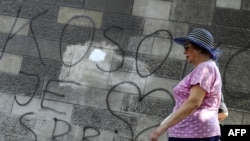
The decision by a UN court on Kosovo’s unilateral declaration of independence will not have immediate consequences. But it has become another element in the general erosion of the European order that has been ongoing since the end of the Cold War. And the long-term consequences of this erosion are impossible to predict.
The court’s ruling marks a political victory for Kosovo, albeit one that will be difficult to convert into practical benefits. Essentially, nothing has changed: Kosovo remains a problematic territory whose existence is maintained at the expense of international donors. The process of gaining international recognition, most likely, will be accelerated somewhat, but the biggest players who have so far refused recognition won’t likely be rushing to do so now.
But even if Pristina is recognized by a majority of UN member states and Kosovo is accepted into that organization, the country will remain a de facto international protectorate. A fundamental change would occur in the event that Kosovo joined the European Union, in which case Europe would be taking on the formal obligation to sustain the former Serbian region. But in addition to legal obstacles, there are others. For one, the urge for expansion in the European Union is barely evident, especially when we are talking about potential members who can contribute nothing to the general pot except additional headaches.
For Serbia, the ruling would seem to be a major setback, but actually it is good for Belgrade. Surely no one, not even among the most diehard Serbian nationalists, now thinks that Kosovo will ever be returned. If that happened, it would certainly drag the country into a new war and destroy any hope of future development. The real, unstated goal of the government is to find a way to withdraw its claims without destroying its own political reputation. The court has given Belgrade the opportunity to begin saying that further struggle is useless because all political possibilities have been exhausted; now it is time to reconcile with this injustice and work on real priorities, the most important of which is European integration. This position won’t prevail immediately, but in any event it will now be easier for the government to transfer responsibility for the loss of Kosovo to outside forces.
Pulling In A Single Direction
The impact of the UN court’s decision on other players who are not directly involved, though, is the most significant of the possible repercussions. The ruling could catalyze various tendencies that have already been notable in Europe. As the first decade of the 21st century drew to a close, several unrelated processes were drawn together to a single point, and together they are now pulling in a single direction.
First, of course, the de facto lifting of the taboo on revising borders that has been in place in Europe since the end of World War II can’t help but create a new atmosphere. While the collapse of the former Yugoslavia and of the Soviet Union might be considered natural disasters and Czechoslovakia broke up amicably, events in Kosovo, Abkhazia, and South Ossetia have embodied a different form of demarcation. One that is in violation of the formal norms of international law and, what is most important, a result of the failure of efforts to resolve disputes on the basis of the coexistence of nations in multiethnic states. As recently as the mid-1990s, Europe consistently insisted on exactly this approach, forbidding the three communities of Bosnia-Herzegovina to even think of separation.
Now the traditional principle of “blood and territory” is in the ascendant. And it cannot be excluded that it will prevail in the end in the remaining post-Soviet conflicts in Moldova (Transdniester) and Azerbaijan (Nagorno-Karabakh). The court’s ruling that Kosovo’s unilateral declaration of independence was “not illegal” plays into the hands of separatists and their patrons among the great powers.
In addition, the reinterpretation of history that has been initiated by countries that consider themselves victims of the Nazi or Soviet regimes is playing a role. Of course, this isn’t a matter of borders, but rather of equating the crimes of these two totalitarian regimes with one another. But the entire European system of the second half of the 20th century is founded on the results of World War II as they were formulated by the victorious powers at Yalta and Potsdam.
The agreements forged then – as cynical as they may have been – confirmed the status quo, which was later confirmed in Helsinki, including the matter of international borders. If one component of these agreements – the ideological component – is being reevaluated, then why should the others – including the territorial component – be untouchable? It is no coincidence that the president of Romania has officially refused to recognize his country’s border with Moldova, referring to the “criminal character” of the Molotov-Ribbentrop pact. Neither is it a coincidence that countries are handing out passports to citizens of neighboring countries – a practice adopted not only by Moscow in relation to Georgia and Moldova but also by Romania in relation to Moldova and Ukraine.
An Unstable Concept
Third, a pan-European identity, which was to have gradually overcome national traits in the consciousness of the citizens of Old Europe, hasn’t materialized. Globalization is penetrating all our lives, striving to erase ethnic and cultural differences. And people are instinctively searching for points of support – which in most cases produces efforts to defend national self-identity. This is manifested in various ways, from the birth of separatist movements that seemingly make no sense in a united Europe without borders to the rejection of foreign elements such as what we have seen in the last few elections in the Netherlands. The unheard-of success achieved by the anti-Islamic Freedom Party means that it has a chance of joining the government in one of the most liberal countries in Europe.
And, finally, the global economic crisis has heightened the tension between the “donors” – mostly Germany -- and the “freeloaders” in Europe who are waiting for the donors to open their wallets. But the same thing is happening within various countries. More than 60 percent of the Belgian economy is located in Flanders, while Catalonia accounts for about a quarter of Spain’s GDP. In exchange for their money, these more advanced provinces are demanding respect for their concerns, including those in the sphere of rights and autonomy. It is no coincidence that a separatist party won the recent elections in Flanders or that in Catalonia the discussion of whether the region is a “nation” has heated up lately.
Borders in Europe are a very unstable concept. They have been altered continuously since the rise of nation states in the 17th century. Every period of fundamental change in Europe has been marked by a fundamental reconsideration of the territorial question. And there is no reason to think the 21st century is going to be any different.
The fact that the highest legal authority of the UN is merely observing these processes – guided by political, rather than by legal, logic – instead of trying to regulate them casts a dark cloud indeed over the continent’s future.
Fyodor Lukyanov is editor of “Russia In Global Affairs.” The views expressed in this commentary are the author's own and do not necessarily reflect those of RFE/RL.
The court’s ruling marks a political victory for Kosovo, albeit one that will be difficult to convert into practical benefits. Essentially, nothing has changed: Kosovo remains a problematic territory whose existence is maintained at the expense of international donors. The process of gaining international recognition, most likely, will be accelerated somewhat, but the biggest players who have so far refused recognition won’t likely be rushing to do so now.
But even if Pristina is recognized by a majority of UN member states and Kosovo is accepted into that organization, the country will remain a de facto international protectorate. A fundamental change would occur in the event that Kosovo joined the European Union, in which case Europe would be taking on the formal obligation to sustain the former Serbian region. But in addition to legal obstacles, there are others. For one, the urge for expansion in the European Union is barely evident, especially when we are talking about potential members who can contribute nothing to the general pot except additional headaches.
For Serbia, the ruling would seem to be a major setback, but actually it is good for Belgrade. Surely no one, not even among the most diehard Serbian nationalists, now thinks that Kosovo will ever be returned. If that happened, it would certainly drag the country into a new war and destroy any hope of future development. The real, unstated goal of the government is to find a way to withdraw its claims without destroying its own political reputation. The court has given Belgrade the opportunity to begin saying that further struggle is useless because all political possibilities have been exhausted; now it is time to reconcile with this injustice and work on real priorities, the most important of which is European integration. This position won’t prevail immediately, but in any event it will now be easier for the government to transfer responsibility for the loss of Kosovo to outside forces.
Pulling In A Single Direction
The impact of the UN court’s decision on other players who are not directly involved, though, is the most significant of the possible repercussions. The ruling could catalyze various tendencies that have already been notable in Europe. As the first decade of the 21st century drew to a close, several unrelated processes were drawn together to a single point, and together they are now pulling in a single direction.
First, of course, the de facto lifting of the taboo on revising borders that has been in place in Europe since the end of World War II can’t help but create a new atmosphere. While the collapse of the former Yugoslavia and of the Soviet Union might be considered natural disasters and Czechoslovakia broke up amicably, events in Kosovo, Abkhazia, and South Ossetia have embodied a different form of demarcation. One that is in violation of the formal norms of international law and, what is most important, a result of the failure of efforts to resolve disputes on the basis of the coexistence of nations in multiethnic states. As recently as the mid-1990s, Europe consistently insisted on exactly this approach, forbidding the three communities of Bosnia-Herzegovina to even think of separation.
Now the traditional principle of “blood and territory” is in the ascendant. And it cannot be excluded that it will prevail in the end in the remaining post-Soviet conflicts in Moldova (Transdniester) and Azerbaijan (Nagorno-Karabakh). The court’s ruling that Kosovo’s unilateral declaration of independence was “not illegal” plays into the hands of separatists and their patrons among the great powers.
In addition, the reinterpretation of history that has been initiated by countries that consider themselves victims of the Nazi or Soviet regimes is playing a role. Of course, this isn’t a matter of borders, but rather of equating the crimes of these two totalitarian regimes with one another. But the entire European system of the second half of the 20th century is founded on the results of World War II as they were formulated by the victorious powers at Yalta and Potsdam.
The agreements forged then – as cynical as they may have been – confirmed the status quo, which was later confirmed in Helsinki, including the matter of international borders. If one component of these agreements – the ideological component – is being reevaluated, then why should the others – including the territorial component – be untouchable? It is no coincidence that the president of Romania has officially refused to recognize his country’s border with Moldova, referring to the “criminal character” of the Molotov-Ribbentrop pact. Neither is it a coincidence that countries are handing out passports to citizens of neighboring countries – a practice adopted not only by Moscow in relation to Georgia and Moldova but also by Romania in relation to Moldova and Ukraine.
An Unstable Concept
Third, a pan-European identity, which was to have gradually overcome national traits in the consciousness of the citizens of Old Europe, hasn’t materialized. Globalization is penetrating all our lives, striving to erase ethnic and cultural differences. And people are instinctively searching for points of support – which in most cases produces efforts to defend national self-identity. This is manifested in various ways, from the birth of separatist movements that seemingly make no sense in a united Europe without borders to the rejection of foreign elements such as what we have seen in the last few elections in the Netherlands. The unheard-of success achieved by the anti-Islamic Freedom Party means that it has a chance of joining the government in one of the most liberal countries in Europe.
And, finally, the global economic crisis has heightened the tension between the “donors” – mostly Germany -- and the “freeloaders” in Europe who are waiting for the donors to open their wallets. But the same thing is happening within various countries. More than 60 percent of the Belgian economy is located in Flanders, while Catalonia accounts for about a quarter of Spain’s GDP. In exchange for their money, these more advanced provinces are demanding respect for their concerns, including those in the sphere of rights and autonomy. It is no coincidence that a separatist party won the recent elections in Flanders or that in Catalonia the discussion of whether the region is a “nation” has heated up lately.
Borders in Europe are a very unstable concept. They have been altered continuously since the rise of nation states in the 17th century. Every period of fundamental change in Europe has been marked by a fundamental reconsideration of the territorial question. And there is no reason to think the 21st century is going to be any different.
The fact that the highest legal authority of the UN is merely observing these processes – guided by political, rather than by legal, logic – instead of trying to regulate them casts a dark cloud indeed over the continent’s future.
Fyodor Lukyanov is editor of “Russia In Global Affairs.” The views expressed in this commentary are the author's own and do not necessarily reflect those of RFE/RL.