



The year 2009 was a crucial one for U.S. foreign policy on Afghanistan, Iran, Iraq, and Bosnia. RFE/RL takes a closer look at developments and challenges involving those countries in the year ahead.
Obama Drafts New Afghanistan Strategy To Fight Resurgent Taliban
It was during 2009 -- with the inauguration of Barack Obama as U.S. president -- that Washington began to reformulate its strategy on Afghanistan.
The new view considers events in Afghanistan and Pakistan as intrinsically interrelated. The appointment of Richard Holbrooke to a newly created post -- Obama's envoy for Afghanistan and Pakistan -- formalized the idea in Washington of a so-called "Afpak" perspective.
Holbrooke and the rest of Obama's foreign-policy staff began by redefining the definition of success in the region -- shifting away from President George W. Bush's transformative goals toward something more achievable.
Spending much of the year listening to Pentagon officials, regional experts, and lawmakers about conditions in Afghanistan and Pakistan, Obama finally announced his new strategy in December.
It calls for the deployment of 30,000 additional U.S. soldiers in Afghanistan -- raising to nearly 100,000 the total number of U.S. troops there. Obama's strategy recognizes the need to build up Afghanistan's governance capacity, fight corruption, and put more focus on civilian reconstruction efforts in Afghanistan and Pakistan. It also focuses on the need to train Afghanistan's own police and army for the day when Afghan troops take over responsibility for security from the NATO-led International Security Assistance Force.
But as Washington was reexamining the mission, confidence in Afghan President Hamid Karzai -- both in Afghanistan and abroad -- was damaged by allegations that his reelection during the summer was the result of widespread fraud by electoral officials he appointed.
Meanwhile, a resurgent Taliban regained footholds in parts of northern Afghanistan where they had not been a force to reckon with since the collapse of the Taliban regime in late 2001. Militants also continued to wage guerrilla attacks -- including suicide bombings and assassinations of Karzai-appointed judges and clerics -- in the south and east of Afghanistan.
"I remain deeply concern by the growing level of collusion between the Afghan Taliban and Al-Qaeda and other extremist groups taking refuge across the border in Pakistan," U.S. Admiral Mike Mullen, chairman of the U.S. Joint Chiefs of Staff, said in December. "Getting at this network, which is now more entrenched, will be a far more difficult task than it was just one year ago."
Also in December, USAID officials in Afghanistan said they had begun storing away the parts of a giant electrical turbine that had been hauled by international forces last year through the heart of Taliban territory to the Kajaki dam in Helmand Province.
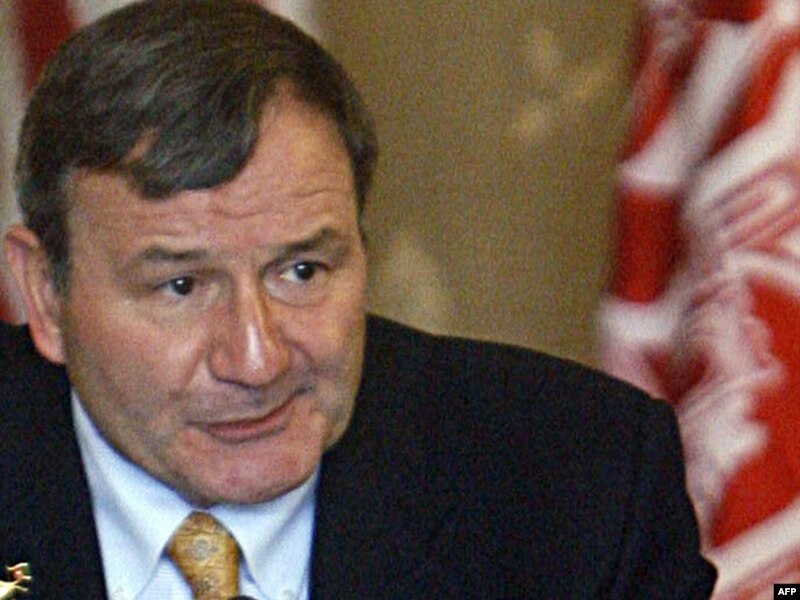
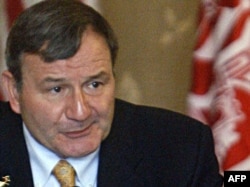 Karl EikenberryThe Chinese firm contracted to install the turbine abandoned the project because international forces have been unable to secure about 50 kilometers of road in Helmand needed to transport concrete to the dam.
The mothballing of the Kajaki turbine was an ominous year-end development. The U.S. military, as well as civilian reconstruction officials, had bragged for years that success in Afghanistan would be measured by their ability to install the turbine and bring electricity to 2 million Afghans in Helmand and Kandahar provinces.
But Karl Eikenberry, the U.S. ambassador in Kabul, told RFE/RL in an interview in mid-December that he still hopes the work can be completed so that reliable electricity can be delivered to people in southern Afghanistan.
"When the security improves in the Kajaki and the Sangin area [of Helmand], and the connecting roads, we are optimistic that the third turbine can be renovated," he said. "With the third turbine being delivered on line or fully renovated, with the renovation and improvement of transmission lines from Kajaki down to Kandahar, and with the improvement of the electrical distribution in Kandahar city which we are working on right now -- with all of that, there will be much more power available making the lives of people in Kandahar and Helmand much better."
Iran Stalls, Then Stands Defiant In Nuclear Crisis
U.S. President Barack Obama came into office early in 2009 with a pledge to engage Tehran diplomatically in an attempt to resolve the crisis over Iran's controversial nuclear program.
But Iranian authorities rejected a compromise offered by the UN's nuclear watchdog -- the International Atomic Energy Agency -- that would have helped alleviate Western concerns about Tehran's uranium enrichment activities.
The United States -- along with allies like Britain and France -- are concerned that Iran is trying to secretly enrich uranium in order to build nuclear weapons. Such activity clearly would violate Iran's obligations under the Nuclear Nonproliferation Treaty.
Tehran claims its nuclear program is only for medical research and generating electricity.
Mark Fitzpatrick, a nonproliferation expert at the International Institute for Strategic Studies in London, says concerns were raised further by a report in "The Times" of London alleging that Iran has recently been conducting secret nuclear weapons-development work. The report was based on documents obtained by the newspaper that referred to a neutron source -- uranium deuteride -- that can be used as a trigger for a nuclear weapon.
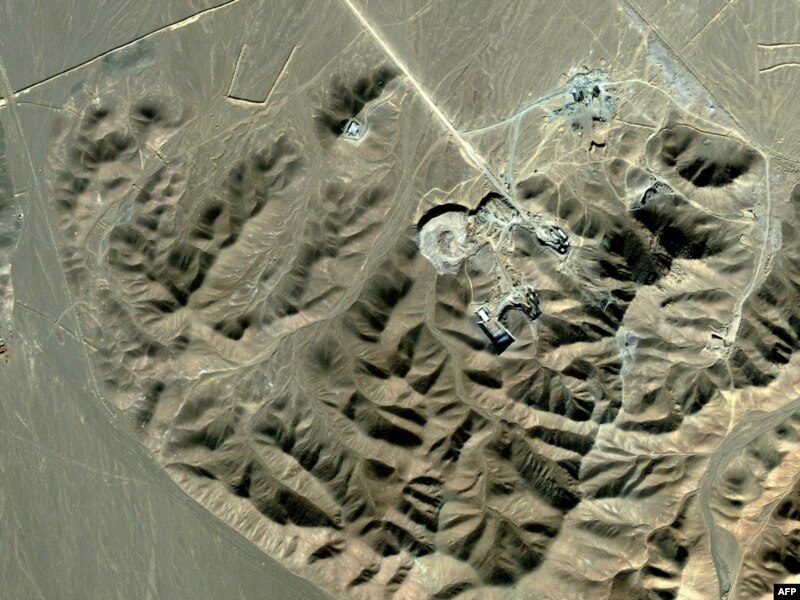
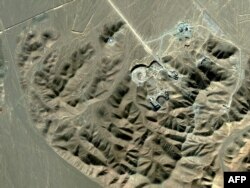 Iran's suspected nuclear facility in Qom"If it is proven that Iran was working on weapons designs and development as recently as 2007, this certainly will change the attitudes toward Iran," Fitzpatrick says. "The previous U.S. intelligence estimate that Iran had stopped that weapons-development work gave people reason to think, 'OK, we can negotiate with Iran and persuade it to accept some limits and we can accept some level of enrichment because it could be limited to civilian applications.'
"But if Iran has been working on weapons development, [this] really calls into question whether Iran can be trusted with any sensitive technologies if it's so clearly being used for weapons-development work."
The report by "The Times" emerged after Tehran defiantly rejected the IAEA compromise that would have seen Iran send its low-enriched uranium to Russia and France for further enrichment and packaging into nuclear fuel rods and sent back to Iran.
It also follows the revelation in the autumn of 2009 that Iran has been secretly building a second uranium-enrichment facility.
Revelations about the new enrichment facility near the city of Qom brought international condemnation -- raising the prospect of tighter unilateral sanctions by the United States, Britain, France, and other Western countries.
But wider international sanctions under a UN Security Council resolution would require support from Russia and China, which both wield veto powers as permanent Security Council members.
As 2009 drew to a close, neither Russia nor China appeared ready to back a Security Council resolution for tighter international sanctions.
Northern Iraq's Arab-Kurdish Rivalry Fuels Continuing Instability
After relative improvements in the security situation across much of Iraq, Baghdad faced a resurgence of suicide bombing toward the end of 2009.
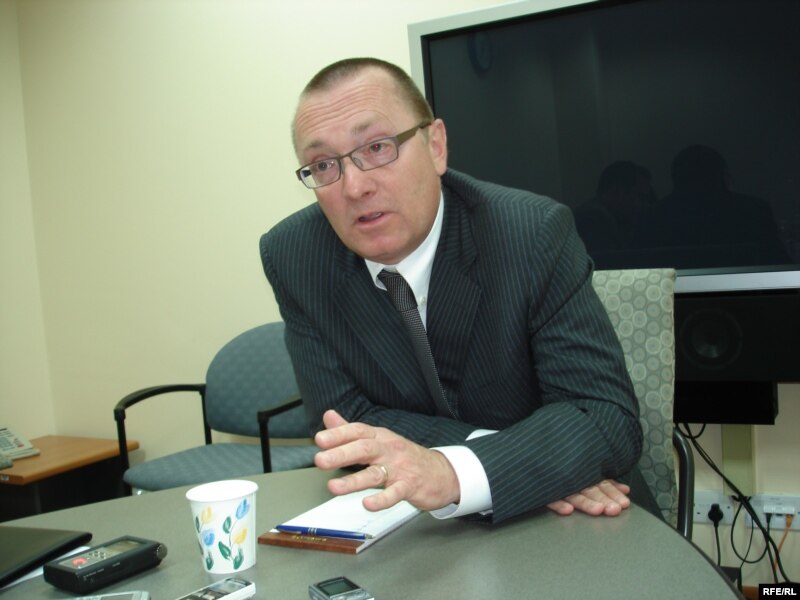
Jeffrey Feltman, the U.S. deputy assistant secretary of state for Near Eastern affairs, says the United States plans to continue training and equipping Iraq's security forces long after U.S. combat troops have left Iraq -- provided Iraq's government continues to want American help.
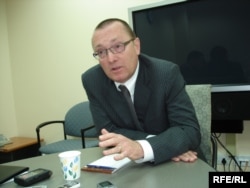 Jeffrey Feltman"We understand that there is concern about the security situation. Of course, there is concern about the security situation," Feltman says. "And I know that the [Iraqi] government has acknowledged that there have been some gaps in security performance. So I don't want to sound like a typical American optimist that says everything is good, even when people on the ground know that there is room for improvement."
The Arab-Kurdish rivalry in northern Iraq is seen as a major source of Iraq's ongoing instability. Militant extremists with links to Al-Qaeda are thought to be exploiting the friction between Iraq's Arabs and Kurds.
It is a struggle for land and resources between Arabs in Iraq's central government and the leaders of the semiautonomous Kurdish region of the north. Ultimately, the dispute focuses on who will control oil-rich territory and energy revenues from the north.
In the northern province of Nineveh, Kurdish regional authorities control swathes of disputed land through deployment of their peshmerga security forces.
U.S. officials have been working to help resolve the political standoff between Sunni Arabs and Kurds in Nineveh's provincial capital of Mosul.
It was after a series of bombings in July and August that killed at least 143 people in the north -- mostly from minority groups -- that the U.S. military announced plans to deploy its troops along with members of the Kurdish peshmerga force and the Iraqi Army.
The Kurdish regional government has said the joint forces must include U.S. troops in order ensure security in the area and to implement Article 140 of the Iraqi Constitution, which outlines how the fate of the disputed northern territories is to be resolved.
But while the Kurdish regional government insists on implementation of Article 140, Arab political leaders reject it.
With the Obama administration signaling that a reduction of U.S. troops in Iraq is in the works, the Council on Foreign Relations has said that the stakes for a successful political transition in Iraq couldn't be higher.
Iraq's political system remains plagued by power struggles and tribal feuding. Nevertheless, Kurdish and Arab members of Iraq's parliament were able to overcome a political impasse and reach a compromise in November on a new electoral law needed for parliamentary elections scheduled for March 7.
The most contentious issue was over voting in the disputed northern province of Kirkuk -- where Sunni Arabs accuse Kurds of artificially boosting their population in an effort to eventually control the provincial capital and annex it to their autonomous region.
Kurdish and Arab lawmakers finally agreed that votes cast in Kirkuk would be examined closely for months after the ballot.
If that assessment changes the outcome of the results in Kirkuk, the process could further exacerbate tensions -- making the parliamentary elections a sensitive challenge in the year ahead.
To Reform Or Not To Reform -- Scars of War Still Fuel Divisions In Bosnia
The year 2009 marked the 14th anniversary of the Dayton accords that ended the war in Bosnia and Herzegovina. But despite the passage of time, the scars of the war could still be seen in the ethnic and political rivalries between Bosnia's two main political-territorial divisions.
It was the Dayton accords that split Bosnia into two semi-independent entities -- the Muslim-Croat Federation with Sarajevo as its official capital, and Republika Srpska with its parliament and government based in Banja Luka. But under the Dayton accords, the two entities remain united by weak central institutions and overseen by a foreign post, the Office of the High Representative (OHR), appointed by the international community to uphold the Dayton principles.
The plan was to phase out the OHR after Bosnia reached a stage of political maturity. But plans to eliminate the post 2007 have been delayed because of continued instability between the two entities and the failure of local politicians to pass necessary reforms.
 Milorad DodikBut Milorad Dodik, the prime minister of Republika Srpska, has made no secret of his disdain for the postwar structure of Bosnia-Herzegovina created by Dayton -- particularly the OHR and its insistence on constitutional reforms that would weaken his entity's autonomy in favor of greater power at the center.
Dodik's loyalties appear to be closer to Belgrade than Sarajevo. He has repeatedly threatened to hold a referendum on whether Republika Srpska should secede from Bosnia in favor of a liaison with Serbia.
In December, the rhetoric heated up further when Dodik proposed twin referendums on two issues -- Bosnia's bid for NATO membership and the presence of foreign judges and prosecutors who have been brought in Bosnia's State Court to prosecute alleged war criminals and organized crime figures.
Dodik himself has been accused of using a powerful investment fund in Republika Srpska to grant preferential loans. He is currently under investigation by one of the international community's prosecutors in the Bosnian State Court.
The mandate for foreign officials in Bosnia's court system was to expire at the end of this year. But Austrian diplomat Valentin Inzko, the international community's high representative to Bosnia, recently extended the mandate of the foreign judges and prosecutors on war-crimes cases for another three years. (The organized crime team has been downgraded to the status of "advisers" for local judges and prosecutors.)
Bosnia's continued unrest comes despite a flurry of international attention. Western diplomats this year pushed hard for Bosnia to resolve its political differences and move forward with reforms. Bosnia holds presidential and parliamentary elections in 2010, and there is fear the West will abandon its efforts in Bosnia in a campaign season when an agreement on political reforms is unlikely.
At the same time, Bosnia will join the UN Security Council as a two-year member on January 1, in a move diplomats hope will help strengthen the country's institutions.
Charles English, the U.S. ambassador to Bosnia, says Washington is concerned about the ongoing divisions that characterize Bosnia's political landscape.
English has been urging Bosnian leaders to adopt the reforms needed to meet the conditions for an application of European Union membership and for the NATO membership action plan.
"First, the United States will accept nothing less than a peaceful, multiethnic, sovereign and unified Bosnia and Herzegovina," English says. "And second, the United States believes that the only real path to a secure and prosperous future for Bosnia and Herzegovina is European and Euro-Atlantic integration."
English says Bosnia is not functioning properly and its citizens are suffering as a result. He is urging constitutional changes that would improve Bosnia's functionality as a state.
Obama Drafts New Afghanistan Strategy To Fight Resurgent Taliban
It was during 2009 -- with the inauguration of Barack Obama as U.S. president -- that Washington began to reformulate its strategy on Afghanistan.
The new view considers events in Afghanistan and Pakistan as intrinsically interrelated. The appointment of Richard Holbrooke to a newly created post -- Obama's envoy for Afghanistan and Pakistan -- formalized the idea in Washington of a so-called "Afpak" perspective.
Holbrooke and the rest of Obama's foreign-policy staff began by redefining the definition of success in the region -- shifting away from President George W. Bush's transformative goals toward something more achievable.
Spending much of the year listening to Pentagon officials, regional experts, and lawmakers about conditions in Afghanistan and Pakistan, Obama finally announced his new strategy in December.
It calls for the deployment of 30,000 additional U.S. soldiers in Afghanistan -- raising to nearly 100,000 the total number of U.S. troops there. Obama's strategy recognizes the need to build up Afghanistan's governance capacity, fight corruption, and put more focus on civilian reconstruction efforts in Afghanistan and Pakistan. It also focuses on the need to train Afghanistan's own police and army for the day when Afghan troops take over responsibility for security from the NATO-led International Security Assistance Force.
But as Washington was reexamining the mission, confidence in Afghan President Hamid Karzai -- both in Afghanistan and abroad -- was damaged by allegations that his reelection during the summer was the result of widespread fraud by electoral officials he appointed.
Meanwhile, a resurgent Taliban regained footholds in parts of northern Afghanistan where they had not been a force to reckon with since the collapse of the Taliban regime in late 2001. Militants also continued to wage guerrilla attacks -- including suicide bombings and assassinations of Karzai-appointed judges and clerics -- in the south and east of Afghanistan.
"I remain deeply concern by the growing level of collusion between the Afghan Taliban and Al-Qaeda and other extremist groups taking refuge across the border in Pakistan," U.S. Admiral Mike Mullen, chairman of the U.S. Joint Chiefs of Staff, said in December. "Getting at this network, which is now more entrenched, will be a far more difficult task than it was just one year ago."
Also in December, USAID officials in Afghanistan said they had begun storing away the parts of a giant electrical turbine that had been hauled by international forces last year through the heart of Taliban territory to the Kajaki dam in Helmand Province.
The mothballing of the Kajaki turbine was an ominous year-end development. The U.S. military, as well as civilian reconstruction officials, had bragged for years that success in Afghanistan would be measured by their ability to install the turbine and bring electricity to 2 million Afghans in Helmand and Kandahar provinces.
But Karl Eikenberry, the U.S. ambassador in Kabul, told RFE/RL in an interview in mid-December that he still hopes the work can be completed so that reliable electricity can be delivered to people in southern Afghanistan.
"When the security improves in the Kajaki and the Sangin area [of Helmand], and the connecting roads, we are optimistic that the third turbine can be renovated," he said. "With the third turbine being delivered on line or fully renovated, with the renovation and improvement of transmission lines from Kajaki down to Kandahar, and with the improvement of the electrical distribution in Kandahar city which we are working on right now -- with all of that, there will be much more power available making the lives of people in Kandahar and Helmand much better."
Iran Stalls, Then Stands Defiant In Nuclear Crisis
U.S. President Barack Obama came into office early in 2009 with a pledge to engage Tehran diplomatically in an attempt to resolve the crisis over Iran's controversial nuclear program.
But Iranian authorities rejected a compromise offered by the UN's nuclear watchdog -- the International Atomic Energy Agency -- that would have helped alleviate Western concerns about Tehran's uranium enrichment activities.
The United States -- along with allies like Britain and France -- are concerned that Iran is trying to secretly enrich uranium in order to build nuclear weapons. Such activity clearly would violate Iran's obligations under the Nuclear Nonproliferation Treaty.
Tehran claims its nuclear program is only for medical research and generating electricity.
Mark Fitzpatrick, a nonproliferation expert at the International Institute for Strategic Studies in London, says concerns were raised further by a report in "The Times" of London alleging that Iran has recently been conducting secret nuclear weapons-development work. The report was based on documents obtained by the newspaper that referred to a neutron source -- uranium deuteride -- that can be used as a trigger for a nuclear weapon.
"But if Iran has been working on weapons development, [this] really calls into question whether Iran can be trusted with any sensitive technologies if it's so clearly being used for weapons-development work."
The report by "The Times" emerged after Tehran defiantly rejected the IAEA compromise that would have seen Iran send its low-enriched uranium to Russia and France for further enrichment and packaging into nuclear fuel rods and sent back to Iran.
It also follows the revelation in the autumn of 2009 that Iran has been secretly building a second uranium-enrichment facility.
Revelations about the new enrichment facility near the city of Qom brought international condemnation -- raising the prospect of tighter unilateral sanctions by the United States, Britain, France, and other Western countries.
But wider international sanctions under a UN Security Council resolution would require support from Russia and China, which both wield veto powers as permanent Security Council members.
As 2009 drew to a close, neither Russia nor China appeared ready to back a Security Council resolution for tighter international sanctions.
Northern Iraq's Arab-Kurdish Rivalry Fuels Continuing Instability
After relative improvements in the security situation across much of Iraq, Baghdad faced a resurgence of suicide bombing toward the end of 2009.
Jeffrey Feltman, the U.S. deputy assistant secretary of state for Near Eastern affairs, says the United States plans to continue training and equipping Iraq's security forces long after U.S. combat troops have left Iraq -- provided Iraq's government continues to want American help.
The Arab-Kurdish rivalry in northern Iraq is seen as a major source of Iraq's ongoing instability. Militant extremists with links to Al-Qaeda are thought to be exploiting the friction between Iraq's Arabs and Kurds.
It is a struggle for land and resources between Arabs in Iraq's central government and the leaders of the semiautonomous Kurdish region of the north. Ultimately, the dispute focuses on who will control oil-rich territory and energy revenues from the north.
In the northern province of Nineveh, Kurdish regional authorities control swathes of disputed land through deployment of their peshmerga security forces.
U.S. officials have been working to help resolve the political standoff between Sunni Arabs and Kurds in Nineveh's provincial capital of Mosul.
It was after a series of bombings in July and August that killed at least 143 people in the north -- mostly from minority groups -- that the U.S. military announced plans to deploy its troops along with members of the Kurdish peshmerga force and the Iraqi Army.
The Kurdish regional government has said the joint forces must include U.S. troops in order ensure security in the area and to implement Article 140 of the Iraqi Constitution, which outlines how the fate of the disputed northern territories is to be resolved.
But while the Kurdish regional government insists on implementation of Article 140, Arab political leaders reject it.
With the Obama administration signaling that a reduction of U.S. troops in Iraq is in the works, the Council on Foreign Relations has said that the stakes for a successful political transition in Iraq couldn't be higher.
Iraq's political system remains plagued by power struggles and tribal feuding. Nevertheless, Kurdish and Arab members of Iraq's parliament were able to overcome a political impasse and reach a compromise in November on a new electoral law needed for parliamentary elections scheduled for March 7.
The most contentious issue was over voting in the disputed northern province of Kirkuk -- where Sunni Arabs accuse Kurds of artificially boosting their population in an effort to eventually control the provincial capital and annex it to their autonomous region.
Kurdish and Arab lawmakers finally agreed that votes cast in Kirkuk would be examined closely for months after the ballot.
If that assessment changes the outcome of the results in Kirkuk, the process could further exacerbate tensions -- making the parliamentary elections a sensitive challenge in the year ahead.
To Reform Or Not To Reform -- Scars of War Still Fuel Divisions In Bosnia
The year 2009 marked the 14th anniversary of the Dayton accords that ended the war in Bosnia and Herzegovina. But despite the passage of time, the scars of the war could still be seen in the ethnic and political rivalries between Bosnia's two main political-territorial divisions.
It was the Dayton accords that split Bosnia into two semi-independent entities -- the Muslim-Croat Federation with Sarajevo as its official capital, and Republika Srpska with its parliament and government based in Banja Luka. But under the Dayton accords, the two entities remain united by weak central institutions and overseen by a foreign post, the Office of the High Representative (OHR), appointed by the international community to uphold the Dayton principles.
The plan was to phase out the OHR after Bosnia reached a stage of political maturity. But plans to eliminate the post 2007 have been delayed because of continued instability between the two entities and the failure of local politicians to pass necessary reforms.

Dodik's loyalties appear to be closer to Belgrade than Sarajevo. He has repeatedly threatened to hold a referendum on whether Republika Srpska should secede from Bosnia in favor of a liaison with Serbia.
In December, the rhetoric heated up further when Dodik proposed twin referendums on two issues -- Bosnia's bid for NATO membership and the presence of foreign judges and prosecutors who have been brought in Bosnia's State Court to prosecute alleged war criminals and organized crime figures.
Dodik himself has been accused of using a powerful investment fund in Republika Srpska to grant preferential loans. He is currently under investigation by one of the international community's prosecutors in the Bosnian State Court.
The mandate for foreign officials in Bosnia's court system was to expire at the end of this year. But Austrian diplomat Valentin Inzko, the international community's high representative to Bosnia, recently extended the mandate of the foreign judges and prosecutors on war-crimes cases for another three years. (The organized crime team has been downgraded to the status of "advisers" for local judges and prosecutors.)
Bosnia's continued unrest comes despite a flurry of international attention. Western diplomats this year pushed hard for Bosnia to resolve its political differences and move forward with reforms. Bosnia holds presidential and parliamentary elections in 2010, and there is fear the West will abandon its efforts in Bosnia in a campaign season when an agreement on political reforms is unlikely.
At the same time, Bosnia will join the UN Security Council as a two-year member on January 1, in a move diplomats hope will help strengthen the country's institutions.
Charles English, the U.S. ambassador to Bosnia, says Washington is concerned about the ongoing divisions that characterize Bosnia's political landscape.
English has been urging Bosnian leaders to adopt the reforms needed to meet the conditions for an application of European Union membership and for the NATO membership action plan.
"First, the United States will accept nothing less than a peaceful, multiethnic, sovereign and unified Bosnia and Herzegovina," English says. "And second, the United States believes that the only real path to a secure and prosperous future for Bosnia and Herzegovina is European and Euro-Atlantic integration."
English says Bosnia is not functioning properly and its citizens are suffering as a result. He is urging constitutional changes that would improve Bosnia's functionality as a state.