



map
Our Affiliates
Listen In 28 LanguagesRFE/RL Radio
In 28 Languages

'Berlin Wall's Lessons For Today'

In an op-ed for "USA Today," Jeffrey Gedmin discusses RFE and the role of free media in societies living under repressive regimes. More
More Articles

Commentary

Moscow's Possible Motives In Recognizing Abkhazia, South Ossetia

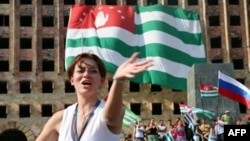
People in the capital, Sukhumi, take to the streets to celebrate the recognition of Abkhazia's independence by Russia.

September 24, 2008
By Salome Zurabishvili
The Russian decision to recognize Abkhazia and South Ossetia is, to say the least, an awkward one. It is an extremely surprising decision, including for those who know Russia well. For there is one process that Russia's leaders fear, and that is that the Russian Federation might one day undergo the same process of implosion the Soviet Union experienced almost two decades ago.


To avert that nightmare scenario, Russia did not hesitate to use brute force to smash the Chechen independence movement. Yet the subsequent decision to recognize Abkhazia and South Ossetia might present Russia with uneasy contradictions in foreign policy. For instance, what should be done with regard to Nagorno-Karabakh? In line with the Abkhazian and South Ossetian logic, Russia should also recognize Karabakh's independence. But this would alienate Azerbaijan, at a moment when Russia is explicitly courting President Ilham Aliyev to reorient gas transit towards the north in order to thwart the European Nabucco gas-pipeline project.

On the other hand, not recognizing Nagorno-Karabakh
could antagonize the one faithful ally that Russia has in the region -- Armenia. The initial steps on the road that might lead to the reestablishment of diplomatic ties between Armenia and Turkey are the first sign of Armenia's disenchantment with its historic friend.


Even more disturbing to Russia should be the reactions among its closest "friends."


Challenges To Moscow

First came the declaration by the Shanghai Cooperation Organization, led by China, which refused to endorse Russia's decision and did not follow through by extending diplomatic recognition to the two republics. The self-restraint shown by the presidents of the CIS Collective Security Treaty Organization member states at their September meeting is another challenge to Moscow.
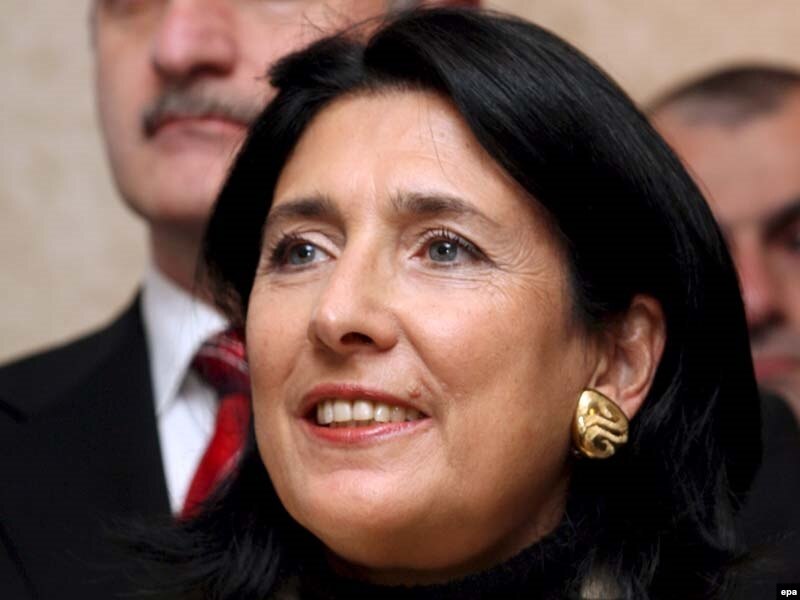
 

Salome Zurabishvili

The final blow was Belarus's delay in expressing support. Expected to fall in line and recognize Georgia's breakaway republics, President Alyaksandr Lukashenka was overtaken by his Venezuelan counterpart Hugo Chavez, and indeed still has not formally recognized Abkhazia and South Ossetia. True, Lukashenka has declared that he will consider submitting the issue to his parliament "in due time," but his hesitation constitutes a departure from his previous unswerving and total alignment with Moscow.


How can these reactions be explained?


Moscow seriously miscalculated by undermining a principle that is crucial to many friendly countries. China's sensitivity to any challenge to the principle of territorial integrity is well-known. Although less visible, Russia's Central Asian allies -- Kazakhstan, Tajikistan, or Kyrgyzstan -- have their own minority and border issues that could render them vulnerable were the very principle which protects their integrity to be weakened. This is also true of Azerbaijan, because of the impact such ad hoc recognitions in the South Caucasus could have on the status of Nagorno-Karabakh, and consequently on Azerbaijan's own territorial integrity.


It is difficult to believe that Moscow, having toyed for years with the possibility of formally recognizing Georgia's breakaway republics, was so taken aback by the international response. Could the Kremlin have made such a hasty decision simply to punish Georgia, without anticipating the likely reactions from its traditional allies and friends?


Alternative Explanation

It is equally difficult to imagine that those same allies would have chosen this issue as a test case to publicly demonstrate their differences with Moscow, or that Moscow's influence over such close allies as Belarus or Armenia is so weakened that it can no longer count on their loyalty.

There is, however, an alternative explanation: that Moscow anticipated those negative reactions from its neighbors and partners and acted knowingly. It might just be that Moscow was seeking to demonstrate the total parallelism with the Kosovo model. Having bombed Georgia (as NATO bombed Serbia in 1999), and having formally recognized Abkhazia and South Ossetia (as the West recognized Kosovo earlier this year), Russia sought to draw a line under these two "precedents" in order to rally everyone around the idea that these two symmetrical exceptions should not be repeated anywhere else.


Consolidating this exceptionality would suit Moscow well by making it into the ultimate backer of the principle of territorial integrity. This hypothesis could explain why Moscow did not exert much pressure on its closest allies to back its decision. What ensued could then stand out as a well planned and calculated strategy of killing two birds with one stone: inflicting the maximum damage on Georgia, while upholding the principle of territorial integrity. Such a move would please Turkey and other European countries that have felt threatened by the implications of Moscow's decision.


Another, even more audacious possibility is that Moscow is trying to obtain a reversal of the Kosovo decision by displaying the absurdity of such micro-states that could endlessly disintegrate into smaller entities, and by generating unease and displeasure among both its allies and competitors. Russian Foreign Minister Sergei Lavrov's address to the UN General Assembly will go a long way toward either confirming or negating this thesis.


Whether it was a gross mistake or a shrewd calculation, it is certainly worth watching to see whether Moscow firmly holds to its decision, or displays a readiness to negotiate and compromise.


Salome Zurabishvili joined the French Foreign Service in 1974. She served as Georgia's foreign minister from March 2004-October 2005. She is  today the chairwoman of the opposition party Georgia's Path. The views expressed in this commentary are the author's own and do not necessarily reflect those of RFE/RL

This forum has been closed.
    Next 
Comments page 1 of 2
by: vaxo from: Tbilisi
October 04, 2008 19:10
I think Russia made a strategic mistake while recognizing Georgias separatist regions. I guess pandora box is open and Russia is next target to be dismembered. Unfortunatly, Georgia can do nothing then except the rule of this game initiated by Russia and wait till next crisis in North Caucasus and recognise Chechnia,Dagestan and etc. I guess its not short term goal but in long run its unavoidable.So lets see evolution of Russian empire after 10 years...I guess that is the end of it.

by: Sofia from: Sokhumi/Tbilisi
September 30, 2008 14:05
Kosovo case has nothing in common with Abkhazian or S.Ossetian conflicts, as in latest conflicts the ethnical cleansing has been committed against ethnical Georgian population and vast majority of indigenous population has been expelled from those breakaway regions of Georgia. Why no one asks those refugees what status they would choose. The issue is that those conflicts happened in 90ies according Kremlin scenario aiming the exorcise of majority and than manipulation with left minority. If the world recognizes those regions, that will mean the approval of ethical cleansing as the mean for "self-determination", which is contrary to the reason for Kosovo recognition.

by: Una from: Gori
September 30, 2008 01:55
Anton, stop preaching like Lenin from Geneva and read more if you want to know something.
Start with:
http://azer.com/aiweb/categories/caucasus_crisis/index/cc_articles

/goble/goble_2008/goble_special
/goble_helsinki.html

by: john from: Canada
September 29, 2008 22:36
Ivo, I absolutely agree with you about Russia recognizing Kosovo, and yes the international community would recognize these new Caucausian micro -states. There are many Micro states in Europe (Lietchistien,San Marino, Andorra) so why not an Abhkazia and Ossetia. As for what I said about Historical destinies, Russia has a special obligation to many nations they annexed in the 20's, and because of these annexed nations, there are frozen conflicts popping up all over Eastern Europe, and I due truly believe Nagorny Karabagh will be the next flash point, if an agreement is not reached this year. In other words had Russia not annexed these lands and left them as their own states, we would not have all these hot spots or war zones emerging all over Eastern Europe

by: Ivo
September 29, 2008 14:29
Clearly now Russia should show some consistency and recognize Kosovo, likewise the EU should also recognize both Abkhazia and South Osetia.

Now to be less facetious, I don’t share this obsession with territorial integrity. I’m OK with both Kosovo and the Caucasus republics going their way, it’s just that in both cases it wasn’t done properly, removing the Serb forces from the province lead to another ethnic cleansing: thousands of Serbs packed up and left and they’ll never return. As for the Caucasus over 200,000 ethnic Georgians were expelled from Abkhazia and now with the Georgians completely losing control of South Osetia the ethnic Georgians are fleeing from there as well. Abkhazia and South Osetia should only be recognized when they let those people return to their homes.

I don’t think Russia actually cares about ‘returning those states to their historic destiny’ (whatever that’s supposed to mean), for today Russia is run by revanchist KGB-mafia agents who want to bring back the former glory.

by: Dragan from: Split
September 28, 2008 10:06
Or that Kosovo has as much right to secede as Slovinia, Croatia, Bosnia-Hercegovina, and Makadonia? also, Europe recognized Kosovo from guilt at failing to stop Serbian genocide the first two times. Russia has been trying to provoke stupid Saakashvili into take them back for years. the Kremlin is mostly afraid of him and other "coloured" revolutionists because it knows it could be an example for its people if the oil price goes back down someday.

by: Anton from: Auckland
September 27, 2008 21:56
John, Kosovo was recognized by 47 nations, which are either in NATO or are affiliated with the Western bloc somehow and thus depend on US or EU. No wonder they do not want to recognize Georgian separatists, as these belong to the opposing camp.

Saakashvili here is as irrelevant as Georgia itself, their role has been played already - they just served to putting the world policies back on the level of nuclear standoff. We would see many changes soon, I assure you.

by: John from: USA
September 27, 2008 13:28
Why is it that so many nations were quick to recognize Kosovo independence then not want to recognize South Ossetia or Abkhazia independence? Also, I am skeptical of Saakashvili. We don't need to be drawn into another war, which is what he was, and probably still is wanting.

by: Anton from: Auckland
September 27, 2008 03:09
John, I understand what you mean about returning these states to their historical destiny, but personally I hesitate to apply human way of thinking to the states, as these are only bureaucratic machines, installed to protect the interests of the national elites, and they can not reason as physical humans.

I believe that Russia is absolutely sincere in what it is doing (meaning there is no hidden interests) - it is simply restoring its historical zones of influence, which it voluntarily refused from since 1991. After Cold War ended, majority (including those people who now run Russia) believed that the planet entered another phase, in which all military confrontations make no sense - but US policies made their best to prove that wrong. Facing the reality, Russia gets back on military track, and what some little nations think is simply not taken into account. They see some 30 million Russians are residing in the surrounding states and often mistreated as a hated national minority - say, in Ukraine or Baltic EU states it is like white minority is mistreated in Zimbabwe. Why would they not use this to make political gains? Russian bureaucrats do not really care about the actual people, they care about the box ticked, "russian". It is like Volksdeutsche in late 1930s...

Ossetians are Russian-oriented people for many centuries, there is many mixed families and even I myself have some Ossetian relatives - one of my aunties is married an Ossetian folk for already 50 years despite him being a Muslim.

As for the Abkhas, they live in a place where many Russians got used to spend their leaves in summer, Abkhasia only lives off Russian tourists and backpackers, and their treatment of Russians is understandeable, as those are that gander which lays golden eggs. I mean, for the Russians in Russia these two tribes are much closer than Georgians, despite Georgians are Orthodox Christians; they are seen almost as Russians in many senses.

What was done now, tells the Kazakh (say) government that Russia starts wars even to protect non-ethnic Russians, but Russian citizens - so this enhances the threat, as it makes clear that if there were ethnic Russians threatened, then the war is the only possible reaction. The same time it reminds the other minorities in Russia itself, that their interests are also treasured by the government... This is all of course only one layer of what is happening, but an important one. For example, Estonia, member of EU and NATO, got so scared that simplified the procedure of issueing Estonian citizenship - they are scared of local Russian uprising and Russia's interference and know that neither EU nor NATO would do anything to protect them. Means, message was received.

by: john from: canada
September 25, 2008 00:19
Anton, I do agree with you about Russia's attitude to its former states. But I am curious if there is not more to the picture than just a type of punishment for stray ex-soviet states. Abkhazia and south Ossetia where at one point independant states along with Chechnya,Kalmykia ,Siberia and even the Crimea(Back before the Soviets took over The Russian empire). It was Russia that decided these states should be annexed into much larger state, devoiding them of independence within the soviet union, and maybe Russia is now trying to return these states to their own destinies. I feel Russia may be undoing what it did to these unrecognized republics back in th 1920's. Ossetia and Abkhazia are different ethnically to the Georgians and have lived on these lands long before Russia ever exsisted
    Next 
Comments page 1 of 2
TEXT SIZE - +
 
RFE/RL Russia Report


SUBSCRIBE For news and analysis on Russia by e-mail, subscribe to "RFE/RL Russia Report."

Products and services:

RSSMail SubscriptionMobile