





The capture of Mullah Abdul Ghani Baradar, the Taliban's top military leader and second-most-influential leader within its ranks, has been confirmed. But the circumstances and reasons behind his detention are anything but clear.
Senior Afghan officials tell RFE/RL that Baradar, whose recent capture in Karachi was reported on February 16, is a key piece of Kabul's efforts to reconcile with the Taliban and has been engaged in the process with Afghan President Hamid Karzai's administration for months.
From this, alternative theories have emerged: One is that his capture is all part of a plan that will pave the way for him to enter Kabul and become the key figure in reconciling with moderate elements of the insurgency he once organized.
The other -- and one that sharply contradicts initial assessments that Baradar's capture exhibited Pakistan's willingness to go after Taliban militants on its soil -- is that Pakistan caught wind of Baradar's role and swept in to forestall the process and detain him for questioning.
Journalist and regional expert Ahmed Rashid says that while on hajj last year in Saudi Arabia, Mullah Baradar met with Afghan and Saudi officials. Prior to this, Rashid claims, Baradar's representatives held negotiations with President Karzai's younger half-brother, Ahmad Wali Karzai, in southern Afghanistan -- the area where the Taliban first emerged and that still provides a large number of its fighters and key leaders.
Rashid says diplomats and officials in Kabul speculate that Pakistan's Inter-Services Intelligence (ISI) agency "might have conducted this raid, because they have made it very clear to the Americans that any negotiations that are held between the Americans and the Taliban have to go through Pakistan."
Rashid says Baradar's capture has critical implications for Kabul's plans to reconcile with moderates among the Taliban's ranks. "There is concern in Kabul, and perhaps some quiet anger, about his arrest and not quite knowing what the Pakistanis are going to do with him," he says.
"I can hope that the Pakistanis are going to treat him not as a prisoner but as a guest, and that he can be free to travel freely and perhaps start some kind of negotiations, perhaps in Saudi Arabia. Perhaps in some other neutral place between the Taliban leadership and Afghan government and the Americans."
Questions Around Arrest
Abdul Salam Zaeef, a former Taliban ambassador to Pakistan who now lives in Kabul, has participated in the Karzai administration's effort to negotiate with the Taliban. He told RFE/RL's Radio Free Afghanistan that Baradar's arrest will not augur well for the reconciliation effort.
And prior to today's confirmation by a Pakistani military official that Baradar was indeed in custody, Zaeef noted that the timing of the capture of the key Taliban figure, second only to Mullah Mohammad Omar, was curious.
"People like him are very important as a key contact [with the Taliban]," Zaeef said. "And what has happened to him is equal to the disappearance of that key contact for [negotiations] with the Taliban. If this [the news about his arrest] is true, it means that somebody wants to prevent people from reaching out to the Taliban by removing their key contact."
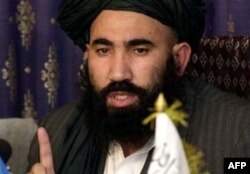 Former Taliban ambassador Abdul Salam Zaeef believes Baradr's arrest will hinder reconciliation efforts.A senior Afghan official with knowledge of Kabul's reconciliation plans, however, tells RFE/RL on condition of anonymity that Baradar's arrest was scripted. His detention, the official says, was intended to serve as a "face-saving" incident that would allow him to be brought to Kabul and turned into a central figure who could persuade a large part of the insurgency he once led into accepting reconciliation with the Afghan government.
Kabul has so far been eerily silent about the arrest, its only official reaction being that it was awaiting the official confirmation of his arrest from Islamabad.
That confirmation came today. In a statement to reporters, Major General Athar Abbas, the chief spokesman for Pakistan's military, said that Baradar's identity was established on the basis of ''detailed identification procedures." Abbas also said that Baradar was one of several people arrested, but that further details could not be made public out of security concerns.
Former Taliban envoy Zaeef, for his part, dismisses the idea that arresting Baradar -- or any Taliban figure for that matter -- and bringing him to Kabul could help attract the attention of a large number of the movement's field commanders and fighters. "Anybody who is brought to Kabul as a prisoner will have little impact, because nobody will listen to him and his efforts will not be considered positive and effective," he says.
Talk Of Taliban Divisions
Addressing the initial reaction that the Taliban commander's capture would provide a major blow to the movement's ability to conduct military operations, former Taliban Foreign Minister Wakil Ahmad Muttawakil is skeptical. He tells RFE/RL that while Baradar was indeed a key Taliban military commander, his capture wouldn't lead to a "dramatic" shift of balance on the battlefield because, "I don't think everything depended on him."
Muttawakil, who is also involved in facilitating behind-the-scene contacts with the Taliban in Saudi Arabia, also says that he does not believe Baradar was involved in negotiations through Riyadh, because as part of the Taliban leadership he would have to strictly follow consensus.
Muttawakil says that reports suggesting that Baradar had developed strong differences with Taliban leader Mullah Omar hold little water. Furthermore, he says the idea that Islamabad would capture Baradar to prevent him from negotiating with Kabul is not plausible, and notes that Islamabad recently indicated its willingness to help in negotiating with the Afghan Taliban. He contrasts "Islamabad's nice diplomatic overtures," with "speculation about his arrest that are negative and problematic."
"I have no doubt that there is unity among the Taliban leadership," Muttawakil adds. "And as far as I can speculate, this movement is not divided into factions."
But Afghan journalist Sami Yousafzai, who has followed the Taliban for years, tells RFE/RL that Baradar's arrest would at the least be a personal blow to Mullah Omar, because he has lost a key confidant whom he trusted since the emergence of the militant movement in southern Afghanistan in 1994. And in the past few years, Yousafzai notes, Baradar also became his sole contact with the Taliban commanders and the outside world.
Baradar 'Acceptable' Candidate?
Yousafzai says that Mullah Omar will find it difficult to appoint a replacement but that Baradar's arrest will not have a grave impact on the Taliban's overall strength.
In the past, the movement has withstood the killing of key commanders Mullah Dadullah and Akhter Mohammad Osmani. Even the 2007 arrest of Mullah Obaidullah, the former Taliban defense minister and Baradar's predecessor, did little to dent the movement.
Yousafzai suggests that speculation about Baradar's contacts with President Karzai are based on the fact that both belong to the Popalzai tribe, a Pashtun lineage whose members populate southern Afghanistan. He says that based on his extensive research of the Taliban, Islamabad would have little interest in arresting Baradar because, unlike other Afghan Taliban commanders, he was unwilling to develop links with the Pakistani Taliban or Al-Qaeda, who are fighting an acrimonious war against Pakistan.
"If there are negotiations with the Taliban and, be that Mullah Baradar or another leader, he cannot move them forward on his own without engaging and keeping in the dark certain quarters in Pakistan who support the Taliban," Yousafzai says. "There is no doubt that he was an acceptable figure for Pakistani officials and certain other quarters."
Yousafzai too rejects the idea that Mullah Baradar negotiated directly with Karzai or his emissaries. He says that anything concerning the Afghan Taliban in Pakistan is seen in Kabul through the prism of conspiracy theory.
In the final assessment of the situation, only concrete results -- such as a breakthrough in reconciling with known Taliban figures that leads sizeable numbers of the movement's foot soldiers to side with Kabul, or on the flip side a stepped-up terror campaign -- will tell the true impact of Baradar's capture.
RFE/RL Radio Free Afghanistan correspondent Hameed Mohmand in Kabul contributed to this report
Senior Afghan officials tell RFE/RL that Baradar, whose recent capture in Karachi was reported on February 16, is a key piece of Kabul's efforts to reconcile with the Taliban and has been engaged in the process with Afghan President Hamid Karzai's administration for months.
From this, alternative theories have emerged: One is that his capture is all part of a plan that will pave the way for him to enter Kabul and become the key figure in reconciling with moderate elements of the insurgency he once organized.
The other -- and one that sharply contradicts initial assessments that Baradar's capture exhibited Pakistan's willingness to go after Taliban militants on its soil -- is that Pakistan caught wind of Baradar's role and swept in to forestall the process and detain him for questioning.
Journalist and regional expert Ahmed Rashid says that while on hajj last year in Saudi Arabia, Mullah Baradar met with Afghan and Saudi officials. Prior to this, Rashid claims, Baradar's representatives held negotiations with President Karzai's younger half-brother, Ahmad Wali Karzai, in southern Afghanistan -- the area where the Taliban first emerged and that still provides a large number of its fighters and key leaders.
Rashid says diplomats and officials in Kabul speculate that Pakistan's Inter-Services Intelligence (ISI) agency "might have conducted this raid, because they have made it very clear to the Americans that any negotiations that are held between the Americans and the Taliban have to go through Pakistan."
Rashid says Baradar's capture has critical implications for Kabul's plans to reconcile with moderates among the Taliban's ranks. "There is concern in Kabul, and perhaps some quiet anger, about his arrest and not quite knowing what the Pakistanis are going to do with him," he says.
"I can hope that the Pakistanis are going to treat him not as a prisoner but as a guest, and that he can be free to travel freely and perhaps start some kind of negotiations, perhaps in Saudi Arabia. Perhaps in some other neutral place between the Taliban leadership and Afghan government and the Americans."
Questions Around Arrest
Abdul Salam Zaeef, a former Taliban ambassador to Pakistan who now lives in Kabul, has participated in the Karzai administration's effort to negotiate with the Taliban. He told RFE/RL's Radio Free Afghanistan that Baradar's arrest will not augur well for the reconciliation effort.
And prior to today's confirmation by a Pakistani military official that Baradar was indeed in custody, Zaeef noted that the timing of the capture of the key Taliban figure, second only to Mullah Mohammad Omar, was curious.
"People like him are very important as a key contact [with the Taliban]," Zaeef said. "And what has happened to him is equal to the disappearance of that key contact for [negotiations] with the Taliban. If this [the news about his arrest] is true, it means that somebody wants to prevent people from reaching out to the Taliban by removing their key contact."
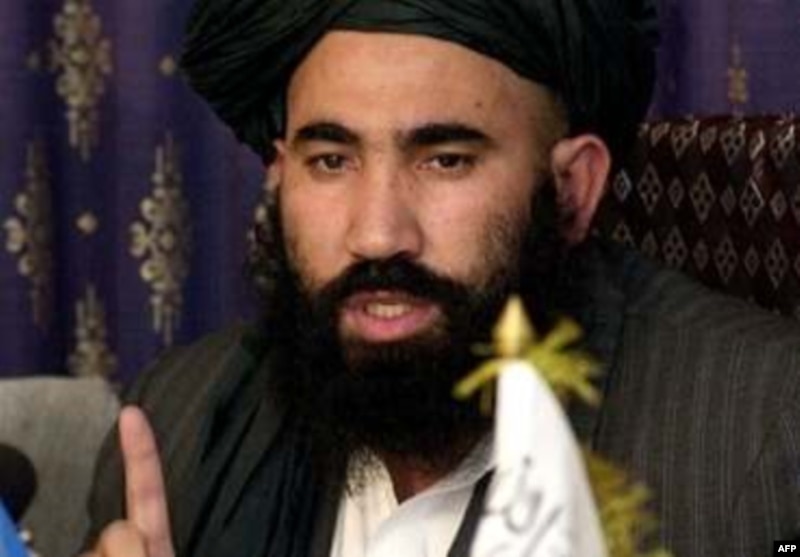
Kabul has so far been eerily silent about the arrest, its only official reaction being that it was awaiting the official confirmation of his arrest from Islamabad.
That confirmation came today. In a statement to reporters, Major General Athar Abbas, the chief spokesman for Pakistan's military, said that Baradar's identity was established on the basis of ''detailed identification procedures." Abbas also said that Baradar was one of several people arrested, but that further details could not be made public out of security concerns.
Former Taliban envoy Zaeef, for his part, dismisses the idea that arresting Baradar -- or any Taliban figure for that matter -- and bringing him to Kabul could help attract the attention of a large number of the movement's field commanders and fighters. "Anybody who is brought to Kabul as a prisoner will have little impact, because nobody will listen to him and his efforts will not be considered positive and effective," he says.
Talk Of Taliban Divisions
Addressing the initial reaction that the Taliban commander's capture would provide a major blow to the movement's ability to conduct military operations, former Taliban Foreign Minister Wakil Ahmad Muttawakil is skeptical. He tells RFE/RL that while Baradar was indeed a key Taliban military commander, his capture wouldn't lead to a "dramatic" shift of balance on the battlefield because, "I don't think everything depended on him."
Muttawakil, who is also involved in facilitating behind-the-scene contacts with the Taliban in Saudi Arabia, also says that he does not believe Baradar was involved in negotiations through Riyadh, because as part of the Taliban leadership he would have to strictly follow consensus.
Muttawakil says that reports suggesting that Baradar had developed strong differences with Taliban leader Mullah Omar hold little water. Furthermore, he says the idea that Islamabad would capture Baradar to prevent him from negotiating with Kabul is not plausible, and notes that Islamabad recently indicated its willingness to help in negotiating with the Afghan Taliban. He contrasts "Islamabad's nice diplomatic overtures," with "speculation about his arrest that are negative and problematic."
"I have no doubt that there is unity among the Taliban leadership," Muttawakil adds. "And as far as I can speculate, this movement is not divided into factions."
But Afghan journalist Sami Yousafzai, who has followed the Taliban for years, tells RFE/RL that Baradar's arrest would at the least be a personal blow to Mullah Omar, because he has lost a key confidant whom he trusted since the emergence of the militant movement in southern Afghanistan in 1994. And in the past few years, Yousafzai notes, Baradar also became his sole contact with the Taliban commanders and the outside world.
Baradar 'Acceptable' Candidate?
Yousafzai says that Mullah Omar will find it difficult to appoint a replacement but that Baradar's arrest will not have a grave impact on the Taliban's overall strength.
In the past, the movement has withstood the killing of key commanders Mullah Dadullah and Akhter Mohammad Osmani. Even the 2007 arrest of Mullah Obaidullah, the former Taliban defense minister and Baradar's predecessor, did little to dent the movement.
Yousafzai suggests that speculation about Baradar's contacts with President Karzai are based on the fact that both belong to the Popalzai tribe, a Pashtun lineage whose members populate southern Afghanistan. He says that based on his extensive research of the Taliban, Islamabad would have little interest in arresting Baradar because, unlike other Afghan Taliban commanders, he was unwilling to develop links with the Pakistani Taliban or Al-Qaeda, who are fighting an acrimonious war against Pakistan.
"If there are negotiations with the Taliban and, be that Mullah Baradar or another leader, he cannot move them forward on his own without engaging and keeping in the dark certain quarters in Pakistan who support the Taliban," Yousafzai says. "There is no doubt that he was an acceptable figure for Pakistani officials and certain other quarters."
Yousafzai too rejects the idea that Mullah Baradar negotiated directly with Karzai or his emissaries. He says that anything concerning the Afghan Taliban in Pakistan is seen in Kabul through the prism of conspiracy theory.
In the final assessment of the situation, only concrete results -- such as a breakthrough in reconciling with known Taliban figures that leads sizeable numbers of the movement's foot soldiers to side with Kabul, or on the flip side a stepped-up terror campaign -- will tell the true impact of Baradar's capture.
RFE/RL Radio Free Afghanistan correspondent Hameed Mohmand in Kabul contributed to this report