




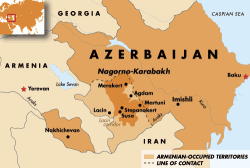
When Presidents Serzh Sarkisian of Armenia and Ilham Aliyev of Azerbaijan meet in St. Petersburg, they are expected to reach a breakthrough on the resolution of the Nagorno-Karabakh conflict, the military phase of which was ended 15 years ago by what has become the world's longest self-maintained cease-fire.
This resolution is expected not just for its own sake, but because it is perceived as a necessary determinant of many other regional processes, including Turkish-Armenian bilateral relations, and even Azerbaijan's relations with Turkey and Russia, among others.
There are four elements that have always affected the settlement process, and continue to do so:
Since 1992, during each successive stage of diplomatic activity, these four factors have always been consequential, although never so significant and so fluid as today. Worse, never have they all been in such a state of great and unpredictable flux.
Regionally and globally, the interrelationship among powers has changed dramatically. The most obvious example is the new U.S. administration's zeal in this region, prompted both by domestic pressures as well as its own outlook.
But other global changes are also significant: Russia and the United States are "resetting" their relationship; the impact of the Russia-Georgia war is still felt; and Europe is promoting the Eastern Partnership with six former Soviet republics, including the three South Caucasus states, among other reasons to find solutions to conflicts that might affect its energy security.
Within international organizations, especially following the very public disagreements on Kosovo's self-determination, there are conflicting directions. Russia, which opposed what it considered to be the unilateral imposition of sovereignty on Kosovo, is trying to counterbalance this process. But it ended up doing the same itself by recognizing South Ossetia and Abkhazia as independent states.
 Click to enlargeIn other words, while both the West and Russia selectively support independence, they continue to talk about the supremacy of the principle of territorial integrity. This contradictory situation created by conflicting approaches by the major players will require delicate diplomatic maneuvering by the sides and the mediators.
The internal situations in Azerbaijan, Armenia, and Karabakh are no less important at these diplomatic crossroads. Despite its oil wealth, Azerbaijan's economic growth is in decline, as is Armenia's. Politically, although both appear stable, neither government enjoys deep support among the population, albeit for differing reasons.
In this context, the ultimate question is what is to happen to this no-peace, no-war situation. What is the end game? Is there a viable political solution?
'Best Alternative To a Negotiated Agreement'
There are three possible scenarios. One is the continuation of a sustainable status quo. The second is the eruption of war and a new situation on the ground. The third is a negotiated solution.
Although most of the international community, including the mediators, will automatically reject the first scenario as unacceptable and unsustainable, this is not necessarily the case. There are many historical examples when yesterday's unrealistic alternative became today's preferred and realistic solution.
The second scenario -- war -- is difficult to imagine. Armenians have no reason to start a war. If the Azerbaijanis start a war, this will be the third time they will have tried, and they will only succeed if they aim for a "final solution." That would be a huge risk for Azerbaijan, greater than for the Armenian side.
And finally, there is the third scenario -- a negotiated solution. This is obviously the most desirable, but would require producing a document that includes substantive compromises. These negotiations have already gone on for 15 long, intense years, during which five serious proposals were presented. Four were rejected, one is still on the table.
In other words, there is no easy resolution, especially since both sides have what negotiators call a BATNA -- the Best Alternative To a Negotiated Agreement. Azerbaijan believes its BATNA is war. Armenia believes its BATNA is today's status quo.
This is the backdrop to the presidents' meeting in St. Petersburg. They will of course be mindful that the most fundamental change in the four parameters identified above, since their last meeting, is the pressure resulting from the U.S. push for improved relations between Turkey and Armenia. President Barack Obama stuck his neck out to try to promote these relations. He believed this compensated for his not using the term genocide on April 24. April 24 will come around again next year, however, so the pressure has not disappeared. Relations still need to be improved.
In addition, to be fair, both Armenia and Turkey do in fact want such progress, albeit for differing reasons. Azerbaijan can see the writing on the wall, but remains intransigent. Only progress in the Nagorno-Karabakh settlement process can reconcile these disparate requirements.
This is the challenge facing the two presidents. A lasting peace will come when each side acknowledges the other's minimum requirements, not their minimum demands. Before this can happen, each side must achieve sufficient internal consensus on its bargaining position. This hasn't happened yet.
The prospects for peace also depend on how well and how quickly disparate local political realities, quickly evolving international relations and radically changing global trends can be juggled and reconfigured.
Vartan Oskanian served from 1998-2008 as foreign minister of the Republic of Armenia. The views expressed in this commentary are his own, and do not necessarily reflect those of RFE/RL
This resolution is expected not just for its own sake, but because it is perceived as a necessary determinant of many other regional processes, including Turkish-Armenian bilateral relations, and even Azerbaijan's relations with Turkey and Russia, among others.
There are four elements that have always affected the settlement process, and continue to do so:
the global and regional interests of the major powers and their present interrelationships;
the dominant trends in international relations as manifested in the agendas and decisions of international organizations (such as the UN and Organization for Security and Cooperation in Europe);
the conflicting sides' own present political and economic situations;
the conflicting sides' diplomatic approaches, convictions, and capacity to shape the peace process.
the dominant trends in international relations as manifested in the agendas and decisions of international organizations (such as the UN and Organization for Security and Cooperation in Europe);
the conflicting sides' own present political and economic situations;
the conflicting sides' diplomatic approaches, convictions, and capacity to shape the peace process.
Since 1992, during each successive stage of diplomatic activity, these four factors have always been consequential, although never so significant and so fluid as today. Worse, never have they all been in such a state of great and unpredictable flux.
Regionally and globally, the interrelationship among powers has changed dramatically. The most obvious example is the new U.S. administration's zeal in this region, prompted both by domestic pressures as well as its own outlook.
But other global changes are also significant: Russia and the United States are "resetting" their relationship; the impact of the Russia-Georgia war is still felt; and Europe is promoting the Eastern Partnership with six former Soviet republics, including the three South Caucasus states, among other reasons to find solutions to conflicts that might affect its energy security.
Within international organizations, especially following the very public disagreements on Kosovo's self-determination, there are conflicting directions. Russia, which opposed what it considered to be the unilateral imposition of sovereignty on Kosovo, is trying to counterbalance this process. But it ended up doing the same itself by recognizing South Ossetia and Abkhazia as independent states.
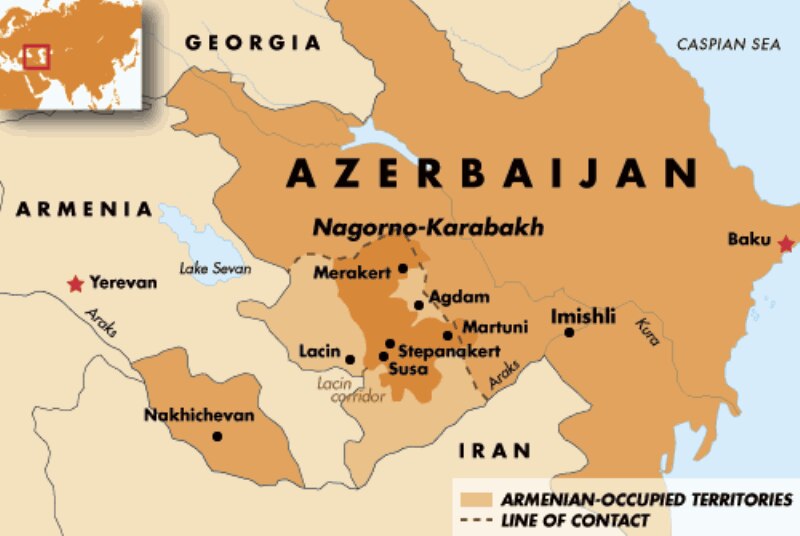
The internal situations in Azerbaijan, Armenia, and Karabakh are no less important at these diplomatic crossroads. Despite its oil wealth, Azerbaijan's economic growth is in decline, as is Armenia's. Politically, although both appear stable, neither government enjoys deep support among the population, albeit for differing reasons.
In this context, the ultimate question is what is to happen to this no-peace, no-war situation. What is the end game? Is there a viable political solution?
'Best Alternative To a Negotiated Agreement'
There are three possible scenarios. One is the continuation of a sustainable status quo. The second is the eruption of war and a new situation on the ground. The third is a negotiated solution.
Although most of the international community, including the mediators, will automatically reject the first scenario as unacceptable and unsustainable, this is not necessarily the case. There are many historical examples when yesterday's unrealistic alternative became today's preferred and realistic solution.
The second scenario -- war -- is difficult to imagine. Armenians have no reason to start a war. If the Azerbaijanis start a war, this will be the third time they will have tried, and they will only succeed if they aim for a "final solution." That would be a huge risk for Azerbaijan, greater than for the Armenian side.
And finally, there is the third scenario -- a negotiated solution. This is obviously the most desirable, but would require producing a document that includes substantive compromises. These negotiations have already gone on for 15 long, intense years, during which five serious proposals were presented. Four were rejected, one is still on the table.
In other words, there is no easy resolution, especially since both sides have what negotiators call a BATNA -- the Best Alternative To a Negotiated Agreement. Azerbaijan believes its BATNA is war. Armenia believes its BATNA is today's status quo.
This is the backdrop to the presidents' meeting in St. Petersburg. They will of course be mindful that the most fundamental change in the four parameters identified above, since their last meeting, is the pressure resulting from the U.S. push for improved relations between Turkey and Armenia. President Barack Obama stuck his neck out to try to promote these relations. He believed this compensated for his not using the term genocide on April 24. April 24 will come around again next year, however, so the pressure has not disappeared. Relations still need to be improved.
In addition, to be fair, both Armenia and Turkey do in fact want such progress, albeit for differing reasons. Azerbaijan can see the writing on the wall, but remains intransigent. Only progress in the Nagorno-Karabakh settlement process can reconcile these disparate requirements.
This is the challenge facing the two presidents. A lasting peace will come when each side acknowledges the other's minimum requirements, not their minimum demands. Before this can happen, each side must achieve sufficient internal consensus on its bargaining position. This hasn't happened yet.
The prospects for peace also depend on how well and how quickly disparate local political realities, quickly evolving international relations and radically changing global trends can be juggled and reconfigured.
Vartan Oskanian served from 1998-2008 as foreign minister of the Republic of Armenia. The views expressed in this commentary are his own, and do not necessarily reflect those of RFE/RL