





One hundred days have passed since the September 4 inauguration of former Russian Constitutional Court Justice Boris Ebzeyev as president of the Karachayevo-Cherkessia Republic (KChR).
Since then, Ebzeyev has angered the republic's Circassian minority, who account for some 11 percent of the republic's estimated 427,400 population, by violating the unwritten agreement that if the post of republic president goes to a Karachai (the Karachais are the largest ethnic group, accounting for some 38 percent of the population), then a Circassian is automatically named prime minister, while the posts of vice president and parliament speaker go to Russians, who are the second-largest ethnic group (33.6 percent).
That agreement dates from a hotly contested presidential ballot in 1998 when a Karachai narrowly defeated a Circassian in a runoff.
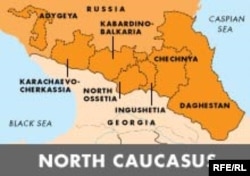
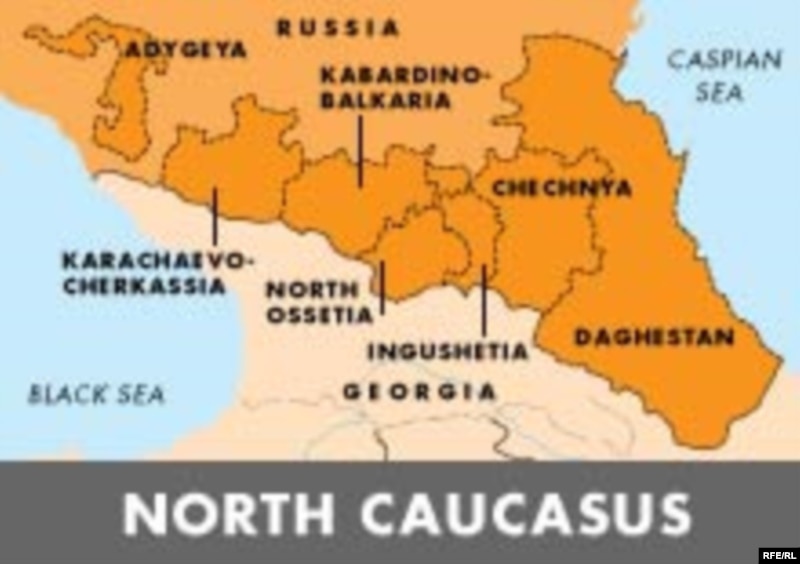
Partly in a direct response to Ebzeyev's controversial personnel appointments, participants in an emergency informal congress of the Circassian people held in the KChR town of Cherkessk on November 23 demanded the revision of existing borders between the North Caucasus republics to create within the Russian Federation a Circassian republic that would comprise those regions of the KChR, the Kabardino-Balkaria Republic (KBR), and Adygeya in which the Circassians, Adygs, and Kabardians constitute a majority. Those three related ethnic groups together account for a little over one-third of the combined total population (1.85 million) of the three republics.
In his inaugural speech on September 4, Ebzeyev stressed the need for reforms in the economy, housing, and education. He also advocated a greater role for the republic's parliament; pledged to submit all proposed government appointments, including that of the new prime minister, to the legislature for approval; and publicly undertook not to give plum jobs to members of his family or auction them off to the highest bidder, according to kavkaz-uzel.ru on September 5. At a meeting of regional security officials on October 1, Ebzeyev reaffirmed his intention to target corruption at all levels of government. Failure to do so is regarded as one of the main reasons why Medvedev did not propose outgoing republic head Mustafa Batdyev for a second presidential term.
It was only on October 7 that Ebzeyev unveiled his proposed new cabinet, and thereby incurred the collective wrath of the Circassian minority. Rather than name a Circassian as prime minister, Ebzeyev selected for that post a Greek, Vladimir Kayshev. One first deputy prime minister (Muradin Kemov) is a Circassian and the second (Ismail Aliyev), a Karachai; of the two deputy prime ministers, Murat Khartsyzov is an Abazin and Djanibek Suyunov, a Nogai. The cabinet consists of three Karachais, two Russians, two Abazins, one Greek, one Circassian, and one Ossetian.
 Three weeks later, on October 28, parliament deputies unanimously elected a Circassian, Zurab Dokshokov, as parliament speaker to succeed Sergei Smorodin, a Russian, whom Ebzeyev appointed the republic's permanent representative in Moscow.
Mukhamed Cherkesov, who heads the executive committee of the Congress of Circassian People, told regnum.ru on October 30 that the Circassians do not consider the post of parliament speaker adequate compensation for the loss of the premiership, given that they now have "no opportunity" to influence government policy. Cherkesov was also quoted by kavkaz-uzel.ru on December 3 as saying the Circassian community had proposed to Ebzeyev several alternative Circassian candidates for prime minister, all of them currently serving in Moscow. According to Cherkesov, Ebzeyev countered that since he himself had spent the past decade in Moscow, he needed a prime minister who was familiar with the situation in the republic.
Circassian Demands
That is in line with Ebzeyev's stated rationale for violating the unwritten agreement on the distribution of top posts: the need to select candidates on the basis of their professional qualities, rather than their ethnicity. Announcing the composition of the new cabinet on October 7, he argued the need to move gradually away from what he termed "ethno-politics" and the "ethnocratic approach to government," while conceding that it would not be possible to discount the ethnic factor completely. Aleksandr Kynev, an expert on nationalities policy, told kavkaz-uzel on December 8 that while he agrees that officials' professional qualifications should take precedence over ethnic quotas, he thinks Ebzeyev was unwise to violate the existing ethnic balance.
Within days of Ebzeyev's announcement of the composition of the new government, the KChR chapter of the Circassian public organization Adyge Khase announced plans to convene a congress in Cherkessk in early November to discuss proposed amendments to the KChR's constitution intended to protect the Circassians' collective rights, and to demand the "unification" of Adyg- and Circassian-populated territories. Delegates to the congress duly adopted a resolution calling on Moscow to support their demand for the creation of a Circassian republic, and adducing in support of that demand mergers in recent years between other subjects of the Russian Federation.
Ruslan Keshev, head of the congress's youth wing, argued that creating a Circassian republic would help stabilize the situation in the North Caucasus. But Zamir Shukhov of the Pan-World Adyg Brotherhood acknowledged that even if the Russian central government gives the green light, the process would take years, and must be undertaken with extreme caution so as not to violate the rights of other ethnic groups.
And not all delegates to the congress supported that proposal; the Kabardino-Balkaria chapter of Adyge Khase earlier released a statement saying they were quite satisfied with the existing territorial-administrative division of the North Caucasus -- which is hardly surprising given that the Kabardins count for over half the KBR's total population of 900,000. Speaking at the congress, KBR chapter head Mukhamed Khafitse termed the unification demand "premature." He argued that the issue should be put to a referendum in all three republics, after which the respective parliaments should raise it with the Russian State Duma.
There has been no reaction to date to the Circassian proposal from the KBR's embattled Balkar minority, who have long alleged discrimination at the hands of the Kabardians. Meeting with Balkar representatives in October, KBR President Arsen Kanokov, a Kabardian, categorically rejected those allegations.
Ramazan Ashinov of RFE/RL's North Caucasus Service contributed to this article
Since then, Ebzeyev has angered the republic's Circassian minority, who account for some 11 percent of the republic's estimated 427,400 population, by violating the unwritten agreement that if the post of republic president goes to a Karachai (the Karachais are the largest ethnic group, accounting for some 38 percent of the population), then a Circassian is automatically named prime minister, while the posts of vice president and parliament speaker go to Russians, who are the second-largest ethnic group (33.6 percent).
That agreement dates from a hotly contested presidential ballot in 1998 when a Karachai narrowly defeated a Circassian in a runoff.
Partly in a direct response to Ebzeyev's controversial personnel appointments, participants in an emergency informal congress of the Circassian people held in the KChR town of Cherkessk on November 23 demanded the revision of existing borders between the North Caucasus republics to create within the Russian Federation a Circassian republic that would comprise those regions of the KChR, the Kabardino-Balkaria Republic (KBR), and Adygeya in which the Circassians, Adygs, and Kabardians constitute a majority. Those three related ethnic groups together account for a little over one-third of the combined total population (1.85 million) of the three republics.
In his inaugural speech on September 4, Ebzeyev stressed the need for reforms in the economy, housing, and education. He also advocated a greater role for the republic's parliament; pledged to submit all proposed government appointments, including that of the new prime minister, to the legislature for approval; and publicly undertook not to give plum jobs to members of his family or auction them off to the highest bidder, according to kavkaz-uzel.ru on September 5. At a meeting of regional security officials on October 1, Ebzeyev reaffirmed his intention to target corruption at all levels of government. Failure to do so is regarded as one of the main reasons why Medvedev did not propose outgoing republic head Mustafa Batdyev for a second presidential term.
It was only on October 7 that Ebzeyev unveiled his proposed new cabinet, and thereby incurred the collective wrath of the Circassian minority. Rather than name a Circassian as prime minister, Ebzeyev selected for that post a Greek, Vladimir Kayshev. One first deputy prime minister (Muradin Kemov) is a Circassian and the second (Ismail Aliyev), a Karachai; of the two deputy prime ministers, Murat Khartsyzov is an Abazin and Djanibek Suyunov, a Nogai. The cabinet consists of three Karachais, two Russians, two Abazins, one Greek, one Circassian, and one Ossetian.
Mukhamed Cherkesov, who heads the executive committee of the Congress of Circassian People, told regnum.ru on October 30 that the Circassians do not consider the post of parliament speaker adequate compensation for the loss of the premiership, given that they now have "no opportunity" to influence government policy. Cherkesov was also quoted by kavkaz-uzel.ru on December 3 as saying the Circassian community had proposed to Ebzeyev several alternative Circassian candidates for prime minister, all of them currently serving in Moscow. According to Cherkesov, Ebzeyev countered that since he himself had spent the past decade in Moscow, he needed a prime minister who was familiar with the situation in the republic.
Circassian Demands
That is in line with Ebzeyev's stated rationale for violating the unwritten agreement on the distribution of top posts: the need to select candidates on the basis of their professional qualities, rather than their ethnicity. Announcing the composition of the new cabinet on October 7, he argued the need to move gradually away from what he termed "ethno-politics" and the "ethnocratic approach to government," while conceding that it would not be possible to discount the ethnic factor completely. Aleksandr Kynev, an expert on nationalities policy, told kavkaz-uzel on December 8 that while he agrees that officials' professional qualifications should take precedence over ethnic quotas, he thinks Ebzeyev was unwise to violate the existing ethnic balance.
Within days of Ebzeyev's announcement of the composition of the new government, the KChR chapter of the Circassian public organization Adyge Khase announced plans to convene a congress in Cherkessk in early November to discuss proposed amendments to the KChR's constitution intended to protect the Circassians' collective rights, and to demand the "unification" of Adyg- and Circassian-populated territories. Delegates to the congress duly adopted a resolution calling on Moscow to support their demand for the creation of a Circassian republic, and adducing in support of that demand mergers in recent years between other subjects of the Russian Federation.
Ruslan Keshev, head of the congress's youth wing, argued that creating a Circassian republic would help stabilize the situation in the North Caucasus. But Zamir Shukhov of the Pan-World Adyg Brotherhood acknowledged that even if the Russian central government gives the green light, the process would take years, and must be undertaken with extreme caution so as not to violate the rights of other ethnic groups.
And not all delegates to the congress supported that proposal; the Kabardino-Balkaria chapter of Adyge Khase earlier released a statement saying they were quite satisfied with the existing territorial-administrative division of the North Caucasus -- which is hardly surprising given that the Kabardins count for over half the KBR's total population of 900,000. Speaking at the congress, KBR chapter head Mukhamed Khafitse termed the unification demand "premature." He argued that the issue should be put to a referendum in all three republics, after which the respective parliaments should raise it with the Russian State Duma.
There has been no reaction to date to the Circassian proposal from the KBR's embattled Balkar minority, who have long alleged discrimination at the hands of the Kabardians. Meeting with Balkar representatives in October, KBR President Arsen Kanokov, a Kabardian, categorically rejected those allegations.
Ramazan Ashinov of RFE/RL's North Caucasus Service contributed to this article