




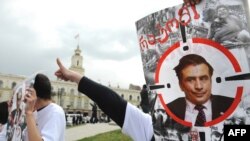
Provocations are by definition intended to provoke, and consequently, responding to them in exactly the way their authors hope is often the worst possible choice by those against whom they are directed. It gives those who are using them a victory they should not have, and those against whom they are directed several kinds of defeats they do not deserve. But all too often, the temptation to rush into the trap set by those who launch provocations is so great that many are not able to avoid doing so.
Few in Georgia -- or indeed anywhere else -- can have any doubts that recent claims by Moscow's Federal Security Service (FSB) that Tbilisi is providing training or other kinds of support for Islamist and nationalist militants in the North Caucasus are absurd provocations. But even fewer in the Georgian capital seem to recognize that far more is riding on their responses than whether the international community accepts, or at least does nothing in response to, this latest example of political duplicity from the Russian powers-that-be.
Attention Getter
More than many other national leaders, Georgian President Mikheil Saakashvili has allowed himself to be provoked, apparently confident that responding in dramatic and sometimes hyperbolic language serves him well both abroad and at home. Abroad, he clearly believes a sharp response on his part will generate more attention in the international community to Russian lies, and thus more support for Georgia from that community. At home, he clearly calculates such attention to Russian actions will go a long way to silencing his opponents and thus reinforcing his power.
In both cases, he is only half right. It is true that Saakashvili's reactions to Russian charges often attract more attention than do the Russian originals.
But as he may not be fully aware, that is exactly what the Russian side is hoping for, convinced that if it continues with such charges and Saakashvili responds as he has in the past and Russian forces take no action, Saakashvili will find himself in the eyes of the West like the little boy who cried wolf once too often. When the wolf finally came, no one would believe him.
It is also true that Saakashvili is correct in his conviction that playing up such Russian threats helps him to control the opposition, as few of its members are going to be willing to incur the kind of withering criticism he and his supporters would deliver if they questioned what he was doing.
But even if that tactic works most of the time, it has two corrosive effects. On the one hand, it undermines the real unity among Georgians that Saakashvili seeks by creating a false simulacrum of agreement. On the other, it undermines the Georgian political system by suppressing precisely the kind of debate that is the essence of a democratic system.
Responding Prudently
None of this means that Georgians -- from Saakashvili to the leaders of the Georgian opposition to the Georgian man and woman in the street -- should avoid responding to Russian lies. Instead, it means that all of them need to recognize that the way in which they respond is critically important.
If some Georgians continue to respond with bombast and others by remaining silent, they will have fallen into an FSB-laid trap -- whether they want to recognize it or not. But if they recognize the ways in which provocations can be turned against their authors, then Georgia and the cause of Georgian democracy will only benefit.
How then should Georgians respond? There are many good ways (for a broader consideration, see Paul W. Blackstock's classic study, "The Strategy of Subversion") but three immediately suggest themselves.
First, no Georgian should be in the business of helping Moscow to spread its lies about Georgia. That means not issuing emotional responses every time the Russians say something. If Georgian leaders could say something like "Moscow has released the latest in a long line of lies about our country" and leave it at that, Georgia and Georgians would be much better off. Only the FSB would suffer, and it seems unlikely many Georgians would see that as a bad thing.
Second, no member of the Georgian opposition should be afraid of speaking out about either how absurd the Russian charges are or about his or her disagreement with how Georgian government officials are responding to them. If opposition figures are frightened of doing either, they are serving neither their own interests nor those of Georgia; they are serving the interests of those in Tbilisi who do not want democracy and those in Russia who do not want Georgia to be independent.
Third, given the rapid multiplication of Russian charges in this area, Georgians, both in the government and outside it, would almost certainly benefit from the formation of an international commission that could assess these charges. Such a group would both move the issue beyond a "he said-she said" situation of the kind in which Georgia found itself after the August 2008 war and provide the kind of cover Georgians of various political stripes may need to act as vigorous members of a democratic polity.
Obviously, there will always be the temptation among government circles to charge critics with being supporters of an outside power, especially in a country with Georgia's history and location. But that temptation must be fought, because failure to fight means that Georgians, despite all their convictions to the contrary, will be playing into Moscow's hands.
Paul Goble is a longtime specialist on the former Soviet space. The views expressed in this commentary are his own, and do not necessarily reflect those of RFE/RL
Few in Georgia -- or indeed anywhere else -- can have any doubts that recent claims by Moscow's Federal Security Service (FSB) that Tbilisi is providing training or other kinds of support for Islamist and nationalist militants in the North Caucasus are absurd provocations. But even fewer in the Georgian capital seem to recognize that far more is riding on their responses than whether the international community accepts, or at least does nothing in response to, this latest example of political duplicity from the Russian powers-that-be.
Attention Getter
More than many other national leaders, Georgian President Mikheil Saakashvili has allowed himself to be provoked, apparently confident that responding in dramatic and sometimes hyperbolic language serves him well both abroad and at home. Abroad, he clearly believes a sharp response on his part will generate more attention in the international community to Russian lies, and thus more support for Georgia from that community. At home, he clearly calculates such attention to Russian actions will go a long way to silencing his opponents and thus reinforcing his power.
In both cases, he is only half right. It is true that Saakashvili's reactions to Russian charges often attract more attention than do the Russian originals.
But as he may not be fully aware, that is exactly what the Russian side is hoping for, convinced that if it continues with such charges and Saakashvili responds as he has in the past and Russian forces take no action, Saakashvili will find himself in the eyes of the West like the little boy who cried wolf once too often. When the wolf finally came, no one would believe him.
It is also true that Saakashvili is correct in his conviction that playing up such Russian threats helps him to control the opposition, as few of its members are going to be willing to incur the kind of withering criticism he and his supporters would deliver if they questioned what he was doing.
But even if that tactic works most of the time, it has two corrosive effects. On the one hand, it undermines the real unity among Georgians that Saakashvili seeks by creating a false simulacrum of agreement. On the other, it undermines the Georgian political system by suppressing precisely the kind of debate that is the essence of a democratic system.
Responding Prudently
None of this means that Georgians -- from Saakashvili to the leaders of the Georgian opposition to the Georgian man and woman in the street -- should avoid responding to Russian lies. Instead, it means that all of them need to recognize that the way in which they respond is critically important.
If some Georgians continue to respond with bombast and others by remaining silent, they will have fallen into an FSB-laid trap -- whether they want to recognize it or not. But if they recognize the ways in which provocations can be turned against their authors, then Georgia and the cause of Georgian democracy will only benefit.
How then should Georgians respond? There are many good ways (for a broader consideration, see Paul W. Blackstock's classic study, "The Strategy of Subversion") but three immediately suggest themselves.
First, no Georgian should be in the business of helping Moscow to spread its lies about Georgia. That means not issuing emotional responses every time the Russians say something. If Georgian leaders could say something like "Moscow has released the latest in a long line of lies about our country" and leave it at that, Georgia and Georgians would be much better off. Only the FSB would suffer, and it seems unlikely many Georgians would see that as a bad thing.
Second, no member of the Georgian opposition should be afraid of speaking out about either how absurd the Russian charges are or about his or her disagreement with how Georgian government officials are responding to them. If opposition figures are frightened of doing either, they are serving neither their own interests nor those of Georgia; they are serving the interests of those in Tbilisi who do not want democracy and those in Russia who do not want Georgia to be independent.
Third, given the rapid multiplication of Russian charges in this area, Georgians, both in the government and outside it, would almost certainly benefit from the formation of an international commission that could assess these charges. Such a group would both move the issue beyond a "he said-she said" situation of the kind in which Georgia found itself after the August 2008 war and provide the kind of cover Georgians of various political stripes may need to act as vigorous members of a democratic polity.
Obviously, there will always be the temptation among government circles to charge critics with being supporters of an outside power, especially in a country with Georgia's history and location. But that temptation must be fought, because failure to fight means that Georgians, despite all their convictions to the contrary, will be playing into Moscow's hands.
Paul Goble is a longtime specialist on the former Soviet space. The views expressed in this commentary are his own, and do not necessarily reflect those of RFE/RL